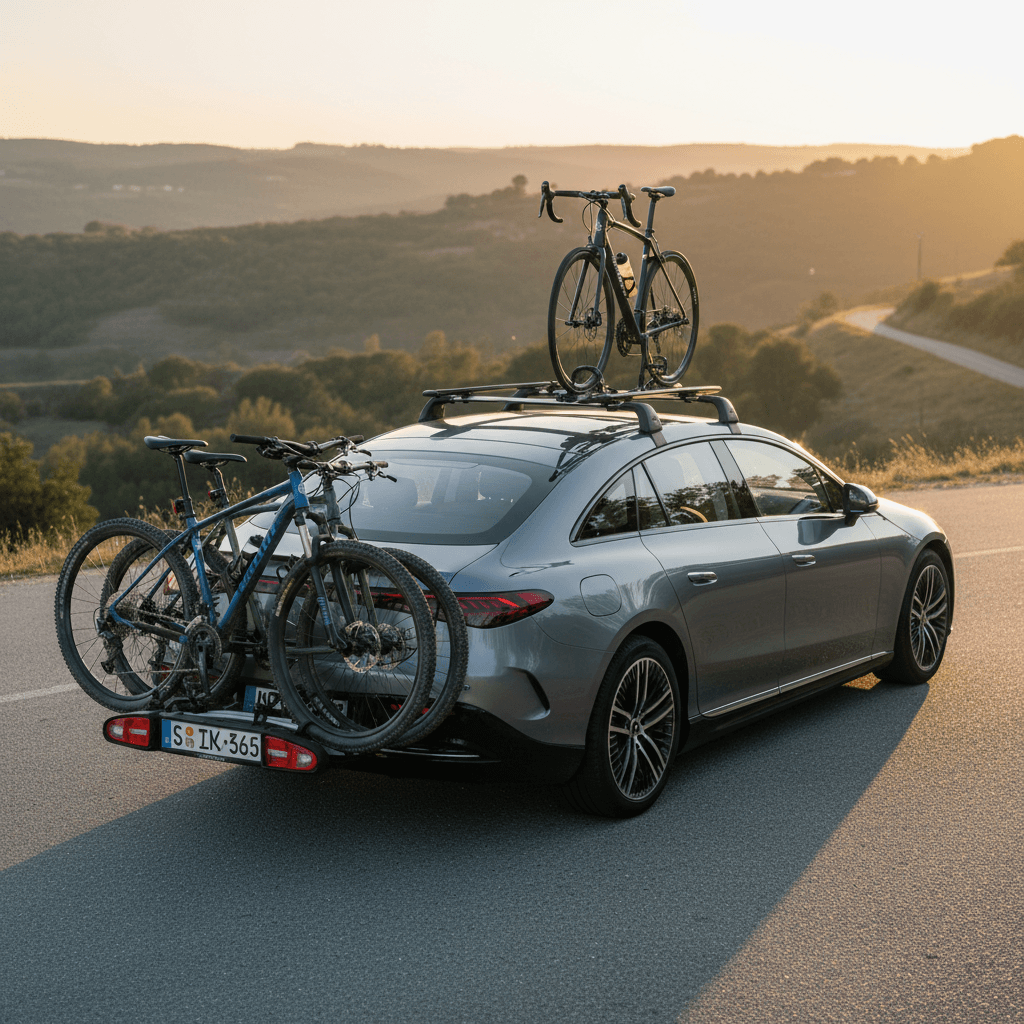
If you’re eyeing a Mercedes EQE as your daily driver and weekend adventure rig, bike transport is probably high on your list. The good news: there are solid Mercedes EQE bike rack options for both the sedan and EQE SUV, including hitch, roof, and (with caveats) trunk‑mounted setups. The trick is matching the rack to your specific EQE, staying within weight limits, and protecting both your EV’s range and its paint.
Before you buy a rack
EQE sedan vs EQE SUV: body styles and factory prep
EQE Sedan (V295)
The EQE sedan uses a sleek, cab‑forward body with a short rear deck. From a bike‑rack perspective, that means:
- No traditional roof rails from the factory in many markets, but several brands offer clamp‑on roof bar kits that use the door jambs or fixed mounting points.
- Factory trailer hitch availability is limited or market‑specific, but aftermarket detachable towbars are available and typically rated for a modest tow load and a nose load around 75–90 kg (165–198 lb), which is more than enough for bike racks.
- The smooth rear sheet metal and EV‑specific crash structure make permanent drilling for hitches a job for specialists only.
EQE SUV (X294)
The EQE SUV is more bike‑rack friendly out of the box:
- Available factory tow hitch in many trims with a swiveling or detachable ball neck and built‑in "bicycle rack" functions in the MBUX menus.
- Roof rails and cross‑bar compatibility are more common, making roof‑mounted bike racks straightforward.
- Higher ride height and hatch layout work well with platform‑style hitch racks and make loading heavy e‑bikes easier than on the sedan.
If you’re still shopping, this is one of those real‑world use cases where the EQE SUV has an edge over the sedan.
Typical Mercedes EQE load ratings that matter for bike racks
Always defer to your exact VIN
Hitch-mounted bike racks on the Mercedes EQE
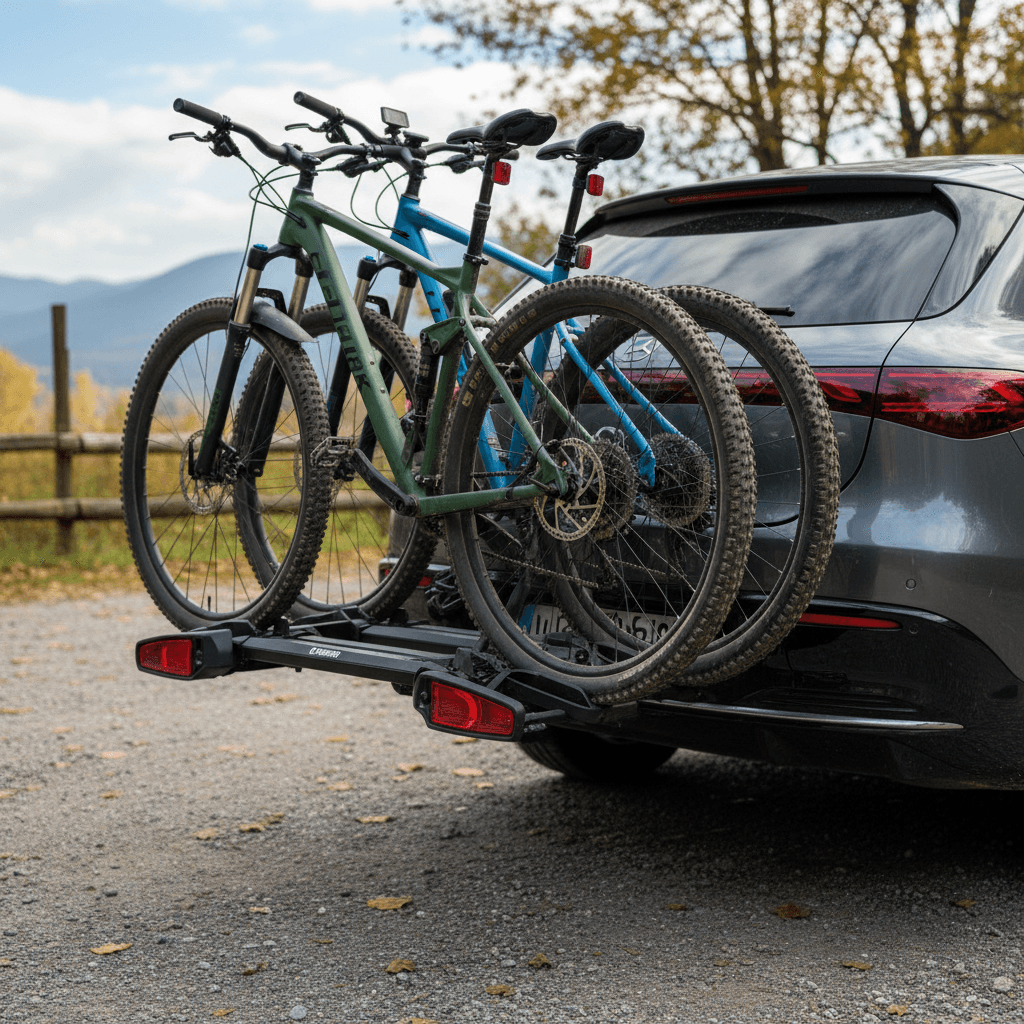
For most EQE drivers, especially EQE SUV owners, a hitch‑mounted bike rack is the most practical choice. It keeps bikes out of the airstream compared with a roof rack, is easier to load than a roof setup, and it’s usually the best option for heavy e‑bikes.
Why hitch racks work so well on the EQE
Especially on the EQE SUV, a hitch rack checks most of the boxes for bike transport.
Easy loading
A platform‑style rack sits at bumper height, so you’re lifting bikes only a couple of feet, ideal for heavier mountain bikes or e‑bikes.
Stable and secure
A properly installed hitch and rack create a solid connection with minimal sway. Many racks offer locks for both bikes and the hitch receiver.
Better efficiency
Bikes sit in the slipstream of the EQE’s body instead of on top, which usually means a smaller hit to range than a tall roof rack.
1. Factory tow hitch (mainly EQE SUV)
If your EQE SUV was ordered with the factory tow hitch, you’re in the best‑case scenario. The hitch is fully integrated into the vehicle’s structure and electronics, and the owner’s manual will list specific values for maximum trailer load and maximum tongue (nose) weight. For a bike rack, the important number is that vertical tongue weight, not the trailer capacity.
- Look up your hitch’s maximum vertical load (often around 75 kg / 165 lb).
- Add up the weight of the rack itself plus all bikes and accessories.
- Stay comfortably under the lowest weight limit among hitch, rack, and vehicle, building in a safety margin for bumps and dynamic loads.
- Use the EQE’s built‑in "bicycle rack" or "trailer" mode if available to adjust stability and driver‑assistance behavior.
Use EV‑rated hitch racks for e‑bikes
2. Aftermarket detachable hitches for EQE sedan and SUV
If your EQE didn’t come with a hitch, several European‑style detachable towbars and US‑market hitches are available for the EQE sedan and SUV. Many are marketed specifically as suitable for bike carriers and light towing. You’ll see specs like “max trailer weight 750–1000 kg” and “max nose load 75–90 kg.”
Checklist for adding an aftermarket hitch to your EQE
1. Confirm your use case
Tell the installer that your primary use is a <strong>bike rack</strong>, not heavy towing. That affects which hitch model, electrical kit, and coding may be recommended.
2. Choose a hitch rated for bike carriers
Look for language like “suitable for bicycle carriers” and verify vertical load ratings. Efficiency‑focused EVs can have different rear‑structure constraints than ICE models.
3. Use a specialist installer
On a modern EV, hitch installation can involve bumper removal, trimming, and integrating a trailer module. Use a shop or dealer familiar with Mercedes EQ models or EVs in general.
4. Keep wiring legal, even for bike racks
If there’s any chance you’ll tow, have the <strong>trailer wiring kit</strong> installed at the same time. Some aftermarket hitches explicitly require wiring for full legality, even if you only carry bikes.
Do not improvise a hitch on an EQE
Roof rack and roof‑mounted bike carriers
If you can’t add a hitch, or you prefer to keep the rear of the car clear, a roof rack with bike carriers is the main alternative. This is more straightforward on the EQE SUV, but there are options for the EQE sedan too.
Roof bars for EQE sedan and SUV
The key step is getting a solid set of cross bars on the roof:
- EQE SUV models with factory roof rails can use OEM Mercedes or aftermarket cross‑bar kits sized to the rail spacing.
- EQE sedan owners can turn to fit‑specific door‑clamp or fixed‑point kits from roof‑rack brands that list the EQE sedan by year and body style.
- Some third‑party “universal” bars may list EQE compatibility, only use them if the manufacturer publishes a clear fit guide and load rating for your exact model.
Types of roof‑mounted bike racks
Common roof‑mounted bike rack styles for the EQE
Match the carrier style to your bike type and lifting comfort.
Fork‑mount
You remove the front wheel and clamp the fork to the rack. This keeps the bike low and secure, but requires thru‑axle adapters for many modern road and mountain bikes.
Frame‑clamp upright
The bike stays fully assembled and an arm clamps the down tube. Simple to load but not ideal for carbon frames unless the rack is specifically rated for them.
Wheel‑only upright
These racks secure the bike by its tires only, avoiding frame contact. They’re popular for carbon bikes and unusual frame shapes, but often have lower weight limits and can be tall to load.
Roof racks hurt efficiency more than hitch racks
Trunk and hatch‑mounted bike racks (pros and cons)
Strap‑on trunk or hatch‑mounted racks are common on gas sedans and crossovers, and some universal products claim compatibility with the EQE. For an expensive EV with a lot of glass and sensors, though, these are rarely the first choice.
Pros
- No hitch or roof rails required.
- Lower initial cost than a hitch + rack or full roof system.
- Can be swapped between multiple vehicles if they share similar body shapes.
Cons
- Paint and glass risk: Straps and feet rest on painted panels and the rear glass. Grit can cause scratches over time.
- Sensor interference: On an EQE, rear radar and cameras may be blocked, complicating parking assists and safety systems.
- Weight uncertainty: Trunk racks and EV hatches are rarely rated for heavy e‑bikes, and the hatch struts weren’t designed for that constant load.
For most EQE owners, especially if you’re hauling expensive bikes, a hitch or properly installed roof system is worth the extra investment.
Weight limits, range impact, and EV-specific safety
Bike racks add more than just bikes, they add leverage, drag, and in some cases electrical complexity. With an EV like the EQE, it pays to be conservative on weight and smart about how you load the car.
Where to check key limits before mounting bikes
Use this table as a quick guide to where various load limits are defined and how they relate to bike racks.
| Limit | Typical value for EQE | Where to find it | Why it matters for bikes |
|---|---|---|---|
| Max roof load | Around 100 kg (220 lb) | Owner’s manual, spec sheet | Includes bars, racks, and bikes combined. |
| Max hitch tongue / nose weight | Around 75–90 kg (165–198 lb) | Hitch label, owner’s manual | Rack + all bikes + accessories must stay under this. |
| Rack capacity | Varies by model, often 2–4 bikes | Rack manual/label | Per‑bike and total weight; don’t overload cheaper racks. |
| Per‑bike weight | 35–70 lb common | Your bike spec + rack manual | Critical for e‑bikes, which can exceed older rack ratings. |
If any rating conflicts, always obey the lowest number.
Think in totals, not pieces
Range impact and driving adjustments
- Plan for a 5–10% hit to range on typical highway drives with bikes on a hitch rack; roof racks with tall mountain bikes can cost more, especially at 70+ mph.
- Use your EQE’s trip computer to watch real‑world consumption so you can adjust charging stops on road trips.
- Increase following distance and brake earlier; you’re carrying more mass, and bikes can add some sway in crosswinds.
- If your EQE has a specific trailer or bicycle rack mode, use it, stability and driver‑assist systems may be tuned differently with a known rear load.
How to choose the right bike rack for your EQE
Narrowing down Mercedes EQE bike rack options
Answer these questions first, then match to a rack style.
What’s your EQE configuration?
Start with what the car gives you:
- EQE SUV with factory hitch: Go straight to a hitch‑mount platform rack sized to your bikes.
- EQE SUV with roof rails: Hitch or roof are both realistic, decide based on bike weight and your height.
- EQE sedan without hitch: Investigate an engineered detachable hitch; if that’s not feasible, a properly fitted roof system is next.
What bikes are you carrying?
Your bike type heavily influences the right rack:
- E‑bikes or downhill rigs: Prioritize hitch‑mount, high‑capacity platform racks.
- Road and gravel bikes: Roof or hitch both work; wheel‑only roof carriers are great for carbon frames.
- Kids’ bikes or mixed sizes: Check minimum and maximum wheelbase and tire sizes on the rack spec sheet.
Feature checklist when comparing specific racks
1. Capacity and expandability
How many bikes do you need to carry today, and could that change? Some hitch racks expand from two to four bikes with add‑on modules, but capacity and tongue‑weight demands climb quickly.
2. Locking and security
Look for integrated locks for both the rack and the bikes. On an EQE, you’re often leaving several thousand dollars’ worth of bikes hanging off a very expensive EV; a quality lock system is cheap insurance.
3. Access to the rear hatch
Many hitch racks tilt or swing away to let you open the hatch. That’s particularly useful on the EQE SUV for road trips when you’re accessing the cargo area frequently.
4. EV‑friendly design
Fewer protruding edges and a clean rear profile reduce aero drag and noise. Some newer racks are explicitly marketed as EV‑optimized with better aerodynamics and lower weight.
Installation tips and ownership checklist
DIY vs professional install
Quick checklist for living with a bike rack on your EQE
Measure twice, park once
Know your new overall height with roof bikes or rear overhang with a hitch rack so you don’t encounter surprises in garages, drive‑thrues, or tight parking lots.
Protect paint and trim
Use clear protective film or pads where straps, hooks, or rack contact points touch painted panels. Even on hitch and roof systems, stray cables can rub in the wind.
Check fasteners regularly
Re‑torque cross‑bar feet, hitch bolts, and rack clamps after the first few drives, then periodically, especially before long trips.
Remove batteries when possible
For e‑bikes, removing the battery before loading reduces weight and stress on the rack and hitch, and makes theft less appealing.
Used Mercedes EQE owners and buyers: what to look for
If you’re shopping the used market, or already own a used EQE, bike‑rack capability is one more reason to dig into a car’s history and equipment. Because the EQE is a relatively new EV platform, some owners and shops are still learning what works and what doesn’t.
Bike‑rack considerations when buying a used EQE
A few extra checks can save you thousands later.
Inspect for prior hitch installs
Look under the rear bumper for any signs of a removed hitch or non‑factory cuts. Poorly sealed bumper cuts or drilled holes can invite corrosion or rattles.
Check for electrical mods
Trailer modules and wiring should be neat, fused, and properly integrated. Sloppy wiring near the rear harness or battery area is a red flag on any EV.
Ask for documentation
Receipts for hitch and rack installs, plus alignment reports after installation, are a good sign the previous owner treated the car carefully.
How Recharged can help
FAQ: Mercedes EQE bike rack options
Frequently asked questions about EQE bike racks
Conclusion: Setting up your Mercedes EQE for biking
Whether you own the sleek EQE sedan or the more upright EQE SUV, you have several solid ways to carry bikes: hitch‑mounted platform racks for maximum convenience and e‑bike capability, roof‑mounted carriers for lighter builds, and (with reservations) strap‑on trunk racks. The key is to respect your EQE’s weight limits, choose hardware that’s engineered for EVs, and install it correctly so you protect both your range and your investment.
If you’re still shopping for a used EQE or comparing it with other electric SUVs and sedans, working with Recharged can make that decision easier. Every vehicle comes with a Recharged Score battery‑health report, fair‑market pricing, and EV‑savvy support that extends to practical questions like bike racks, towing, and road‑trip readiness, so you can spend more time on the trail and less time worrying about your setup.