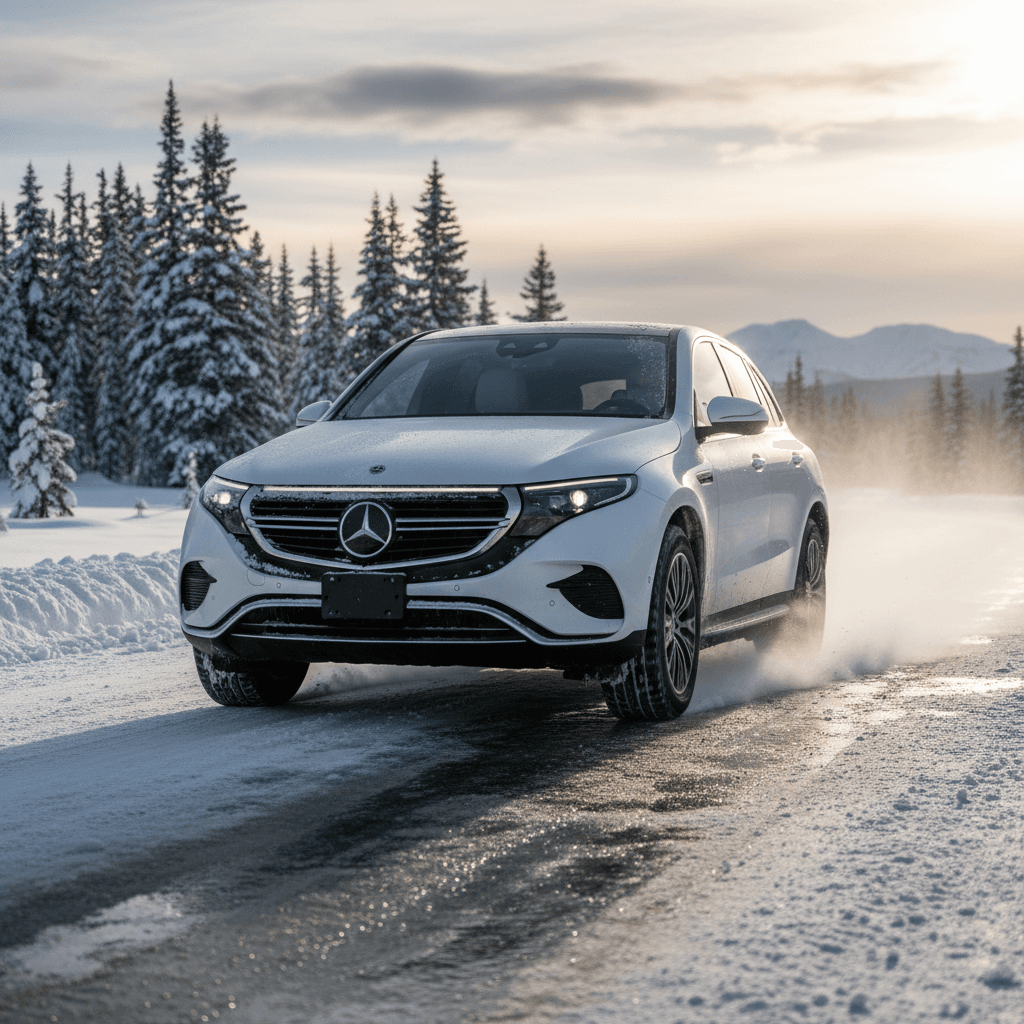
If you live where winter is real, not just a light dusting but snowpack, plow berms and black ice, the question isn’t just whether the Mercedes EQE is good in snow and ice. It’s which version of the EQE is best, and what you need to do so it behaves like the secure, luxury winter car you’re expecting.
Sedan vs SUV, RWD vs 4MATIC
Overview: Is the Mercedes EQE good in snow and ice?
Short answer: yes, the Mercedes EQE can be very good in snow and ice, especially the 4MATIC all‑wheel‑drive versions with winter tires. Every EQE benefits from instant electric torque modulation, sophisticated stability control and a low center of gravity, so it’s naturally stable and predictable. But there are tradeoffs: the sedan’s relatively low ground clearance and heavy weight mean you’ll want plowed roads, and like every EV, you’ll see a noticeable winter range hit.
- EQE strengths in winter: fast-reacting traction control, available 4MATIC AWD, stable chassis, strong cabin heating and lots of comfort tech.
- EQE weaknesses in winter: low-ish ground clearance on sedans, heavy curb weight if you get stuck, and 20–40% range loss in real cold depending on your driving and climate.
- The single biggest decider of your snow and ice experience: tires, not the badge on the trunk.
Know your EQE
EQE sedan vs EQE SUV: Which is better for snow?
EQE Sedan (V295)
- Layout: Lower, executive sedan.
- Ground clearance: Around 5.2 inches (≈132 mm) for many trims, so you sit lower in the snow.
- Drivetrains: Rear‑wheel drive or 4MATIC all‑wheel drive.
- On-road feel: Excellent stability and traction on plowed roads with good tires; more likely to "plow" in deep, unplowed snow.
Think of the EQE sedan as a winter‑capable luxury car for cleared highways and city streets, not for punching through unplowed country lanes.
EQE SUV (X294)
- Layout: Taller SUV body with more upright seating.
- Ground clearance: Roughly 6.4–7.1 inches unraised, and available air suspension can lift the EQE SUV by up to ~30 mm in Off‑Road mode on some trims.
- Drivetrains: Rear‑wheel drive (350+) or 4MATIC AWD (350, 500, AMG).
- On-road feel: The extra clearance and SUV stance make it more forgiving in ruts, slush and moderate snow depths.
If you regularly deal with snow ruts, driveway berms and unplowed side streets, the EQE SUV is the better bet.
If you live where the plows are slow…
Best Mercedes EQE trims and options for snow and ice
Mercedes gives you a buffet of EQE versions. If winter is a big part of your life, some are smarter choices than others. Here’s how they stack up, from most winter‑friendly to least.
Most winter-capable EQE versions
Focus on 4MATIC, sensible wheels, and the right packages
EQE SUV 350 4MATIC
Sweet spot for snow states.
- Dual‑motor 4MATIC AWD.
- Respectable ground clearance and available air suspension.
- Plenty of torque without being overly wild on slick roads.
- Look for 19" wheels and an available winter wheel/tire package if you can.
EQE SUV 500 4MATIC / AMG EQE SUV
Maximum traction, maximum power.
- High-output dual‑motor AWD for confident acceleration on packed snow.
- Air suspension and Off-Road mode on many specs.
- Best if you drive in variable mountain weather and want serious passing power.
- Consider downsizing to smaller winter wheels to tame the power.
EQE 350 4MATIC Sedan
Winter‑ready luxury sedan.
- 4MATIC AWD helps with slick starts and hill climbs.
- Sedan is more aero‑efficient, which helps winter range a bit on highway.
- Lower ground clearance means you’ll still want plowed streets.
- Prioritize dedicated winter tires if you buy the sedan for snow country.
EQE trims ranked for snow and ice
General guidance for shoppers in snowy climates. Exact specs vary by model year and market.
| Rank | Model / Drivetrain | Body Style | Winter Confidence | Best Use Case |
|---|---|---|---|---|
| 1 | EQE SUV 350 / 500 4MATIC | SUV | Excellent | Snow‑belt daily driver, ski trips, unplowed driveways |
| 2 | AMG EQE SUV 4MATIC+ | SUV | Excellent (with proper tires) | Enthusiast driver in mixed conditions, frequent highway use |
| 3 | EQE 350 4MATIC | Sedan | Very good | Plowed city and suburban roads, long winter commutes |
| 4 | EQE SUV 350+ (RWD) | SUV | Good (with winter tires) | Regions with occasional snow where plows are reasonably quick |
| 5 | EQE 350+ RWD sedan | Sedan | Fair | Light‑snow climates or areas with excellent plowing; must have winter tires |
Treat this as a winter-confidence ladder, from best to most limited in deep snow.
Don’t rely on all‑season tires
Tires matter more than badges: Picking the right rubber
Every EV, including the Mercedes EQE, lives or dies in winter on the four contact patches it has with the road. The EQE’s traction control is excellent, but it can only work with the grip your tires provide.
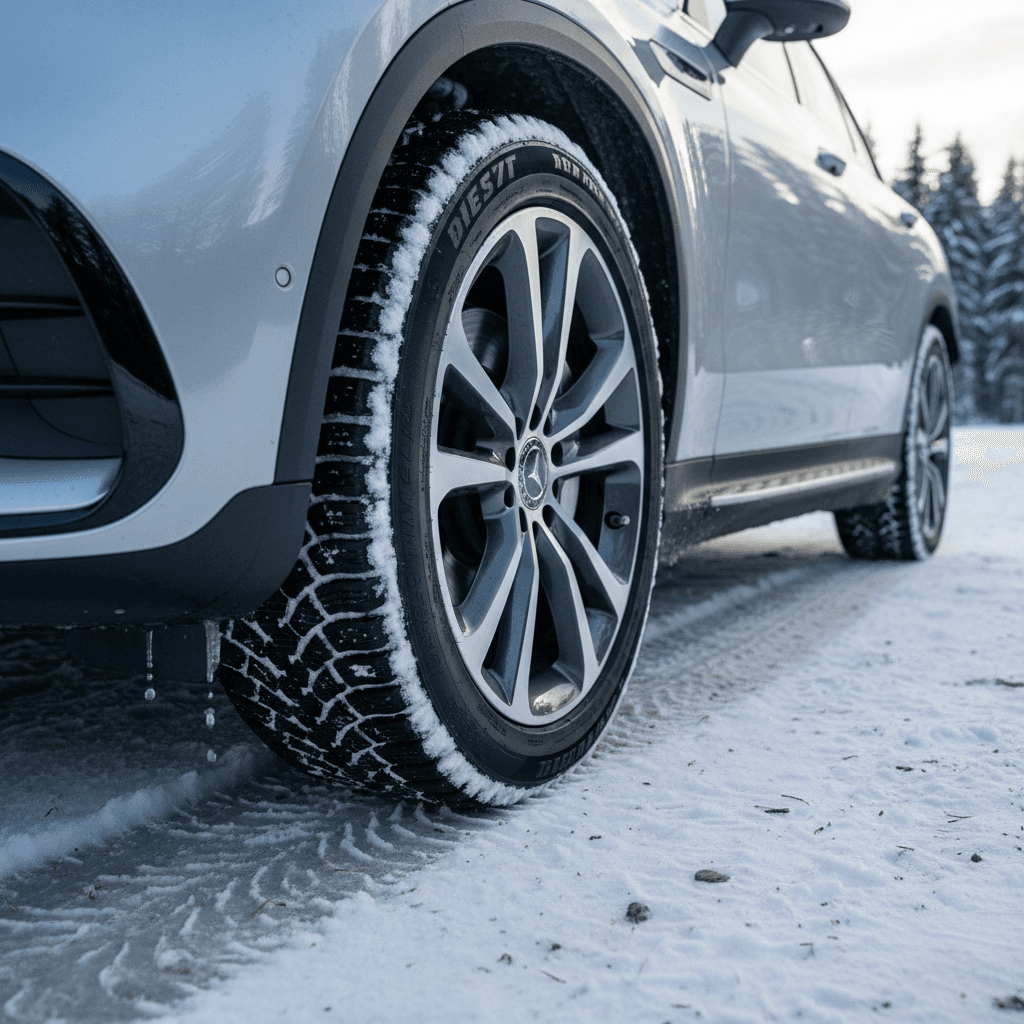
- Dedicated winter tires (the ones with the mountain‑snowflake symbol) dramatically improve braking and turning on snow and ice, not just acceleration.
- All‑season tires are a compromise: acceptable in light snow when new, but they harden up in deep cold and get overwhelmed fast on ice.
- Because the EQE is heavy, you feel the benefit of a true winter tire even more, shorter stopping distances and less ABS hammering on slick surfaces.
- Narrower tires (for example, 19" wheels with taller sidewalls) usually cut through slush and snow better than very wide, low‑profile 20–21" tires.
Smart winter wheel strategy
Ground clearance, weight and AWD: How the EQE behaves in deep snow
The EQE’s battery pack lives in the floor, so you get that beautiful, planted feel on the highway, and a car that feels heavy when it’s fighting snow. That’s both good and bad news.
Key winter-related EQE specs (typical ranges)
In real winter use, here’s what that means for you:
- On plowed highways and city streets, the EQE feels rock‑solid, with the weight helping you track straight and true.
- In 4MATIC versions, the dual motors can shuffle torque almost instantaneously, so the car feels like it’s calmly pulling itself out of slick corners instead of clawing for grip.
- In deep, unplowed snow, the low battery floor becomes a sled. Once you’re high‑centered on packed snow, even AWD won’t get you moving again without a shovel or tow.
- The EQE SUV’s extra clearance and the ability to raise the suspension on some trims buys you valuable margin on rutted roads and driveway berms.
Respect the snow berm
Winter range loss and battery care in the EQE
Cold weather hits every EV’s range, and the Mercedes EQE is no exception. Owners in colder climates commonly report losing 20–40% of their rated range in real winter driving, depending on temperature, speed and how much cabin heat they use.
- Batteries are less efficient when cold, so you spend more energy just keeping the pack and cabin warm.
- Short trips are worst: the EQE has to heat the cabin and battery over and over while you never get to steady‑state cruising efficiency.
- High speeds on cold, dry pavement (think 70–80 mph on a 15°F day) combine aero drag and heater use into a perfect range‑shrinking storm.
How to protect your winter range
EQE winter range best practices
Precondition before you leave
Use the Mercedes me app or in‑car scheduler to warm the cabin and battery while you’re still plugged in. You start with a warm pack and full charge instead of burning precious miles just to defrost the car.
Plan shorter charge gaps
On a route you might normally drive in one stop in summer, expect to add an extra quick charging stop in deep winter, especially at highway speeds.
Use eco or comfort modes in snow
Softer throttle mapping in ECO or COMFORT makes it easier to drive smoothly on slick surfaces and often reduces unnecessary wheelspin.
Lean on seat and wheel heaters
Heated seats and steering wheel use far less energy than cranking cabin heat to 78°F. Stay comfortable without punishing your range.
Must-have winter features and drive settings on the EQE
One upside of buying a premium EV like the EQE is that Mercedes throws a whole ski lodge of winter‑friendly features at you, if you know what to look for when you’re shopping, or what to dig into in the menus once it’s in your driveway.
EQE features that make winter easier
Look for these when you’re spec’ing, or test‑driving, a car
Heated seats & steering wheel
These are non‑negotiable if you live with real winters. They let you run a slightly cooler cabin temperature while still feeling toasty, which is kinder to your battery.
Heated windshield & mirrors
Depending on trim, EQE models can have heated washer jets, a heated windshield area and heated side mirrors. Together, they make frosty morning starts and slushy passing much less stressful.
Drive modes & ESP tuning
Mercedes drive programs (ECO/COMFORT and sometimes an Off‑Road or Winter mode on SUVs) soften throttle response and let ESP® step in early on slippery surfaces. Use them; they’re tuned by people who live on snow, too.
Does the EQE have a specific snow mode?
Checklist: Preparing a used Mercedes EQE for winter
If you’re eyeing a used EQE, or getting your current one ready for its first serious winter, don’t just throw on snow tires and call it good. A little preparation goes a long way toward keeping things boring in the best possible way.
Winter prep checklist for your EQE
Confirm drivetrain and ground clearance
Verify whether the car is <strong>RWD or 4MATIC AWD</strong>, and whether it’s a sedan or SUV. That tells you how conservative you should be about deep snow and steep, icy hills.
Inspect or install winter tires
Check tread depth and age on any existing winter tires. If you’re on all‑seasons, budget for a quality winter set before the first real storm hits.
Test all heaters and defrosters
On a test drive, crank the heat, heated seats, steering wheel and defrosters. Make sure they come on quickly and evenly, repairs here are annoying in January.
Update navigation & apps
Ensure the infotainment software and Mercedes me app are up to date so you can reliably precondition, find fast chargers and get accurate, cold‑weather range estimates.
Check charging options at home and work
In bitter cold, <strong>Level 2 home charging</strong> is a game changer. Charging slowly on 120V overnight when it’s 5°F can leave you with less energy than you expect by morning.
Get a battery health snapshot
When you buy through Recharged, every used EQE includes a <strong>Recharged Score battery health report</strong>, so you know how much usable capacity you still have before winter bites into it. That context makes winter range behavior much less mysterious.
How Recharged can help
Ready to find your next EV?
Browse VehiclesWhen the EQE is not ideal in winter (and how to work around it)
No car is perfect in every snow scenario, and the EQE has a few blind spots you should know about before you commit, especially if you live somewhere like northern Minnesota or high in the Rockies.
- Very deep, unplowed snow: The low battery floor and front overhang on the sedan mean it can “surf” on heavy powder instead of cutting through. The SUV copes better but still isn’t a lifted off‑roader.
- Remote, charger‑sparse routes: If you’re doing 200‑mile winter runs with no fast‑charging backup, the EQE’s winter range compression requires careful planning, or a backup vehicle for the worst weeks.
- Steep, unmaintained driveways: Weight plus ice can defeat even 4MATIC if you’re trying to climb a neglected, steep driveway on poor tires. Sand or traction mats (and winter tires) become your friends here.
- Frequent short trips in Arctic cold: If your life is five‑mile errands at 0°F with the heat on high, the EQE will feel inefficient. Group errands and precondition to soften the blow.
When to consider a different EV
FAQ: Mercedes EQE in snow and ice
Frequently asked questions about the Mercedes EQE in winter
Bottom line: Should you buy a Mercedes EQE for snow and ice?
If your winters mean plowed roads, occasional storms and the odd ice‑glazed morning, a well‑specced Mercedes EQE, especially an EQE SUV 4MATIC on winter tires, makes a calm, comfortable and secure winter companion. The low center of gravity, smart traction systems and excellent climate control all play in your favor. You just have to respect the limits of ground clearance, plan for a realistic winter range, and invest in the right tires.
If you’re shopping used, that’s exactly where Recharged shines. Every EV we sell comes with a Recharged Score that explains battery health and fair pricing in plain language, plus EV‑savvy specialists who can talk you through which EQE trim is best for your kind of winter. Get those pieces right, and your EQE will spend winter doing what it does best: making bad weather feel like no big deal.