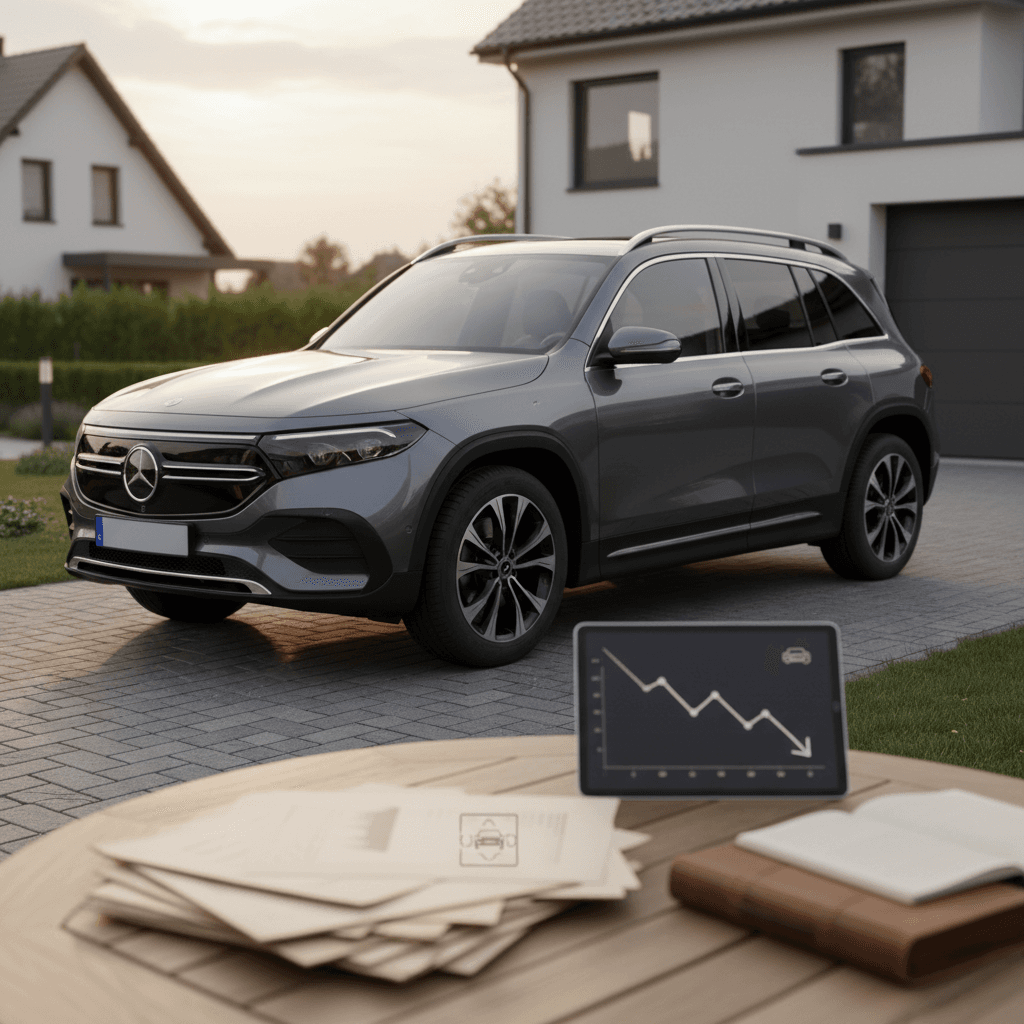
If you’re looking at a Mercedes EQB in 2026, whether you already own one or you’re shopping used, the uncomfortable question is resale value. Early Mercedes EQ models took some heavy depreciation hits, and shoppers want to know whether the compact EQB electric SUV is any different. This Mercedes EQB resale value guide for 2026 pulls together real-world pricing data, depreciation trends, and the factors that are actually moving values up or down.
At a glance
Why Mercedes EQB resale value matters in 2026
The EQB sits in a crowded field of compact electric SUVs, where incentives, rapid tech changes, and shifting demand have made resale value far less predictable than it is for gas models. In 2024–2025, many luxury EVs saw big price corrections, and aggressive lease support on new EQB models, often including thousands of dollars in bonus cash, pushed advertised lease payments down while quietly depressing used values a few years later.
If you’re a current owner, EQB resale value will shape whether you’re better off trading in, selling private party, or extending your ownership. If you’re a shopper, understanding depreciation can help you spot genuinely good deals versus cars that are cheap for the wrong reasons, like weak battery health or missing options.
Quick take: How the EQB is holding its value
Mercedes EQB resale snapshot for 2026
Why some owners feel it more
Current used Mercedes EQB prices in 2026
Used pricing moves month to month, but by early 2026 a clear pattern has emerged. Recent used model years of the Mercedes‑Benz EQB are clustering in the mid‑$40,000s on many large listing sites when you average across trims, with older, higher‑mileage examples falling well into the $30,000s.
Typical Mercedes EQB asking prices in 2026
Approximate retail asking ranges for common EQB model years and trims in the U.S. as of early 2026. Actual pricing will vary by region, incentives and condition.
| Model year | Typical mileage in 2026 | EQB 250+ asking range | EQB 300 4MATIC asking range | EQB 350 4MATIC asking range |
|---|---|---|---|---|
| 2025 | 5k–20k mi | $44,000–$50,000 | $46,000–$52,000 | $48,000–$54,000 |
| 2024 | 15k–30k mi | $38,000–$46,000 | $40,000–$48,000 | $42,000–$50,000 |
| 2023 | 25k–45k mi | $32,000–$40,000 | $34,000–$42,000 | $36,000–$44,000 |
| 2022 (early builds) | 35k–60k mi | $28,000–$36,000 | $30,000–$38,000 | $32,000–$40,000 |
Use these ranges as directional guidance, not exact valuation numbers for a specific vehicle.
MSRP context matters
Depreciation curve: What to expect in years 1–8
Like most EVs, the Mercedes EQB takes its biggest value hit in the first two to three years. Aggressive leasing, tax‑credit dynamics, and rapid improvements in range and charging speeds all push used prices down faster than in the gas GLB that the EQB is based on.
Years 0–3: The steep drop
- Immediate hit: Once titled, even low‑mile demo EQBs can shed 10–15% of MSRP.
- By year 2: Analyses have shown roughly 50%+ depreciation from MSRP is possible when buyers paid full sticker during the peak‑pricing era.
- Leased cars return: Off‑lease EQBs begin to hit the market, adding supply and pressuring prices.
Years 4–8: Flattening out
- Value stabilizes: Once the initial EV tech shock is priced in, depreciation tends to slow to more normal luxury‑SUV levels.
- Battery health matters more: Buyers focus heavily on range, degradation, and warranty remaining.
- Equipment gaps show: EQBs without features like adaptive cruise or larger screens take bigger late‑cycle discounts as expectations rise.
Think in dollars, not just percentages
Factors that move Mercedes EQB resale up or down
Key drivers of EQB resale value
What appraisers and informed buyers look for on a used electric Mercedes SUV
Region & climate
EQBs in colder climates or snow‑belt states often have higher miles on rougher roads but can also carry more demand for AWD 300/350 trims. Coastal sun‑belt cars may show less corrosion but more UV wear.
Battery & range
Buyers want to see healthy state of charge and realistic range. A car that can still match or nearly match EPA range numbers (accounting for weather) is worth more.
Service history
Documented dealer service, software updates, and any warranty repairs help de‑risk first‑generation EQ issues. Spotty records or unresolved warning lights hurt value immediately.
Accident & cosmetic condition
Luxury buyers are picky: paintwork, wheel rash, and interior wear move the needle. Clean Carfax/AutoCheck and a well‑detailed interior support top‑of‑market pricing.
Miles and usage pattern
Most EQBs showing 12k–15k miles per year are considered normal. Heavily highway‑driven commuter cars may have more miles but less interior wear than stop‑and‑go city use.
Remaining warranty
Mercedes’ EV battery warranty coverage (often 8 years / 100,000+ miles) is a major reassurance. EQBs closer to the warranty horizon will see sharper price negotiations.
Trim-by-trim: EQB 250+, 300 4MATIC, and 350 4MATIC
The Mercedes EQB lineup in the U.S. has typically centered on three powertrains: the front‑drive EQB 250+ and the dual‑motor EQB 300 4MATIC and EQB 350 4MATIC. All share the same basic battery architecture, but their performance, features, and perceived value differ.
Resale characteristics by EQB trim
How the main EQB trims typically fare on the used market in 2026.
| Trim | Original positioning | Resale strengths | Resale weak spots |
|---|---|---|---|
| EQB 250+ | Entry, FWD | Lower entry price when new; best efficiency numbers; attractive to city drivers who don’t need AWD. | Less winter traction appeal; some buyers view it as “less Mercedes” than the dual‑motor versions; can be harder to resell in snow‑belt regions. |
| EQB 300 4MATIC | Volume AWD | Sweet spot for many shoppers, AWD, adequate power, and more typical luxury equipment. | If heavily discounted when new, used pricing can look soft; mid‑spec cars without premium packages can feel bare next to rivals. |
| EQB 350 4MATIC | Top‑spec performance | Strongest acceleration; usually the best‑equipped examples; attracts buyers cross‑shopping Tesla Model Y Performance or Mach‑E GT. | Highest original MSRP; buyers may balk at paying near‑$50k for used examples if range and charging don’t feel competitive in 2026. |
Higher original MSRP doesn’t always translate into proportionally higher resale, equipment mix and buyer demand matter.
Which EQB trims seem to hold best?
Leasing incentives and how they distort resale
One reason EQB resale numbers look startling on paper is the aggressive support Mercedes has thrown at leases. In late 2024 and into 2025, it wasn’t unusual to see substantial lease bonus cash stacked on top of dealer discounts for EQB models, particularly in competitive EV markets.
- Lease customers were effectively paying far less than MSRP in real dollars.
- Two‑ and three‑year returns added a wave of low‑mileage EQBs into the used channel.
- Captive finance companies often set optimistic residual values, then eat losses at auction when the real market comes in lower.
Why this is good news for used buyers
Battery health and range: How much buyers care
For any used EV, battery health is the number‑one driver of long‑term value. The EQB hasn’t been on the road long enough for high‑mile, out‑of‑warranty pack failures to be common, but shoppers in 2026 are already asking hard questions about range and degradation.
Battery health signals that support EQB resale
Recent, verifiable range tests
A simple highway‑range log or trip‑computer photo showing realistic miles at typical speeds can reassure buyers that the EQB still behaves close to its original EPA estimates.
No DC fast‑charging abuse
An EQB that lived mostly on home Level 2 charging and used DC fast charge only for trips will usually be more appealing than a rideshare vehicle fast‑charged every day.
Clean diagnostics report
A third‑party battery health scan or a structured report like the <strong>Recharged Score</strong> gives shoppers a quantified view of pack condition instead of guesswork.
No persistent warning messages
Random, unresolved error messages or high‑voltage system warnings can scare away informed buyers and drag down offers even if the car still drives fine.
Where Recharged fits in
How the EQB compares to other used electric SUVs
Compared with the broader EV market, the EQB sits in an interesting middle ground. It doesn’t hold value like the strongest Tesla or Rivian nameplates, but it’s also not at the very bottom of the depreciation charts with some older luxury EVs that saw dramatic price resets.
EQB resale positioning vs other electric SUVs (2024–2026 trends)
Generalized view of how the EQB stacks up in resale behavior compared with popular electric SUVs.
| Model | Segment | Observed resale behavior | Used‑buyer appeal in 2026 |
|---|---|---|---|
| Mercedes‑Benz EQB | Compact luxury SUV | Roughly 50–60% retained value at 3 years; hit by early‑EV price corrections and incentives. | Strong brand cachet and premium interior, but range and charging speeds feel mid‑pack versus newest rivals. |
| Tesla Model Y | Compact EV SUV | Among the stronger resale performers, though not immune to Tesla’s own price cuts. | Dominant charging network access and strong demand keep used prices relatively firm. |
| Hyundai Ioniq 5 / Kia EV6 | Mainstream EV crossovers | Healthy resale overall; strong demand but more volume on the market by 2026. | Excellent fast‑charging and range help offset non‑luxury badge when used pricing is close. |
| Older luxury EVs (e.g., some EQE/EQS, Audi e‑tron) | Midsize/large luxury EVs | Many saw steep drops as MSRPs were cut and range expectations rose. | Attractive used bargains if you can live with earlier‑generation software and range. |
These are directional market impressions, not precise, model‑by‑model residual values.
Don’t overpay for the badge
Buying a used Mercedes EQB in 2026: Checklist
If you’re shopping a used EQB this year, your goal is to separate smart buys, where someone else paid for the steep early drop, from problem cars that will keep depreciating faster than average. Use this checklist to structure your search.
10 steps to a smart used EQB purchase
1. Verify original MSRP and discounts
Ask for the original window sticker or build sheet so you understand what the car cost new. A heavily discounted or lease‑supported EQB may not have lost as much value for its first owner as it appears.
2. Pull full vehicle history
Check for accidents, flood damage, lemon buybacks, or repeated service visits for the same issue. Multiple electrical or software‑related repairs can be a red flag on an EV.
3. Review charging behavior
Ask how the car was charged, mostly at home on Level 2, or constantly on DC fast charging? Frequent fast charging isn’t an automatic deal‑breaker, but it deserves a closer look at battery health.
4. Get an independent battery health report
Where possible, obtain a third‑party scan or a <strong>Recharged Score battery diagnostic</strong>. A good report turns vague seller claims about “great range” into data you can rely on.
5. Test real‑world range
On a test drive, reset the trip computer, drive a known loop at highway speeds, and compare energy use to displayed range. You’re looking for consistent, believable numbers, not perfection.
6. Inspect tires, brakes, and suspension
Heavy EVs like the EQB can go through tires and suspension components faster than light crossovers. Worn tires or noisy suspension can signal higher future ownership costs.
7. Confirm remaining factory warranty
Ask a Mercedes dealer to confirm in‑service date and remaining coverage for both the general and high‑voltage battery warranties. Cars close to their warranty horizon should be priced accordingly.
8. Evaluate software and feature set
Make sure all driver‑assistance features, cameras, and infotainment functions work as advertised. Missing or outdated software can hurt resale and day‑to‑day livability.
9. Compare against non‑EQB alternatives
Cross‑shop similarly priced EVs with more range or faster charging. If an Ioniq 5 or Model Y costs the same but offers better tech, the EQB should be discounted to compensate.
10. Ask for a Recharged Score when buying online
If you’re considering a used EQB through a digital retailer, look for platforms like <strong>Recharged</strong> that provide transparent battery health, pricing benchmarks, and EV‑specialist support end‑to‑end.
Selling or trading in your Mercedes EQB: Strategies
If you own an EQB today, your strategy should depend on how far along the depreciation curve you are and what kind of replacement you’re considering. The key question: are you still in the steep‑drop years, or has your EQB started to flatten out in value?
If your EQB is under 3 years old
- Expect softer trade‑in offers from dealers who have watched early EQs struggle at auction.
- Private‑party sale may yield several thousand dollars more if you can present strong battery and service documentation.
- Timing matters: listing just before peak spring or early‑fall buying seasons often brings more eyeballs and better offers.
If your EQB is 4–6 years old
- Depreciation has likely slowed, so the yearly cost to hold onto the vehicle may be lower than you expect.
- Strong battery health and clean cosmetics can help you stand out as newer EQ models arrive with updated tech.
- At this stage, you’re often better off extracting value by driving it longer, unless you’re moving to a significantly more efficient or longer‑range EV.
Three ways to sell your Mercedes EQB
How to play to the strengths of an EV with uneven resale reputation
Trade‑in at a dealer
Fast and simple, especially if you’re rolling into another Mercedes or a different EV. Expect conservative offers if the store is nervous about EQ inventory.
Private‑party sale
Best for maximizing price when you have excellent records, recent battery diagnostics, and time to handle showings and paperwork yourself.
Digital EV marketplace
Platforms like Recharged can provide an instant offer or consignment option, EV‑specialist support, and nationwide reach, helpful for matching niche EQB trims with the right buyer.
Use data to defend your price
Mercedes EQB resale FAQ
Common questions about Mercedes EQB resale value in 2026
Bottom line: Is the Mercedes EQB a smart used buy?
In 2026, the Mercedes EQB is a classic example of an EV that makes more sense used than new. Early buyers shouldered heavy depreciation as the market recalibrated, but that pain translates into opportunity if you’re shopping now. Provided you’re honest about the EQB’s mid‑pack range and charging speeds, a clean, well‑equipped EQB at the right price can be a comfortable, premium‑feeling electric SUV with a much lower real cost of entry than it had at launch.
Whether you’re buying or selling, your edge in this market is information: clear pricing benchmarks, verified battery health, and realistic expectations about how quickly EV tech is evolving. If you’d rather not navigate that alone, platforms like Recharged are built for exactly this moment, combining deep battery health diagnostics, fair‑market pricing, EV‑savvy financing, and flexible selling options to help you get the most from your Mercedes EQB in 2026 and beyond.