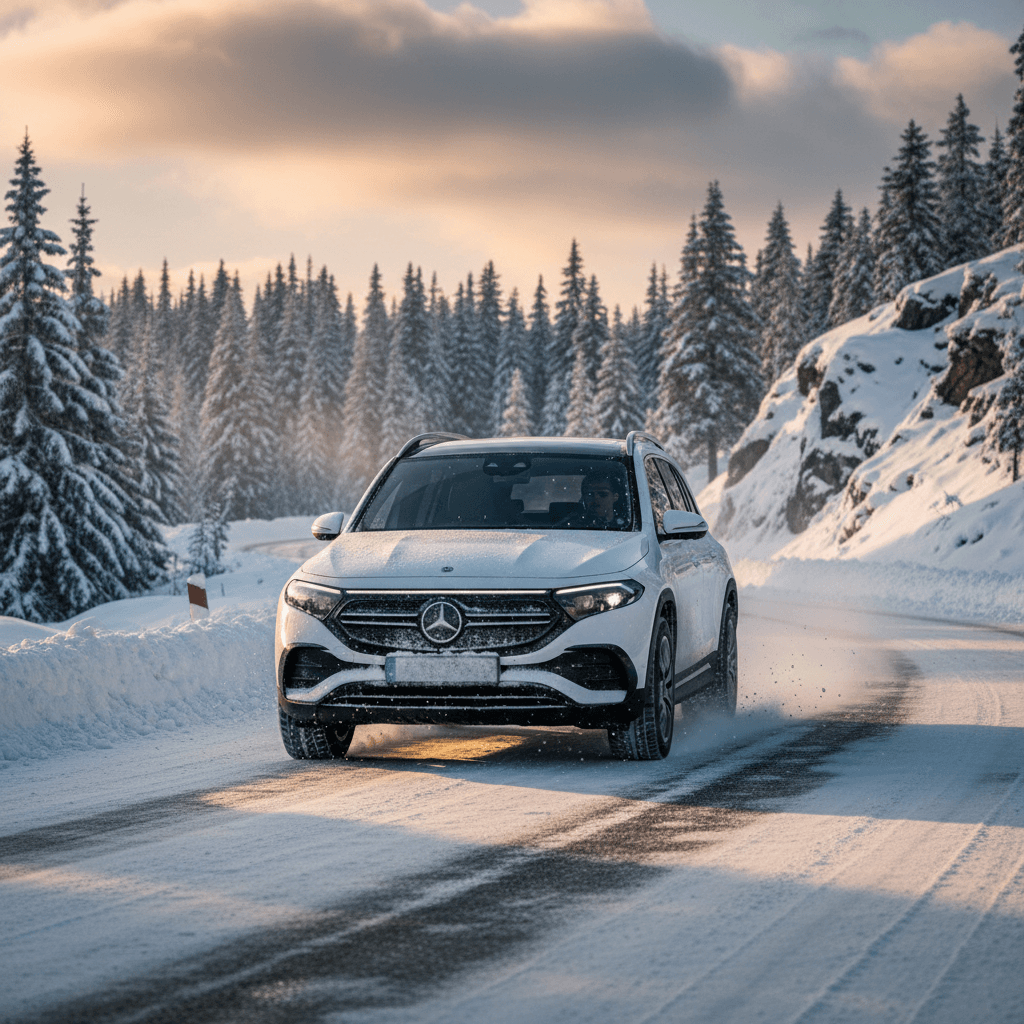
If you live where snow and ice are part of the calendar, you’re right to ask whether the Mercedes EQB is best for snow and ice or if you’d be better off with something else. The short answer: a properly equipped EQB can be a very competent winter vehicle, but only if you pick the right trim, tires, and expectations, especially around range.
Snapshot: EQB in Winter
Mercedes EQB in Snow and Ice: Quick Overview
How the EQB Handles Real-World Winter Use
Where it shines, where it struggles, and what’s on you as the driver.
Traction & Control
Dual‑motor 4MATIC EQB 300 and 350 trims deliver confident traction on packed snow and icy side streets when paired with quality winter tires. Electronic traction and stability systems react faster than you can with a steering correction.
Cold-Weather Range
Expect winter range to drop significantly versus the EPA rating. Owners routinely report losing 25–35% in freezing weather, and more in extreme cold, especially on the highway with heat running.
SUV Practicality
The EQB’s upright seating position, boxy body, and available third row make it a practical family winter hauler. But ground clearance is closer to a compact crossover than a rugged off‑road SUV, so deep unplowed snow is still a challenge.
In other words, the EQB can absolutely be a daily driver through winter storms, but you’ll want the right trim and setup if snow and ice are a regular part of your life.
Which Mercedes EQB Trim Is Best for Winter Driving?
In the U.S., the current Mercedes EQB lineup typically includes three main variants: the EQB 250+ (front‑wheel drive), EQB 300 4MATIC, and EQB 350 4MATIC. If winter weather is a priority, that 4MATIC badge on the tailgate matters more than the extra power numbers on the spec sheet.
EQB Trims Compared for Winter Use
How the main EQB variants stack up if snow and ice are part of your regular driving.
| EQB Trim | Drive Type | Power (Approx.) | EPA Range (Approx., mi) | Winter Confidence |
|---|---|---|---|---|
| EQB 250+ | Front‑wheel drive | 188 hp | 245–250 | Fair with winter tires; best for mild climates |
| EQB 300 4MATIC | Dual‑motor AWD | 225 hp | ~232 | Very good; balanced power and traction |
| EQB 350 4MATIC | Dual‑motor AWD | 288 hp | ~206 | Excellent grip; range trade‑off, especially in cold |
For winter confidence, focus less on 0–60 mph and more on driven wheels and tire choice.
Best All-Around Winter Choice
The front‑drive EQB 250+ can manage snow with proper dedicated winter tires and a light foot, but you’ll feel torque trying to tug the steering on slick surfaces. For drivers in places like the upper Midwest or mountain states, 4MATIC is the smarter long‑term bet.
EQB Winter Driving: Strengths and Limitations
Winter Strengths
- Fast-reacting traction control: Dual motors in 4MATIC models can shift torque between axles much more quickly than a mechanical system, helping you pull away smoothly on slick intersections.
- Predictable handling: Owners consistently report that the EQB feels planted in light to moderate snow, especially at city speeds and on plowed highways.
- Good weight distribution: The battery in the floor lowers the center of gravity, which helps stability on slippery surfaces.
- Strong driver-assist tech: Features like adaptive cruise, lane keeping, and blind‑spot assist reduce workload on long, dark winter drives when you’re already tired.
Winter Limitations
- Cold-weather range loss: Battery chemistry, cabin heat, and higher rolling resistance in snow all cut into usable range. You’ll need to plan more frequent charging stops in winter.
- Modest ground clearance: The EQB is more crossover than trail SUV. Deep, unplowed snow can pack under the car and leave you stuck sooner than in a tall off‑roader.
- Weight on all‑season tires: The EQB is heavy. On basic all‑season tires, that weight becomes a liability on ice; on proper winter tires, it becomes a stability advantage.
- No true off‑road mode: Unlike some larger Mercedes SUVs, the EQB doesn’t offer a dedicated OFFROAD setting or Downhill Speed Regulation focused on steep unpaved roads.
Don’t Rely on Electronics Alone
Cold-Weather Range: What You Can Really Expect
Official EPA ranges for the EQB, roughly 232 miles for an EQB 300 4MATIC and about 206 miles for an EQB 350 4MATIC, are measured in controlled conditions. In real‑world winter use, especially in places with sustained freezing temperatures, those numbers are optimistic.
Typical Range Impact for an EQB in Cold Weather
On owner forums, EQB drivers frequently report seeing only 150–170 miles of indicated range at 100% charge around 0–20°F, and less in extreme cold or on long, fast highway legs. That’s not a flaw specific to the EQB, it’s true of nearly every EV, but it’s something you must plan around if you’re taking winter road trips.
Precondition and Plug In
For a deeper breakdown of how Mercedes’ compact SUV behaves in different conditions, including cold‑weather testing, you can read Recharged’s dedicated 2024 Mercedes EQB range test. It translates lab ratings into what you can expect on your real commute or ski‑weekend drive.
Winter Tires, Wheels, and Ground Clearance
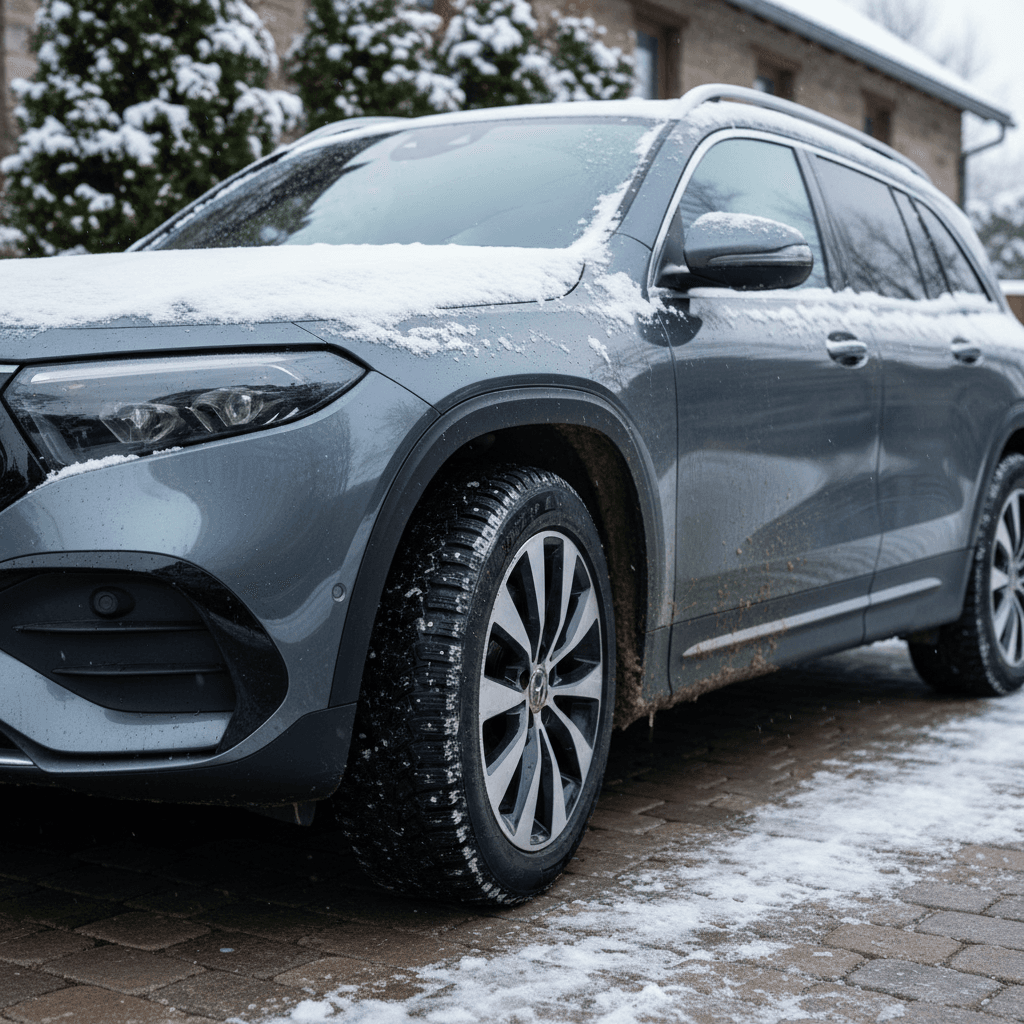
Whether the Mercedes EQB is “best for snow and ice” often comes down to one boring but critical choice: tires. All‑season tires harden up in the cold and lose grip just when you need it most. A good winter tire turns an already capable 4MATIC EQB into something that rivals, or even beats, many gas SUVs in bad weather.
- Look for winter tires with the mountain/snowflake (3PMSF) symbol, sized correctly for your EQB’s wheels.
- If your EQB came with 19- or 20‑inch wheels and low‑profile tires, consider a downsized winter wheel/tire package (for example, 18‑inch) to add sidewall and ride comfort.
- Check load and speed ratings to match the EQB’s weight and performance.
- Rotate winter tires every season and keep an eye on pressure; cold snaps will drop PSI noticeably.
What About Ground Clearance?
Best Drive Modes and Settings for Snow and Ice
Mercedes doesn’t give the EQB a dedicated "Snow" or "Off‑Road" button like some larger SUVs, but you still have helpful tools. The way you combine drive mode, regeneration level, and driver assists can make a noticeable difference on slick pavement.
Recommended EQB Settings for Snow and Ice
These are general guidelines, always follow your owner’s manual and adjust to road conditions.
Drive Mode: Comfort or Eco
Comfort softens throttle response and keeps things predictable. Eco can help on very slick surfaces by further taming power delivery, but may feel too sluggish for some drivers.
Regen: Moderate, Not Max
Strong one‑pedal regen can upset the car’s balance on ice when you lift off suddenly. Many EQB owners prefer medium regeneration in snow for smoother deceleration.
Assists: Use, Don’t Overtrust
Keep stability control and ABS fully on. Lane keeping and active steering can occasionally misread poorly marked snowy roads, be ready to override them with firm steering input.
Avoid Sudden Inputs
Driving Tips for EQB Owners in Snow and Ice
Practical Winter Tips for EQB Drivers
1. Build a Winter Range Buffer
In cold weather, plan trips assuming you’ll get <strong>60–70% of the EPA range</strong>, less if you’re driving fast into a headwind or climbing. On longer winter drives, aim to charge from about 10–20% back up to 70–80% more often instead of waiting for deep discharges.
2. Precondition Before You Drive
Use departure timers or app‑based preconditioning to warm the battery and cabin while plugged in. Your windows are clear, your seat is warm, and your battery isn’t being hammered as hard in the first miles.
3. Pack a Winter Kit
Include a snow brush, scraper, gloves, small shovel, portable phone charger, and warm blanket. An EV is comfortable when running, but if you’re stuck in traffic behind a closure you’ll be glad you’re prepared.
4. Mind the Charging Infrastructure
Not all DC fast chargers are well maintained in winter. Have <strong>backup charging options</strong> along your route and keep an eye on plug condition (snow in the connector, frozen cables) before you pull in with 2% left.
5. Use Hill Techniques Wisely
On downgrades, let regeneration do most of the work but be ready to ease onto the brakes if you feel the wheels slip. On steep, snowy climbs, carry a bit of momentum and avoid coming to a complete stop midway up a hill.
6. Clean Sensors and Cameras
Snow and slush can block parking sensors, cameras, and radar. Wipe them down during fuel‑stop‑equivalent charging breaks so driver assists continue to work properly.
City vs. Highway in Winter
Buying a Used Mercedes EQB for Winter Use
If you’re considering a used Mercedes EQB as a winter car, you’re actually in a sweet spot. The model’s been on the road long enough that real‑world winter behavior is well documented, and you can prioritize the trims and options that matter in snow without paying new‑car pricing.
Winter-Focused Shopping Checklist
- Prioritize 4MATIC EQB 300 or 350 if you see regular snowfall.
- Ask if the car includes a dedicated winter wheel-and-tire set, that can save you hundreds of dollars up front.
- Check underbody and wheel wells for signs of excessive corrosion or damage from deep snow and road salt.
- Confirm that charging ports and seals are clean and undamaged; road grime and salt build‑up around the charge door can cause headaches.
Why Buy Through a Specialist
A used EV is only as good as its battery and how honestly that battery’s health is represented. That’s where a specialist retailer like Recharged makes winter buying easier.
- Every vehicle includes a Recharged Score Report with verified battery health, so you know how much winter range you’re really working with.
- You can finance, trade in, or sell your current vehicle, and arrange nationwide delivery without leaving home.
- If you want to see how an EQB fits your life, you can visit the Recharged Experience Center in Richmond, VA, or complete the process fully online with EV‑specialist support.
Leaning Toward an EQB?
FAQ: Mercedes EQB in Snow and Ice
Common Questions About the EQB in Winter
Bottom Line: Should You Pick an EQB for Winter?
If you’re looking for an electric SUV that can comfortably handle snow and ice, the Mercedes EQB, especially in 4MATIC form with good winter tires, is a solid, confidence‑inspiring choice. It’s not a rock‑crawler and it won’t deliver its brochure range in January, but within those bounds it does what most families need: starts on slick driveways, tracks straight on plowed highways, and feels secure when the forecast turns ugly.
The key is to be honest about your climate and your driving. Choose the right trim, invest in proper winter tires, learn how the drive modes and regen feel on slick pavement, and give yourself more range margin in the cold. If you’re shopping used, partnering with a specialist like Recharged, with battery‑health reporting, financing, trade‑in options, and EV‑savvy support, can make sure the EQB you bring home is ready for many winters to come.