If you’re eyeing a quirky little electric crossover and have stumbled across the Mazda MX-30, your next Google search is probably “Mazda MX-30 safety rating crash test.” The styling is charming, the range is… modest, but what about protection for you and your family when things go wrong?
Quick safety snapshot
Mazda MX-30 safety overview
The Mazda MX-30 is a subcompact electric SUV sold in limited numbers in North America (primarily the 2022–2023 model years) and more broadly in Europe and other markets. Despite its small footprint and funky rear “freestyle” doors, it was engineered from the ground up as an EV and tuned to score well in modern crash tests.
- Built on Mazda’s Skyactiv-Vehicle Architecture with a rigid, impact‑absorbing body structure.
- Equipped with a full suite of active safety systems branded as i‑Activsense (Mazda’s driver‑assist tech).
- Holds the maximum 5‑star overall safety rating in both Euro NCAP (Europe) and NHTSA (United States) testing.
- Performs especially well in side-impact tests and child-occupant protection.
Note on model years
NHTSA crash test results (U.S.)
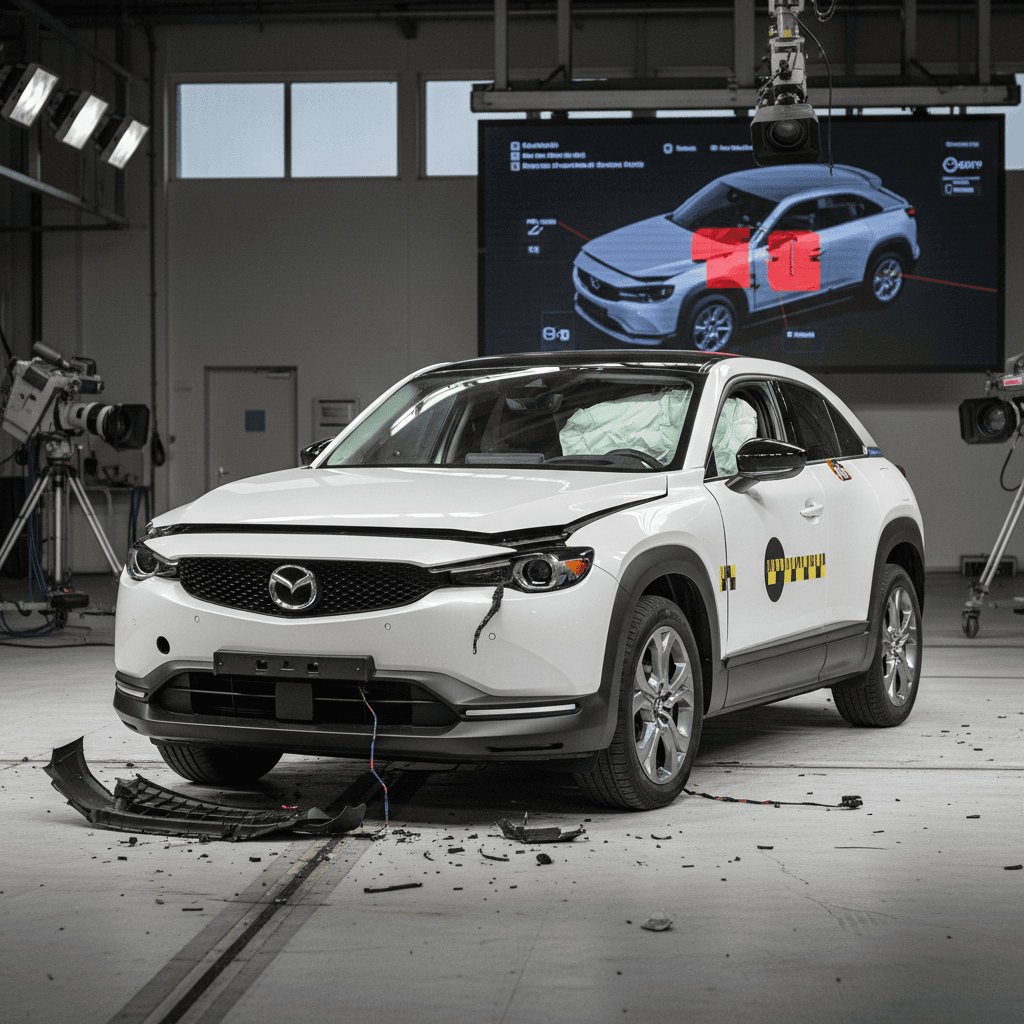
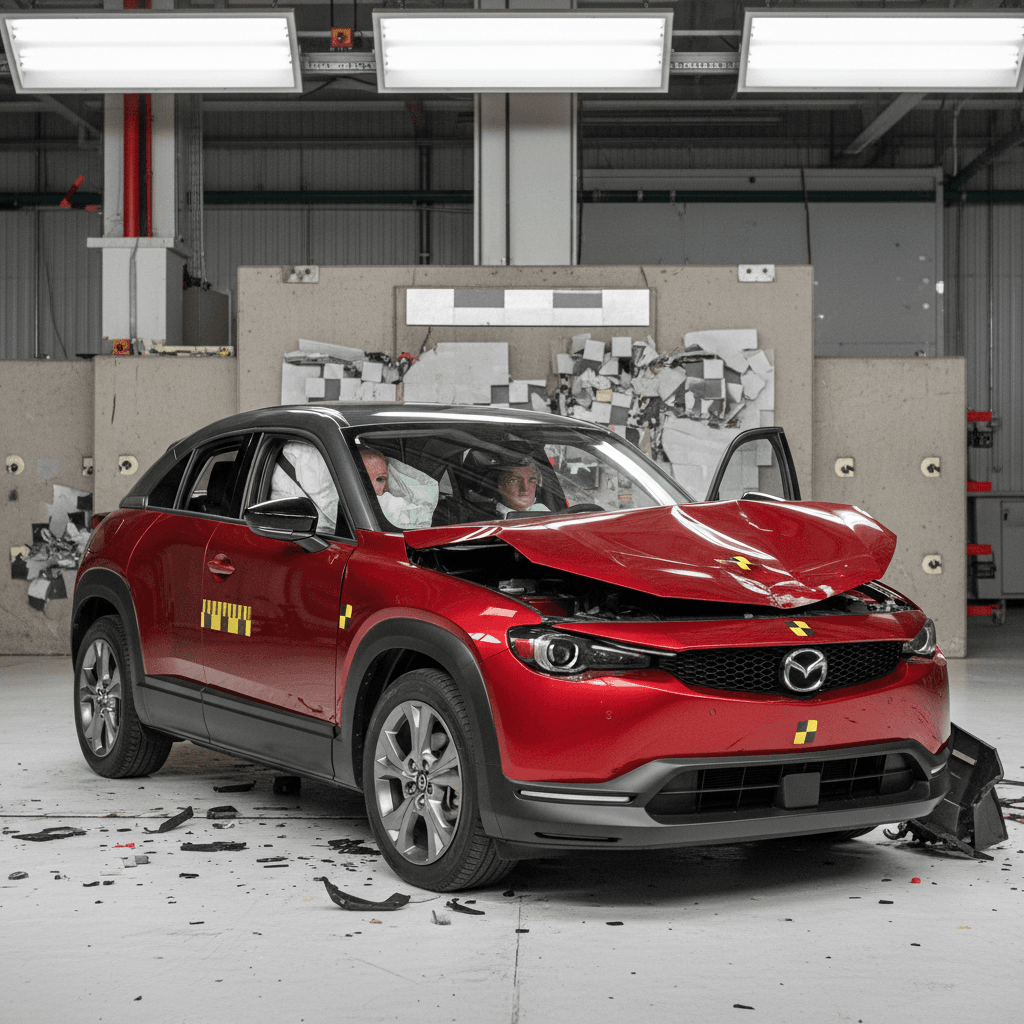
In the United States, the National Highway Traffic Safety Administration (NHTSA) tested the 2022 Mazda MX-30 and awarded it a 5‑star overall safety rating under its New Car Assessment Program.
Mazda MX-30 NHTSA crash test ratings
How the MX-30 scored in U.S. government crash testing.
| Test | Rating (out of 5) | Details |
|---|---|---|
| Overall Safety Rating | 5 | Top score across combined crash modes |
| Frontal Crash – Overall | 5 | 5 stars for both driver and front passenger |
| Side Crash – Overall | 5 | 5 stars in barrier and pole tests, front and rear seats |
| Rollover Resistance | 4 | 4 stars; typical for small crossovers with higher ride height |
Scores listed are out of 5 stars, with 5 being the highest possible rating.
How to read NHTSA stars
Euro NCAP safety rating (Europe)
Across the Atlantic, Euro NCAP tested the Mazda MX-30 under its stricter 2020 protocols, which emphasize occupant protection, post‑crash safety, and advanced driver assistance. The MX-30 again came away with a 5‑star overall Euro NCAP rating.
Mazda MX-30 Euro NCAP scores
Euro NCAP highlighted the MX-30’s strong side‑impact performance and good structural behavior in offset frontal tests. The quirky rear‑hinged back doors did not compromise safety; in fact, the car scored maximum points in certain side barrier and pole impacts with child dummies onboard.
Crash test performance: what the numbers actually mean
Frontal impact behavior
In both NHTSA and Euro NCAP testing, the MX-30’s structure performs predictably in frontal offset and full‑width impacts. The cabin remains largely intact, and measured forces on the dummy’s chest and legs fall into the “good” or “adequate” range.
- Minimal intrusion into the footwell and pedal area.
- Stable steering column, reducing risk of chest injury.
- Front airbags and seatbelt pretensioners working in concert.
Side impact and rollover
Side impacts are typically brutal for small crossovers, yet the MX-30 scores maximum points in side barrier and side pole tests in Euro NCAP procedures and full 5‑star side scores from NHTSA.
- Robust B‑pillar and side sills absorb energy effectively.
- Side curtain airbags extend the full length of the cabin.
- Rollover rating of 4 stars reflects a low but not negligible rollover risk, typical for its class.
About that 4‑star rollover score
Standard safety features on the Mazda MX-30
On paper, the MX-30 comes loaded with the kind of active and passive safety kit you now expect from a modern EV. Most of these systems were standard equipment on U.S.‑market MX-30s and widely available in other regions, though exact specs vary by trim and country.
Mazda MX-30 safety equipment highlights
From airbags to driver‑assist tech, here’s what’s doing the work behind those ratings.
Passive safety
- Front, side, and curtain airbags
- Front and rear crumple zones
- Reinforced cabin with high‑strength steel
- Whiplash‑reducing front seat design
Crash avoidance
- Automatic emergency braking with pedestrian detection
- Forward collision warning
- Blind‑spot monitoring and rear cross‑traffic alert
- Rear parking sensors and backup camera
Driver assistance
- Lane departure warning and lane‑keeping assist
- Adaptive cruise control (on many trims)
- Traffic sign recognition in some markets
- Stability and traction control systems
Good news for used‑EV shoppers
Real‑world safety considerations for MX-30 owners
Crash labs are controlled environments. Real life… not so much. Here’s how the MX-30’s design and limitations play out in everyday driving.
Where the MX-30 shines
- Urban crash profile: The MX-30’s short range naturally orients it toward city and suburban commuting, where speeds (and crash energies) are often lower.
- Excellent child protection scores: If you’re hauling little ones, those Euro NCAP child‑occupant numbers should be reassuring.
- Predictable handling: The low‑mounted battery pack helps keep the center of gravity in check, improving stability in quick maneuvers.
Tradeoffs to remember
- Limited rear visibility: The thick rear pillars and small back windows can make lane changes and parking trickier, rely on your mirrors and blind‑spot monitoring.
- Compact rear seating: Adults in the back sit close to the doors, so proper seat and head‑rest adjustment is key.
- Freestyle doors: Great for style, but they require a mindful opening routine in tight parking lots to avoid contact with passing traffic or cyclists.
Don’t let tech become a crutch
Buying a used Mazda MX-30: safety checklist
Because the MX-30 sold in relatively small numbers in North America, most examples you’ll see now will be used imports from lease returns or early adopters moving on. If safety is top of mind, as it should be, here’s how to size up an MX-30 on the test drive.
Safety checks before you buy a used MX-30
1. Verify crash test ratings for your market
Confirm whether the car you’re looking at aligns with <strong>NHTSA</strong> or <strong>Euro NCAP</strong> specs. U.S. buyers should focus on NHTSA’s 5‑star rating; European shoppers can lean on Euro NCAP’s 5‑star result.
2. Look for accident history
Pull a vehicle history report and inspect panel gaps, paint overspray, and windshield glass. A well‑repaired minor accident isn’t a deal‑breaker, but serious structural damage might compromise crash performance.
3. Confirm all airbags and sensors are intact
Turn the ignition on and verify that the airbag and stability‑control warning lights illuminate briefly and then go out. Any light that stays on, or never illuminates, deserves a professional diagnostic before you sign anything.
4. Test every driver‑assist feature
On a safe, low‑traffic route, gently test lane‑keeping, adaptive cruise (if equipped), blind‑spot warnings, and automatic emergency braking alerts. These systems should engage predictably, without random beeps or error messages.
5. Inspect tires and brakes
Crash tests assume healthy rubber and stopping hardware. Uneven tire wear, mismatched tires, or spongy brakes can lengthen stopping distances and upset the MX-30’s otherwise calm behavior in emergency maneuvers.
6. Check child-seat friendliness
If you’ll be installing child seats, bring one along. Verify that <strong>ISOFIX/LATCH anchors</strong> are accessible and that the unique rear doors don’t make day‑to‑day loading a chore.
How Recharged evaluates MX-30 safety and battery health
When a Mazda MX-30 comes through Recharged, we’re not just glancing at the crash test stars and calling it a day. We combine those lab results with a deep look at how each individual car has lived in the real world.
What our Recharged Score looks at on an MX-30
Safety ratings are the baseline; the vehicle’s actual condition is the story.
Structural & safety inspection
- Undercarriage and frame check for previous collision damage
- Airbag system scan and warning‑light verification
- Brake performance and tire condition assessment
Battery & high‑voltage health
- State‑of‑health diagnostics on the traction battery
- Charging behavior and DC fast‑charge history review when available
- Cooling system and high‑voltage cabling inspection
Documentation & history
- Service and recall completion checks
- Ownership and mileage verification
- Road test to confirm driver‑assist operation
Ready to find your next EV?
Browse VehiclesWhy this matters for you
If you find an MX-30 you love, on Recharged or elsewhere, our EV specialists can help you compare it with other safe, compact EVs and even arrange financing options tailored to used EVs and trade‑in support for your current car.
FAQ: Mazda MX-30 safety rating & crash test questions
Common Mazda MX-30 safety questions
Bottom line: is the Mazda MX-30 a safe EV?
The Mazda MX-30 is a bit of an oddball in the EV world: limited range, gorgeous cabin, suicide‑style rear doors. But when you strip away the design theater and look at the safety rating and crash test data, the picture is reassuring. This is a small electric crossover that consistently aces the big independent tests on both sides of the Atlantic.
If you’re shopping used, the homework shifts from, “Is the MX-30 safe in general?” to, “Is this specific MX-30 still in the same condition Mazda and the test labs assumed?” That’s where detailed inspections, recall checks, and transparent reporting matter. A well‑cared‑for MX-30 can be a safe, charming urban EV, just make sure the one you’re looking at lives up to its crash‑test résumé.
When you’re ready to move from research to short list, Recharged can help you compare used MX-30s with other highly rated EVs, review Recharged Score battery and safety data, line up financing, and even arrange nationwide delivery. Safety is the baseline; finding the right EV for your life is the fun part.