If you’re considering a Mazda MX-30, especially on the used market, cargo space is probably high on your checklist. The MX-30 is a compact electric crossover with stylish coupe-like lines, rear-hinged back doors and a relatively small battery, so it’s natural to wonder how much room is actually left for your luggage, groceries and weekend gear. This guide breaks down the Mazda MX-30 cargo space dimensions, what those numbers mean in the real world, and how it compares with other small EVs.
Quick takeaway
Mazda MX-30 cargo space overview
The MX-30 is built more for style and city use than for maximum cargo volume. Its sloping roofline, thick rear pillars and shallow load floor mean you don’t get the cavernous space you’ll find in a traditional boxy SUV. But the wide hatch opening and split-folding rear seats still make it more practical than most compact sedans and some small hatchbacks.
Mazda MX-30 cargo space at a glance
Note on numbers
Official Mazda MX-30 cargo space dimensions
Mazda sells the MX-30 in very limited numbers, and its cargo specs don’t always show up in every brochure. But broadly, it slots with other subcompact crossovers. For most shoppers, these are the numbers that matter:
Mazda MX-30 cargo volume (approximate)
Key Mazda MX-30 cargo space dimensions you’ll care about when shopping used.
| Configuration | Volume (cubic feet) | What it means |
|---|---|---|
| Behind rear seats | ~20–21 | Everyday trunk space with all seats in use. |
| Rear seats folded (to window line) | ~35–37 | More horizontal room for bulkier items, loaded to the bottom of the windows. |
| Rear seats folded (to roof) | ~40–41 | Maximum usable volume when you stack to the roof in the cargo area. |
| Under-floor storage | Small bin | Shallow compartment for charging cable and small items. |
All figures are approximate and based on commonly reported measurements for the U.S.-spec MX-30.
Why the range matters for cargo
How much stuff can the MX-30 really hold?
Specs are helpful, but you’re probably thinking in terms of grocery bags, suitcases and gear. Here’s what the Mazda MX-30 cargo space dimensions translate to in everyday use:
Real‑world Mazda MX-30 cargo capacity
From grocery runs to airport pickups, here’s what typically fits.
Grocery runs
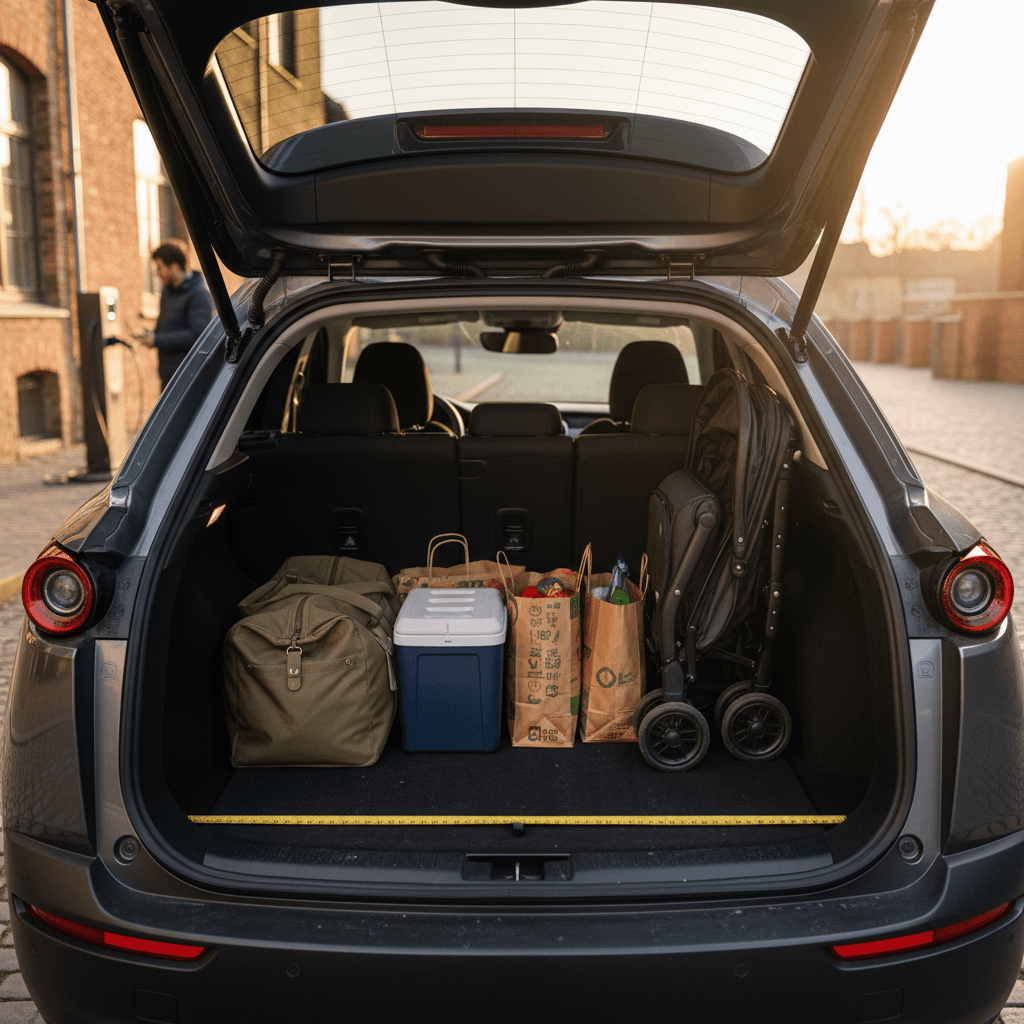
Behind the rear seats, you can usually fit:
- 10–12 standard grocery bags without stacking to the roof
- A couple of reusable crates plus a backpack or stroller frame
Airport & travel
With the rear seats up, expect:
- 2 carry‑on suitcases laid flat plus a couple of soft duffel bags
- Or 1 full‑size checked bag on its side plus smaller items
Pets & gear
For pets and sports gear:
- Medium dog crate with the rear seats folded
- Several gym bags, a stroller, or a couple of camping chairs
Soft bags beat hard shells
Mazda MX-30 cargo area measurements in detail
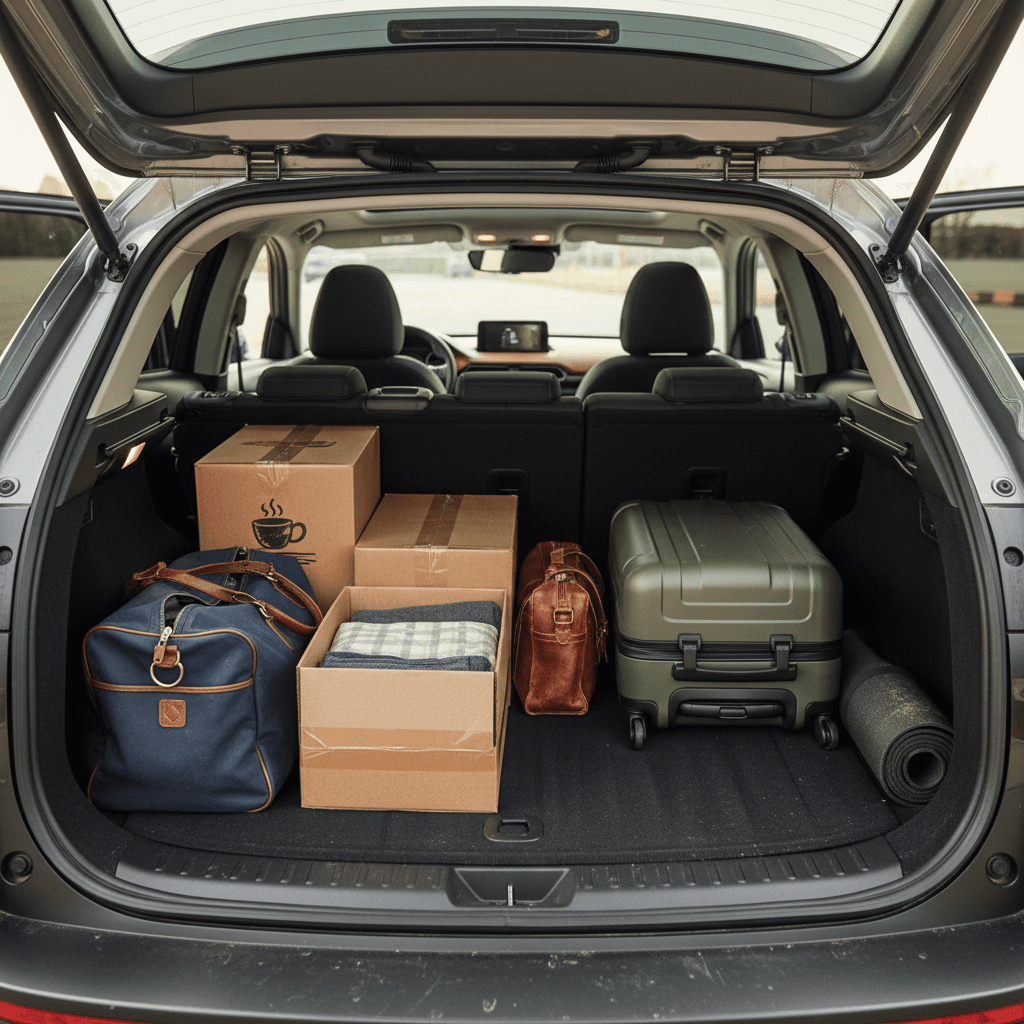
If you’re used to thinking in inches rather than cubic feet, it helps to visualize the MX-30 cargo space as a low, wide rectangle with some taper at the top near the rear glass. Exact figures vary by measurement point, but most owners experience something like this:
Floor and opening dimensions
- Load floor depth: a bit over 30 inches from hatch to rear seatbacks with seats up; around 60 inches to the front seats with the rears folded.
- Cargo width: roughly 40 inches between the narrowest points of the interior trim.
- Hatch opening: wide at the bumper but narrows slightly near the roof due to the MX-30’s sloping rear glass.
Height and usability details
- Cargo height: enough to stand a medium suitcase upright near the hatch, but taller items may need to go in sideways.
- Seatback angle: when folded, the rear seats don’t create a perfectly flat load floor, but the slight incline is manageable for boxes and luggage.
- Lip height: there’s a modest step from the bumper to the cargo floor, noticeable but not a deal breaker for most shoppers.
Mazda MX-30 cargo space vs other small EVs
On paper, the Mazda MX-30 sits on the smaller end of the EV crossover spectrum. If you’re cross‑shopping used EVs, it’s helpful to see how its cargo space stacks up against popular alternatives.
Mazda MX-30 cargo vs comparable small EVs (approx.)
How the MX-30’s cargo space compares with other small electric crossovers many used‑EV shoppers consider.
| Model | Behind rear seats (cu ft) | Max cargo (cu ft) | Cargo takeaways |
|---|---|---|---|
| Mazda MX-30 | ~20–21 | ~40–41 | Stylish and city‑friendly, but smaller than most rivals. |
| Hyundai Kona Electric | ~19–20 | ~45–47 | Similar behind‑seat space, slightly more when seats are folded. |
| Chevy Bolt EUV | ~16–17 | ~55 | Less space behind seats, but very generous with seats folded. |
| Kia Niro EV (1st gen) | ~18–19 | ~53 | Boxier rear end makes more of the space usable for bulky items. |
| Nissan Leaf (hatchback) | ~23–24 | ~30–32 | More behind‑seat room, but less max volume than some small SUVs. |
Figures shown are approximate "behind rear seats" volumes using common manufacturer data; exact numbers vary by source and measurement method.
Where the MX-30 makes sense
Everyday uses: groceries, kids and pets
Most MX-30 owners will use this EV as a commuter and errand‑runner. For those day‑to‑day tasks, the cargo space dimensions are usually a comfortable fit, but there are a few quirks to know, especially if you’re hauling kids or pets.
How the MX-30 handles daily hauling
1. Weekly grocery shopping
The trunk comfortably handles a typical family grocery run. Use the under‑floor bin for fragile items or bottles you don’t want rolling around, and soft trunks or totes to stack vertically against the rear seats.
2. Strollers and kid gear
Compact, foldable strollers fit fine with the rear seats up; larger travel systems may require folding one of the split rear seats. Consider a quick test fit if you’re shopping used and have bulky baby gear.
3. Pets in the cargo area
The low floor helps dogs hop in, but the sloped glass and limited height make tall crates tricky. Many owners use a soft-sided travel crate or a harness and barrier with a cargo liner to protect the fabric trim.
4. Car seats and rear access
The MX-30’s rear‑hinged freestyle doors make child‑seat access different from a normal SUV. With car seats installed, folding the rear seatbacks for extra cargo can be slower, so plan your layout ahead of time.
Watch the rear visibility
Road trips and weekend getaways in an MX-30
The MX-30’s range and DC fast‑charging limitations make it better suited for shorter trips than cross‑country adventures, but plenty of owners use it for weekend getaways. In those cases, how you pack matters more than the raw cargo number.
For two adults
- Fold one half of the 60/40 rear seat and pack two larger suitcases or duffels lengthwise.
- Use the remaining rear seat for a passenger and keep smaller bags on the seat or footwell.
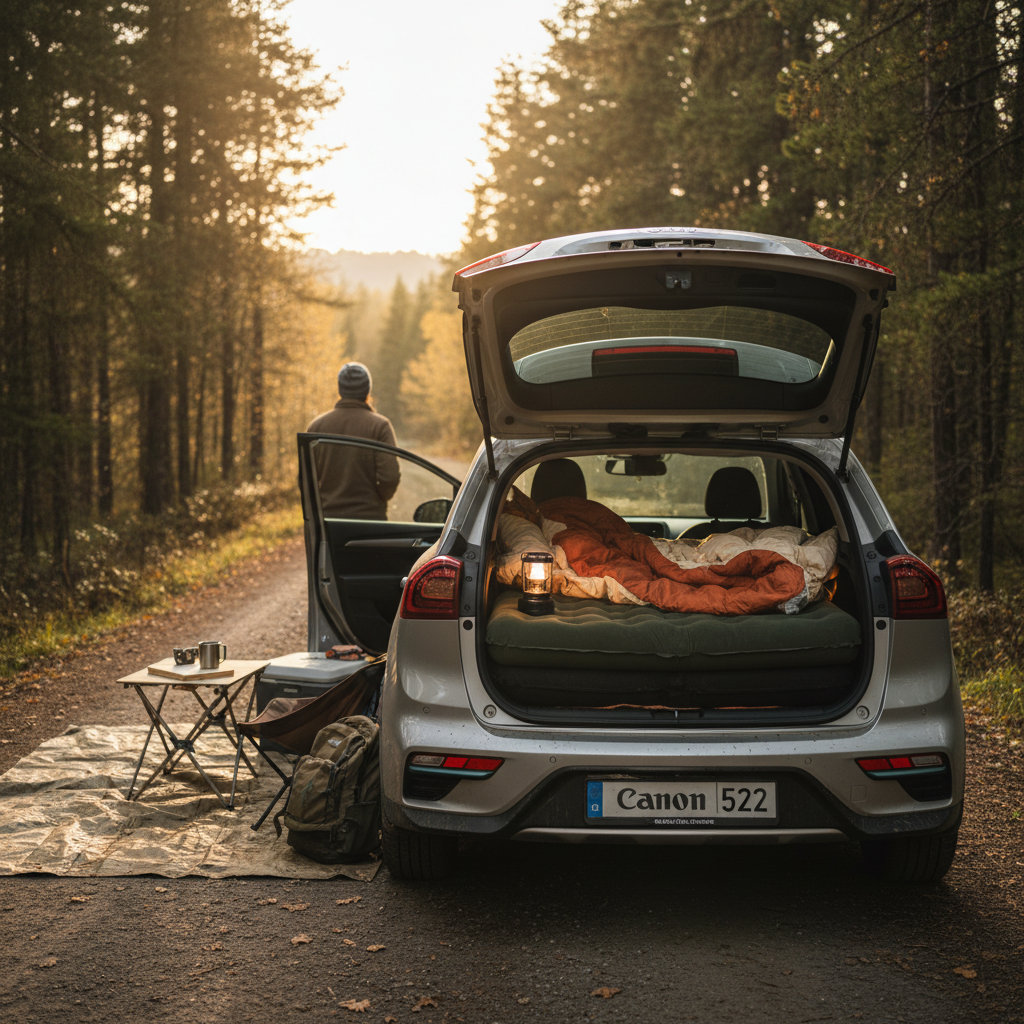
- Soft camping gear (sleeping bags, pads, tents) compresses nicely on top of hard luggage.
For a small family
- Plan on a mix of smaller, stackable bags instead of a few big suitcases.
- Roof‑mounted cargo boxes are possible if you need overflow capacity, but they add drag, important in an EV with limited range.
- Keep charging cables easily reachable so you’re not unpacking the cargo area at public chargers.
Pack around your charging stops
Tips to maximize Mazda MX-30 cargo space
If you decide the MX-30’s overall size fits your life, a few simple strategies can make its modest cargo dimensions feel more generous. Many of these apply to any small EV, but they’re especially helpful in Mazda’s compact layout.
- Use stackable storage bins that match the cargo floor dimensions; they keep gear from drifting and make it easier to load to the window line.
- Invest in a fitted cargo liner to protect fabric trim and make sliding items in and out smoother.
- Keep your charging cable and adapters in a compact bag stored in the under‑floor bin so they don’t steal space from everyday cargo.
- Fold only one side of the split rear bench when you need an extra‑long load floor but still want a rear passenger seat.
- If you’re tall and keep the front seats far back, test‑fit longer items like skis or flat‑packed furniture diagonally before committing.
Buying used? Look at the whole package
Is Mazda MX-30 cargo space right for you?
The Mazda MX-30 cargo space dimensions put it firmly in the "urban runabout" camp: more flexible than a sedan, less cavernous than a traditional small SUV. If your life revolves around commuting, coffee runs, gym trips and the occasional weekend away, and you like Mazda’s design‑forward approach, the MX-30’s trunk will probably feel just fine. If you regularly move big furniture, travel with a lot of gear or take long family road trips, you may want to look at roomier EVs like a Kia Niro EV or Chevy Bolt EUV instead.
As you shop the used EV market, treat cargo room like you would battery health or range: a key part of the decision, not an afterthought. Platforms like Recharged can help you compare used MX-30s against other small EVs, factoring in verified battery diagnostics, fair pricing and expert guidance so you end up with an electric crossover that fits both your life and your stuff.
Mazda MX-30 cargo space FAQ
Frequently asked questions about Mazda MX-30 cargo space
In a used‑EV market where shoppers focus heavily on range and battery health, everyday practicality like cargo room is increasingly becoming the tie‑breaker.