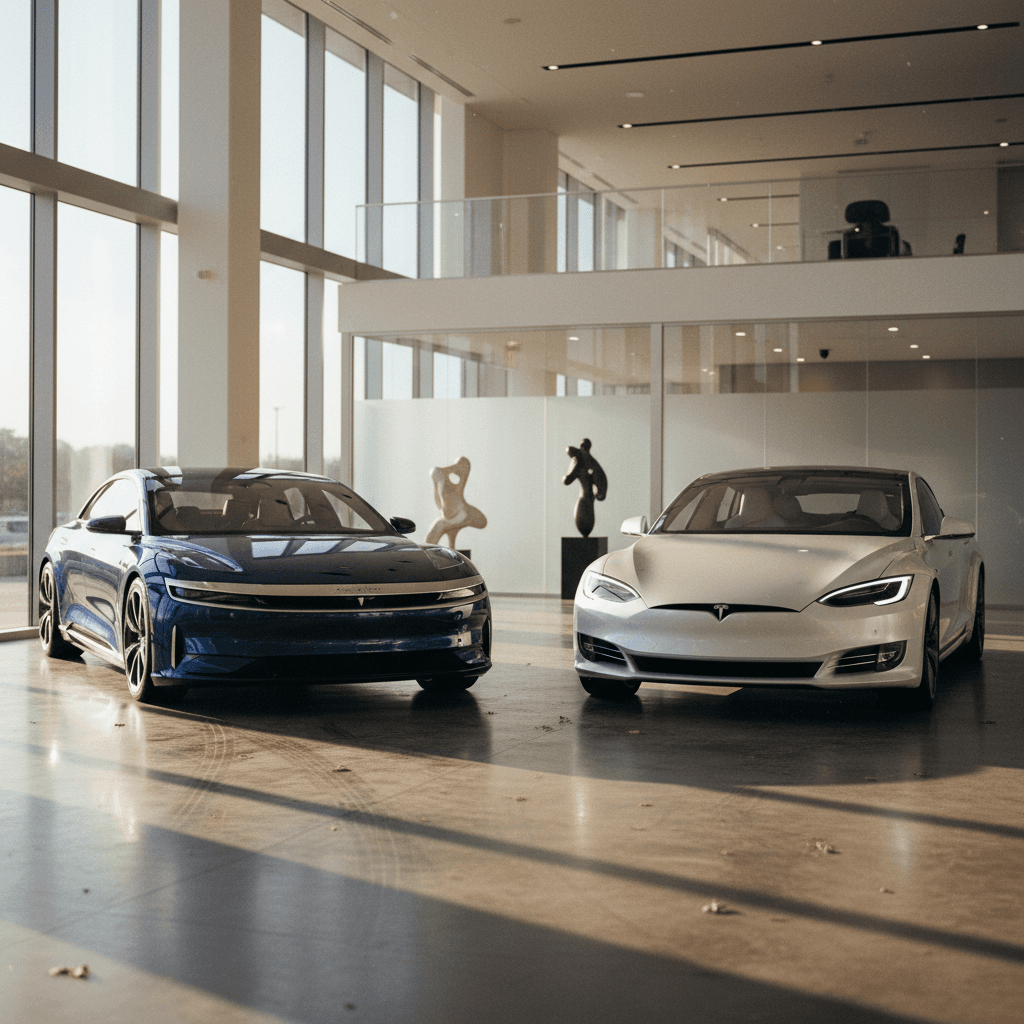
You don’t cross-shop the Lucid Air vs Tesla Model S unless you’re serious about a long‑range luxury EV. Both are quick, quiet, and wildly capable. But they solve the same problem in very different ways, and the right choice depends less on spec-sheet bragging rights and more on how you’ll actually live with the car.
Two luxury EV flagships
Lucid Air vs Tesla Model S: quick overview
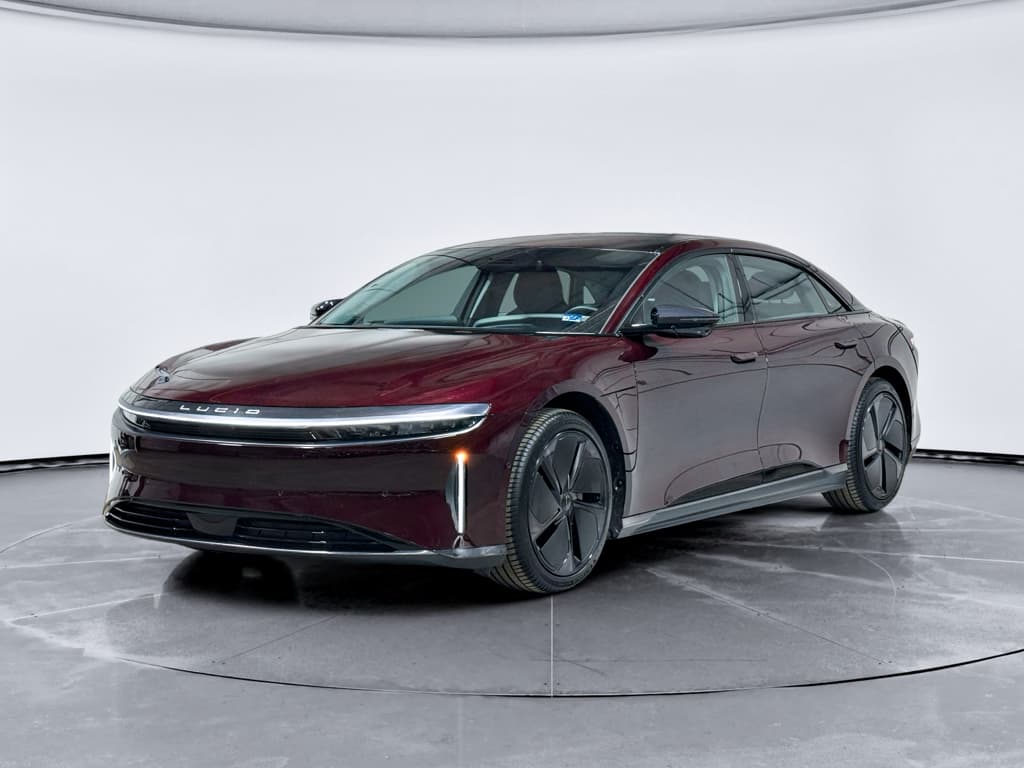
Lucid Air: the range and efficiency champion
- Multiple trims: Pure, Touring, Grand Touring, Sapphire.
- Known for segment‑leading EPA range, up to around 500+ miles on certain Grand Touring models.
- Ultra‑efficient drivetrain (around 5 miles per kWh on the newest high‑efficiency Air), with very fast DC charging up to ~300 kW.
- Spacious rear seat, airy cabin, and a more traditional luxury vibe.
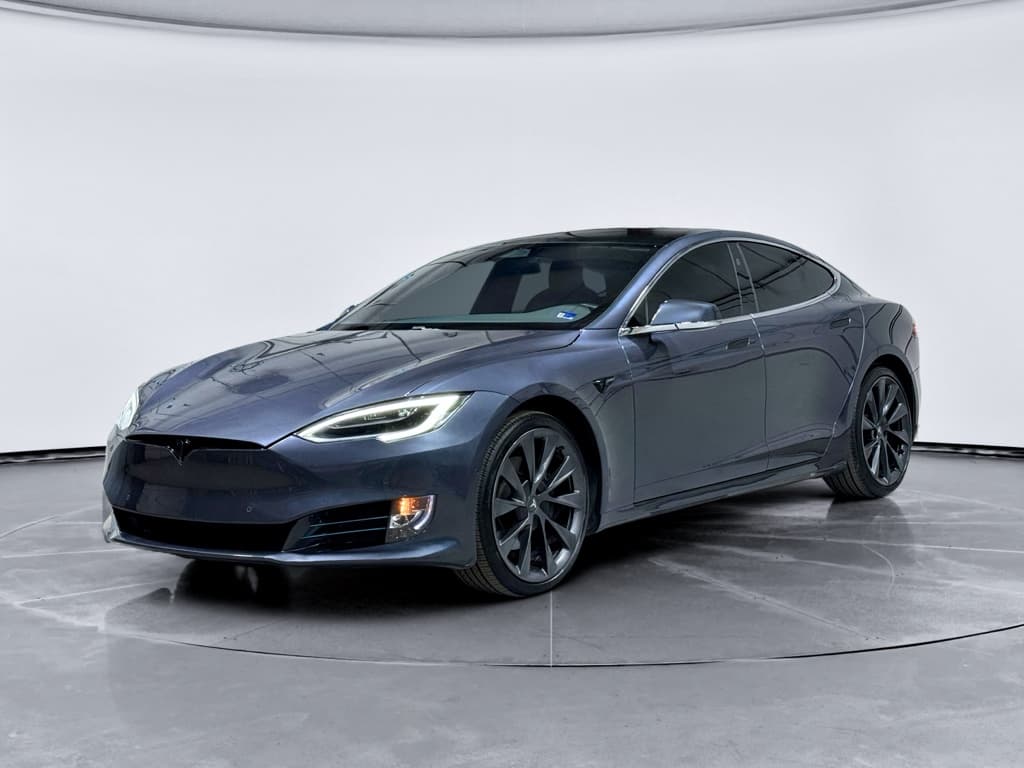
Tesla Model S: the all‑rounder with a network
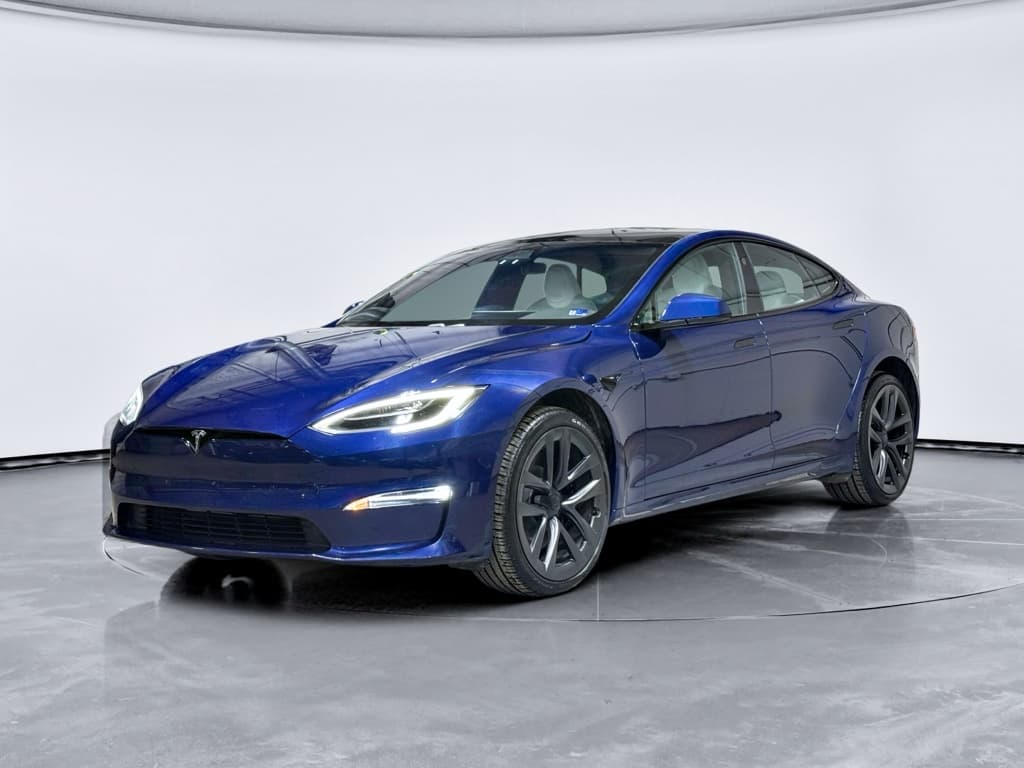
- Two main flavors in 2025: Long Range (dual motor) and Plaid (tri‑motor).
- EPA range up to ~410 miles for the latest Long Range updates, ~370 miles for Plaid.
- DC fast charging up to 250 kW on V3 Superchargers, with seamless route planning.
- Lower starting price than a comparable Lucid and a very mature software ecosystem.
Headline numbers: Lucid Air vs Tesla Model S (approximate)
Specs shift every model year
Range and efficiency: where Lucid pulls ahead
If you care about pushing a single charge as far as possible, the Lucid Air is still the benchmark. Upper trims like the Air Grand Touring have been EPA‑rated at over 500 miles of range, and Lucid has introduced a highly efficient lower‑capacity pack claiming roughly 5 miles per kWh and around 420 miles of range. The Model S Long Range tops out around 400–410 miles in its latest form, with real‑world efficiency closer to 3.6–4.0 miles per kWh depending on driving style and conditions.
Approximate EPA range comparison by representative trims
These are ballpark figures to illustrate positioning; always check the window sticker or EPA listing for a specific VIN.
| Model / Trim | Approx. EPA Range | Battery Size | Efficiency Character |
|---|---|---|---|
| Lucid Air Pure (RWD) | ≈419–420 miles | ~80–88 kWh | High efficiency daily driver |
| Lucid Air Grand Touring | Up to ≈516 miles | ~118 kWh | Longest‑range EV sedan on sale |
| Lucid Air Sapphire | ≈400+ miles (est.) | Large tri‑motor pack | Super‑sedan with serious range |
| Tesla Model S Long Range | ≈400–410 miles | ~100 kWh | Strong balance of range and price |
| Tesla Model S Plaid | ≈370 miles | ~100 kWh | Prioritizes brutal acceleration over max range |
Lucid focuses on absolute range and efficiency; Tesla trades a bit of range for price and performance.
How much range do you actually need?
In steady highway driving, independent tests have seen Lucid Air Grand Touring cars go 400+ miles at 75 mph, and the newer high‑efficiency variants are setting distance records in the hands of hyper‑milers. The Model S is no slouch, 400 miles is still excellent, but Lucid’s obsession with aerodynamics and in‑house drive units pays off when you stretch the battery to its limits.
Charging speed and real-world road trips
Charging is where numbers on a spec sheet can mislead. The Lucid Air can accept DC fast‑charge power up to about 300 kW, while the Model S tops out around 250 kW on Tesla’s V3 Superchargers. In perfect conditions, that means the Lucid can add more miles, more quickly, but the Tesla often makes trips easier because of how simple the Supercharger network is to use.
Charging comparison: speed vs convenience
Both are fast; one makes the planning nearly effortless.
Peak power vs total time
On paper, the Lucid Air’s 300 kW peak lets it sprint from 10–80% in roughly the low‑20‑minute range on a strong 350 kW DC fast charger. A Model S usually runs from about 10–80% in the mid‑20‑minute range when the battery is warm and you’re on a healthy Supercharger.
Network coverage
Lucid relies on third‑party networks like Electrify America and others. Coverage has improved, but reliability can vary station to station. Tesla’s Supercharger network remains the most expansive, tightly integrated with the car’s navigation, and generally very consistent.
Trip planning
In a Model S, you punch in your destination and the car automatically routes via Superchargers, preconditions the battery, and tells you exactly how long to stay. In a Lucid, the navigation can plan around DC fast chargers, but you’re still living with multiple networks, apps, and pricing schemes.
Home charging still does the heavy lifting
If your life is full of interstate miles, Tesla’s ecosystem is still the stress‑free choice. The Lucid Air’s faster peak charging and higher efficiency make each stop shorter and each kWh go farther, but you’ll want to be a little more proactive about planning which stations you trust.
Performance, driving feel, and comfort
No matter which side you choose, you’re getting serious performance. Lucid’s lineup ranges from brisk to outrageous, and Tesla’s dual‑motor and Plaid trims are still “laugh‑out‑loud” quick. You’re deep into supercar territory long before you reach the top of either range.
Representative performance snapshots
Exact numbers vary by year and wheel choice, but this gives you a feel for where these cars land.
| Model / Trim | 0–60 mph (approx.) | Drive Layout | Character |
|---|---|---|---|
| Lucid Air Pure | ≈4.5 sec | Single‑motor RWD | Smooth, quiet, more than quick enough |
| Lucid Air Touring | ≈3.5–3.8 sec | Dual‑motor AWD | Confident traction, big mid‑range punch |
| Lucid Air Grand Touring | ≈3.0 sec | Dual‑motor AWD | Effortless highway surge |
| Lucid Air Sapphire | ≈2.0–2.3 sec | Tri‑motor AWD | Track‑capable super‑sedan with insane thrust |
| Tesla Model S Long Range | ≈3.1 sec | Dual‑motor AWD | Instant torque, very strong everyday performance |
| Tesla Model S Plaid | ≈2.0–2.1 sec | Tri‑motor AWD | Drag‑strip king that still hauls the kids |
Both are wildly quick; your neck muscles are the limiting factor, not the car.
Ride and handling
- The Lucid Air leans toward luxury comfort: supple ride, excellent noise isolation, and a long‑wheelbase composure that makes rough pavement fade into the background.
- The Model S feels a bit more tied‑down and agile, especially in Plaid trim. It’s still comfortable, but the car communicates more of the road.
- Both offer adaptive dampers and multiple drive modes that let you soften things up for commuting or firm them for canyon carving.
Space and practicality
- Lucid uses its compact drive units to carve out excellent rear legroom, adult passengers can really stretch out.
- Model S counters with a fastback hatch and generous cargo room. If you haul bikes, strollers, or home‑improvement supplies, that hatch matters.
- Both offer large frunks for extra storage, but the Tesla’s long history means you’ll find more aftermarket storage solutions and accessories.
Either way, your gas car will feel old
Interior, tech, and user experience
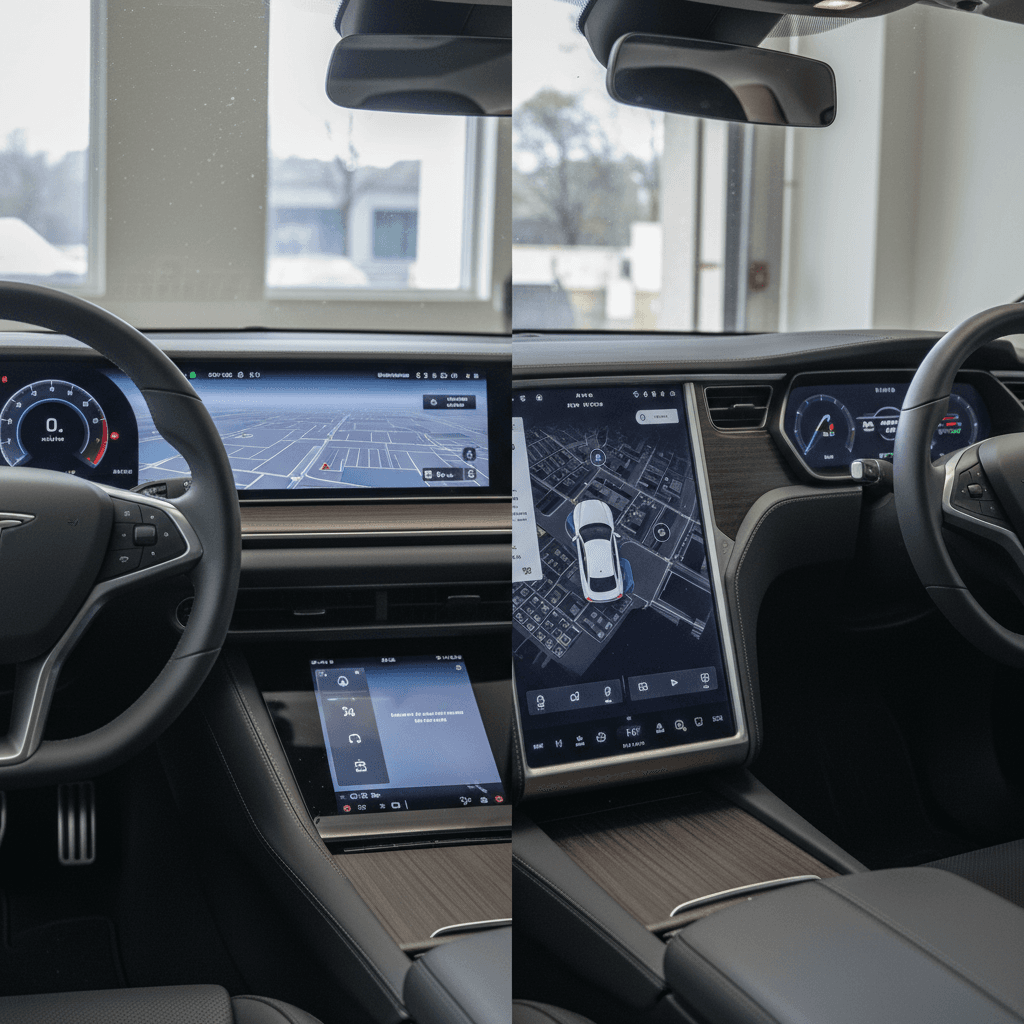
Sit in a Lucid Air and the first impression is “modern luxury sedan.” There’s rich material work, a sweeping glass cockpit display, and a separate lower touchscreen that tucks away. It feels like a high‑end lounge that just happens to be incredibly fast. The Tesla Model S, by contrast, is minimalist to the core: a big central touchscreen, sparse physical controls, and a yoke‑style wheel optional on Plaid models if you want to go full spaceship.
Tech approaches: immersive vs minimalist
Both are high‑tech, but they prioritize different things.
Lucid Air tech feel
- Instrument cluster and center screen work together; key controls stay on dedicated areas so you’re not hunting through menus.
- Supports modern conveniences like wireless Apple CarPlay and Android Auto, a big deal if you’re committed to your phone’s ecosystem.
- Lucid’s DreamDrive driver‑assist suite is strong on highway comfort, though it doesn’t try to be a self‑driving science experiment.
Tesla Model S tech feel
- Massive central screen dominates the cabin; nearly every function lives in software.
- Native navigation and route planning tightly integrated with the Supercharger network, still the benchmark here.
- Autopilot and optional Full Self‑Driving add advanced driver‑assist features, though capability and behavior change frequently with software updates.
Know your tolerance for touchscreens
Price, value, and the used EV market
New for new, a Lucid Air generally costs more than a comparable Tesla Model S. But by 2025, both are showing up in meaningful numbers on the used market, and that’s where things get interesting for value‑hunters.
Typical 2024–2025 pricing snapshots (new MSRP ballpark)
These are rough starting prices for context; incentives, options, and regional differences apply.
| Model / Trim (recent years) | Approx. New MSRP | Used Market Trend |
|---|---|---|
| Lucid Air Pure | Low–mid $70,000s when new | Early cars now often in the $40,000s with low miles |
| Lucid Air Touring | High $70,000s–$80,000s+ | Used prices can be dramatically lower than MSRP |
| Lucid Air Grand Touring | Low $110,000s+ | Drops quickly; big spread between new and used |
| Tesla Model S Long Range (AWD) | Mid–high $80,000s+ after recent price bumps | Used values more stable; wide selection from multiple years |
| Tesla Model S Plaid | Around $100,000+ new | Still strong demand; used prices hold relatively firm |
Tesla usually wins on upfront price; Lucid can be a screaming deal used because of early depreciation.
Depreciation dynamics
This is where a platform like Recharged can tilt the scales in your favor. Every used EV listed includes a Recharged Score Report with verified battery health, transparent pricing against the current market, and expert guidance so you understand exactly what you’re getting, whether it’s a first‑run Lucid Air or a higher‑mileage Model S that’s spent years on Superchargers.
Ownership experience, support, and reliability
Tesla has had a decade‑plus head start building out service centers, mobile service, and independent specialists who know these cars inside and out. Lucid is much newer, with a smaller footprint of service locations and fewer third‑party shops familiar with its hardware and software. That shows up in day‑to‑day ownership in very practical ways.
- Tesla Model S: You’re more likely to find a service center or independent EV shop within a couple of hours’ drive. Parts availability and repair playbooks are well‑established, and over‑the‑air updates have ironed out many early quirks.
- Lucid Air: Owners rave about the driving experience, but you may wait longer for parts or travel farther for service, depending on your region. Software has matured rapidly, yet you’re still buying into a younger ecosystem.
- Warranties: Both offer competitive battery and drivetrain warranties (often 8 years with mileage caps). But in the used market, you want to know exactly how much coverage is left and whether any factory recalls or campaigns have already been addressed.
Don’t skip the battery health check
Which EV fits which kind of driver?
Lucid Air vs Tesla Model S: buyer profiles
Match the car to the way you actually live, not just the headline numbers.
Lucid Air is a better fit if…
- You want the longest possible range in a luxury EV sedan and will actually use it on road trips.
- You care deeply about cabin comfort and rear‑seat space, think clients, teens, or adult friends in the back.
- You’re willing to put up with a younger service network in exchange for cutting‑edge efficiency and design.
- You’re shopping used and see a big price drop on a low‑mileage Air compared with a similar‑year Model S.
Tesla Model S is a better fit if…
- You road‑trip frequently and want the simplest charging experience possible via the Supercharger network.
- You want proven reliability, broad community support, and lots of real‑world data on long‑term ownership.
- You prefer Tesla’s minimalist, software‑centric interface and rapid over‑the‑air updates.
- You’re value‑conscious and want a luxury EV that balances range, performance, and price without going deep into six figures.
How to shop smart for a used Lucid Air or Tesla Model S
Used Lucid Air / Tesla Model S buying checklist
1. Start with your use case, not the badge
Write down how many miles you actually drive in a typical day, how many true road trips you take in a year, and whether you have (or can add) home charging. That will narrow Lucid vs Tesla, and trim level, fast.
2. Verify battery health and DC fast‑charge history
Ask for a recent battery health report and pay attention to how often the car fast‑charged vs home‑charged. High‑mileage Supercharger or DC‑fast use isn’t a deal‑breaker, but it should be priced in. Recharged’s battery diagnostics and Recharged Score put this data front and center.
3. Check remaining warranty and recall status
Look at the in‑service date and mileage to see what’s left on the battery and powertrain warranties. Confirm that all open recalls or service campaigns have been completed, especially on early Lucid Airs and pre‑refresh Model S vehicles.
4. Inspect interior wear and software features
On both cars, software defines a lot of the experience. Make sure the infotainment system, driver‑assist features, and app connectivity work exactly as described. Look for seat, trim, and screen wear that could hint at rough use.
5. Consider resale and future support
If you tend to keep cars only a few years, Tesla currently has the edge on resale and buyer familiarity. If you plan to hold onto the car for a long time, a well‑priced Lucid with strong battery health can deliver a lot of luxury per dollar.
6. Lean on EV‑specialist support
A general used‑car lot might not know how to evaluate high‑voltage systems, software, or charging history. Buying through an EV‑focused retailer like <strong>Recharged</strong> gives you access to specialists, transparent pricing, nationwide delivery, and an Experience Center if you’d like to see vehicles in person.
Lucid Air vs Tesla Model S: frequently asked questions
FAQs: Lucid Air vs Tesla Model S
Bottom line: range king vs everyday hero
Line up the Lucid Air vs Tesla Model S and you’re really choosing between two different interpretations of the same idea. Lucid is the range and efficiency king with a cushy cabin and astonishing long‑legged performance. Tesla is the everyday hero: easier to charge, easier to service, easier to understand if this is your first EV.
If you’re a long‑distance driver who wants to go as far as possible on each charge, and you don’t mind being an early adopter, Lucid makes a compelling case, especially in the used market where early depreciation works in your favor. If you want the smoothest path into EV ownership, from charging to software to resale, the Model S remains hard to beat.
Whichever way you lean, buying through Recharged adds a layer of confidence that spec sheets can’t. With battery‑health diagnostics, fair market pricing, financing, trade‑in options and EV‑specialist guidance from first click to delivery, you can focus on choosing the car that truly fits your life, and let us sweat the details under the floorpan.