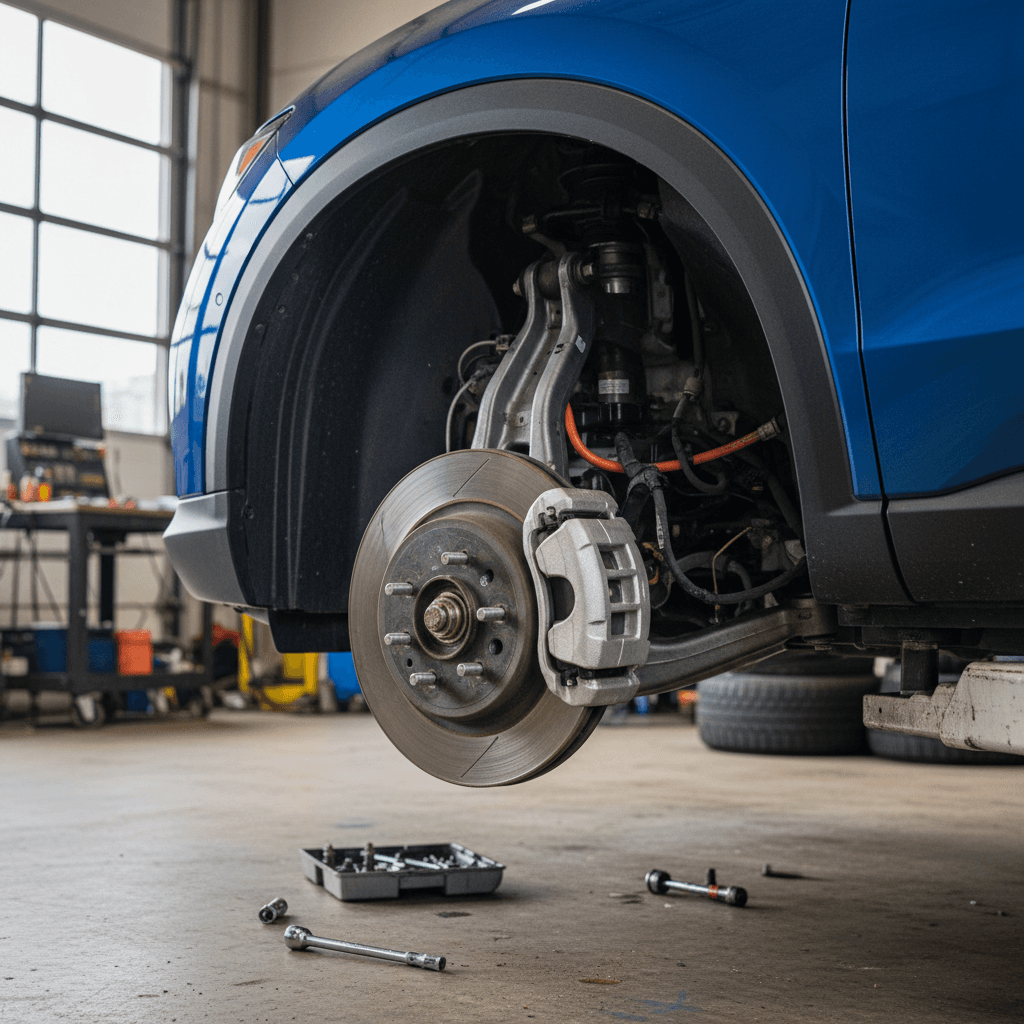
The Lexus RZ is Lexus’s first dedicated battery‑electric SUV: quiet, comfortable, beautifully trimmed, and, in its early years, a bit of a **half‑baked EV**. If you’re looking up Lexus RZ common problems and fixes, you’ve probably already heard about the modest range and fussy charging. The good news? Most of the big pain points are now well‑understood, and many have clear workarounds or dealer fixes, especially if you’re shopping a used RZ through a specialist like Recharged.
Model years this guide covers
Lexus RZ problems: what owners actually complain about
On paper, the RZ inherits Lexus’s reputation for reliability. In practice, as a first‑generation EV, it has its own set of recurring themes. Owner forums, early long‑term tests, and repair data point to these **most common Lexus RZ problems**:
- Real‑world range well below the EPA rating, especially in cold or hot weather, leading some owners to worry about early battery degradation.
- Slow or inconsistent DC fast charging speeds, with sessions sometimes stuck far below the advertised peak rate.
- A relatively weak onboard charger on early cars, making Level 2 home charging slower than rivals.
- Software quirks: range “guess‑o‑meter” swings, laggy infotainment, frozen screens, and a sometimes‑buggy companion app.
- Occasional drivetrain issues, like torque‑vectoring warning messages or odd motor noises, usually resolved via software updates or part replacement.
- Everyday annoyances: fast tire wear, creaks in the dash or doors, and finicky charging‑port doors.
How Recharged helps with first‑gen EV quirks
Problem 1: Disappointing real‑world range and perceived battery loss
The headliner complaint with the Lexus RZ is **range that feels smaller than the brochure promised**. Early 450e models were EPA‑rated around 220 miles depending on wheels, yet many owners report seeing 150–180 miles on the dash, and less in winter or at highway speeds. Some drivers have watched the displayed full‑charge range fall by 20–30 miles within the first year and assumed the battery itself is failing.

What’s actually going on with RZ range
Three different things get conflated here: the EPA test cycle, the car’s own algorithm, and real‑world physics. The RZ uses a relatively modest‑capacity battery for its size, and the platform is shared with the Toyota bZ4X and Subaru Solterra, both of which are also known for underwhelming range. Owners regularly report scenarios like driving 60 miles and seeing 100 miles disappear from the display, especially with A/C or heat running.
- The **"guess‑o‑meter"** uses your recent driving and climate control behavior, so the number can drop quickly after a few fast or cold‑weather trips.
- The heat pump and HVAC draw a lot of power in extreme temperatures, carving a visible 15–25% chunk out of range in winter, and sometimes even in hot weather.
- High speeds (75–80 mph) hit the RZ harder than some rivals, because its aerodynamics and gearing were tuned more for refinement than hyper‑miling.
Is the battery really degrading?
So far, documented cases of **true, out‑of‑spec battery degradation** on the RZ are the exception, not the rule. What most owners are seeing is a mix of software estimation, seasonal variation, and driving style. A few anecdotal reports mention higher‑than‑expected loss (around 15% after ~30,000 miles), but that’s not representative of the fleet. Still, because the RZ is a first‑gen EV, long‑term data is limited, and that uncertainty is exactly why you want an independent battery health readout when buying used.
When to worry about RZ battery health
Owner‑friendly fixes and best practices
Simple ways to improve Lexus RZ range
Use Eco mode and moderate speeds
The RZ is very sensitive to highway speed. Keeping it closer to 65–70 mph instead of 75–80 can add 15–25 miles of usable range on a full charge.
Mind HVAC and seat heaters
In extreme temperatures, pre‑condition the cabin while plugged in and lean on seat and wheel heaters rather than blasting cabin heat. In summer, use moderate A/C instead of LO with Max fan.
Keep charge between ~20–80% for daily use
Like most EVs, the RZ’s battery prefers not to live at 100% or 0%. Daily use in the 20–80% window, reserving full charges for trips, is a good compromise for longevity.
Check for software updates
Lexus has issued updates that refine range estimation and thermal management. Ask the dealer (or a seller) for proof that all TSBs and software campaigns are current.
Get a third‑party battery health test
If you’re buying used, request a proper State of Health (SoH) test, something <strong>Recharged</strong> includes in its <strong>Recharged Score</strong> so you see real capacity vs. factory spec.
Problem 2: Slow or inconsistent DC fast charging
If the range doesn’t get you, charging speed might. On paper, early RZs promise up to **150 kW DC fast charging**, already behind the 200–250 kW peak many newer rivals post. In real‑world testing, reviewers have often seen peaks closer to 90–110 kW, and some owners complain of painfully slow sessions that never climb above 30–50 kW and taper early.
Typical RZ DC fast‑charging complaints
- Charging from ~10–80% taking significantly longer than expected, even 45–60 minutes in some conditions.
- Charge rate plateauing well below the advertised 150 kW and dropping under 10 kW before 90% state of charge.
- Charging sessions that ramp up normally but then slow dramatically in cold weather or on repeated fast‑charge days.
- A mismatch between what the station reports and what the Lexus app or dash shows.
What’s normal vs. abnormal
Possible causes and fixes
Why your Lexus RZ might be charging slowly
And what you can realistically do about it
Battery temperature
If the pack is cold (winter) or very hot (after repeated fast charges), the RZ will throttle power.
- Drive 10–20 minutes before DC charging in cold weather.
- Avoid back‑to‑back DC sessions when possible.
Outdated software
Lexus has pushed updates to smooth charging curves and fix bugs.
- Ask a dealer to confirm latest firmware.
- For used cars, make software status part of your inspection.
Station limitations
Not all stations can really deliver their advertised power.
- Try a different brand or another stall.
- Compare the station’s screen vs. what the car reports.
Trip‑planning tip for RZ road trips
Problem 3: Home charging limitations and onboard charger quirks
Compared with rivals, early Lexus RZ models use a relatively modest **6.6 kW onboard charger** for AC Level 2. While that’s functional, it’s slower than the 9.6–11 kW units found in many newer EVs. Later RZ updates move toward 11 kW, but most used examples on the market today will still be the 6.6 kW crowd.
What this means in your driveway
- On a 40‑amp Level 2 home charger (derated to 32A continuous), you’re looking at roughly 20–25 miles of range added per hour instead of 30+.
- A full 0–100% charge can easily take overnight, particularly in cold weather when the car may spend extra energy warming the pack.
- Some owners mistake this for a charger problem when it’s really just the onboard hardware’s ceiling.
Home‑charging best practices for the RZ
How to get the most from home charging
Install a proper Level 2 charger
If you’re coming from a plug‑in hybrid, upgrading from a 120V outlet to a 240V Level 2 unit is transformative. A professional installation is strongly recommended for safety.
Size your charger realistically
There’s no benefit in buying a 19 kW wallbox for a 6.6 kW car. A well‑made 32–40A Level 2 charger is plenty for an RZ.
Use scheduled charging
Set the RZ to charge overnight during off‑peak electric‑rate windows. That keeps your costs down and gives the pack time to pre‑condition quietly.
Check for charging‑port door or latch issues
Some owners report stiff or misaligned charge‑port doors. The fix is usually a quick adjustment or small parts replacement at the dealer.
Problem 4: Software, infotainment, and app glitches
As with almost every modern EV, many **Lexus RZ problems live in software**, not hardware. Owners have reported frozen or laggy infotainment screens, random reboots, flaky Bluetooth or CarPlay connections, and a Lexus app that doesn’t always log charging sessions correctly.
Common Lexus RZ software complaints
- Infotainment screen freezing during navigation or phone calls, sometimes requiring a full vehicle restart.
- System randomly rebooting while driving, briefly interrupting audio and navigation (annoying, more than dangerous).
- Apple CarPlay / Android Auto connection drops, especially with cheap wireless adapters.
- The Lexus app missing parts of fast‑charge sessions or showing incorrect history and range.
When a glitch becomes a safety issue
Fixes: from easy resets to dealer updates
At‑home troubleshooting
- Hard reset the infotainment: Consult the owner’s manual for the button combo or menu path to reboot the system without shutting the whole car down.
- Clear paired devices: Delete old phones and Bluetooth accessories; re‑pair only the main devices you actually use.
- Update maps and apps: Make sure navigation and Lexus software are on the latest consumer versions.
When to see the dealer
- Persistent freezing or reboots even after a reset often indicate a deeper software bug or failing module.
- OTA update problems (like new bugs appearing after an update) may need a full dealer reflash.
- If you’re buying used, ask for a printout of software campaign history so you know every relevant TSB and recall is complete.
Problem 5: Drive system, torque vectoring, and odd noises
Under the skin, the RZ is generally solid, but a few **drive‑system specific issues** have surfaced in owner reports and technical write‑ups. These tend to be relatively rare, but they’re important to understand if you’re looking at an early‑build 2023.
Torque‑vectoring warnings and limp mode
Some dual‑motor RZ450e owners have seen warning lights or error messages related to the all‑wheel‑drive torque‑vectoring system. In a few cases, the car limits power or enters a reduced‑performance “limp mode” until it’s scanned and reset. These faults are usually traced to software glitches or sensor issues rather than catastrophic hardware failure, and many have been fixed with updated control software or recalibration.
Electric‑motor whine or humming
Electric motors always make some noise, but a small number of RZ owners have reported **unusual whining or humming** during acceleration or deceleration. Sometimes this is just normal inverter/motor character; sometimes it points to bearing wear or misalignment. Because the cabin is so quiet, even small noises stand out.
How to evaluate an RZ drivetrain on a test drive
Do a cold start and gentle drive
Listen for any grinding, scraping, or cyclical hum that rises and falls with speed. Evaluate both under light throttle and coasting.
Test acceleration and regen
From 20–60 mph, accelerate moderately, then lift off and let regen do its work. Note any shudders, unexpected resistance, or dash warnings.
Scan for warning messages
Before and after your drive, look for stored messages in the cluster. If possible, have a shop or dealer scan for stored error codes.
Ask about software history
On a used RZ, request service records showing torque‑vectoring or drive‑unit updates. A car that’s already had TSBs applied is often better than one that’s never seen a dealer.
Problem 6: Tires, creaks, and small build‑quality annoyances
Compared with some early EVs, the RZ’s cabin is well screwed together, but it’s not entirely free of **old‑fashioned Lexus annoyances**: fast tire wear, trim creaks, and the occasional rattly dash in cold weather.
Fast tire wear
The RZ is a heavy, torquey SUV, especially on the larger wheel options. It can eat through front tires faster than many owners expect, particularly if they lean on its instant torque or skip regular rotations. This is more a cost‑of‑doing‑business with EVs than a unique Lexus flaw, but it still hits your wallet.
Creaks, rattles, and charging‑port doors
- Some owners report light dashboard or door‑panel creaks over rough roads, most noticeable in cold weather when plastics contract.
- A few have had misaligned or stiff charging‑port doors that don’t want to open or close cleanly.
- Minor trim buzz around the panoramic roof area has also been mentioned on early cars.
Easy wins for build‑quality complaints
Recalls, updates, and what Lexus covers
Because the RZ is still relatively new, Lexus is actively refining it via **software campaigns, technical service bulletins, and limited recalls**. The exact list evolves year by year, but themes include software stability, charging behavior, and calibration of driver‑assist systems. The high‑voltage battery and drive units are covered by long EV component warranties (typically around 8 years / 100,000–120,000 miles, depending on market), which is good news for used‑EV buyers.
Key Lexus RZ warranty items to know
Always confirm exact coverage for your model year and region.
| Component | Typical Coverage* | Why it matters for used buyers |
|---|---|---|
| High‑voltage battery | ~8 years / 100k–120k miles | Protects you from early, out‑of‑spec degradation or outright pack failures. |
| Electric motors & inverter | ~8 years / 100k–120k miles | Covers rare but expensive issues like inverter replacement or motor defects. |
| Basic bumper‑to‑bumper | ~4 years / 50k miles | Covers infotainment glitches, trim issues, HVAC faults, and many electronics. |
| Corrosion / structural | Often 6–12 years | Less of an issue on a new EV, but good for long‑term owners. |
Battery and electric‑drive warranties are your friend when shopping a used RZ.
Check campaign and recall status before you buy
Used Lexus RZ pre‑purchase checklist
If you love the way the RZ looks and drives, and you should, it’s a serene, genuinely luxurious EV, you just need to shop it with clear eyes. Use this checklist when evaluating a used Lexus RZ 300e or 450e.
Pre‑purchase checklist for a used Lexus RZ
1. Verify battery health and real‑world range
Ask for a recent battery health report and compare indicated range at 100% charge to what similar RZs achieve. Look for consistency rather than chasing the highest number.
2. Test DC fast charging once
If possible, plug into a reputable DC fast charger and watch how quickly it climbs from, say, 20–60%. Note peak kW and whether charge rate is reasonably stable for that band.
3. Check for software and recall completion
Request a dealer or service printout showing completed campaigns. Confirm infotainment firmware and drivetrain software are fully up to date.
4. Drive on mixed roads
Do city and highway speeds. Listen for creaks, rattles, or drivetrain noises. Pay attention to steering feel, brake behavior, and any warning messages.
5. Inspect tires and wheels
Uneven or heavily worn tires on a relatively low‑mileage RZ may indicate poor alignment or hard use. Budget accordingly, or negotiate the price down.
6. Test every door, seat, and feature
Cycle windows, seats, climate zones, the charging‑port door, and the panoramic roof shade. Small electric gremlins are annoying and worth fixing under warranty if still active.
7. Evaluate charging setup at home
Before you buy, make sure you can install or already have a suitable Level 2 charger. If you’re not sure where to start, pair your search with a guide on <a href="/articles/home-ev-charger-installation">home EV charger installation</a>.
Is the Lexus RZ a reliable used EV?
So where does all this leave the Lexus RZ in the used‑EV universe? Mechanically, it appears **fundamentally sound so far**. We’re not seeing systemic battery failures or widespread drive‑unit catastrophes. The real knocks are philosophical: conservative range and charging specs in a market increasingly judged by those two numbers alone, plus the usual first‑generation software hiccups.
If what you want from an EV is 300‑plus miles of highway range in all weather and 250 kW charging, the early RZ is not your car. But if you value Lexus‑grade comfort, a quiet cabin, and you mostly drive within 40–80 miles of home, the RZ can make a very satisfying used EV, as long as you buy one that’s been **properly checked, updated, and priced accordingly**.
Where a platform like Recharged fits in
Viewed charitably, the Lexus RZ is a superb Lexus that just happens to be a cautious EV. If you go in knowing its limits, choose a well‑maintained example, and pair it with the right charging setup, those limits become manageable quirks rather than deal‑breakers.