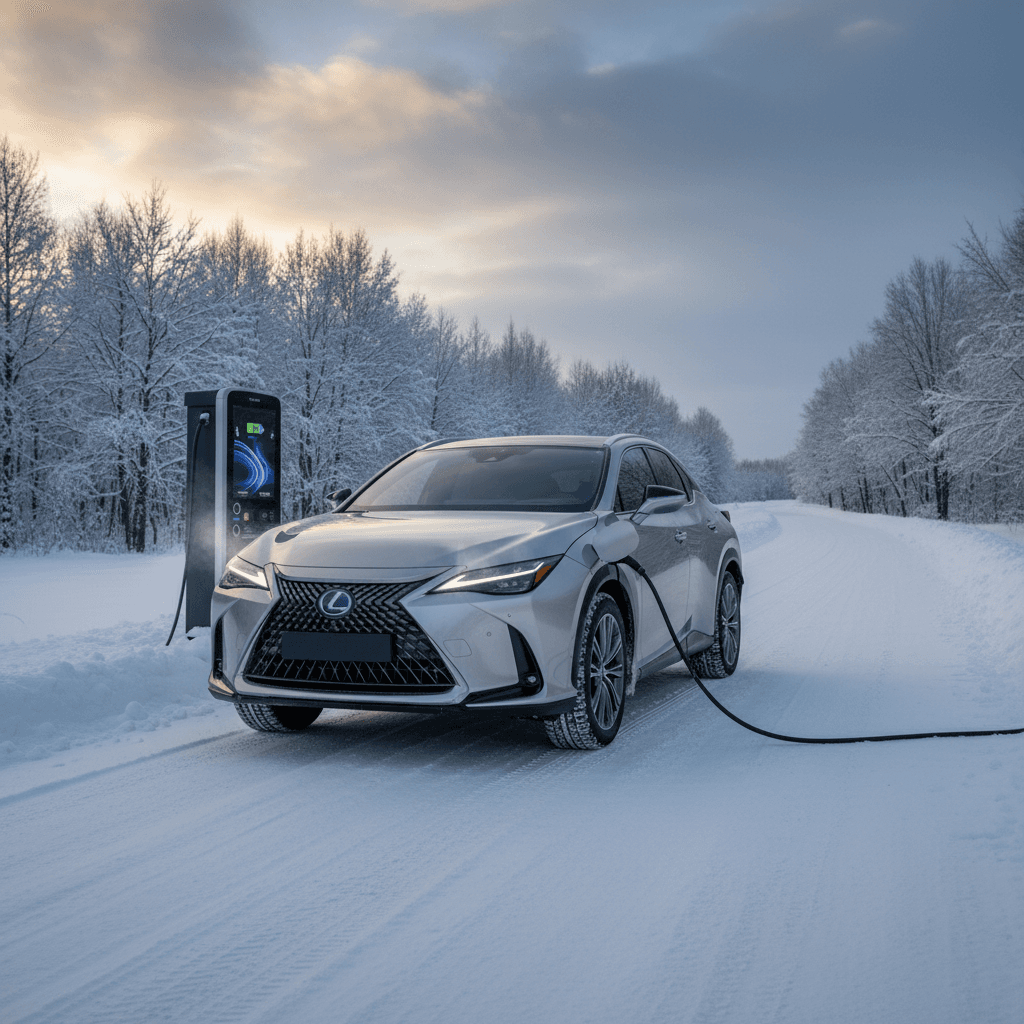
If you live where winter really means winter, the Lexus RZ 450e range in cold weather is one of the make‑or‑break questions. On paper the RZ looks fine, with EPA estimates in the low‑ to mid‑200‑mile range depending on model year, wheels and trim. But once the temperature drops, real‑world range shrinks fast, especially at interstate speeds. This guide walks you through what owners and instrumented tests are actually seeing, how to plan around it, and what you can do to stretch every winter mile.
Cold-weather reality check
Why Lexus RZ 450e range drops so much in cold weather
Cold weather punishes every EV, but the Lexus RZ 450e is particularly sensitive because it combines a relatively modest battery pack with standard dual‑motor all‑wheel drive. The RZ’s battery is roughly 71–72 kWh usable, yet it’s pushing a tall, heavy luxury SUV with standard DIRECT4 AWD. That’s great for traction and acceleration, but it means a fairly high energy draw per mile even in ideal temperatures.
Drop ambient temperatures into the 20s °F and below, and two things happen at the same time: the battery chemistry becomes less efficient, and the car has to spend energy simply keeping you and the pack warm. The RZ does have a heat pump and battery conditioning, which help, but they can’t eliminate the physics. If you then add 70–75 mph cruising, headwinds, wet roads or snow tires, you’re stacking multiple range penalties on top of each other.
Highway speeds are the real culprit
Lexus RZ 450e EPA range vs real-world winter range
To make sense of winter numbers, you first need a baseline. EPA ratings have evolved across the RZ lineup, but the pattern is clear: smaller wheels and newer model years get more range, yet cold weather bites them all.
Lexus RZ 450e EPA ratings vs typical winter range
Approximate U.S. EPA ratings for common trims and realistic winter expectations for mixed use. Exact figures vary by driver, terrain and temperature, but these ballpark numbers are a solid planning starting point.
| Model / wheels | EPA rated range (mi) | Mild winter (30–40°F) mixed driving | Cold winter (10–25°F) mixed driving | Deep cold (sub‑10°F) highway‑heavy |
|---|---|---|---|---|
| 2023–2024 RZ 450e, 18" | ~220 mi | ~170–180 mi | ~150–160 mi | ~120–140 mi |
| 2023–2024 RZ 450e, 20" | ~196 mi | ~145–160 mi | ~125–140 mi | ~100–120 mi |
| 2025–2026 RZ 450e updated, 18" | ~260–280 mi (varies by trim) | ~200–220 mi | ~170–190 mi | ~140–165 mi |
| 2025–2026 RZ 450e updated, 20" | ~230–250 mi | ~180–200 mi | ~155–175 mi | ~125–150 mi |
Use this table as a planning tool, not a promise, always build in an extra buffer, especially for highway trips in deep winter.
In other words, on a newer RZ 450e with the more efficient tune, a healthy battery and 18‑inch wheels, a realistic winter planning number for mixed driving in the 20s–30s °F is around 190–210 miles. On early 2023 models with 20‑inch wheels, it’s much safer to plan around 130–150 miles in the same conditions, and even less if your driving is mostly highway.
Watch out for optimistic guess‑o‑meters
How much RZ 450e range loss to expect by temperature
You’re not crazy if you see your RZ 450e lose a third of its rated range on a bad winter day. That’s common across the EV world. The RZ just starts from a lower EPA baseline than some rivals, so the same percentage loss feels more painful. Here’s a simplified way to think about range loss as temperatures fall, assuming a mix of city and highway use and a driver who isn’t hypermiling or drag‑racing:
Typical Lexus RZ 450e winter range loss by temperature band
These are ballpark planning numbers, not lab results. Your exact results will vary with speed, elevation, cargo and climate settings.
Cool (40–55°F)
Range hit: ~10–15% vs EPA
- Battery still reasonably efficient
- Cabin heat used, but not maxed out
- Most owners hardly notice a big drop
Cold (25–40°F)
Range hit: ~20–30% vs EPA
- Battery and drivetrain are noticeably colder
- Heater runs more often, especially on short trips
- Expect more consumption on first 10–15 miles
Deep winter (≤25°F)
Range hit: ~30–40%+ vs EPA
- Cabin and battery need steady heat
- Short trips are very inefficient
- Highway plus headwinds can feel brutal
Short, stop‑and‑go trips in bitter cold are where you’ll see the worst efficiency because the car spends a lot of energy reheating the cabin and components for each drive. By contrast, a long highway leg at 32°F might look surprisingly decent if you keep speeds closer to 65 mph and use seat and wheel heaters instead of blasting cabin air.
Quick Lexus RZ 450e winter range realities
City vs highway: which winter driving kills RZ range faster?
In the RZ 450e, speed matters more than stoplights when it’s cold. At a steady 70–75 mph, aerodynamic drag is the primary enemy, and it rises with the square of speed. Add in cold‑soaked components and wet or slushy pavement, and your consumption can jump from the high‑2s mi/kWh into the low‑2s or worse. On a 71‑kWh pack, that’s the difference between 210+ miles and barely cracking 150 miles on a full charge.
In urban or suburban driving at 25–50 mph, the RZ’s regen braking and lower aero drag help. Even in the 20s °F, many owners report better‑than‑expected efficiency on relaxed city routes, something like 3.0–3.3 mi/kWh when they drive smoothly and precondition the cabin while plugged in. That’s why winter range horror stories often come from long highway days, not from commuting across town.
Typical winter city loop
- Speeds: 25–45 mph with traffic lights
- Range impact: battery and cabin heating hurt, but regen recovers some energy
- Result: often 70–85% of EPA in 25–35°F weather, more if you preheat while plugged in
Typical winter highway leg
- Speeds: 65–75 mph, steady cruise
- Range impact: aero drag and heater load stack up, regen barely used
- Result: commonly 60–75% of EPA once temps fall below freezing, sometimes less with wind or snow
Use the right "mental EPA" for your route
RZ 450e features that help, or hurt, winter range
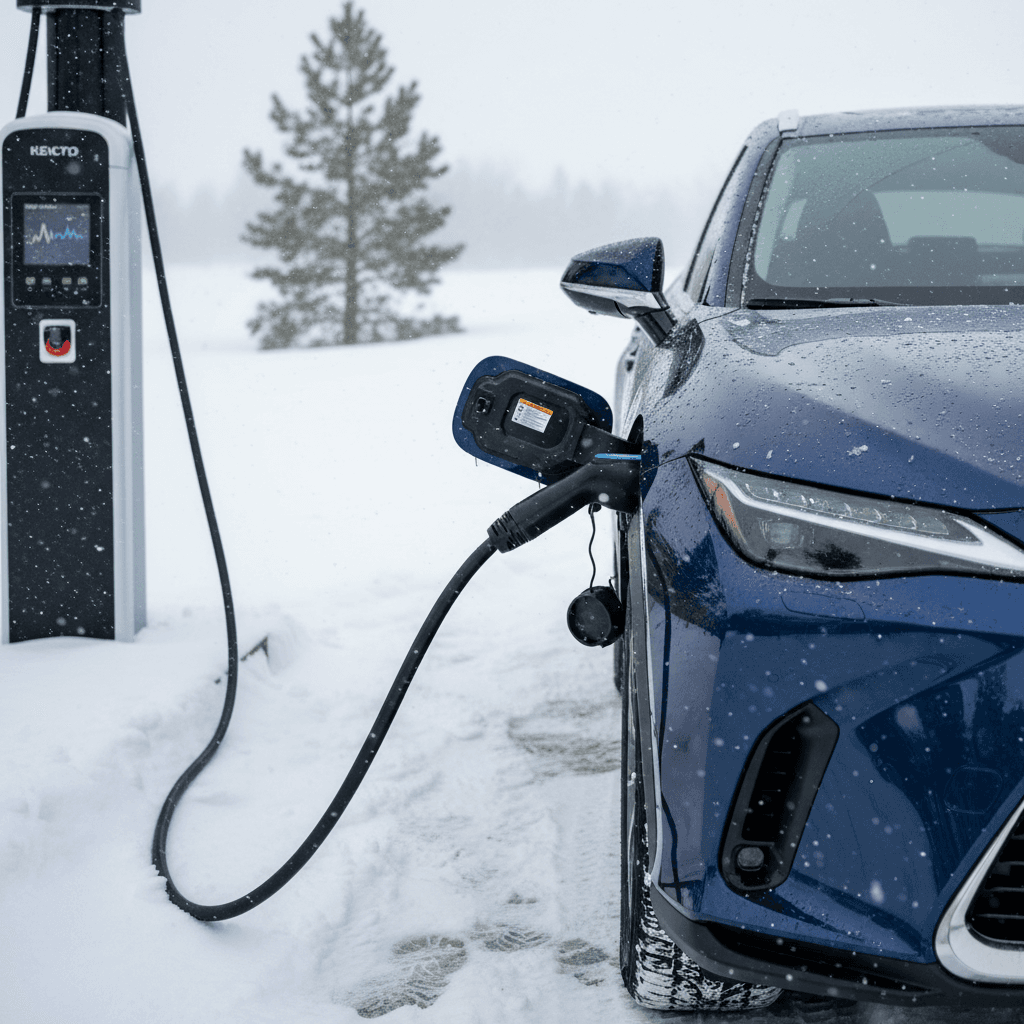
Lexus didn’t leave the RZ naked in the snow. It comes with a heat pump, available radiant panel heaters, efficient seat and wheel heaters, and multiple drive modes including an energy‑saving "Range" profile on newer models. Used thoughtfully, those tools can claw back a surprising amount of winter range. Used carelessly, climate settings can be the single biggest line item on your energy bill.
Key Lexus RZ 450e systems that affect winter range
Lean on the efficient features, and be mindful of the silent range killers.
Heat pump HVAC
The RZ’s heat pump is far more efficient than traditional resistive heat, especially in the 20–40°F band. It still draws real power, but it’s better than the old‑school "electric space heater" approach.
Seat & wheel heaters
Heating you directly is much cheaper than heating all the cabin air. In deep winter, keep cabin temps a bit lower and crank up the seat and steering wheel heaters instead.
DIRECT4 dual‑motor AWD
Fantastic for traction, but two motors mean more baseline consumption versus a single‑motor EV. In winter you don’t just pay the climate penalty, you’re feeding two drive units as well.
Drive modes
Eco and Range modes soften throttle response, reduce climate output and can trim a few percent off energy use. They won’t work miracles at 80 mph in a blizzard, but they absolutely help.
Wheels, tires & snow
20‑inch wheels, aggressive winter tires and slushy roads all increase rolling resistance. If you’re shopping, the 18‑inch setup is the friendlier winter choice for both comfort and range.
Preconditioning while plugged in
Using the app or schedule to warm the battery and cabin before you unplug shifts some of that heating load from your battery to the grid. That effectively adds winter range for free.
Quick win: preheat from the outlet, not the battery
Real-world planning examples for cold climates
Numbers on paper are helpful, but what most drivers really want to know is, "Can this car cover my actual life in January?" Here are a few realistic scenarios and how an RZ 450e stacks up if you plan with conservative winter assumptions.
Scenario 1: 80‑mile daily commute
- Profile: 40 miles each way, mix of freeway and arterials in a Midwest winter (~20–30°F).
- Plan with: 60–70% of EPA if you’re on a 20" wheel early model, 70–80% on newer 18" cars.
- Reality: Any RZ 450e in good health can comfortably do this on a single daily charge, even on cold days, as long as you’re not driving 80+ mph.
Scenario 2: 180‑mile family visit
- Profile: 90 miles each way, mostly 70–75 mph interstate in the Northeast at 25°F.
- Plan with: ~65% of EPA on newer 18" cars (roughly 170–180 mi usable) and closer to ~60% on 20" early models.
- Reality: A newer RZ on 18s can often make a one‑way leg nonstop with a buffer; older 20" cars are right on the bubble and should plan a short top‑up mid‑trip.
Scenario 3: 250‑mile winter road trip
- Profile: 250+ highway miles in one day with temps in the teens and a full car.
- Plan with: 60–70% of EPA and 10–20% battery buffer on arrival at each stop.
- Reality: Treat it like any EV road trip: 1–2 DC fast‑charge stops, ideally timing lunch with a 20–40‑minute session from ~10–15% back up to 70–80%.
Scenario 4: Short winter hops around town
- Profile: Multiple 5–10 mile errands in 15–25°F weather.
- Plan with: Higher displayed consumption, the car keeps reheating the cabin for each short trip.
- Reality: Range drops fast on the gauge, but total daily mileage is low. Preheat while plugged in and batch errands to improve efficiency.
Build your own winter baseline
7 ways to maximize Lexus RZ 450e range in cold weather
Winter driving checklist for better RZ 450e range
1. Precondition on shore power
Use scheduled departure or the app to warm the cabin and battery while plugged in. You start with a warm pack and avoid wasting your first 10–15 miles burning energy on heat alone.
2. Prioritize seat and wheel heaters
Turn those on early and you can comfortably run a slightly cooler cabin setting. Heating surfaces close to your body uses much less energy than heating all the air in the cabin.
3. Dial back highway speeds
Even a drop from 75 mph to 65 mph can reclaim dozens of miles of effective range on a winter leg. In the RZ, that difference can mean skipping a charging stop entirely.
4. Use Eco or Range modes wisely
On newer RZ models, Range mode in particular trims climate output and sharp throttle response. It’s a great default for winter highway cruising when you care more about miles than sprints.
5. Keep tires properly inflated
Cold air drops tire pressure, which increases rolling resistance and hurts efficiency. Check pressures a few times each winter and keep them at the door‑jamb spec for best range and handling.
6. Travel lighter when possible
Racks, boxes and heavy cargo all add drag and weight. If you don’t need that ski box or extra gear on a given trip, leave it behind and pocket the extra range.
7. Plan charging with a buffer
In deep winter, aim to arrive at fast chargers with at least 10–15% left and reach your destination with a similar cushion. That margin covers headwinds, traffic jams and detours without white‑knuckle driving.
Don’t chase the last mile in bad weather
What winter range means if you’re buying a used Lexus RZ
If you’re cross‑shopping a used RZ 450e against other luxury EVs, cold‑weather range shouldn’t automatically knock it off your list, but you do need to be clear‑eyed about your use case. For short‑to‑moderate daily driving in cold climates, the RZ’s comfort, refinement and traction can outweigh its modest battery size. For frequent long winter road trips, you’ll want to plan more carefully or consider alternatives with larger packs.
This is where a verified view of battery health really matters. A strong pack will still lose range in the cold, but it does so from a higher starting point. A degraded pack shrinks your safety margin on bad weather days, which is why Recharged includes a Recharged Score battery health report with every RZ we list. You’ll see not just odometer and options, but how the pack is actually performing compared with new, critical for buyers in the northern U.S. or Canada.
Questions to ask when shopping used
- How far did the previous owner typically drive in winter, and at what speeds?
- Does the seller have any DC fast‑charging history or winter efficiency logs?
- Are you looking at 18" or 20" wheels, and which model year?
- Has the vehicle spent most of its life in an extremely hot or cold climate?
How Recharged can help
- Every used RZ 450e includes a Recharged Score battery and charging health report.
- EV‑specialist advisors can help translate that report into real‑world winter range expectations for your specific commute or trip pattern.
- Nationwide delivery and trade‑in options let you shop the right RZ for your climate, not just what’s on the nearest lot.
Turn "range anxiety" into "range awareness"
Ready to find your next EV?
Browse VehiclesLexus RZ 450e winter range: FAQ
Common questions about Lexus RZ 450e range in cold weather
The Lexus RZ 450e isn’t a winter range champion, but it also isn’t helpless in the cold. If you understand how temperature, speed and wheels affect your real‑world numbers, and you’re willing to plan around 60–75% of EPA on the highway in deep winter, you can enjoy the RZ’s refinement, quiet and traction without surprise "battery low" messages. And if you’re considering a used RZ, pairing this winter‑range playbook with a verified Recharged Score battery report gives you the clearest picture of whether a particular car will handle your actual January and February, not just a perfect spring test drive.