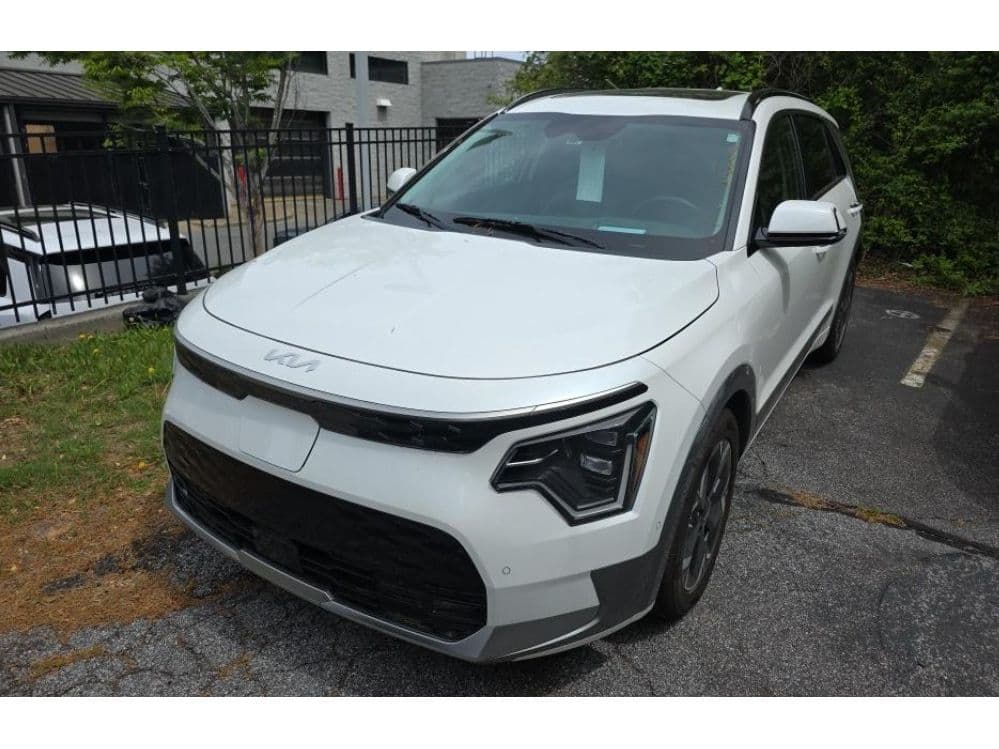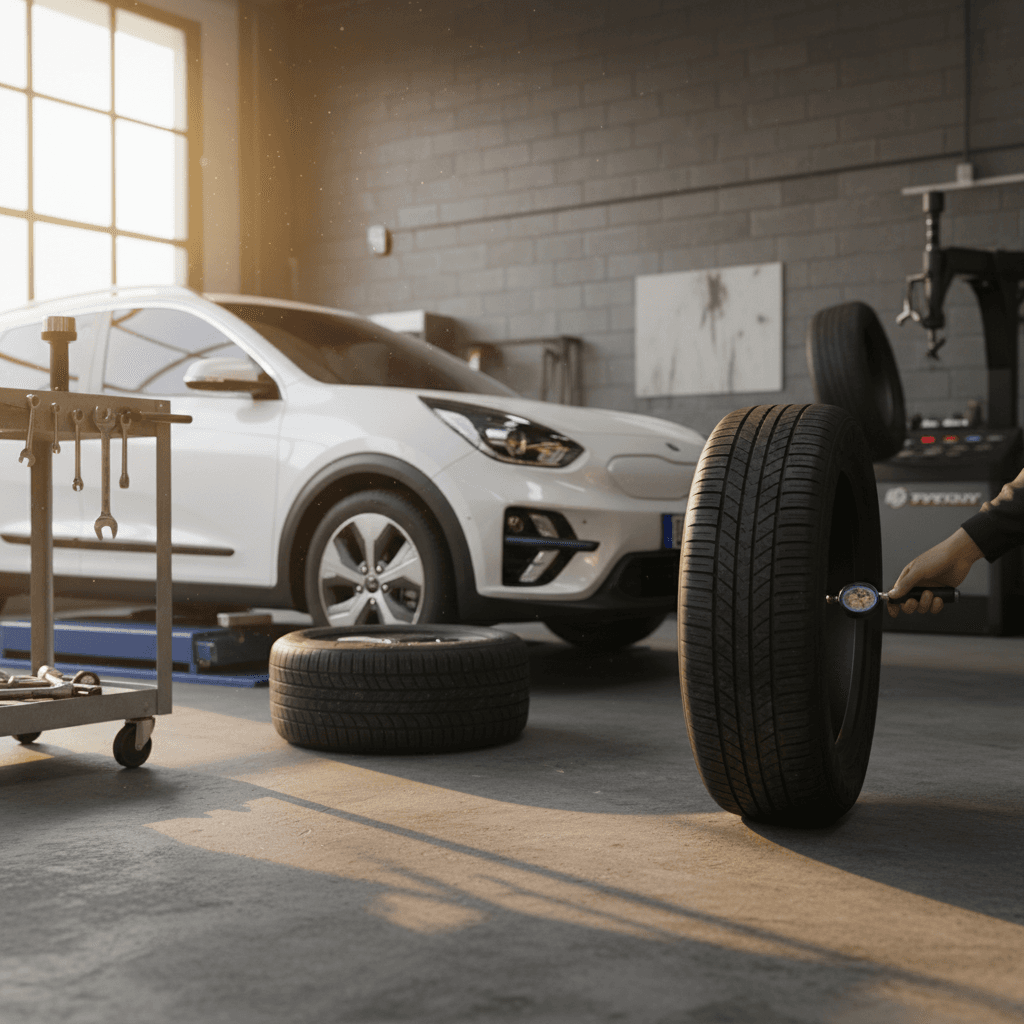
If you’re trying to budget for Kia Niro EV tire replacement cost, you’re asking the right question. For most Niro EV owners, tires are the single biggest maintenance line item over the first 5–8 years, bigger than brake jobs, coolant, or cabin filters. The good news: with realistic numbers and a bit of strategy, tire costs are predictable and manageable.
Quick takeaway
Kia Niro EV tire replacement cost at a glance
Kia Niro EV tire costs in context
Those ranges are broad by design. A budget all-season from a regional tire chain might put you closer to the bottom end, while a premium EV‑specific tire from a top brand can push you to the top. Where you live, how you drive, and whether you add an alignment all move the final bill up or down.
OEM Kia Niro EV tire size and types
Knowing exactly what’s on the car from the factory helps you compare apples to apples when you shop for replacements.
- Recent U.S. Kia Niro EV models typically use 215/55R17 tires on 17-inch wheels.
- Most trims ship with low-rolling-resistance all-season tires aimed at efficiency and comfort, not aggressive performance.
- Some OEM tires may include noise-reducing foam inside the carcass; that can narrow direct replacement choices slightly, but you’re not locked into foam-equipped tires.
Always confirm your size
How much do Kia Niro EV tires cost?
Let’s break down Kia Niro EV tire replacement cost into the two big components: the tires themselves and the work required to install them.
Tire price ranges for a Niro EV
Typical Kia Niro EV tire price ranges (per set of four)
Approximate 2025 U.S. retail pricing for 215/55R17 Niro EV tires. Actual quotes will vary by region, brand and promotions.
| Tire type | Example use case | Per-tire price | Set of 4 (before install) |
|---|---|---|---|
| Budget all-season | Mild climate, value-focused | $110–$140 | $440–$560 |
| Mid-range touring all-season | Typical daily driving, mix of comfort and longevity | $150–$190 | $600–$760 |
| Premium/EV-focused all-season | Quieter ride, better grip, EV-optimized compound | $190–$250 | $760–$1,000 |
| Winter/snow tires | Snow belt drivers who swap seasonally | $140–$200 | $560–$800 |
Use this as a budgeting guide rather than a quote, always get live pricing from a tire retailer.
If you shop at a warehouse club or big-box store, you’ll often see mid-range all-season sets for a Niro EV land in the $600–$750 range before installation. A premium EV-labeled tire from a major brand tends to push the parts bill closer to $900–$1,000 for four.
Watch for all-in promotions
Labor, mounting, alignment and other add-ons
Tires aren’t just rubber. Part of your Kia Niro EV tire replacement cost is the labor and shop services that make that new set safe and quiet at highway speeds.
Typical add-on costs when replacing Niro EV tires
These are common line items you’ll see on a tire invoice.
Mounting & balancing
Most shops charge $20–$30 per tire to mount, balance, and install new tires on your wheels.
For a full set, budget $80–$120 for this line item alone.
Valve stems & TPMS services
Standard rubber valve stems are often a small add-on, while your Niro EV’s tire-pressure sensors (TPMS) are usually reused.
Expect $0–$10 per tire unless a sensor is damaged and needs replacement.
Disposal & shop fees
Most states allow a small per-tire disposal or recycling fee.
Plan on $5–$10 per tire in environmental or shop-charges.
Wheel alignment
An alignment is not strictly required with every set of tires, but it’s usually smart.
Many EV owners pay $120–$200 for a four-wheel alignment to keep tire wear even and maximize tread life.
Add all of that up and a typical U.S. Kia Niro EV driver who chooses a mid-range all-season tire is realistically looking at $800–$1,200 out the door for a full replacement set including labor, fees and an alignment. Skip the alignment and choose budget tires and you might sneak in around $650–$750, but that can be false economy if you chew through those tires faster.
How often will you replace Niro EV tires?
Electric vehicles tend to be tougher on tires than their gas counterparts. The Niro EV is no exception: it’s heavier than a gas Niro and delivers instant torque to the front tires, which can scrub off tread faster if you’re aggressive with the accelerator.
- Many EV drivers report their first set of tires lasting somewhere around 20,000–35,000 miles depending on driving style and roads.
- Careful driving, regular rotations every 7,500 miles, and correct pressures can stretch that closer to 35,000–40,000 miles.
- Hard launches, pothole-heavy city streets, and skipped rotations can pull that number below 25,000 miles.
What Kia’s schedule says
Annual tire cost math for a typical Niro EV owner
If you drive about 12,000–15,000 miles per year, and you replace Niro EV tires every 30,000 miles on average, you’re looking at a full set roughly every two to three years. At $900 per set all-in, that’s about $300–$450 per year when you spread it across your annual budget.
Ways to save on Kia Niro EV tire replacement
You can’t avoid buying tires, but you do have a lot of control over how often and how much you pay. These are the levers that matter most for a Kia Niro EV.
Practical ways to cut your Niro EV tire bill
1. Choose the right tire, not just the fanciest
Premium EV-branded tires can be great, but if you mostly commute at moderate speeds, a reputable mid-range touring tire may deliver 90% of the benefit for noticeably less money. Look for long treadwear warranties (60,000+ miles) and good wet-braking scores.
2. Rotate tires every 7,500 miles
Front tires on the Niro EV do most of the work. Rotating them regularly evens out wear so you replace four tires at once less often. Many tire shops include lifetime rotations if you buy the tires there, take advantage of it.
3. Keep pressures dialed in
Low tire pressure is one of the fastest ways to destroy tread life. Check monthly and before long trips, and keep pressures at the door-jamb spec (or slightly higher if you’re carrying heavy loads). It also improves efficiency and range.
4. Get an alignment when the old set looks uneven
If the inside or outside edges of your old tires are significantly more worn than the center, pay for a four-wheel alignment with your new set. It can easily pay for itself in extra tread life.
5. Shop around, don’t default to the dealer
Dealers are convenient but not always cheapest for tires. Compare quotes from warehouse clubs, national chains, and independents. Ask for out-the-door pricing so you’re comparing total cost, not just per-tire numbers.
6. Consider a second set of wheels for winter climates
If you live where it snows and you swap to dedicated winter tires, a second set of wheels makes seasonal changes cheaper and protects your main wheels from corrosion and curb rash.
How Recharged helps with tire surprises
Ready to find your next EV?
Browse Vehicles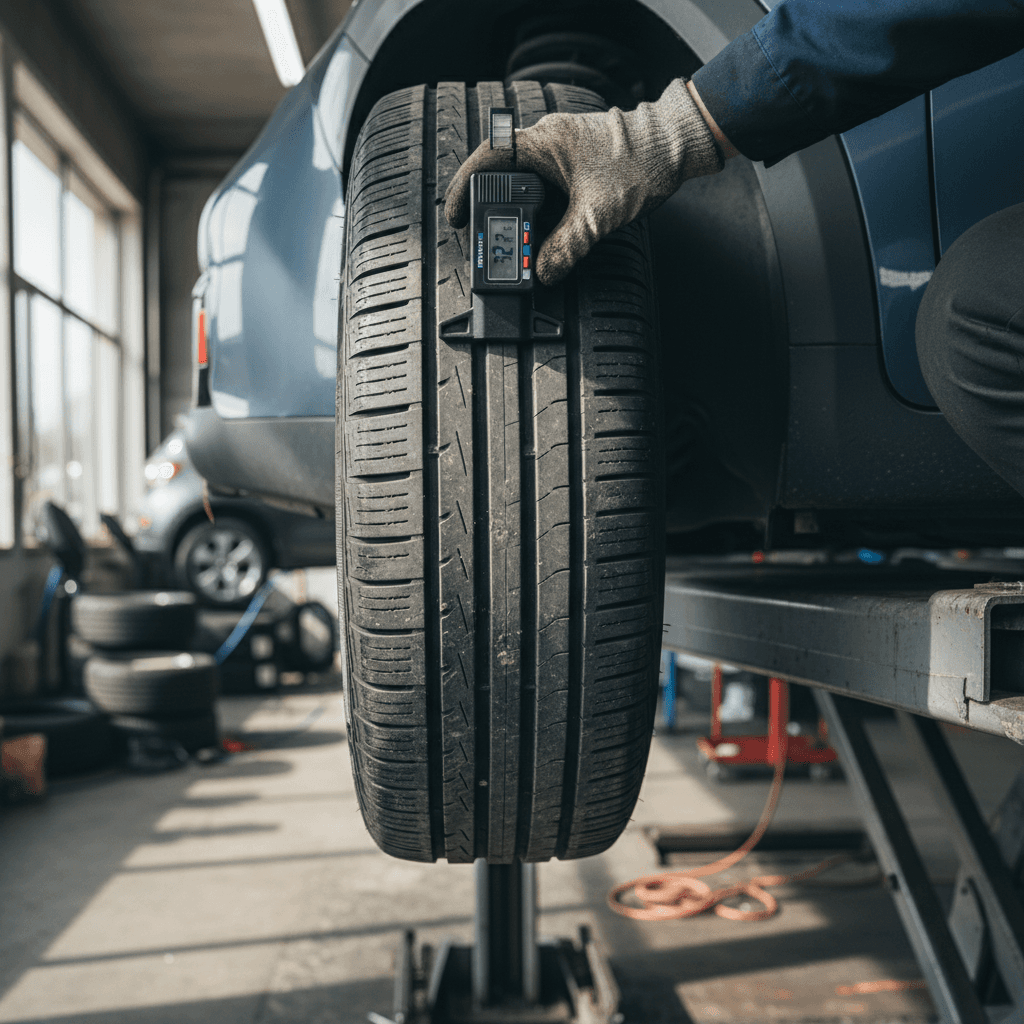
Buying a used Kia Niro EV: tire costs to watch
If you’re looking at a used Niro EV, especially one with 20,000–40,000 miles, tires are one of the first things you should evaluate. A car that looks like a deal on paper can quietly need $1,000 in rubber within months of purchase.
What to inspect on a test drive
- Tread depth: Use a gauge if you have one, or the penny/quarter trick. Under 4/32" means replacement is coming soon.
- Uneven wear: Compare inner and outer edges; cupping, feathering, or shoulder wear hints at alignment or suspension issues.
- Age of tire: Check the DOT date code on the sidewall. Anything older than 6 years is nearing end-of-life regardless of tread.
- Road noise and vibration: Loud droning or steering wheel shake at highway speeds can indicate cupped tires or balance problems.
How to factor tires into the deal
- If the tires are near the wear bars, assume you’ll spend $800–$1,200 soon and adjust your offer or budget.
- Ask for a printout of any alignment work or recent tire invoices, good documentation is a positive signal.
- On a marketplace like Recharged, review the Recharged Score battery and tire notes to understand what you’re inheriting.
- Remember: new tires can actually be a selling point; don’t undervalue a Niro EV that already has a fresh, quality set installed.
Dealer vs tire shop vs DIY: what makes sense?
There’s no single “right” place to replace Niro EV tires, but each option comes with tradeoffs in cost, convenience, and expertise.
Where should you replace your Kia Niro EV tires?
Compare the most common options before you book an appointment.
Kia dealership
- Pros: Knows the Niro EV, easy to bundle with other service.
- Cons: Often higher prices for the same or similar tires.
- Best for: Warranty work, or if you value a single service relationship more than rock-bottom pricing.
Tire chain / warehouse club
- Pros: Competitive prices, frequent promotions, nationwide warranties.
- Cons: EV-specific advice can be hit-or-miss depending on staff.
- Best for: Value-focused owners who want lifetime rotations and straightforward pricing.
DIY or mobile installer
- Pros: Maximum control, sometimes cheaper if you source tires online.
- Cons: Requires equipment or a trusted mobile installer; alignment still needs a shop.
- Best for: Enthusiasts or people far from a convenient tire store.
Avoid “race to the bottom” tire choices
Kia Niro EV tire replacement cost: FAQ
Frequently asked questions about Niro EV tire costs
Tires may not be as attention‑grabbing as battery packs or fast‑charging stats, but they’re where most of your Kia Niro EV’s maintenance dollars actually go. Understanding realistic Kia Niro EV tire replacement cost, how often you’ll face that bill, and the levers you can pull to stretch tread life turns an unpredictable expense into a manageable line item. And if you’re shopping used, starting with a transparent tire assessment, like the Recharged Score Report on every vehicle at Recharged, can make the difference between a smooth first year of ownership and an unwelcome four‑figure surprise.