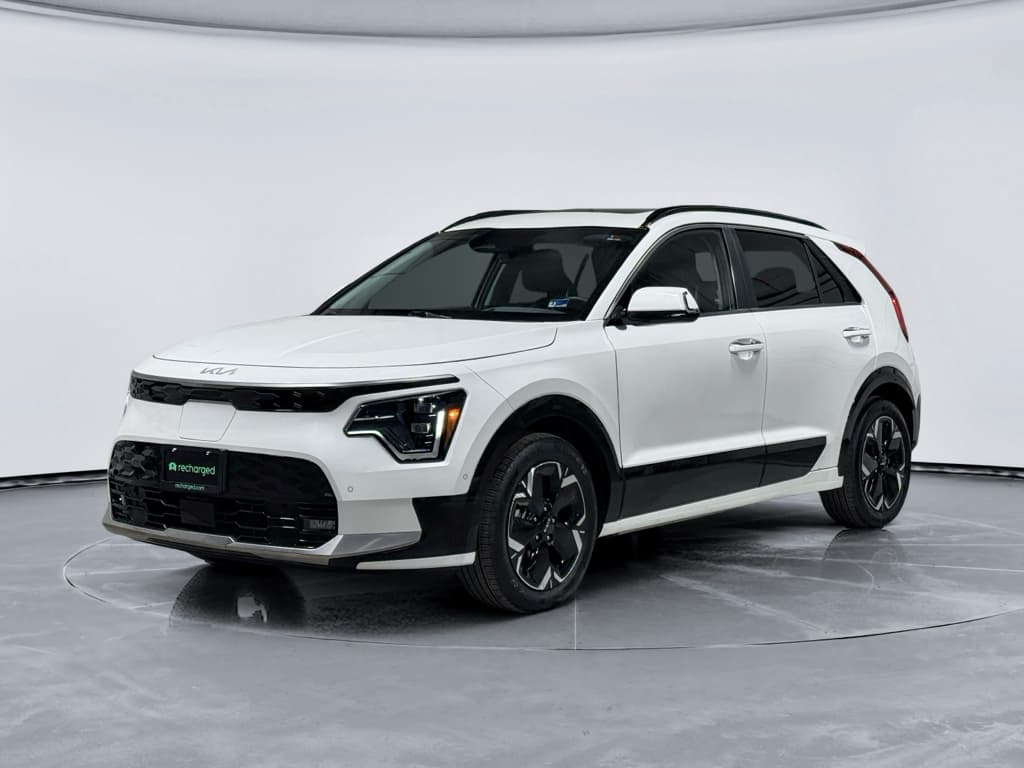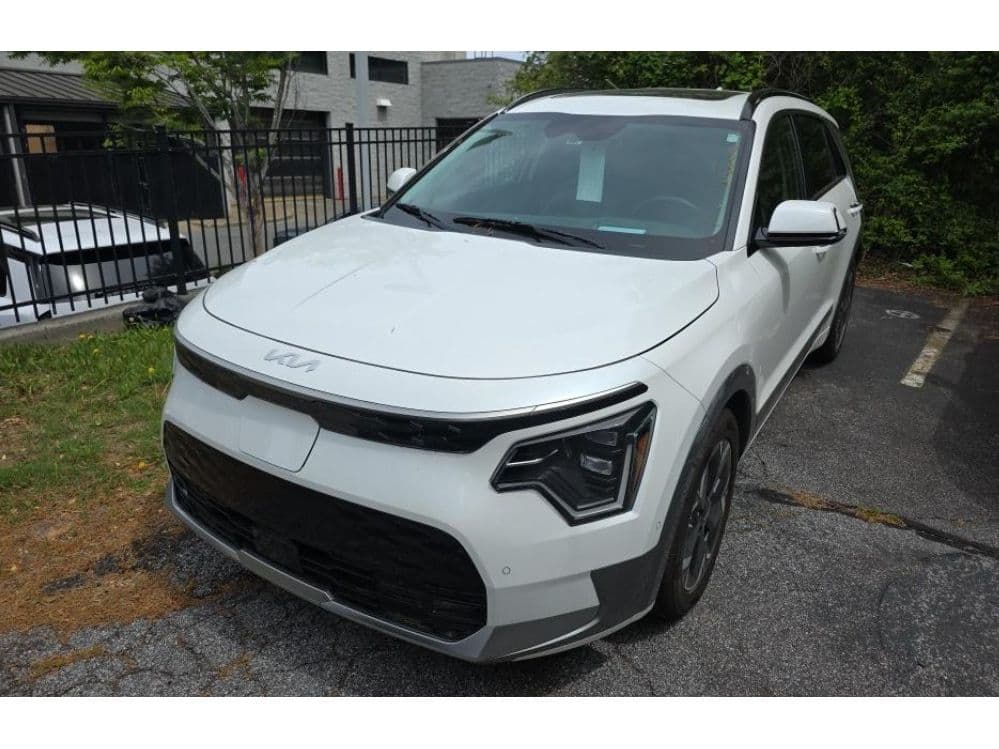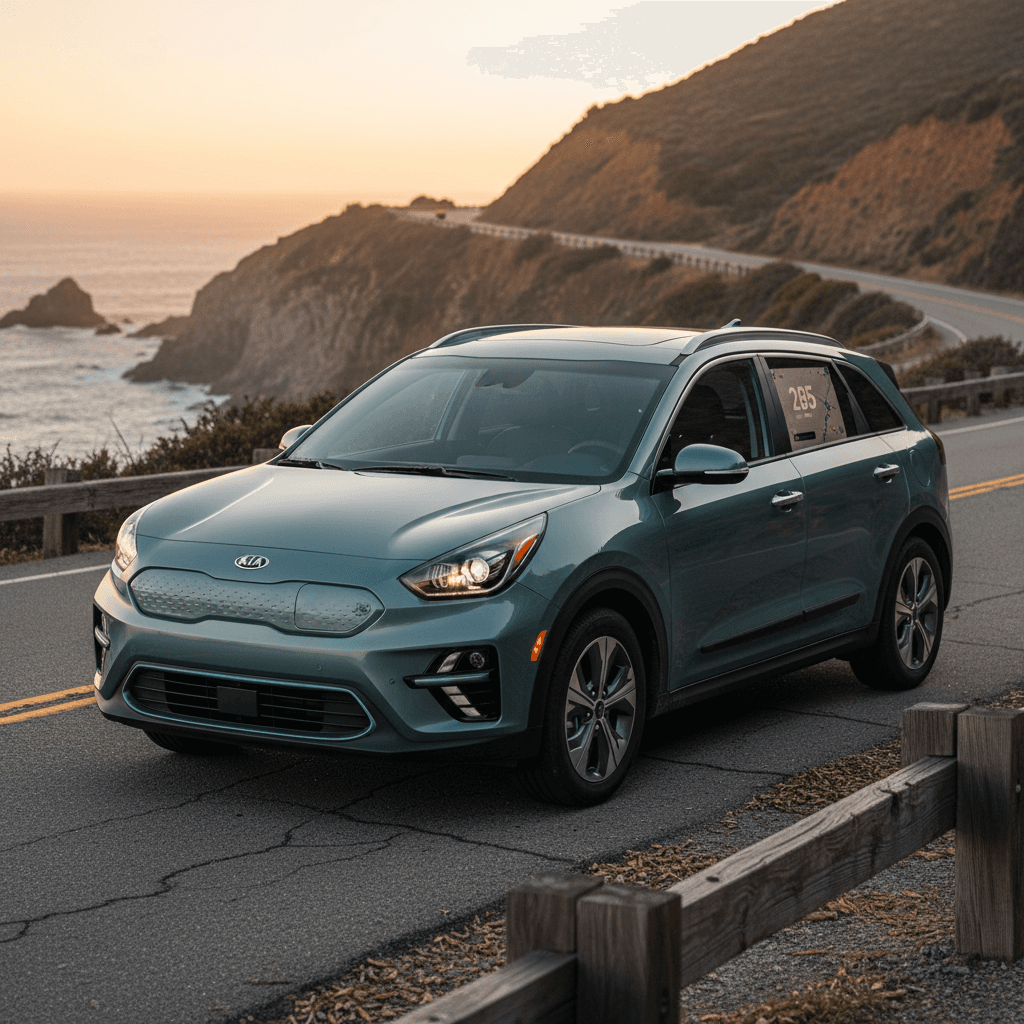
If you’re eyeing a Kia Niro EV in 2026, you’ve probably seen the **253‑mile EPA estimate** and wondered what the *real‑world range* actually looks like, on the highway, in winter, and on a used battery. This guide breaks down **Kia Niro EV real‑world range in 2026** using independent tests, owner data, and what we see every day inspecting used Niro EVs at Recharged.
Quick takeaway
Overview: Kia Niro EV range in 2026
Headline range numbers for the Kia Niro EV
Every modern Niro EV sold in the U.S. uses a **64.8 kWh usable battery** paired with a 201 hp (150 kW) front motor. That pack size, combined with the Niro’s relatively efficient shape, is what lets the car score that 250‑ish mile rating. But the number that matters to you isn’t on the Monroney sticker, it’s what you’ll see on your commute, on I‑95, or in a February cold snap.
Know your real range, not just EPA
EPA rating vs real‑world Kia Niro EV range
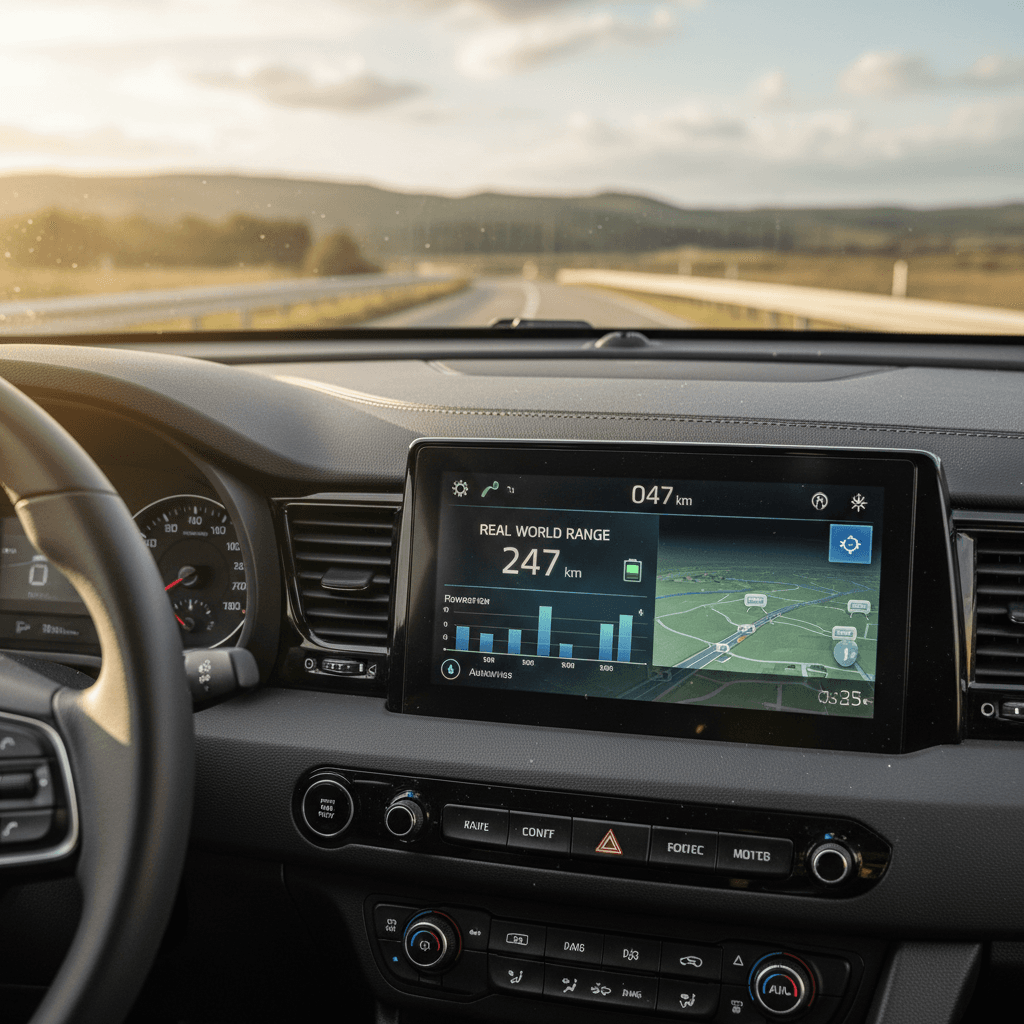
Recent model‑year Kia Niro EVs (2023–2025) carry an EPA‑rated range of around **253 miles** on a full charge. That figure comes from a carefully controlled test cycle that blends city and highway speeds and assumes mild temperatures and conservative driving. In the real world, American owners tend to drive faster and in more varied weather, so you rarely see that exact number outside of ideal conditions.
What the EPA number assumes
- Moderate temperatures (around 70°F)
- Gentle acceleration and lower average speeds
- Relatively flat routes
- Limited HVAC use
What real life actually looks like
- 70–75 mph interstate cruising
- Summer A/C and winter heat
- Hills, traffic, and short trips
- Passengers, cargo and roof racks
Independent range tests and owner logs for the 64.8 kWh Niro EV consistently land in the **3.3–3.7 mi/kWh** range in normal U.S. driving. Multiply that by 64.8 kWh usable, and you get a **realistic band of roughly 215–240 miles** on a full charge for a healthy battery in mild weather. Push the car harder on the highway, or add extreme cold or heat, and the number falls from there.
Don’t bank on 0–100%
City vs highway: where the Niro EV really shines
Like most EVs, the Kia Niro EV is at its best around town. Regenerative braking captures a lot of stop‑and‑go energy, and speeds are low enough that aero drag isn’t killing you. Once you’re at 70–75 mph for hours, wind resistance ramps up and efficiency falls.
Real‑world efficiency benchmarks
Approximate numbers we see across tests, owner data and Recharged road loops, assuming a healthy pack.
Urban & suburban mix
Efficiency: ~3.7–4.1 mi/kWh
Estimated range: ~240–260 miles
Lots of 25–45 mph driving, plenty of regen and light HVAC use.
Mixed commuting
Efficiency: ~3.3–3.7 mi/kWh
Estimated range: ~215–240 miles
Typical 20–40 mile commute with highway stints and errands.
70–75 mph highway
Efficiency: ~2.8–3.2 mi/kWh
Estimated range: ~180–210 miles
Sustained interstate driving, light cargo, moderate temps.
Use cruise, not speed
If most of your driving is under 50 miles a day, the Niro EV’s city and mixed‑driving efficiency means you’ll rarely think about range at all. It becomes a plug‑in once‑or‑twice‑a‑week appliance. Highway‑heavy drivers should plan conservatively, especially in winter.
Weather, climate and winter range hit
Temperature is the silent partner in every EV range story, and the Niro EV is no exception. The 64.8 kWh pack is efficient, but cabin heat, battery conditioning, and dense cold air all work against you when temperatures drop. On the flip side, mild spring and fall weather can produce some of the best numbers you’ll ever see.
Kia Niro EV real‑world range by season (healthy battery)
Approximate full‑charge ranges owners report in different U.S. climates, assuming similar driving styles.
| Scenario | Typical temps | Driving profile | Likely range |
|---|---|---|---|
| Mild spring/fall | 55–75°F | Mixed city/highway | 230–260 miles |
| Hot summer | 80–100°F | A/C running, mixed speeds | 210–240 miles |
| Cold, above freezing | 25–40°F | Heat on, mixed speeds | 185–215 miles |
| Deep winter | 0–20°F | Highway‑heavy, full heat | 150–190 miles |
These are planning numbers, not promises, your exact results depend on driving speed, elevation, tires and climate control use.
Watch short, cold trips
If you live in the Upper Midwest or Northeast, plan winter charging stops with a generous buffer, think **stopping around 20–25% instead of pushing to 5–10%**. Owners who can pre‑heat the car while plugged in, or use the heated seats and steering wheel instead of blasting cabin heat, report much more stable winter range.
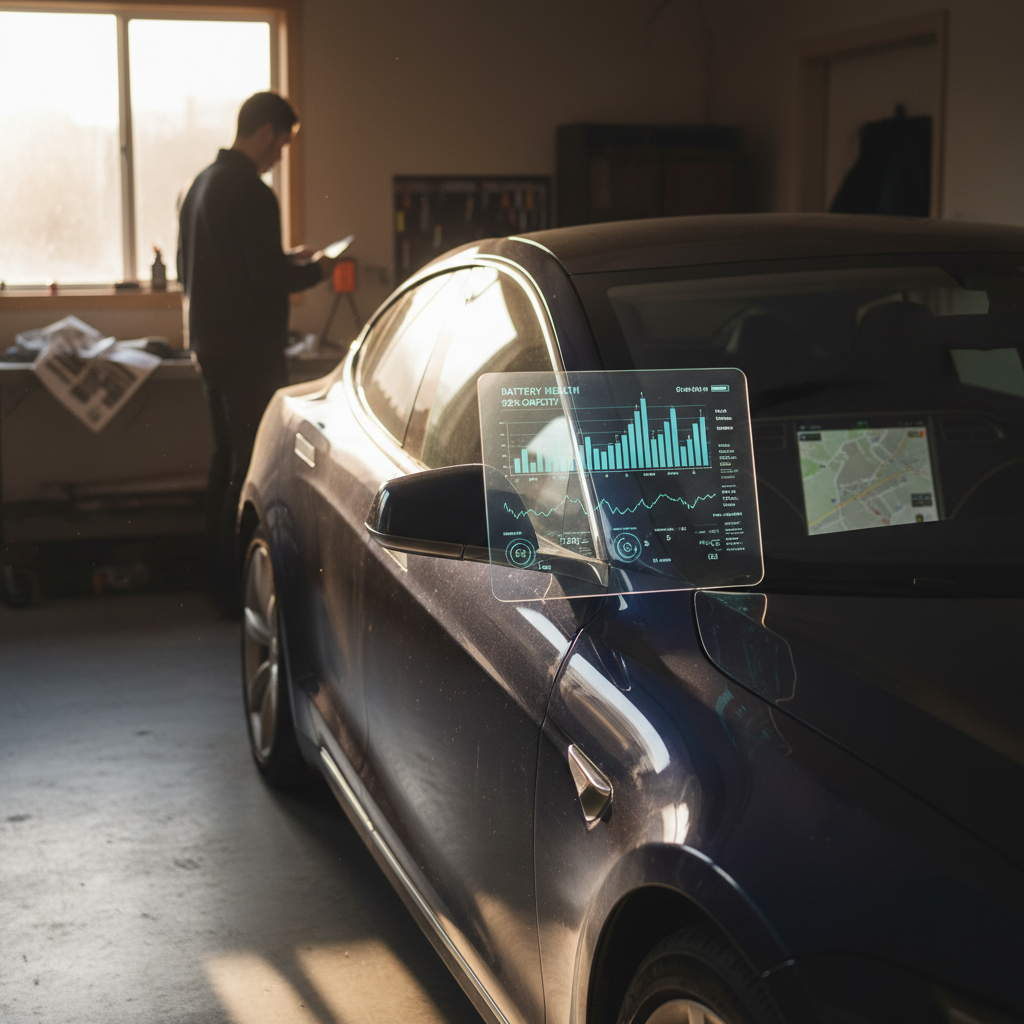
Battery degradation on used Kia Niro EVs
By 2026, a big share of the Kia Niro EV market is used: 2019–2022 first‑gen e‑Niros and 2023–2025 second‑gen Niro EVs. Naturally, shoppers want to know how much **real‑world range they lose as the battery ages**. The picture is better than many expect.
What we typically see on used Niro EV batteries
Estimates based on owner telemetry, public reports and Recharged battery health diagnostics.
3–5 years old
Odometer: 40k–70k miles
Typical loss: ~5–10% usable capacity
Real‑world range often still above 200 miles in mixed driving.
6–7 years old
Odometer: 80k–120k+ miles
Typical loss: ~10–15% with outliers
Many still deliver ~180–200 miles if well cared for.
Warranty & protection
High‑voltage warranty: typically 8 years/100k miles
Makes early, severe degradation relatively rare in the U.S. fleet.
How Recharged measures real‑world range potential
In practical terms, a Niro EV that has lost **10% of its original usable capacity** will usually see its real‑world mixed‑driving range move from, say, 230–240 miles down to roughly 205–215 miles. That’s noticeable on paper but rarely a deal‑breaker for daily use. The key is knowing which end of the curve a specific used car sits on before you buy it.
Model years, trims and how they change range
The headline for 2026 shoppers is simple: **recent Niro EVs all share the same 64.8 kWh usable battery and 201 hp motor**, so the differences in real‑world range between trims are small. What matters more is wheels, tires and options that add drag or weight.
- Most 2022–2025 Niro EVs with the 64.8 kWh pack cluster around **250–255 miles EPA** and similar real‑world numbers.
- Larger‑diameter wheels and aggressive all‑season or winter tires can trim **10–15 miles** off practical range.
- Roof racks, cargo boxes and bike racks hit highway efficiency hard, plan on losing **another 5–15%** depending on setup.
- Earlier e‑Niro models sold outside the U.S. with smaller packs (around 39 kWh) obviously have shorter range; those are rare in American used‑car inventories.
Spec for the range you need
Road‑tripping a Kia Niro EV in 2026
Can you road‑trip a Kia Niro EV in 2026? Yes, but you should know what you’re signing up for. With realistic highway range in the **180–210 mile** window and DC fast‑charging speeds that trail newer 800‑volt EVs, it’s more of a patient cruiser than a cross‑country rocket.
What works well
- Comfortable, quiet cabin for several‑hour stints
- High‑200s EPA rating gives a useful buffer
- DC fast charging up to ~80–100 kW under ideal conditions
- Strong efficiency offsets the modest charge rate
Where it falls short
- Fast‑charge curve is less impressive than newer EV6/EV9
- Winter highway legs can shrink below 180 miles
- Limited DC fast‑charging infrastructure in some rural corridors
- More planning required than a gas crossover
Plan around 60–70% of EPA on trips
If you’re buying a Niro EV primarily for road trips, test your own route once or twice after purchase and see what efficiency numbers you get at your preferred speed. That data will tell you far more than any lab test.
Practical ways to improve your real‑world range
You can’t change physics, but you can tilt the odds in your favor. The Niro EV gives you several tools, drive modes, regen settings, scheduling, that have surprisingly big effects on what you see at the plug and on the dash.
Range‑boosting habits that actually work
1. Dial back highway speed
Every 5 mph over 65 mph costs you range. Cruising at 65–70 instead of 75–80 is one of the most powerful levers you have, especially in winter.
2. Use Eco or Eco+ modes
Eco modes soften throttle response and optimize climate control. Many Niro EV owners find they lose very little comfort but gain 10–20 miles of range on longer drives.
3. Let regen do its job
Experiment with higher regenerative‑braking levels in city traffic. The more you can slow using regen instead of friction brakes, the more energy you keep in the pack.
4. Pre‑condition while plugged in
On cold or hot days, schedule departure and climate pre‑conditioning while the car is still charging. You spend grid power, not battery power, to heat or cool the cabin and battery.
5. Watch your tires
Under‑inflated or aggressive tires drag range down quickly. Keep pressures at spec and consider low‑rolling‑resistance options if range is a top priority.
6. Travel light on the roof
Remove cargo boxes and bike racks when you’re not using them. Anything that disrupts airflow over the roof shows up as extra kWh burned at 70+ mph.
Small changes, big gains
Shopping used: matching real‑world range to your life
If you’re shopping a used Kia Niro EV in 2026, the right question isn’t “What’s the EPA range?” It’s “Will this car’s **current real‑world range** comfortably cover my routine and my worst‑case days?” That answer depends on your routes and the specific battery in the car you’re considering.
How much Niro EV range do you really need?
Match your daily life to the battery you’re buying.
Short‑range commuter
Daily miles: 20–50
Charging: Home Level 2
Even a Niro EV that’s lost 15% capacity is more than enough. Winter hits are manageable.
Longer suburban commute
Daily miles: 60–90
Charging: Mostly home, occasional public
Aim for a healthier pack and understand your winter worst case. Mixed driving still works well.
Frequent highway trips
Use case: Weekly 150–200 mile legs
Here, battery health and charging infrastructure really matter. Look for higher‑capacity packs and plan realistic 180–190 mile legs.
How Recharged derisks used‑EV range
If you’re trading in a gas crossover, remember that you rarely drive your tank all the way to empty. Think about your longest regular days, add winter weather and detours, and make sure the Niro EV you’re considering clears that comfortably with the **20–30% buffer** you’d want in any car.
FAQ: Kia Niro EV real‑world range in 2026
Frequently asked questions
Bottom line: Is the Kia Niro EV’s real‑world range enough?
In 2026, the **Kia Niro EV real‑world range** lands in a sweet spot for a lot of drivers. It’s not a record‑setter like some big‑battery SUVs, but its combination of **~210–240 miles in everyday use, solid efficiency and a manageable pack size** makes it easy to live with, especially if you can charge at home.
If your life is built around 20–80 mile days with the occasional 150–200 mile trip, a healthy Niro EV should feel almost gas‑car simple. Highway road‑trippers and cold‑climate drivers just need to plan around **realistic 180‑ish mile legs** and the usual winter compromises. When you’re shopping used, focus less on the original EPA sticker and more on **measured battery health and honest range estimates**, the kind of data you’ll see in a Recharged Score Report.
Do that, and the Niro EV’s range stops being an anxious unknown and becomes what it really is in 2026: a predictable, efficient tool that quietly covers most Americans’ daily driving with room to spare.