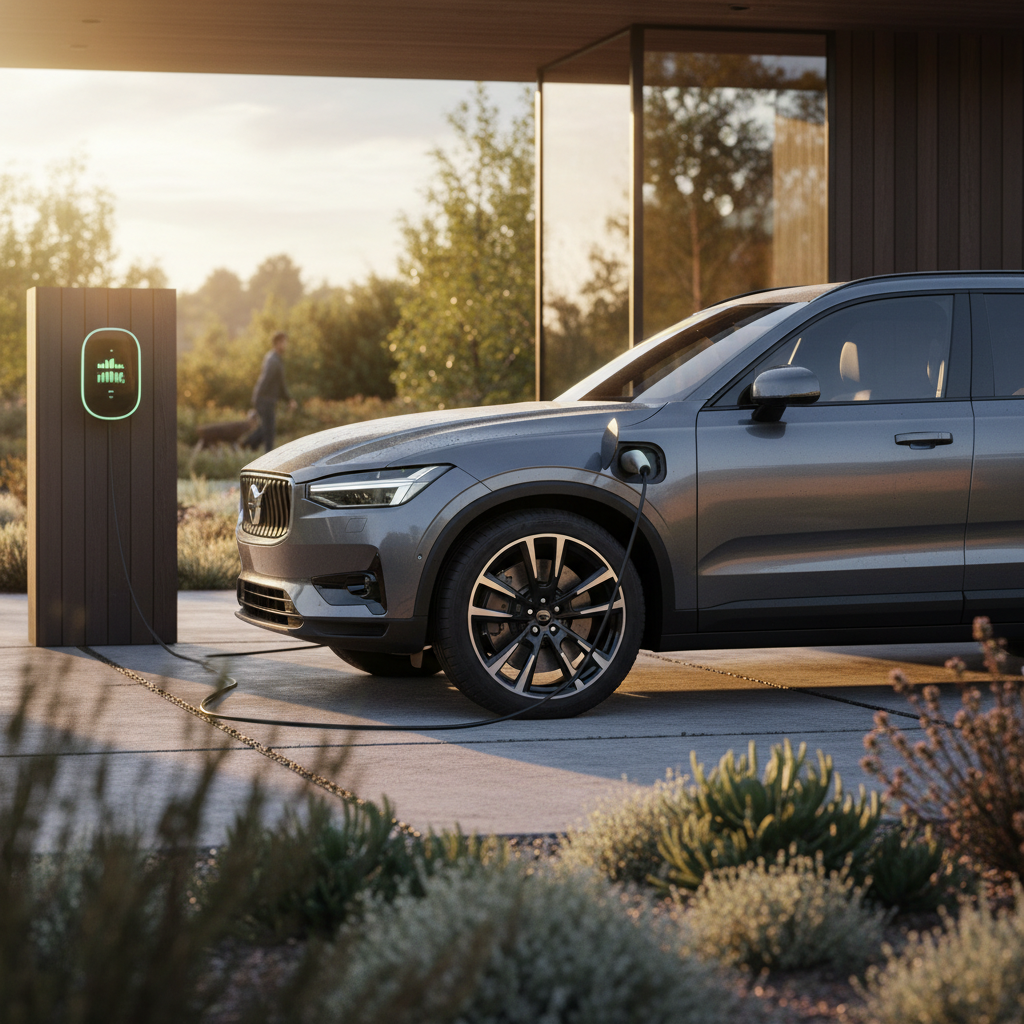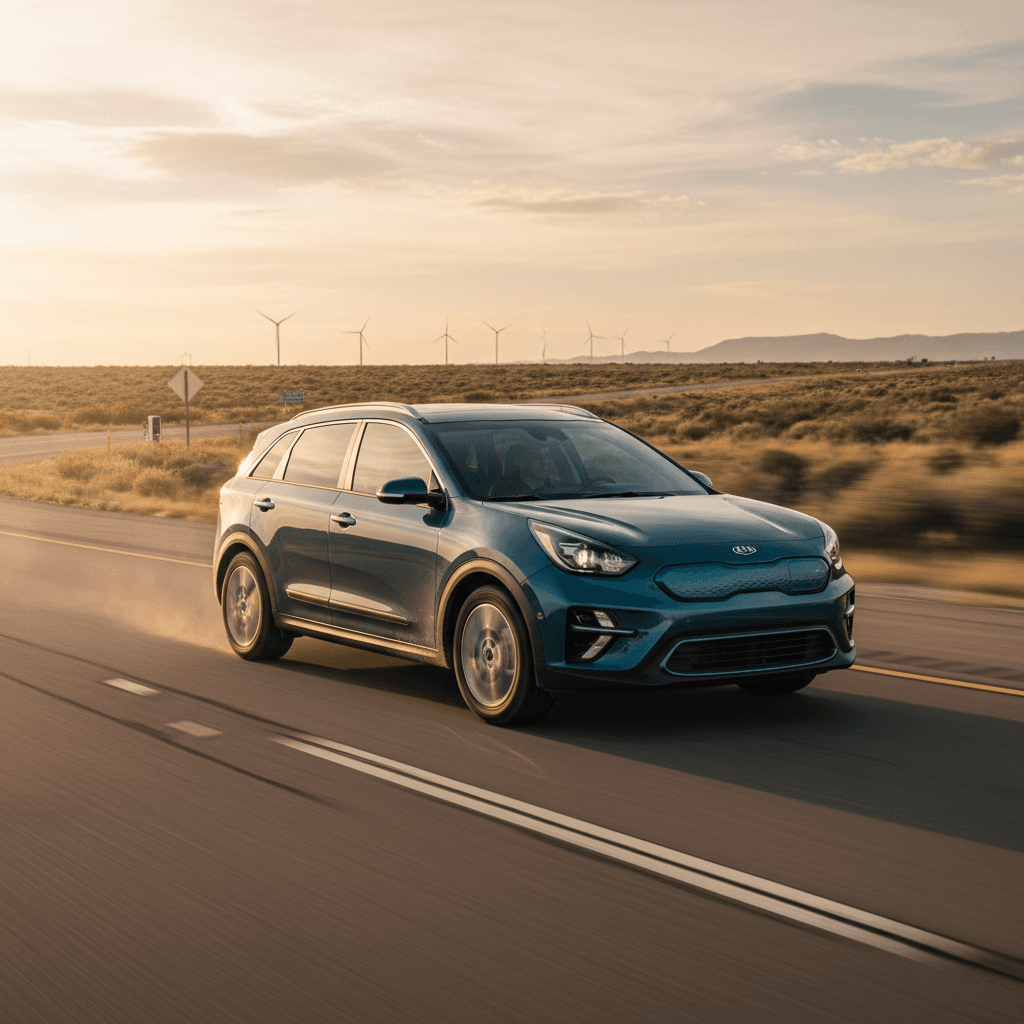
The spec sheet says a 2023–2024 Kia Niro EV will go an EPA‑rated 253 miles on a charge. On paper, that’s the neat, round number; in the real world, it’s messier. Drivers report anything from sub‑200‑mile winter slogs to road‑trip days that brush 280 miles. This guide pulls together independent tests, owner reports, and our own experience so you know what the Kia Niro EV’s range really looks like on the road.
Key takeaway
Kia Niro EV real‑world range at a glance
2023–2024 Kia Niro EV: lab vs road
Every modern Niro EV sold in the U.S. uses a roughly 64.8‑kWh battery and a 201‑hp front motor, good for that 253‑mile EPA number. That’s your starting point, not a guarantee. Once you add speed, temperature, elevation, and how heavy your right foot is, you’ll see why your range estimate jumps around so much.
EPA range vs real‑world: what 253 miles actually means
The EPA test cycle is a compromise between city puttering and highway cruising, capped at modest speeds. Think of the 253‑mile number as a blended score: part stop‑and‑go suburbia, part gentle highway work at around 55–60 mph, all done in controlled temperatures. Your life almost certainly doesn’t look like that.
What the EPA test assumes
- Mild temperatures (no deep‑freeze winter or brutal summer heat)
- Moderate speeds, mostly below U.S. interstate pace
- Limited use of climate control and accessories
- A mix of city and highway driving that flatters EV efficiency
What your driving probably looks like
- Long stretches at 70–80 mph
- Cabin kept at 70°F with heat or A/C always on
- Hills, headwinds, and real traffic
- Cargo, passengers, bikes, roof box, whatever life demands
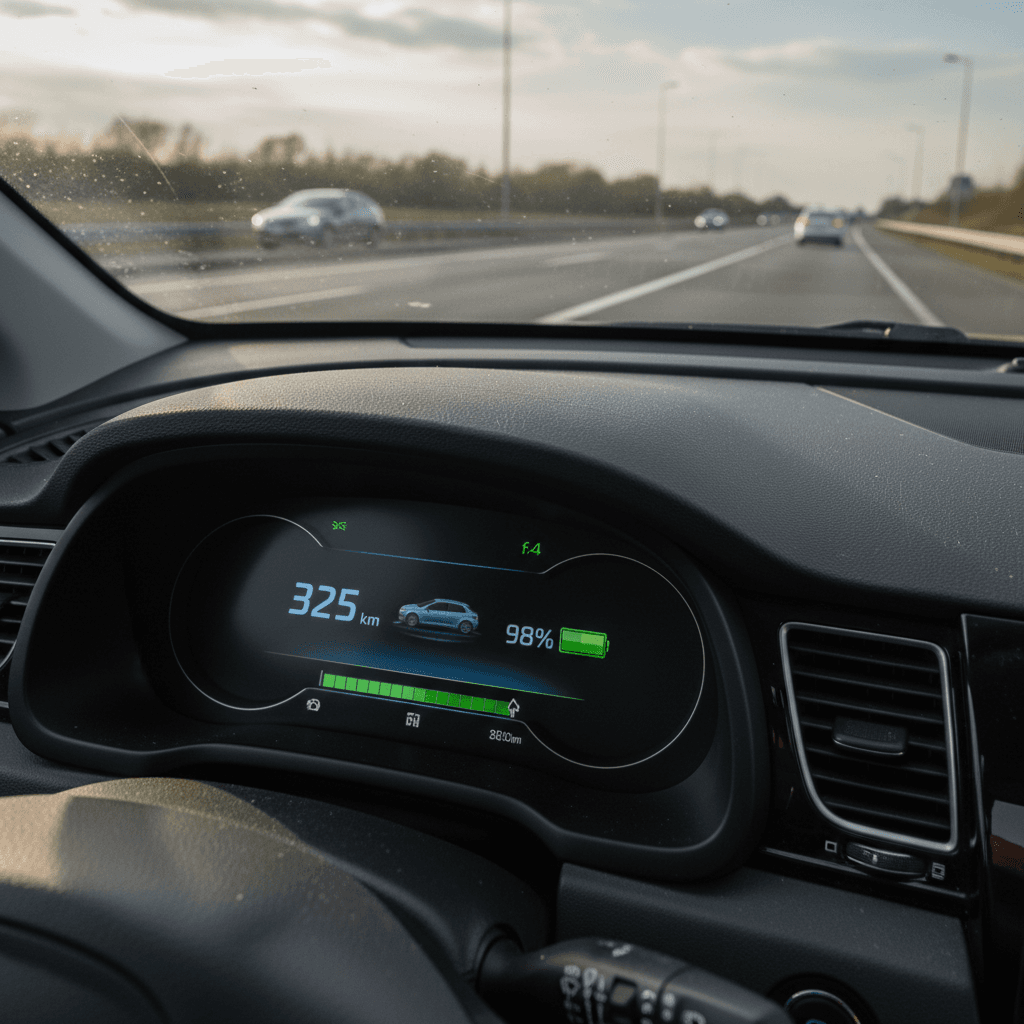
Don’t worship the GOM
Real‑world highway range test: 75‑mph results
Most EVs are at their worst on the highway, and the Niro EV is no exception. In an independent 75‑mph highway test on a 2023–2024 Niro EV in calm, mild conditions, the car delivered roughly 210 miles before needing a charge, about 17% below its 253‑mile EPA rating. That’s not a failure; that’s physics.
One‑charge highway range at a steady 75 mph
Approximate real‑world results for a healthy 2023–2024 Kia Niro EV starting from 100% state of charge.
| Conditions | Average Speed | Estimated Consumption | Usable Range |
|---|---|---|---|
| Calm weather, 60–70°F | 75 mph | ≈3.0 mi/kWh | ≈210 miles |
| Light headwind or rolling hills | 75 mph | ≈2.7–2.8 mi/kWh | ≈190–200 miles |
| Cold (below 32°F), heater on | 75 mph | ≈2.3–2.5 mi/kWh | ≈165–180 miles |
Your exact numbers will vary with grade, wind, and how often you slow down or draft behind traffic.
If your Saturday routine is a 200‑mile out‑and‑back at 75 mph, the Niro EV can do it from full in good conditions, but with very little buffer. On a windy or cold day, you’ll want at least one quick top‑up along the way.
City and mixed driving: when the Niro EV beats its rating
Turn down the speed, add some stop‑and‑go, and suddenly the Kia Niro EV looks like a range hero. Owners commonly report 3.7–4.2 mi/kWh in light city and suburban driving in mild weather. Do the math on a roughly 64‑kWh pack and you’re in the 240–270‑mile ballpark, sometimes higher if you’re really gentle and avoid high speeds.
Typical real‑world range by driving pattern
Assuming a healthy battery and temperate weather
Urban commuter
Profile: 25–45 mph, lots of lights and regen, little highway.
Typical efficiency: 3.8–4.3 mi/kWh.
Real‑world range: about 240–275 miles per full charge.
Mixed suburban
Profile: 50/50 city and 60–70 mph highway.
Typical efficiency: 3.3–3.7 mi/kWh.
Real‑world range: about 215–245 miles.
Mostly interstate
Profile: Long stints at 70–80 mph.
Typical efficiency: 2.6–3.1 mi/kWh.
Real‑world range: about 170–215 miles.
Why slow feels so good (for range)
What kills Kia Niro EV range in the real world
If your Niro EV feels like it’s falling short of the brochure, there’s usually a clear culprit, or three. The big enemies of range are the same across almost all compact EVs: speed, temperature, elevation, and how much air you’re shoving out of the way.
- High sustained speed: Aerodynamic drag rises with the square of speed. Jumping from 65 to 80 mph can easily cost you 15–25% of your range.
- Cold weather and cabin heat: Below freezing, the battery is less efficient and the resistive heater can draw several kilowatts by itself, especially before the cabin warms up.
- Strong headwinds and rain: Anything that forces the car to push harder through the air, or through standing water, drags range down.
- Big elevation gains: Climbing long grades consumes energy quickly. You’ll recapture some of it on the way back down, but not all.
- Under‑inflated or winter tires: Extra rolling resistance can quietly chew through 5–10% of your expected range.
- Roof boxes and bike racks: Great for weekend adventures, terrible for aerodynamics. Expect a noticeable efficiency penalty at highway speeds.
Cold‑weather reality check
How the Niro EV’s range compares to other compact EVs
On paper, the Kia Niro EV sits in the fat middle of the compact‑EV class. It beats some rivals on efficiency, loses a bit on total kWh versus the mega‑range crowd, and largely lives in the 230–260‑mile real‑world window for everyday use.
Kia Niro EV vs similar compact EVs (EPA ratings)
Approximate EPA range and battery size for 2023 model‑year compact EVs sold in the U.S.
| Model & year | Battery size | EPA range | Highway reality (75 mph, mild) |
|---|---|---|---|
| Kia Niro EV (2023–24) | 64.8 kWh | 253 miles | ≈210 miles |
| Chevy Bolt EUV (2023) | 65 kWh | 247 miles | ≈200 miles |
| Hyundai Kona Electric (2023) | 64 kWh | 258 miles | ≈210 miles |
| VW ID.4 Standard RWD (2023) | 62 kWh | 209 miles | ≈175–185 miles |
Real‑world results depend heavily on speed and temperature; the Niro EV’s highway behavior is broadly similar to these peers.
The Niro EV’s quiet superpower
Real‑world range in a used Kia Niro EV
If you’re shopping a used Kia Niro EV, the first question isn’t just “What’s the range?” It’s “How healthy is the battery that creates that range?” A 3‑ to 5‑year‑old Niro EV should still be entirely usable for road‑tripping, but range will track with how much usable capacity remains and how the car was treated.
What’s normal as these age?
- Most well‑cared‑for Niro EVs show modest degradation in the first 3–5 years.
- Think in terms of a 5–10% loss in usable range, not a cliff.
- A car that once felt like a solid 230‑mile commuter might now feel more like 205–215 in the same conditions.
Red flags to watch for
- Owner reports of dramatically lower range than peers in similar climates.
- Big mismatch between battery percentage and displayed miles (e.g., 100% but only 150 miles predicted in mild weather).
- Fast‑charge behavior that seems to taper unusually early, suggesting the pack is protecting itself.
How Recharged helps on the used side
How to maximize real‑world Niro EV range
You can’t change physics, but you can nudge the odds in your favor. A few small habits turn the Kia Niro EV from “borderline” to “no‑sweat” on trips that brush its range limits.
Practical ways to stretch your Kia Niro EV’s range
1. Set a realistic highway pace
If you’re chasing range, think 65–70 mph, not 80. Dropping your cruise speed by even 5 mph can claw back a surprising amount of range without ruining your day.
2. Precondition while plugged in
Use the Kia Connect app or in‑car timers to warm or cool the cabin while the Niro EV is still on the charger. You’ll start with a comfortable interior without dumping that energy from the battery.
3. Use Eco mode and strong regen
Eco mode softens throttle response and optimizes climate settings. Pair it with strong regenerative braking (via the paddle shifters) so more of your slowing down turns back into stored energy.
4. Watch consumption, not just miles
Keep an eye on your mi/kWh readout over each leg of your trip. If it’s trending low, you can adjust speed or climate settings before range becomes a problem.
5. Keep tires properly inflated
Low tire pressures sap range and feel. Check them regularly, especially at the start of a road‑trip season. If you run aggressive winter tires, assume a few percent loss in efficiency.
6. Plan fast‑charge stops around 10–60%
The Niro EV charges quickest in the mid‑pack range. For road trips, it’s often faster overall to bounce between roughly 10% and 60–70% than to sit and wait on that last slow 80–100% top‑up.
Plan with good data, not vibes
Kia Niro EV real‑world range: FAQ
Frequently asked questions about Kia Niro EV range
Is the Kia Niro EV’s real‑world range enough for you?
On the spec sheet, the Kia Niro EV is a 253‑mile compact crossover. On actual roads, in actual weather, it’s more honest to think of it as a 210‑mile highway car and a 230–260‑mile everyday commuter, with winter knocking those numbers back. If that matches your life, home charging, sane daily mileage, the occasional planned‑out road trip, the Niro EV quietly does the job and sips electrons while it’s at it.
If you’re browsing for a used Niro EV, the key is pairing those range expectations with a clear picture of battery health. That’s exactly what Recharged’s Recharged Score Report is designed to deliver: verified pack diagnostics, fair pricing, and EV‑savvy guidance from your first search to delivery in your driveway. That way, when you see 210 miles on a road‑trip leg, it’s because that’s how you chose to drive, not because the battery has quietly given up 40 miles of its life without telling you.