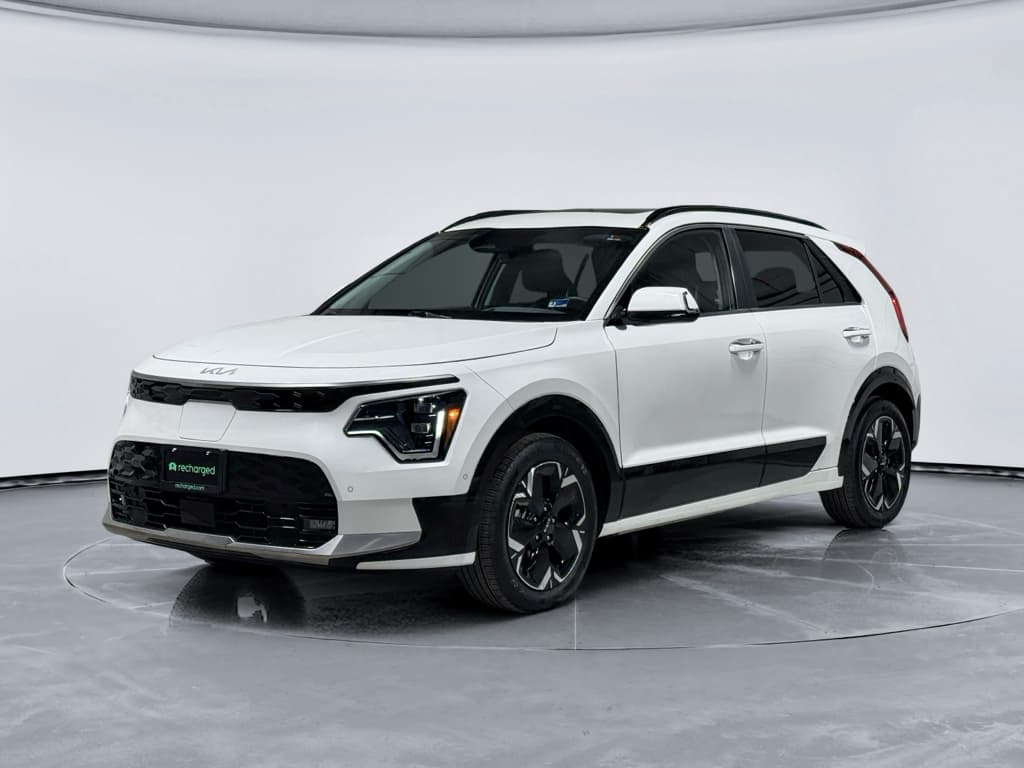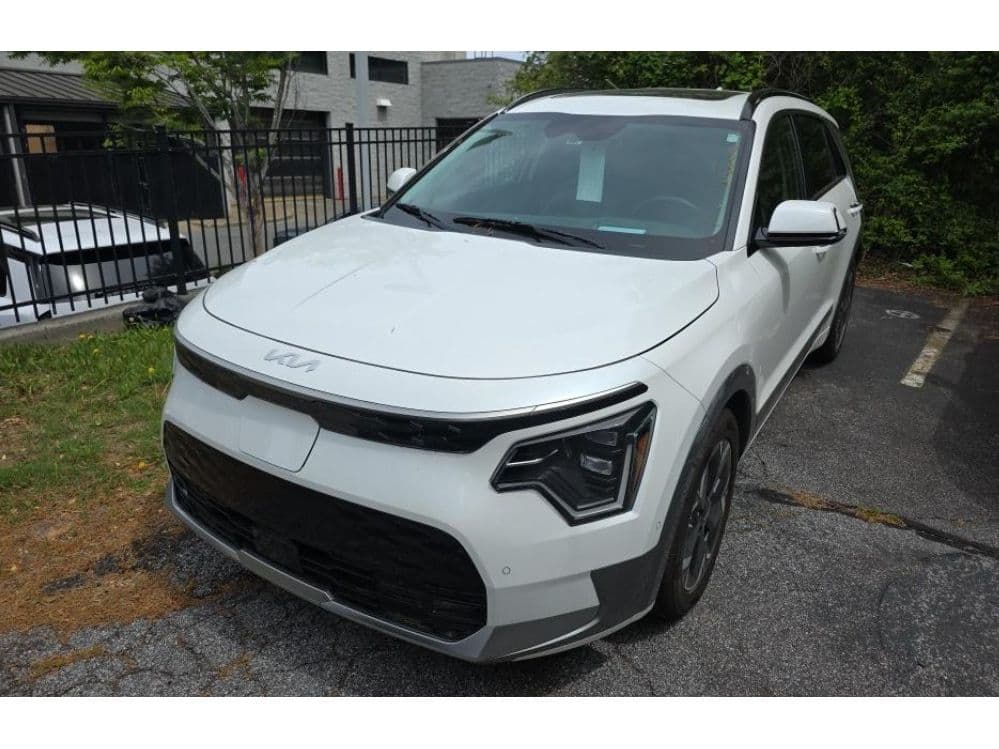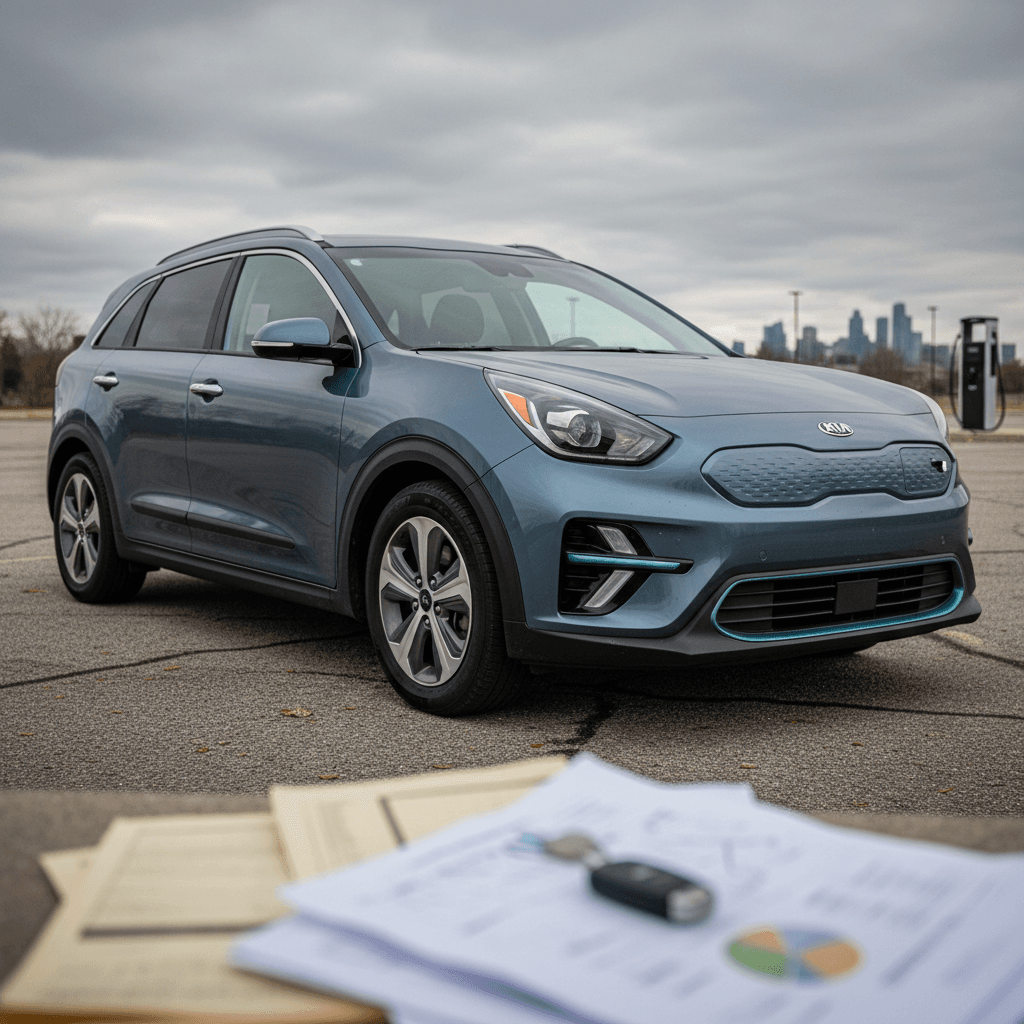
If you’re eyeing a used Kia Niro EV or wondering what your current one will be worth in a few years, understanding the Kia Niro EV depreciation rate in 2026 is crucial. EV prices have been volatile since the 2021–2022 spike, but clear patterns have emerged for the Niro EV that can help you buy smart, choose the right loan term, and avoid ending up upside‑down on your car.
Quick snapshot for 2026
Kia Niro EV depreciation rate in 2026: the big picture
Across multiple data sources and real‑world listings, the Kia Niro EV follows a familiar EV pattern: a steep drop in the first few years, then a slower, flatter curve. Recharged’s own analysis of three‑year‑old Niro EVs shows many examples that started in the low‑to‑mid $30,000s selling in the low‑to‑mid $20,000s after three years, which works out to around 35–45% depreciation from original MSRP by year three. Several five‑year studies place the Niro EV’s five‑year depreciation in the 55–60% range, roughly in line with other mainstream EVs and slightly better than some luxury electric models.
Kia Niro EV depreciation milestones (typical ranges)
Those are averages, not promises. The specific Niro EV you’re looking at can sit well above or below the curve based on mileage, trim level, accident history, and whether heavy rebates or discounts were used when it was new. That’s why at Recharged each vehicle gets a Recharged Score Report that benchmarks pricing against live nationwide data instead of guesswork.
How fast does a Kia Niro EV depreciate? 3–10 year view
Let’s translate those percentages into a simple timeline. To keep things grounded, imagine a Niro EV with a new‑vehicle MSRP of $42,000 (roughly what many mid‑trim 2023–2025 Niro EVs list for before incentives). Actual MSRP and incentives vary by year and trim, but the shape of the curve stays similar.
- By year 1: Many Niro EVs take their sharpest hit early. In a soft used‑EV market, it’s common to see 15–25% depreciation in the first 12 months, especially if big rebates were on the hood when new.
- By year 3: Real‑world data in 2026 points to roughly 35–45% total depreciation. For that $42,000 example, that’s a resale value somewhere in the low‑to‑mid $20,000s, assuming typical miles and clean history.
- By year 5: Several studies and market analyses put the Niro EV’s 5‑year depreciation in the 55–60% range. That same car might be worth around $16,500–$19,000, again with big variations for miles, trim, and condition.
- Years 6–10: After year five the curve usually flattens. The car is firmly a value play, and as long as the battery is healthy and the warranty still has time left, resale tends to fall more gently year over year.
Beware of incentives “double dipping”
Why Niro EV depreciation looks the way it does in 2026
Depreciation isn’t just about the car; it’s about timing. The Kia Niro EV is running through 2026 in a market that’s very different from the frenzied 2021–2022 environment. Used EV prices cooled significantly in 2023–2025 as new EV supply improved and newer models with longer range and faster charging, sometimes from Kia itself, hit the market. That’s pushed early‑build Niro EVs down the price ladder faster than some owners expected, but it’s also created real value opportunities for used‑EV shoppers.
Key 2026 forces shaping Niro EV depreciation
Why the same Niro EV might be a bargain for a buyer but a headache for a seller
Newer, flashier EVs
Past incentives & discounts
Steady demand for efficient crossovers
Middle‑of‑the‑road is not a bad place to be
Battery health, warranty, and their impact on resale
Unlike a gas engine, an EV’s single biggest wild card in depreciation is battery health. The good news for Niro EV owners is that real‑world experience and Kia’s warranty structure both support value.
- Long battery warranty: In the U.S., Kia typically backs its EV traction batteries for 10 years or 100,000 miles (check your exact warranty booklet). A three‑ or four‑year‑old Niro EV still has many years of coverage left, which reassures second and third owners.
- Stable degradation so far: Owner reports and testing suggest that a well‑cared‑for Niro EV battery tends to hold up well. Many drivers see only modest range loss after the first few years, assuming normal charging habits.
- Battery health reports matter: In 2026, savvy buyers want proof, not just promises. A battery health diagnostic, like the Recharged Score Report we run on every Niro EV we sell, can turn a “maybe” into a confident “yes” and support a higher selling price.

Charging habits that protect value
Illustrative year‑by‑year Kia Niro EV value curve
To make this more concrete, here’s an illustrative depreciation curve for a Kia Niro EV with a notional MSRP of $42,000. These are typical market ballparks in 2026, not guarantees, and assume normal mileage (about 12,000–15,000 miles per year), clean history, and no severe battery issues.
Approximate Kia Niro EV depreciation through 10 years
Illustrative value curve for a Niro EV launched at a $42,000 MSRP. Real‑world prices vary by trim, local demand, incentives, and condition.
| Age of vehicle | Approx. value range | Typical total depreciation | What’s happening in the market |
|---|---|---|---|
| 1 year | $31,500–$35,500 | 15–25% | Early‑year incentives and the shift from new‑car hype to used‑car reality take a fast initial bite. |
| 3 years | $23,000–$27,500 | 35–45% | Loan balances and market value often start to converge; many owners hit “break‑even” around this point if they financed sensibly. |
| 5 years | $16,500–$19,000 | 55–60% | The Niro EV sits squarely as a value EV, with remaining battery warranty still meaningful for most examples. |
| 7 years | $12,000–$15,000 | 65–70% | Battery health, warranty balance, and cosmetic condition drive large price differences between similar‑year cars. |
| 10 years | $8,000–$11,000 | 75–80% | At this stage, buyers pay mostly for a known‑good battery and clean history. Nice examples can still command a premium. |
Use these numbers as directional guideposts, not exact appraisals for a specific vehicle.
Why you shouldn’t rely on a single online estimate
How the Kia Niro EV compares to other EVs and gas SUVs
When you look beyond the Niro EV itself, the depreciation story gets context. Industry‑wide analyses consistently find that EVs, as a group, depreciate faster than popular gas trucks and SUVs, especially in the first five years. Within the EV segment, Tesla models often hold value better than mainstream EVs, while some low‑volume electrics lose value far more quickly.
Versus other compact EV crossovers
Compared with many non‑Tesla EV crossovers, the Niro EV sits near the middle of the pack. Some rivals have seen five‑year depreciation over 60%, particularly if they launched with smaller batteries or slower charging and were later overshadowed by refreshed models.
The Niro EV’s strengths are its usable range, relatively conventional styling, and a mainstream brand with good warranty coverage. Those traits help it avoid the steepest resale cliffs seen by more niche EVs.
Versus gas compact SUVs
Against mainstream gas compact SUVs, the Niro EV generally depreciates faster in percentage terms over the first five years. That’s partly because EV technology is evolving quickly and partly because gas SUVs discovered a second wind during and after the 2021–2022 supply crunch.
However, when you add in fuel and maintenance savings, a Niro EV’s total cost of ownership can still undercut a gas rival even if the sticker‑price depreciation looks steeper.
A smart buy in its lane
Buying a used Kia Niro EV in 2026: minimizing depreciation risk
If you’re on the buying side in 2026, depreciation risk can actually work in your favor, as long as you choose the right car at the right price. Here’s how to tilt the odds your way.
Used Niro EV buying checklist for 2026
1. Target the “sweet spot” years
Three‑ to five‑year‑old Niro EVs often represent the best blend of price, remaining warranty, and modern tech. Much of the steep early depreciation is already behind you, but there’s still plenty of life (and warranty) left.
2. Focus on battery health, not just miles
Mileage matters, but EVs live or die on battery condition. Ask for a recent battery health report. At Recharged, every Niro EV comes with a Recharged Score Report that includes verified battery diagnostics so you’re not guessing.
3. Verify remaining warranty coverage
Confirm the in‑service date and mileage so you know exactly how much of the 10‑year/100,000‑mile battery and EV system warranty is left. A car with two extra years of coverage can justify a higher price than a similar one that’s nearly out of warranty.
4. Compare asking prices to live market data
Don’t rely on a single guide. Look at active listings for comparable Niro EVs in your region and see what’s actually selling. Platforms like Recharged benchmark pricing against nationwide EV transaction data so you can quickly spot outliers.
5. Run the long‑term cost math
A Niro EV that seems to depreciate faster than a gas SUV may still cost less to own when you add up fuel, maintenance, and potential tax incentives. Build a simple 5‑ to 7‑year cost‑of‑ownership estimate before you decide.
Consider your exit plan on day one
Selling or trading your Kia Niro EV: getting the best number
If you’re on the selling side, you can’t control the entire EV market, but you can control how your specific Niro EV looks on a buyer’s shortlist. Small steps can noticeably improve your offers.
Tactics to improve your Niro EV’s resale value
Stack several of these together and you can stand out from similar listings
Detail, photos, and records
Provide a battery health report
Consider online offers & consignment
Watch your payoff vs. market value
When Niro EV depreciation actually works in your favor
For savvy buyers, the very depreciation that frustrates some early adopters creates opportunity. In 2026, there are plenty of three‑ to six‑year‑old Niro EVs that deliver modern range and tech at prices that would have been unthinkable when they were new.
- You can often buy a nicely equipped Niro EV for low‑to‑mid $20,000s that once stickered in the $40,000 neighborhood.
- Total operating costs, especially if you charge at home on off‑peak electricity, can undercut a comparable gas SUV, even after accounting for depreciation.
- Because the depreciation curve flattens with age, buying later in the curve can mean smaller dollar losses per year during your ownership window.
Where Recharged fits into the picture
Ready to find your next EV?
Browse VehiclesKia Niro EV depreciation rate 2026: FAQs
Frequently asked questions about Niro EV depreciation
Bottom line: is the Kia Niro EV a good value in 2026?
By 2026, the Kia Niro EV depreciation rate has settled into a predictable pattern: sharper early‑year drops than a typical gas SUV, but a solid middle‑of‑the‑pack showing within the EV world. For first owners who paid near MSRP with minimal incentives, that can sting. For used‑EV shoppers, though, it’s a chance to pick up a practical, efficient crossover for thousands less than its original price while still enjoying years of battery warranty coverage.
If you’re considering a Niro EV, whether you’re buying, trading, or selling, focus on the specific car in front of you: its battery health, warranty timeline, mileage, and how its asking price lines up with the live market. That’s exactly what Recharged is built to help with. Every Niro EV in our marketplace comes with a Recharged Score Report, expert guidance, flexible financing options, and the ability to trade in or get an instant offer on your current vehicle, all with nationwide delivery. That way you’re not just guessing where depreciation will land, you’re making a decision that fits your budget and your plans for the years ahead.