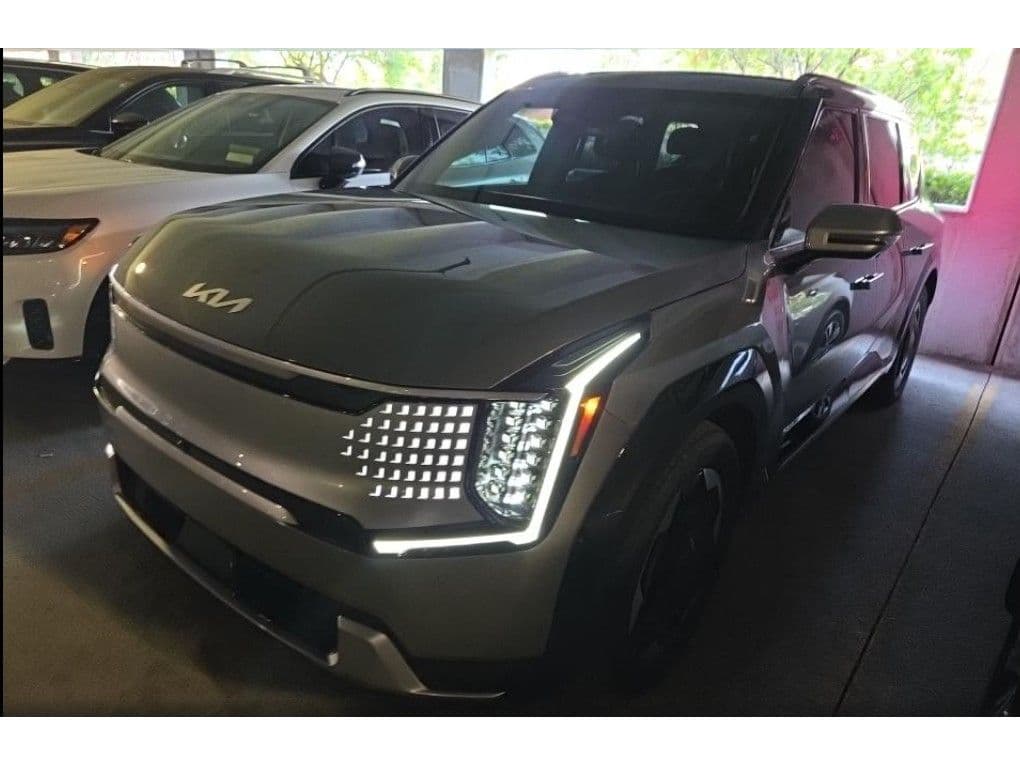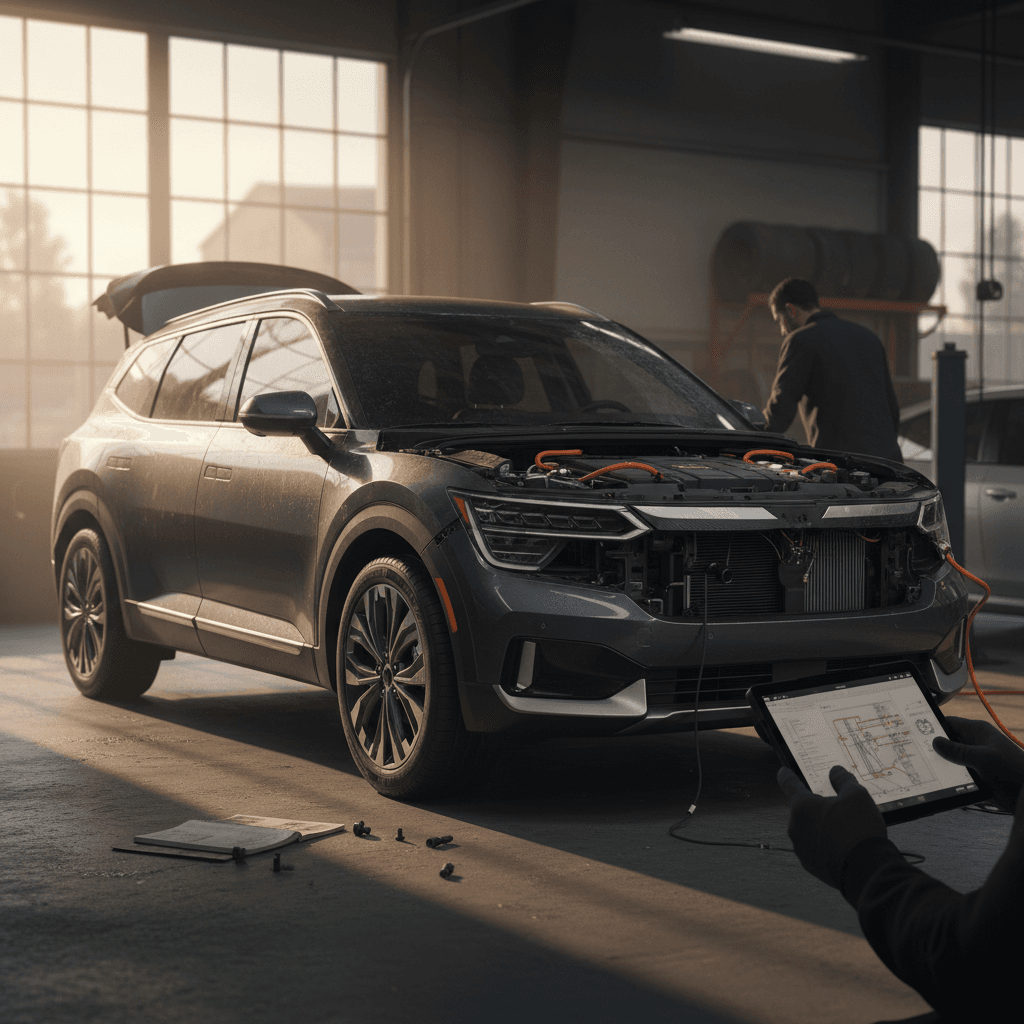
If you’re considering a three‑row electric SUV, the Kia EV9’s reliability in 2026 is probably one of your biggest question marks. On paper, it checks every box: space, range, tech and price. In the real world, early recalls, scattered battery complaints and slow repairs have created a more complicated picture, especially if you’re looking at a 2024 or 2025 build, or a used EV9 coming off its first lease.
Context: first-generation flagship EV
Kia EV9 reliability in 2026: the short version
Kia EV9 reliability at a glance (2026)
Where it’s strong, where it’s shaky, and what that means for you
Safety vs. reliability
The EV9 has earned strong crash-test and safety tech scores where tested, and Kia has been quick to issue recalls for seat-mounting and drivetrain issues. That’s good from a safety standpoint, even if it signals early‑build quality problems.
Drivetrain & battery
The core E‑GMP electric platform is proven across EV6 and Hyundai Ioniq models, and most EV9 owners report smooth, quiet power. But there are enough reports of high‑voltage battery module failures and 12‑volt battery issues that you can’t ignore them, especially if dealer support is thin in your area.
Dealer repair experience
When things do go wrong, some owners report weeks or months in the shop waiting for parts, loaners or clear answers. That’s common with new EV nameplates, but it’s a real ownership risk you should price into any deal.
In 2026, the fairest summary is this: the Kia EV9 is an excellent EV wrapped in first‑generation reliability risk. If you live near a strong Kia EV dealer, get the right price, and protect yourself with the right warranty and battery health data, it can still pencil out. If your local dealer is learning EVs on the fly, you’ll want to think much harder about how much risk you’re willing to absorb.
How the Kia EV9 has performed so far
Early reliability signals for the Kia EV9
The data on the EV9 is still young. This is a 2024‑launch model, and by April 2026 it hasn’t accumulated the years of history you see on a Kia Telluride or Toyota Highlander. What we do have is a familiar early‑EV pattern: some glowing owner reviews, some nightmare repair stories, and a cluster of recalls you need to understand before you sign anything.
How to read the mixed signals
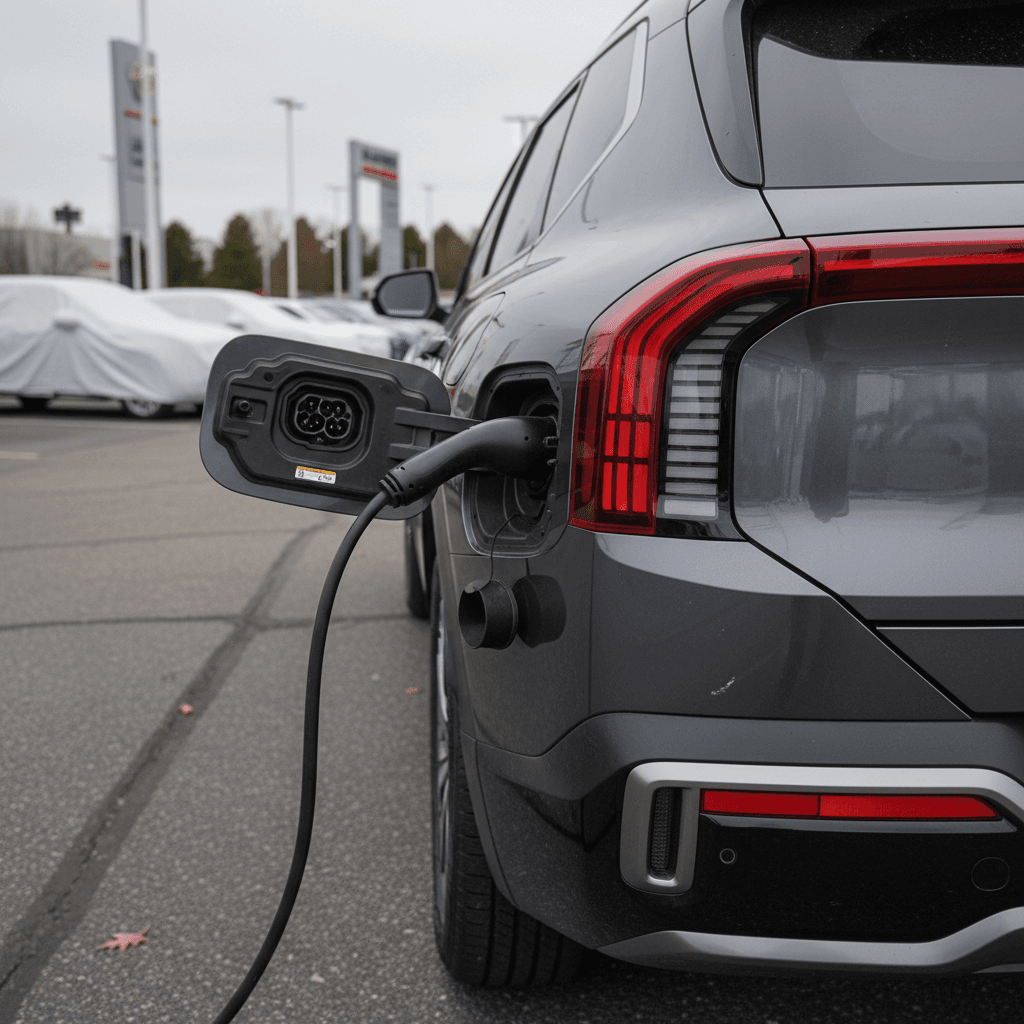
Key Kia EV9 recalls through early 2026
Major Kia EV9 recalls affecting 2024–2025 builds
Always run a VIN check and confirm recall completion before buying or leasing any EV9, especially a used example.
| Issue | Model years affected | What can happen | How it’s fixed |
|---|---|---|---|
| Seat mounting bolts missing or loose | 2024–2025 | Second‑ or third‑row seats may not be properly secured, increasing injury risk in a crash. | Dealer inspects seat mounting hardware and installs or torques bolts as required. |
| Rear drive unit (dual‑motor AWD) defect | Select 2025 AWD builds | Improperly manufactured rear gear drive unit can lead to loss of drive power. | Dealer replaces the rear drive unit with updated hardware. |
| Instrument cluster / software fault | 2024–2025 | Cluster may go blank or display incorrectly, potentially obscuring key driving information. | Software update and/or cluster replacement through a recall campaign. |
| Electrical/software campaign (control units) | 2024 | Software errors in control modules can cause warning lights, limp modes or reduced functionality. | Dealer or over‑the‑air (OTA) software update, sometimes followed by in‑dealer verification. |
Recall campaigns continue to evolve; confirm open recalls with the NHTSA database or a Kia dealer at the time of purchase.
Why recalls matter so much on a first‑gen EV
If you’re eyeing a used EV9 in 2026, especially an early‑build 2024 or 2025, expect recall hits on a vehicle history report. That’s not necessarily a deal‑breaker. What you’re looking for is a clear trail showing the work was completed promptly, not months after the notice arrived.
Common Kia EV9 problems owners report
- 12‑volt battery failures that strand the vehicle or trigger a no‑start condition
- High‑voltage battery module faults requiring pack or module replacement
- Long wait times for battery‑related parts and field engineers
- Glitchy instrument clusters or infotainment behavior that requires software updates
- Occasional complaints about squeaks, rattles and trim alignment on early builds
Owner forums and early survey data paint a split picture. Many EV9 drivers report thousands of quiet, trouble‑free miles. Others have seen high‑voltage battery cell issues, repeated error messages, or 12‑volt battery failures that take the vehicle offline until a dealer can intervene. Because the EV9’s pack is large and complex, any internal fault tends to mean slow, specialized repairs, and in the first model years, parts availability hasn’t always kept up.
The worst‑case scenario
That may sound extreme, and it is. But if you only have one vehicle, a months‑long outage is more than an annoyance. It’s the kind of risk that should nudge you toward a stronger lease deal, a loaner‑guarantee written into your purchase contract, or a different model altogether if your local dealer isn’t geared up for EV service.
Battery health, range and software updates
Battery degradation vs. battery failures
The EV9’s pack uses Kia’s latest E‑GMP architecture, shared with EV6 and Hyundai’s larger EVs. So far, there’s no broad evidence of rapid, across‑the‑board degradation; most early owners still report range figures in line with what they saw new.
The higher‑profile problems show up as individual bad cells or modules that trigger errors long before typical degradation would. Those are warranty events, not normal wear, and they’re exactly the ones that can park your EV9 for weeks while parts arrive.
Software updates that change the rules
Like most modern EVs, the EV9 leans heavily on over‑the‑air (OTA) updates. Some owners have reported OTA changes that subtly adjust usable battery capacity or displayed state of charge in the name of longevity and safety.
That can be good news for long‑term battery health, but frustrating if your displayed range shrinks. It also makes independent battery health validation more important when you’re evaluating a used EV9, because on‑screen state of health doesn’t always tell the whole story.
How Recharged handles EV9 battery health
Did Kia fix it? 2026 EV9s vs. 2024–2025 builds
How EV9 reliability trends by model year (so far)
What we’re seeing by 2026, not a guarantee for every vehicle
2024: launch-year kinks
Most recalls and the ugliest battery/12‑volt stories trace back to early 2024 builds. Hardware and software have both moved quickly since then. If you buy a 2024, you want one that’s had every campaign and TSB applied and shows clean, recent service notes.
2025: still sorting hardware
By 2025, Kia had already rolled out recalls for seat bolts and was addressing drive‑unit issues in specific dual‑motor builds. Software became more stable, but some owners still reported one‑off battery and electronics problems.
2026: incremental improvement
Early 2026 owners report fewer dramatic failures so far, and Kia has more experience stocking parts and processing EV repairs. But this is still fundamentally the same first‑generation EV9 under the skin, so you should treat it as improved, not bulletproof.
If you’re cross‑shopping 2024–2026 EV9s
Kia EV9 reliability vs. other three-row EVs
How the Kia EV9 stacks up on reliability vs. rivals
Rough, directional comparison based on early survey data, recalls and owner feedback as of early 2026.
| Model | Generation status | Reliability risk profile (early 2026) | Key tradeoffs |
|---|---|---|---|
| Kia EV9 | New (launched 2024) | Higher-than-average risk for battery/electrical issues and recall trips, with slow repairs in some regions. | Excellent packaging and value; strong warranty and charging speed; service network still learning large EVs. |
| Hyundai Ioniq 9 | New (shared platform) | Similar first‑gen risk profile; fewer U.S. units on road so far, less data overall. | Potentially better efficiency; dealer EV experience varies widely by region. |
| Mercedes‑Benz EQS SUV | New-ish, luxury | Complex tech and high repair costs; not immune to software glitches, but different buyer expectations and support model. | Luxury interior and brand cachet; expensive both to buy and to fix out of warranty. |
| Tesla Model X (updated) | Mature but niche | Known for fit‑and‑finish quirks and intermittent software issues; mechanicals reasonably sorted after years in production. | Access to Supercharger network; parts and service can still be a pain depending on region. |
Always compare specific VINs and service histories; reliability can vary widely even within the same model year.
The EV9 doesn’t exist in a vacuum. Almost every three‑row electric SUV on sale in 2026 has some kind of asterisk next to its name when you look past the marketing. The question isn’t whether the EV9 is perfect, it isn’t. The question is whether its particular flavor of risk fits your budget, your local dealer landscape and your tolerance for downtime.
Warranty coverage, and what it really solves
- 10‑year/100,000‑mile high‑voltage battery warranty, typically covering repair or replacement if capacity drops below a defined threshold or if a defect appears.
- 5‑year/60,000‑mile basic warranty that covers most non‑wear components and many electronic failures.
- Roadside assistance for breakdowns within warranty limits, including tows to a Kia dealer.
- Separate corrosion and emissions coverage depending on market.
On paper, Kia’s warranty package is a strong counterweight to EV9 reliability concerns. High‑voltage battery issues, drive‑unit failures and major electronic gremlins are largely Kia’s financial problem, not yours, at least within the first decade. But warranty coverage doesn’t guarantee speed, nor does it guarantee you’ll get a comparable EV loaner for months if your pack needs modules replaced.
How to make the warranty work for you
How to shop for a used Kia EV9 in 2026
Used EV9s are just starting to trickle into the market as early leases roll off. For shoppers, that can mean compelling pricing on a big‑ticket EV that was out of reach new. It also means you’re walking into the teeth of early‑life reliability risk. The good news: if you approach a used EV9 methodically, you can slash a lot of that uncertainty.
1. Prioritize the right ownership story
- Seek single‑owner vehicles with clear, consistent service history at the same Kia dealer.
- Look for recent recall completion dates, not campaigns that sat open for a year.
- Be cautious with units that bounced between multiple dealers or show long gaps between visits.
2. Buy the battery, not just the badge
- Request an independent battery health report, not just a photo of the range estimate.
- Ask for printouts of any high‑voltage fault codes or field engineer reports.
- On Recharged, every EV9 listing includes a Recharged Score battery health diagnostic, so you can compare pack condition across vehicles instead of guessing.
Leasing vs. buying a used EV9
Checklist: reliability checks before you buy an EV9
Pre‑purchase reliability checklist for a 2024–2026 Kia EV9
1. Pull a complete VIN history
Run a vehicle history report and cross‑check it with the NHTSA recall lookup and Kia’s own tools. Confirm that every EV9‑specific recall has a clear "completed" status, and that accident repairs (if any) involve quality shops.
2. Demand a battery health report
Don’t settle for "it still shows 280 miles of range." Ask for documented <strong>state‑of‑health measurements</strong> from a trusted tool or marketplace. With Recharged, this is built into the Recharged Score Report.
3. Inspect 12‑volt and charging history
Have a technician check the 12‑volt battery’s age and health, and scan for historical trouble codes related to charging, HV isolation faults or repeated limp‑mode events.
4. Test every screen and function
On the test drive, cycle the instrument cluster views, infotainment, driver‑assist features and climate controls. Watch for flickers, reboots, or warning messages that suggest software or wiring issues.
5. Ask pointed questions about downtime
Ask the seller: "Has this EV9 ever been down for more than a week for a repair?" If so, get documentation. Long downtimes for battery or electronics work are a key red flag.
6. Verify dealer EV competency
Before you buy, call the service department you’d use and ask how many EV9s they’ve actually repaired. A dealer that’s done multiple high‑voltage jobs is a safer bet than one learning on your vehicle.
Kia EV9 reliability FAQ (2026)
Frequently asked questions about Kia EV9 reliability in 2026
Bottom line: is the Kia EV9 a risky bet in 2026?
The 2026 Kia EV9 is a classic first‑generation flagship: impressive where it’s good, imperfect where it’s not. If you want three rows of electric seating, strong charging speeds and a comfortable cabin, it belongs on your short list. But it also deserves a more cautious buying approach than a mature gasoline SUV with a decade of data behind it.
If you’re comfortable with that tradeoff, and you pair it with a fair price, robust warranty strategy, and independent battery and recall verification, the EV9 can still be a smart play. If your tolerance for shop visits is near zero, you may be better served by waiting for the mid‑cycle update, choosing a more proven EV, or structuring your EV9 deal as a lease rather than a long‑term purchase.
Either way, don’t shop the Kia EV9’s reliability on rumor or ads alone. Use the data that exists, lean on EV‑savvy marketplaces such as Recharged for transparent battery health and pricing, and make the kind of informed decision first‑generation vehicles demand.