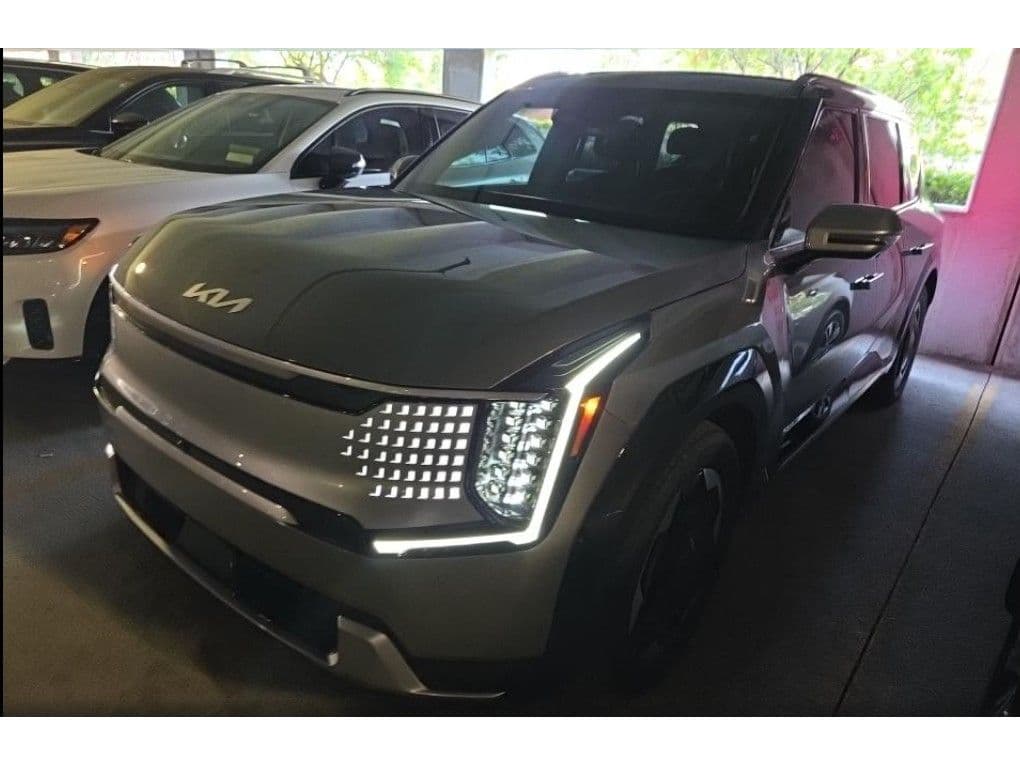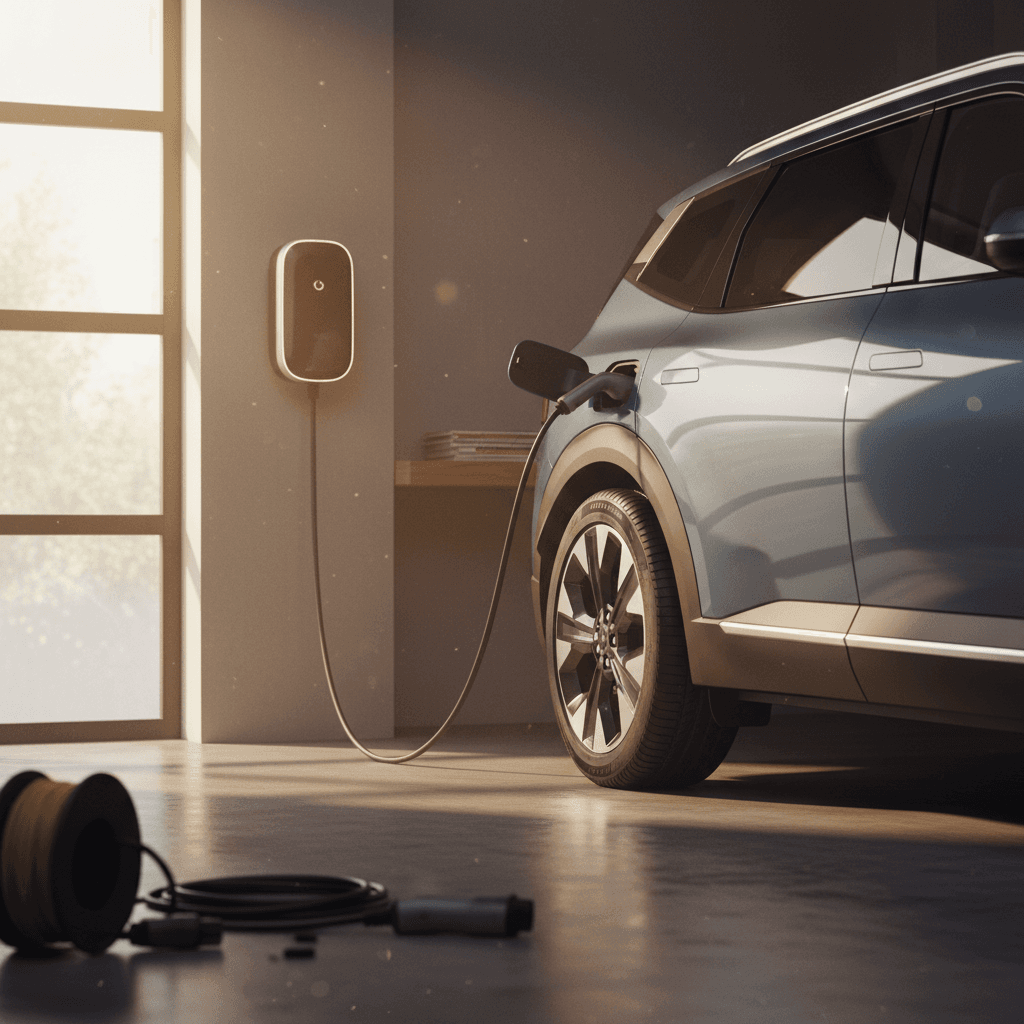
The Kia EV9 is a big, family‑size SUV with a big battery. To enjoy it day to day, you’ll want more than the slow trickle of a standard wall outlet. The good news is that choosing the best home charger for a Kia EV9 isn’t complicated once you understand how the EV9 charges and what kind of Level 2 unit makes sense for your driveway or garage.
Quick answer
Kia EV9 home charging basics
Before you pick hardware, it helps to understand how the Kia EV9 handles AC (home) charging. Every EV9 trim in the U.S. comes with an onboard charger rated around 10.9–11 kW for Level 2 AC charging. That’s the maximum power the vehicle can accept from a home charger; anything bigger won’t make it charge faster.
Kia EV9 AC charging at a glance
In practical terms, a properly sized Level 2 charger will typically refill a mostly depleted EV9 battery overnight. A basic Level 1 cord on a 120V outlet, by contrast, can take multiple days to do the same job, fine in a pinch, frustrating for everyday use with a three‑row SUV.
- Level 1 (120V): ~2–5 miles of range per hour of charging, emergency or very light use only for an EV9.
- Level 2 (240V, 32–48A): ~20–40+ miles of range per hour, what most EV9 owners should install at home.
- DC fast charging: Great for road trips, but not a home solution and harder on your wallet (and, over time, the battery).
Think in miles, not just kW
How much power does the Kia EV9 really need at home?
Because the EV9’s onboard charger tops out around 11 kW, the “best” home charger size is the one that gets you closest to that number on your home electrical service, without requiring a utility upgrade or breaking your budget.
Common Level 2 charger sizes for the EV9
How they translate into real‑world charging speed
32‑amp charger
Power: ~7.7 kW on 240V
Good for: 8–10 hours to refill from low, typical suburban commutes, older 100A panels.
Why choose: Easier on existing wiring, lower hardware and installation cost.
40‑amp charger
Power: ~9.6 kW on 240V
Good for: Faster overnight charging if you regularly arrive home below 30%.
Why choose: Nice middle ground, noticeably faster than 32A without maxing out the EV9.
48‑amp charger
Power: ~11.5 kW on 240V
Good for: Using essentially all of the EV9’s AC charging capability.
Why choose: Fastest practical home charging. Ideal if you often drive 150–200+ miles in a day.
Breaker sizing rule of thumb
If you own your home and have a relatively modern 200‑amp service panel, a 40A or 48A charger is usually realistic. If you’re in an older home, condo, or townhouse, a 32A charger on a 40A breaker might be the sweet spot that avoids a pricey service upgrade.
Key features of the best Kia EV9 home charger
Once you’ve decided on an amp rating, you still have a lot of choices. The best Kia EV9 home charger will combine the right connector, smart features, and a build quality that can live outside for a decade or more.
What to look for in an EV9 home charger
Don’t just buy by price, buy by fit
Connector & standards
- NACS or J1772: Newer EV9s will have the NACS (Tesla‑style) port; earlier builds use CCS/J1772.
- Adapter‑friendly: Many J1772 chargers can be used with a NACS adapter and vice versa.
Smart features
- Wi‑Fi or Bluetooth app control.
- Schedule charging for off‑peak electric rates.
- Energy tracking for home budgeting or tax credits.
Durability & safety
- UL or ETL listing.
- Outdoor‑rated enclosure (NEMA 3R or better).
- Solid cable strain relief and weather‑sealed plug.
Cable length & mounting
- Look for 20–25 ft of cable for flexibility.
- Wall‑mount vs. pedestal options.
- Clean cable management so you’re not tripping over it.
Load management
- Some chargers or panels can share power between multiple EVs.
- Helpful if your home’s main panel is near its limit.
Future‑proofing
- Adjustable amps in the app or on the unit.
- Firmware updates for new features and grid programs.
Don’t obsess over brand loyalty
Top home charger picks for the Kia EV9
Different households use the EV9 in different ways. Instead of one “winner,” it’s smarter to match a charger to how, and where, you’ll actually live with the vehicle. Below are archetypes based on features and use cases commonly recommended by EV9 owners and installers.
Popular home charger types that pair well with the Kia EV9
These examples illustrate what to look for. Always confirm the exact connector (NACS vs J1772) and available amp settings before you buy.
| Use case | Suggested charger type | Amps / power | Why it works well for EV9 |
|---|---|---|---|
| Best all‑around pick | Wi‑Fi enabled wall‑mount Level 2 with adjustable 16–48A (NACS or J1772) | Up to 48A / ~11.5 kW | Maxes out the EV9’s onboard AC charger while letting you dial down current if your panel is tight. |
| Budget‑conscious owner | Basic hard‑wired 32A J1772 unit | 32A / ~7.7 kW | Much faster than Level 1, with simpler installation and lower cost; good for shorter daily commutes. |
| Future two‑EV household | Smart 40–48A charger with load‑sharing or panel‑integrated system | 40–48A per port (dynamically shared) | Supports the EV9 now and a second EV later without overloading your panel. |
| Apartment / no-permission parking | Portable Level 2 (NACS or J1772) with 14‑50 plug | Up to 32–40A depending on circuit | Lets you use existing 240V outlets (where allowed) and take the charger with you when you move. |
Specific model availability changes quickly; treat this as a feature guide, not a fixed shopping list.
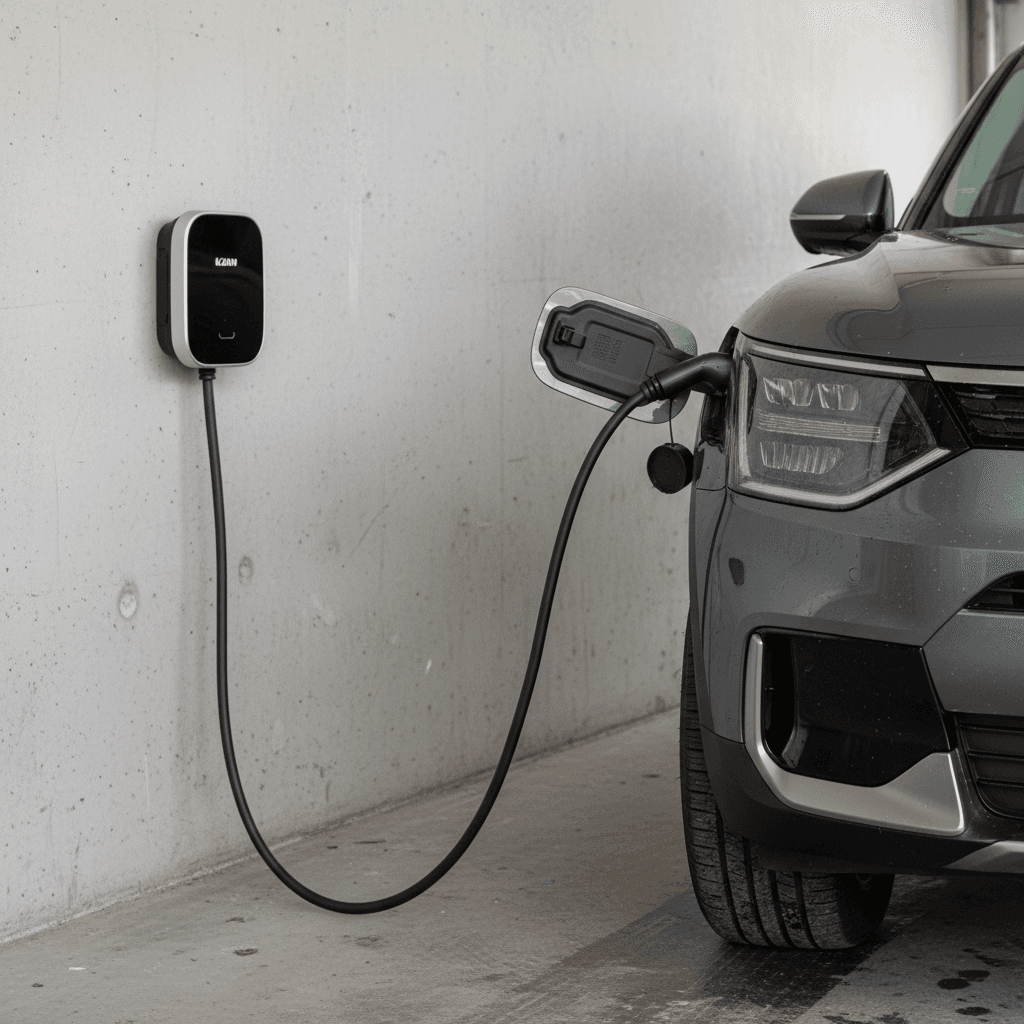
A practical “best overall” configuration
Installation, wiring, and safety considerations
Home charging has two sides: the wall box you buy and the wiring behind it. Even the “best” EV9 charger will disappoint if it’s on an undersized circuit, or installed in the wrong place.
Work with a licensed electrician
EV charging is a continuous high‑amp load. A licensed electrician should:
- Inspect your main panel and existing loads.
- Size the new circuit and wire gauge correctly.
- Install the breaker, conduit, and outlet or hard‑wire the charger.
- Pull any required permits and arrange inspections.
Plan the location carefully
Before you drill holes, think about daily life:
- Where the EV9 usually parks (garage vs. driveway).
- Which side the charge port is on and how the cable will reach.
- Weather exposure if the unit is outdoors.
- Cable management so kids, pets, and trash cans aren’t fighting the cord.
Don’t oversize the circuit on your own
If you’re buying a used EV9 from a marketplace like Recharged, it can make sense to coordinate your charger installation with the purchase itself. That way your electrician knows exactly which connector (NACS or J1772) and parking configuration they’re wiring for, and you don’t spend money on a setup that doesn’t match the SUV you end up with.
Charging speed, cost, and battery health
With a big battery like the EV9’s, it’s natural to worry about both electricity costs and long‑term battery life. Fortunately, home Level 2 charging is usually the cheapest and most battery‑friendly way to keep such a large SUV ready to go.
How the right home charger affects your EV9
Three angles: time, money, and longevity
Time: full vs. top‑off charges
If you plug in most nights, you rarely need 0–100%. A 40–48A charger will typically replace a full day’s driving in just a few hours.
Cost: home vs. public DC fast charging
Home kWh rates are often far below what you’ll pay at a DC fast charger. A solid Level 2 setup can pay for itself over time if it keeps you off high‑priced public stations.
Battery health: slow and steady wins
Automakers generally prefer frequent Level 1/2 charging over constant DC fast charging. Overnight Level 2 use with reasonable charge limits is a battery‑friendly routine for the EV9.
Charging to 100% at home
Smart chargers and the EV9’s own software can also work together. You can schedule charging for off‑peak hours, set charge limits, and even monitor how much energy the SUV is consuming each month, useful if you’re tracking total cost of ownership or using a Recharged Score battery‑health report to compare used EV9s.
Using NACS and Tesla chargers with the EV9
Another wrinkle for Kia EV9 shoppers in 2026 is the shift to the North American Charging Standard (NACS), the slim connector popularized by Tesla. Kia has confirmed that newer EV9 builds will ship with NACS ports, and earlier CCS‑equipped EV9s are gaining access to Tesla Superchargers through adapters and software updates.
Home charging with NACS
If your EV9 has a factory NACS port:
- You can use a NACS home charger directly, no adapter needed.
- Many newer third‑party chargers now offer NACS cables from the factory.
- You can still use J1772 chargers via a small adapter if needed.
Home charging with CCS/J1772
If your EV9 has the older CCS/J1772 setup:
- A standard J1772 Level 2 charger works perfectly for home charging.
- You may use a NACS home charger with a CCS adapter, but always verify the adapter’s rating matches your charger’s amps.
- Keep an eye on software updates that improve interoperability and charging reliability.
Check adapter ratings
Whether your EV9 has NACS or CCS, the fundamentals don’t change: you still want a 32–48A Level 2 charger on a dedicated 240V circuit, with a weather‑rated enclosure and enough cable length to comfortably reach your SUV.
Kia EV9 home charger buying checklist
Step‑by‑step checklist before you buy
1. Confirm your EV9’s charge port
Is your EV9 NACS or CCS/J1772? Check your build year, window sticker, or owner’s manual so you buy a charger with the right connector or a compatible adapter.
2. Review your driving pattern
Roughly how many miles do you drive on a typical day? If it’s under 50–60 miles, even a 32A charger might be enough. Heavy‑duty commuting or regular road trips favor 40–48A.
3. Have an electrician evaluate your panel
Before you fall in love with a 48A charger, find out whether your service panel can handle a 60A EV circuit, or whether a 40A or 32A setup is more realistic without upgrades.
4. Choose a trusted, UL‑listed unit
Stick with chargers that carry major safety listings (UL, ETL). Look for solid enclosures, good cable strain relief, and a warranty that lasts at least three years.
5. Decide on smart vs. basic features
If you care about off‑peak rates, usage tracking, or utility rebates, a Wi‑Fi–enabled smart charger is worth it. If you just want reliable overnight charging, a simpler unit may do.
6. Plan the mounting spot and cable route
Measure distances in your garage or driveway. A 20–25 ft cable gives you the most flexibility to park your EV9 nose‑in or nose‑out and still reach the charge port.
7. Coordinate with your EV purchase
If you’re buying a used EV9 through <strong>Recharged</strong>, schedule your installation so the charger is ready the week your SUV arrives, and make sure the installer knows your exact trim and connector.
Kia EV9 home charging FAQ
Frequently asked questions about Kia EV9 home chargers
Bottom line: Best home charger for the Kia EV9
When you strip away the marketing and alphabet soup of connectors, the equation for the best home charger for a Kia EV9 is straightforward: match the EV9’s ~11 kW onboard charger with a properly installed, 40–48A Level 2 unit that your electrical panel can comfortably support, and put it where the SUV naturally lives.
If your home’s electrical capacity is limited, a 32A charger is still a big upgrade over Level 1 and may be all you need for normal commuting. If you have the room in your panel and the budget, a 48A smart charger with NACS or J1772 (plus any needed adapter) gives you maximum speed today and flexibility for future EVs.
As you shop EV9s, especially on the used market, pair what you learn from tools like the Recharged Score about battery health and prior charging habits with a thoughtful home‑charging plan. Do that, and your EV9 will feel less like a complicated new gadget and more like what it really is: a confident, quiet family hauler that’s always ready to go when you are.