If you spend any time in Kia EV6 forums or Reddit threads, it can feel like this otherwise excellent EV is a ticking time bomb. Talk long enough about the **Kia EV6’s biggest complaints** and you’ll hear about ICCU failures that strand the car, 12V batteries that die in the driveway, frustrating trips to the dealer, and DC fast‑charging that doesn’t always live up to the spec sheet. The reality is more nuanced, and if you’re considering a new or used EV6, understanding that nuance is the key to buying (and owning) with confidence.
Context matters
Overview: Should Kia EV6 complaints scare you?
Broadly, owner complaints fall into a handful of buckets:
- ICCU (integrated charging control unit) failures that can trigger errors like “Check EV System,” stop DC fast charging, or immobilize the car until repaired.
- 12V battery drain or failure that leaves the EV6 unable to “turn on,” even when the high‑voltage pack is charged.
- Charging experience quirks, especially winter DC fast‑charging performance and charger compatibility.
- Software and tech frustrations, Kia Connect app reliability, CarPlay drops, camera and sensor glitches.
- Traditional car issues: noises, rattles, trim problems, and spotty dealer/service quality.
The important pieces for you as a shopper or owner are: **how common, how serious, and how fixable** each complaint is, and what you can do to reduce your risk, especially if you’re looking at a used EV6 from 2022–2023.
Kia EV6 complaint landscape at a glance
Quick Look: Biggest Kia EV6 complaints
The 6 Kia EV6 complaints you’ll hear about most
From stranded‑car stories to minor annoyances
1. ICCU failures
The ICCU manages AC/DC charging and DC‑DC conversion. On some early EV6s it has failed, triggering warnings, stopping charging, and in some cases leaving the car undriveable until replaced.
2. 12V battery drain
Owners report the 12V battery going flat after the car sits for several days or after frequent app polling or smart‑charger communication, resulting in a no‑start situation even with a full traction battery.
3. Real‑world charging speed
While Kia advertises extremely fast DC charging, some owners see slower speeds, especially in cold weather or at busy stations, and feel misled by the marketing numbers.
4. Software/app quirks
Wireless and wired CarPlay disconnects, Kia Connect outages, camera glitches, and occasional phantom warning messages are recurring complaints in owner communities.
5. Build & NVH issues
A minority of owners report rattles, wind noise at highway speeds, misaligned trim, or squeaks that can be hard to get fixed cleanly by dealers.
6. Dealer experience
Even fans of the EV6 often criticize Kia dealers for long wait times, weak EV knowledge, and difficulty getting software updates or recalls handled efficiently.
How to read these complaints
ICCU failures and charging stop issues
The ICCU (Integrated Charging Control Unit) is the brain and plumbing behind how the EV6 charges. When it fails, or when software around it misbehaves, you can see warnings like “Check EV System”, sudden loss of DC fast‑charging, or a car that simply refuses to go into “Ready” mode.
- Early‑build 2022–early‑2023 EV6s are over‑represented in ICCU failure stories, often around 10,000–30,000 miles.
- Failures are sometimes preceded by repeated DC fast‑charging or high‑current Level 2 use, but many owners fast‑charge heavily without issue.
- In some markets there have been campaigns or recalls to update software or replace ICCU components pre‑emptively; in others, dealers replace parts only after a failure is documented.
- Parts delays have been a pain point, some owners report waiting weeks for an ICCU, while others are back on the road in a few days, depending on dealer and region.
Common ICCU‑related complaint patterns
What owners report before or during ICCU‑related failures
| Scenario | What owners see | What it can mean |
|---|---|---|
| During DC fast‑charge | Charge stops early, power drops sharply, or multiple failed start attempts | Possible ICCU or battery‑conditioning software issue |
| After DC fast‑charge | “Check EV System” warning, car won’t shift into Drive | ICCU or high‑voltage system protection behavior, needs diagnosis |
| Home Level 2 charging | Charger faults out, EV6 shows unable to charge | Could be ICCU, onboard charger, or wiring, needs proper testing |
| Randomly when parked | Warning messages on start‑up that clear after restart | Could be transient software glitch, but recurring errors warrant a scan |
Not every EV6 will show these issues, but if you’re test‑driving or inspecting a used EV6, these are the red flags to watch for.
Why ICCU failures feel so scary
If you’re shopping used, it’s worth asking directly whether the **ICCU has ever been replaced**, whether any related recall or service campaigns have been completed, and reviewing service records. On a test drive, include a stop at a public DC fast charger if possible and watch for errors starting or ending the session.
12V battery drain and no-start situations
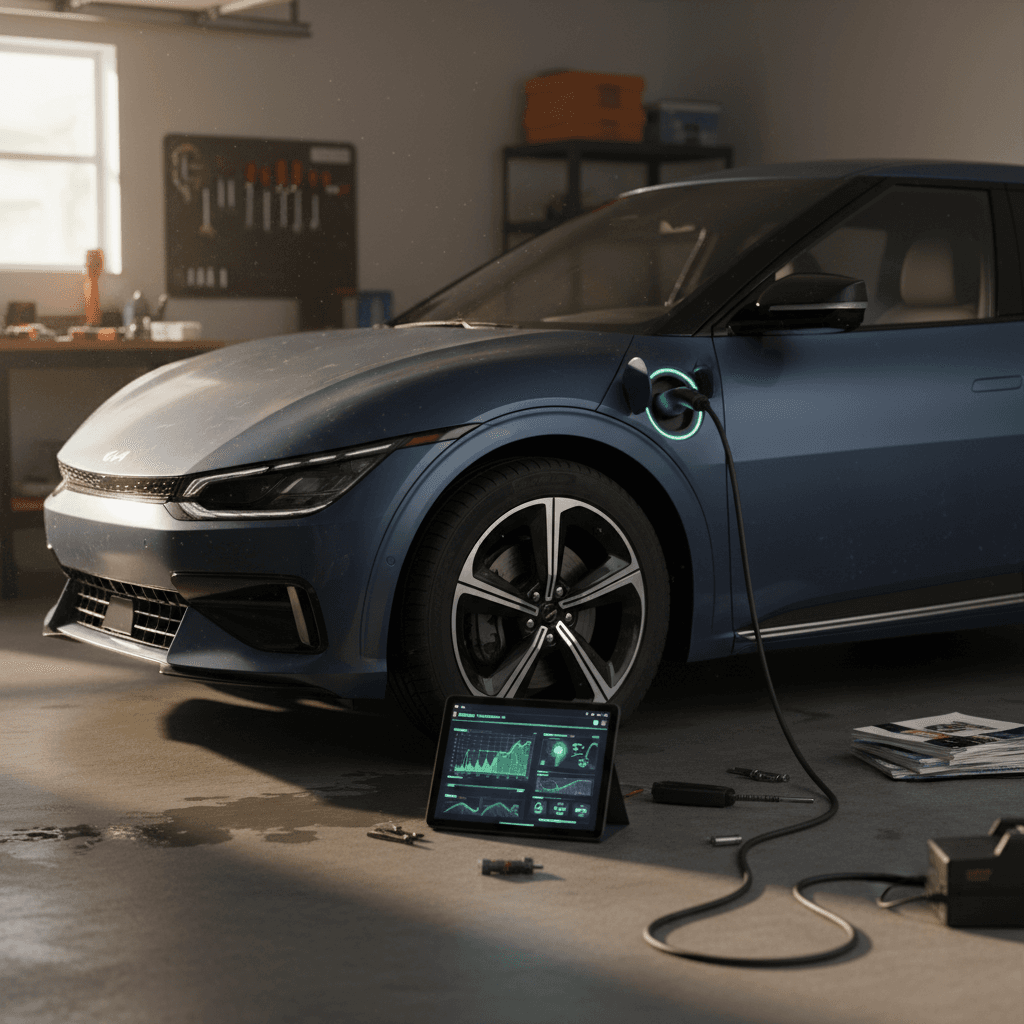
The EV6, like every EV, relies on a small 12V battery to wake up the computers and close the high‑voltage contactors. If that 12V battery is weak, the car can appear completely dead, even with a full traction battery. This has become one of the most visible **Kia EV6 complaints**, especially on early 2022 models.
- Owners report the car sitting for several days and then refusing to start until the 12V is jump‑started or charged.
- Some threads connect frequent 12V issues to smart home chargers that “ping” the car repeatedly to check state of charge, or to aggressive third‑party apps that keep the car from going into a deep‑sleep mode.
- Other owners see gradual high‑voltage battery drain, several percent per day, because the car keeps topping off the 12V far more often than it should.
- In many cases, dealers have replaced the 12V battery or applied software updates that improve sleep behavior, with mixed success depending on usage patterns.
Why EV 12V issues feel different
Practical ways to reduce EV6 12V battery headaches
1. Ask about 12V replacements or updates
If you’re buying used, check service records for 12V battery replacement or relevant software updates. A fresh, high‑quality 12V battery is cheap insurance on any EV.
2. Review smart‑charging settings
If you use a smart charger or dynamic electricity‑pricing app, configure it to minimize how often it polls the car. Fewer wake‑ups means less parasitic 12V drain.
3. Avoid long idle stretches
If your EV6 will sit for more than a week, consider leaving it plugged in or taking a brief drive mid‑week. Short, regular use tends to be kinder to both 12V and traction batteries.
4. Carry a compact jump pack
Many EV owners keep a small lithium jump pack in the frunk or trunk. It won’t fix the root cause, but it can turn a no‑start headache into a five‑minute interruption.
Charging experience: when “fast” isn’t fast
On paper, the Kia EV6 is one of the fastest‑charging EVs you can buy. With an 800‑volt architecture and a claimed 10–80% DC fast‑charge time of around 18 minutes under ideal conditions, it’s a road‑trip standout. In practice, **charging‑related complaints** tend to fall into three buckets: expectations, conditions, and infrastructure.
- Owners in colder climates see much slower DC speeds when the pack isn’t preconditioned or when software updates for cold‑weather charging haven’t been applied.
- Busy or under‑maintained public chargers can throttle power regardless of what the EV6 is capable of, making drivers blame the car for a station problem.
- Some drivers are disappointed that real‑world charging curves don’t match the single best‑case number in the brochure, especially if they’re coming from Tesla’s highly optimized Supercharger network.
What the spec sheet promises
- Peak DC rate up to ~240 kW on a compatible, healthy charger.
- 10–80% in the high‑teens of minutes under ideal temperature and SOC.
- Excellent highway range in long‑range RWD trims.
What owners actually experience
- Warm‑weather sessions on modern 350 kW units can be impressively fast.
- Cold‑soaked packs, battery abuse protection, and weak stations often cut speeds dramatically.
- Inconsistent station quality across networks leads to a “charger lottery” feeling.
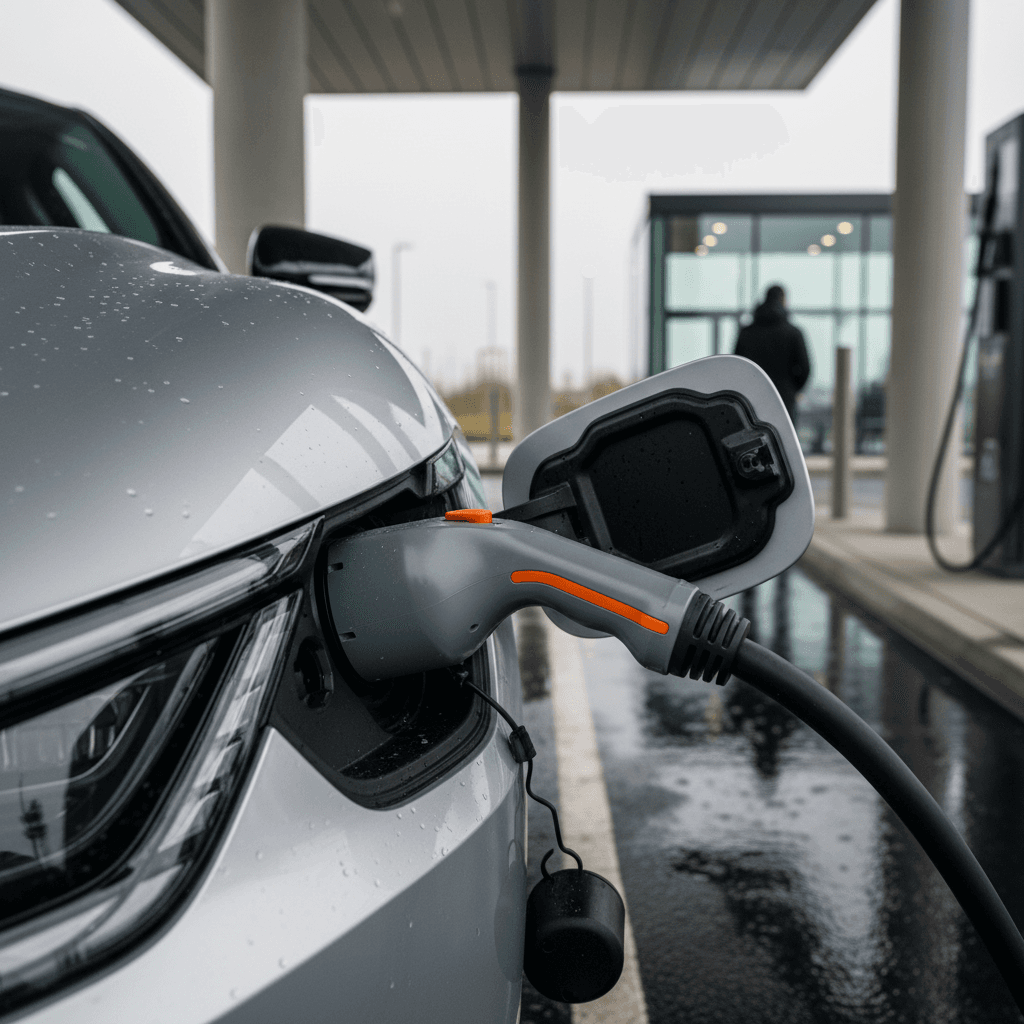
Improving your EV6 fast‑charging experience
Software glitches and tech frustrations
Like almost every modern EV, the Kia EV6 tries to be a rolling smartphone. That’s a blessing when it works, and a nuisance when it doesn’t. Owner reports of **software‑related complaints** include:
- Wired or wireless Apple CarPlay or Android Auto disconnecting intermittently, sometimes more in hot weather or after software updates.
- Kia Connect app outages, delayed command execution, or the car dropping off the network entirely after body repairs or module replacements.
- Occasional camera or parking‑sensor glitches, including blank screens or false proximity alerts that resolve after a restart.
- Laggy infotainment performance or random reboots, especially on early software builds.
OTA reality check
From a buyer’s perspective, the big question is whether the EV6’s tech stack is merely quirky or fundamentally broken. For most owners, it’s the former: occasional annoyances rather than show‑stoppers. But if you’re sensitive to tech friction, it’s worth testing CarPlay/Android Auto, cameras, and the app thoroughly during a test drive and right after purchase.
Build quality, noise, and fit-and-finish
Kia has come a long way from its budget‑brand roots, and many EV6 owners praise the solid feel and premium interior design. Still, there are recurring **build‑quality complaints** you’ll want to keep an ear and eye out for:
- Wind noise from door mirrors or window seals at highway speeds, sometimes tied to alignment of trim or glass.
- Rattles from interior panels, the cargo area cover, or underbody aero shields, often at specific speeds or on coarse pavement.
- Isolated reports of loose exterior trim or mouldings that weren’t adhered properly from the factory.
- Squeaks or creaks from the dash or steering column over time.
The upside: easy to spot on a test drive
Dealer and service experience: the quiet deal-breaker
If there’s one **Kia EV6 complaint** that cuts across almost every subreddit, forum, and owner group, it’s not the car, it’s the **dealer**. This isn’t unique to Kia, but the gap between the EV6’s engineering and some Kia stores’ EV competence can be jarring.
- Long waits for appointments, especially for high‑voltage or charging issues that require an EV‑trained tech.
- Dealers that are unfamiliar with common EV6 campaigns or software updates and push back unless there’s an active warning light.
- Inconsistent communication about parts availability and repair timelines, particularly for ICCU‑related work.
- Service advisors who still treat EVs like ICE cars, everything from suggesting completely irrelevant maintenance to misunderstanding how charging works.
Why service matters even more for used EV6s
When you buy from a traditional dealer, you don’t usually get much visibility into battery health or how an EV6 has been fast‑charged. One advantage of buying a used EV6 from a specialist like Recharged is that every vehicle comes with a Recharged Score Report that includes verified battery health and a history‑informed look at how the car’s been used. That makes it much easier to separate a great EV6 from the one that’s already burned through your local dealer’s goodwill.
How much of this is fixed on 2024–2025 EV6s?
A natural question is whether you should avoid early EV6 model years entirely and only consider the facelifted 2025‑model EV6 or later. The answer is more “evolution” than “night‑and‑day reset.”
Earlier vs. newer Kia EV6: complaint trends
What shifts as the EV6 matures
2022–early 2023 builds
- More reports of ICCU failures and 12V weirdness.
- Software still maturing, more infotainment quirks.
- Some build‑quality niggles as factories ramped up.
Late 2023–2025 builds
- Hardware and software revisions aimed at improving reliability.
- Better fast‑charging behavior with updated battery conditioning.
- Facelifted 2025 models add larger batteries and refinements.
What doesn’t change
Shopping checklist for a used Kia EV6
If you like how the EV6 drives, and many owners absolutely love it, the key is minimizing your exposure to the **Kia EV6’s biggest complaints** before money changes hands. Here’s a structured way to do that.
Used Kia EV6 due‑diligence checklist
1. Confirm recall and campaign status
Ask the seller for a printout of completed recalls and service campaigns, especially anything related to charging, ICCU, and battery conditioning. This is standard for dealers and shows how up‑to‑date the car is.
2. Review service history for ICCU or 12V issues
Look for notes about "Check EV System" warnings, no‑start events, or replacement of ICCU, high‑voltage components, or the 12V battery. A repaired issue isn’t necessarily a deal‑breaker, but repeated visits are a red flag.
3. Get objective battery‑health data
Use a seller that can provide a real battery‑health report, such as the <strong>Recharged Score</strong>. This helps you distinguish normal degradation from an outlier pack that may have been abused or overheated.
4. Test DC and AC charging if possible
On a test drive, plug into a public DC fast charger and a Level 2 station, even briefly. Watch for warning lights, failed sessions, or unusually slow speeds relative to state of charge and temperature.
5. Listen for noises at multiple speeds
Drive on city streets, rough pavement, and highways. Listen for wind noise, rattles, or vibrations that get worse at certain speeds. Minor noises are normal; persistent loud ones are not.
6. Stress‑test the tech
Pair your phone, run CarPlay/Android Auto, try navigation, cameras, and driver‑assist features. Flick through menus. You’re looking for freezes, reboots, or features that simply don’t work.
7. Evaluate the seller’s EV expertise
Ask a basic EV question or two (charging behavior, battery warranty). A seller who stumbles through the answers may not have the experience to help if something goes wrong later.
8. Understand warranty coverage and transfer
Check how much of the original battery and powertrain warranty is left and what’s required to transfer it. On a borderline car, strong remaining warranty can change the risk calculus.
Where Recharged fits in
FAQ: Kia EV6 biggest complaints
Frequently asked questions about Kia EV6 complaints
Bottom line: Is the Kia EV6 still worth it?
When you zoom out beyond the forums and horror stories, the Kia EV6 remains one of the most compelling EVs in its class. It’s quick, efficient, charges incredibly fast when conditions are right, and feels genuinely special to drive. Its biggest complaints, ICCU failures, 12V behavior, uneven dealer support, are real, but they’re also concentrated in specific build periods, usage patterns, and service networks.
If you treat those pain points as **risk factors to manage** rather than deal‑breakers, the EV6 can be a smart buy, especially on the used market where pricing often bakes in some of the anxiety. Prioritize clean history, current software and recall work, and verified battery health, and you dramatically increase your odds of landing an EV6 that delivers all of the upside with far less of the drama.
That’s exactly the gap Recharged is built to close: pairing detailed battery diagnostics, transparent Recharged Scores, and EV‑savvy guidance with nationwide delivery and flexible trade‑in options. If the Kia EV6 is on your shortlist, you don’t have to choose between an exciting EV and a predictable ownership experience, you just have to choose your buying partner carefully.