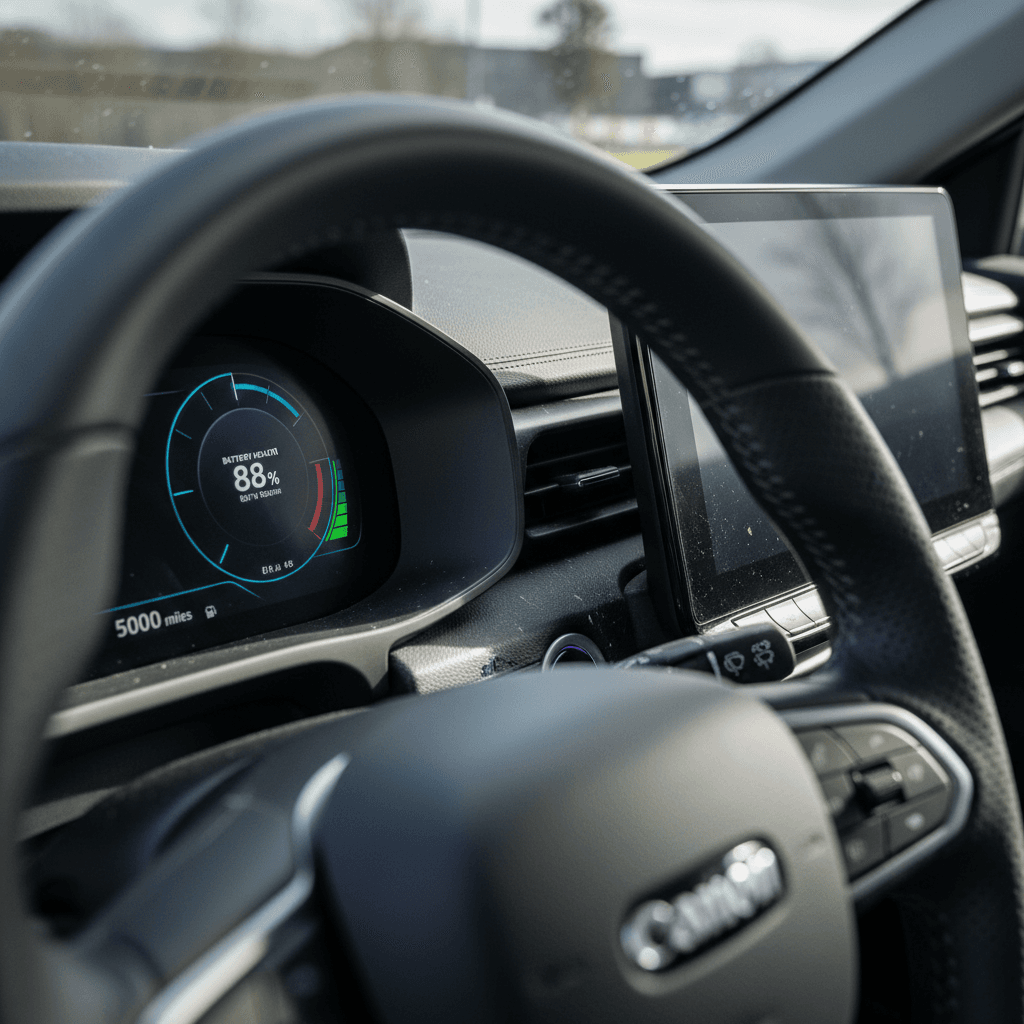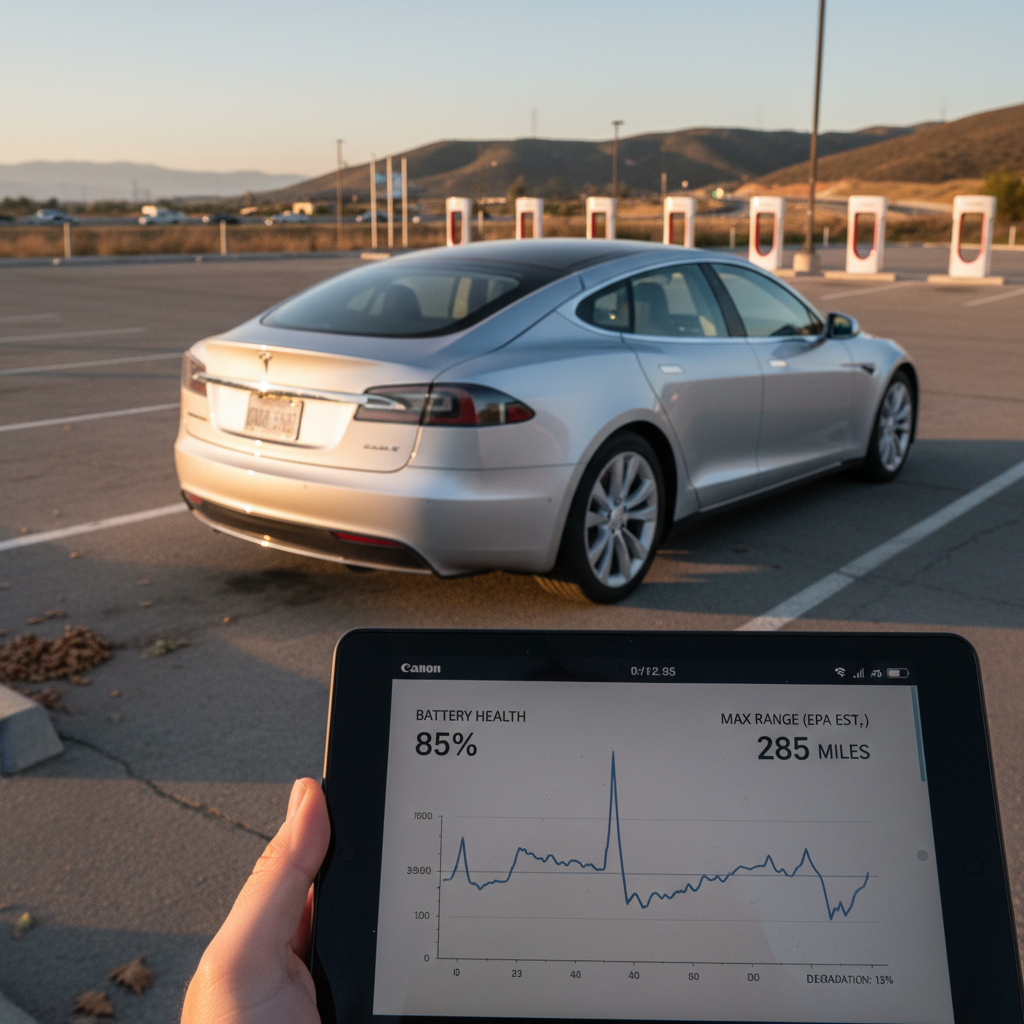
If you grew up judging cars by odometer alone, the phrase “used EV with 50,000 miles” probably makes your eyebrow twitch. On a gas car, 50,000 miles is the dawn of middle age. So is 50,000 miles too many for a used EV, or is that quietly the smart‑money zone? The short answer: 50,000 miles is often perfectly reasonable on a modern electric car, sometimes even a sweet spot, if the battery checks out and you understand what’s left of the warranty.
The short version
Is 50,000 Miles Too Many for a Used EV?
Framed correctly, the real question isn’t, “Is 50,000 miles too many?” It’s, “What does 50,000 miles do to an EV battery, and how much coverage and value is still on the table?” Most current‑generation packs are engineered to go well past 100,000 miles before they even approach the warranty floor, which is usually around 70% of original capacity. A 50,000‑mile car is roughly halfway to that mileage cap on paper, and often hasn’t even used half its useful battery life.
- For a commuter driving 12,000 miles per year, 50,000 miles is about 4 years of use.
- Most U.S. EVs carry an 8‑year/100,000‑mile (or more) battery warranty.
- Real‑world studies increasingly show moderate degradation, not catastrophic drop‑off, by 100,000 miles.
Rule of thumb
How EV mileage is different from gas‑car mileage
On a gasoline car, 50,000 miles means four years of oil changes, cold starts, transmission shifts, and thousands of explosions per minute under the hood. Mechanical wear accumulates everywhere. A modern EV has fewer moving parts and a completely different failure profile. The big question isn’t the motor or gearbox, they’re usually bored. It’s the giant lithium‑ion battery pack under the floor and how gently (or not) it has lived.
What 50,000 Miles Usually Means: EV vs. Gas Car
Same number on the dash, very different story under the skin
On a gasoline car
- Wear on engine, transmission, exhaust, and fuel system.
- Dozens of fluids, belts, filters either aging or overdue.
- Performance can drop; repairs begin to stack up.
On a modern EV
- Electric motor and single‑speed gearbox barely stressed.
- No oil changes, spark plugs, or exhaust.
- Main concern is battery capacity and warranty, not mechanical wear.
Don’t romanticize “low miles”
What the data says about EV battery degradation
Modern EV batteries age more slowly than people fear
Independent testing and large‑fleet data increasingly point in the same direction: batteries are aging better than early skeptics predicted. Long‑term trials in Europe have seen popular EVs retain roughly 90% of their battery capacity after around 100,000 miles of mixed use and several years on the road. Meanwhile, broad studies of used EVs in the resale market have found the majority still above 90% state of health.
That doesn’t mean every battery is a saint. Abuse still matters. Repeated DC fast charging, chronic 100% charging and deep discharging, extreme heat, and high‑speed driving can all accelerate wear. But under normal commuter use, a 50,000‑mile pack is often down only single‑digit percentages from new, far from the warranty trigger.
Chemistry matters
Warranty math: why 50,000 miles can be a sweet spot
In the U.S., federal rules help explain why you see the same promise everywhere: roughly 8 years or 100,000 miles of high‑voltage battery coverage, whichever comes first. Many automakers go beyond that, Tesla offers up to 150,000 miles on some models, while Hyundai and Kia commonly pair 10 years with 100,000 miles, but the basic silhouette is the same.
Typical EV Battery Warranty Terms in the U.S.
These are representative examples; always confirm the exact coverage for the specific car you’re buying.
| Brand/Type | Years | Mileage cap | Capacity guarantee* |
|---|---|---|---|
| Most mainstream EVs | 8 | 100,000 | ~70% |
| Some Teslas | 8 | 120,000–150,000 | ~70% |
| Hyundai / Kia EVs | 10 | 100,000 | ~70% |
Battery warranty is measured from the in‑service date of the original owner, not from when you buy it used.
Now plug in our hypothetical 50,000‑mile used EV. If that car is four years old with 50,000 miles, you may still have 4 years and 50,000 miles of battery coverage left on a typical 8‑year/100,000‑mile warranty. In other words, someone else absorbed the initial depreciation hit, and you’re buying into the middle of the warranty curve, not the end of it.
Where Recharged fits in
Ready to find your next EV?
Browse VehiclesWhen 50,000 miles on a used EV is a good idea
Green flags on a 50,000‑mile used EV
These are the cases where 50k miles can be a smart buy, not a compromise
Battery health ≥ 90%
4–6 years old
Mostly home‑charged
In these situations, a 50,000‑mile EV can be the used‑car equivalent of a pre‑broken‑in leather jacket: softened up, price knocked down, usefulness largely intact. For many shoppers, this is the sweet spot, especially if you’re financing and want your loan term to sit entirely inside the remaining battery warranty.
Consider your own mileage
When 50,000 miles should make you walk away
There are absolutely 50,000‑mile EVs you should avoid. Most of them aren’t scary because of the odometer reading, but because of how those miles were accumulated, or because the battery tech itself was an early experiment that didn’t age gracefully.
- Battery health already near the warranty floor (for example, 72–75% capacity) even at ~50,000 miles.
- Early‑generation EVs known for weak thermal management and accelerated degradation in hot climates.
- Carfax shows rideshare or commercial duty with heavy DC fast‑charging and minimal rest periods.
- Warranty nearly or entirely expired due to time, with no clear plan for out‑of‑warranty repair costs.
Hard no: mystery batteries
Battery health first: how to check a 50,000‑mile EV
If mileage is the headline, battery health is the fine print that actually determines whether the story has a happy ending. A 50,000‑mile used EV is only a good deal if the pack is aging gracefully. The good news is you no longer have to guess; battery diagnostics have finally caught up with buyer anxiety.
1. Get a real battery health report
Ask for an OEM scan, a reputable third‑party report, or a Recharged Score battery diagnostic. You’re looking for:
- State of health (SoH) as a percentage of original capacity.
- Any logged battery fault codes or thermal issues.
- Evidence of frequent DC fast‑charging.
2. Cross‑check with real‑world range
Compare the reported SoH with how far the car actually goes on a full charge. If an EV that originally did 260 miles now shows only ~210–220 miles at 100%, that’s in line with roughly 85% SoH.
If the numbers don’t line up, dig deeper.
Use the car’s own data
Pricing: how mileage actually impacts used EV value
The market is still learning how to price used EVs. Two forces are in tension: legacy thinking that knocks value off at tidy mileage intervals, and growing real‑world evidence that battery health and tech generation matter more than raw miles. That’s why you’ll sometimes see bizarre listings: a low‑mile early EV priced ambitiously beside a newer, higher‑mile model that’s objectively the better car.
How mileage typically affects used EV pricing
Rough qualitative guide; actual pricing depends heavily on model, demand, and battery health.
| Mileage band | Market perception | Reality check |
|---|---|---|
| Under 20,000 miles | “Like new” premium | Great if priced reasonably, but you’re paying peak depreciation. |
| 20,000–60,000 miles | “Normal use” | Often best mix of price, remaining warranty, and proven reliability. |
| 60,000–100,000 miles | “High mileage?” | Not necessarily scary on newer EVs if the pack is healthy and warranty remains. |
| 100,000+ miles | “Risky” | Must be priced aggressively and come with stellar battery health data. |
Battery health, warranty, and tech updates can easily outweigh mileage differences of 20,000–30,000 miles.
How Recharged prices higher‑mile EVs
Real‑world examples: 30k vs 50k vs 90k miles
Let’s walk through some simplified scenarios. Assume the same model of EV originally rated at 250 miles of range with an 8‑year/100,000‑mile battery warranty.
Car A: 30,000 miles
- Age: 3 years
- Battery SoH: 93%
- Remaining warranty: ~5 years / 70,000 miles
- Likely price: Highest of the three
Great choice if you want maximum coverage and are willing to pay for it.
Car B: 50,000 miles
- Age: 4 years
- Battery SoH: 90%
- Remaining warranty: ~4 years / 50,000 miles
- Likely price: Meaningful discount vs. Car A
Often the best value: still healthy, still well within warranty, noticeably cheaper.
Car C: 90,000 miles
- Age: 7 years
- Battery SoH: 85%
- Remaining warranty: ~1 year / 10,000 miles
- Likely price: Deepest discount
Interesting only if you’re comfortable with out‑of‑warranty ownership and the battery report is excellent.
How to decide between them
Checklist: evaluating any higher‑mileage used EV
10‑step checklist for a 50,000‑mile (or higher) used EV
1. Confirm battery warranty start and end
Ask for the in‑service date and official battery warranty terms (years and mileage). Calculate exactly how much coverage is left for you, not just the first owner.
2. Get a recent battery health report
Insist on a current diagnostic from the manufacturer, a reputable third‑party service, or a <strong>Recharged Score Report</strong> that quantifies state of health, degradation, and any fault codes.
3. Compare reported SoH to real‑world range
Take a long test drive or, better, do a full‑to‑low charge cycle and see if the actual miles line up with the claimed capacity.
4. Review charge‑history behavior
Look for a history of mostly Level 2 home charging with occasional DC fast‑charging. Heavy fast‑charge use, especially in hot climates, warrants a closer look at the pack.
5. Consider climate history
EVs that spent their life in very hot regions with poor thermal management can degrade faster. Check where the car was registered and serviced.
6. Inspect tires, brakes, and suspension
Mileage still matters for wear items. A 50,000‑mile EV will likely be on, or close to, its second set of tires and may soon need brake service, even if the battery is happy.
7. Check software and recall status
Ensure the car has the latest software updates and that all battery‑ or charging‑related recalls have been addressed, especially for early‑production runs.
8. Look for usage patterns (commuter vs. rideshare)
Fleet or rideshare duty isn’t a deal‑breaker if the price and battery health are right, but it should be reflected in a lower price and a clean pack report.
9. Align warranty with your ownership horizon
If you plan to keep the car 5 years, but the battery warranty expires in 2, go in with eyes open, or negotiate the price accordingly.
10. Get a second opinion if you’re unsure
Talk to an EV‑literate mechanic, a brand‑specific forum, or one of Recharged’s EV specialists. An hour of expert time can save you thousands.
FAQ: is 50,000 miles too many for a used EV?
Frequently asked questions about 50,000‑mile used EVs
Bottom line on 50,000‑mile used EVs
So, is 50,000 miles too many for a used EV? For most modern electric cars, the answer is no, provided the battery is healthy, the warranty math works, and the price reflects reality rather than leftover fear from the early EV era. A 50,000‑mile car often sits in a sweet spot where early depreciation is gone, catastrophic battery failures are rare, and you still have years of coverage in your back pocket.
The key is to stop treating the odometer as a blunt instrument and start thinking like an EV owner: judge the pack, the warranty, and the use case, then let mileage fall into place behind those. If you’d rather not become a battery detective on your own, shopping through Recharged means every car arrives with a verified Recharged Score Report, expert guidance, financing options, and nationwide delivery, so you can say yes to the right 50,000‑mile EV, and no to the wrong one, with a clear conscience.