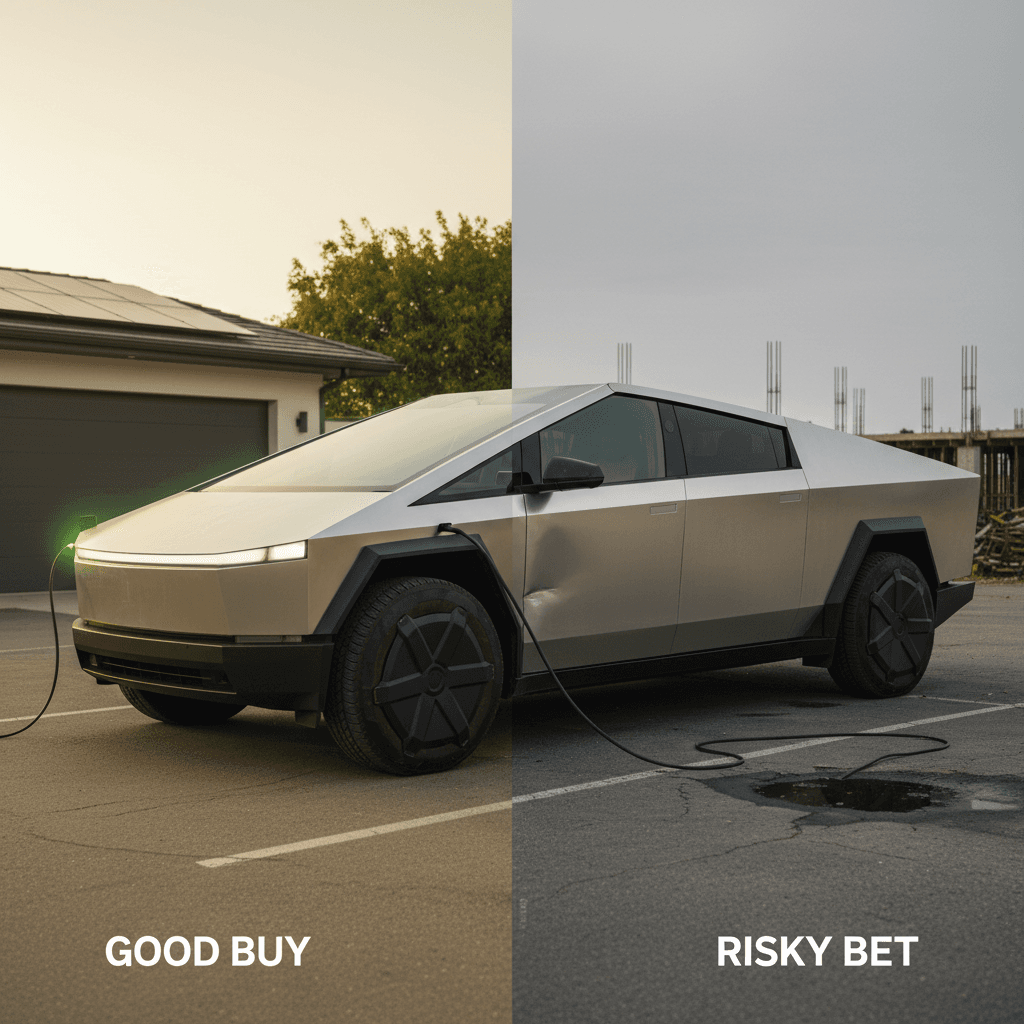
If you’ve typed “is 2026 Tesla Cybertruck a good buy” into a search bar, you’re probably torn. On one side: wild performance, headline‑grabbing looks, and the Tesla badge. On the other: recalls, depreciation headlines, and a truck that doesn’t behave like a normal work tool. This guide cuts through the noise so you can decide whether a 2026 Cybertruck, especially on the used market, fits your budget, your use case, and your risk tolerance.
Context: What’s changed by the 2026 model year
Quick answer: Is the 2026 Cybertruck a good buy?
Where the 2026 Cybertruck shines
- Performance: Even the dual‑motor AWD model is brutally quick for a full‑size truck.
- DC fast charging: Competitive charging times from 5–80% on Tesla’s Supercharger network.
- Utility on paper: Tow ratings up to 11,000 lbs and a functional, enclosed bed.
- Tech and OTA updates: Frequent software improvements and Tesla’s strong charging ecosystem.
Where it’s a red flag
- Reliability and recalls: Above‑average number of recalls and early build‑quality complaints for 2024–2025 trucks, many issues still being watched in 2026.
- Depreciation: Steep early value drops versus what many buyers expected, with trade‑ins showing aggressive discounts.
- Practicality: Size, visibility, and stainless‑steel body make it more toy and statement piece than easy daily driver for some owners.
- Uncertain long‑term demand: Sales volumes are well below Tesla’s early projections, which matters for future parts support and resale.
Simple verdict
2026 Cybertruck trims, pricing, and key specs
Tesla continues to adjust Cybertruck trims and pricing, but by early 2026 the lineup in the U.S. has settled around three main versions: a single‑motor Long Range, a dual‑motor All‑Wheel Drive, and the high‑output Cyberbeast. Exact sticker prices move with Tesla’s periodic adjustments and destination fees, but you’re realistically in the upper $60,000s to six‑figure window before options.
2026 Tesla Cybertruck trims at a glance
Approximate positioning of the 2026 Cybertruck lineup. Always confirm current pricing and specs in the Tesla configurator before you buy.
| Trim | Approx. starting price (USD) | Drive layout | Est. EPA range (mi) | 0–60 mph (approx.) | Max tow rating (lbs) |
|---|---|---|---|---|---|
| Long Range (single‑motor) | High $60Ks–low $70Ks | RWD | 300+ | ~6.5 sec | 7,500 |
| All‑Wheel Drive (dual‑motor) | Mid–high $70Ks | AWD | ~340 | ~4.1 sec | 11,000 |
| Cyberbeast (tri‑motor) | High $90Ks–$100K+ | AWD | ~320 | Sub‑3 sec | 11,000 |
Cybertruck pricing and specs change frequently; treat these as ballpark guideposts, not fixed quotes.
Mind the options and fees
Cybertruck by the numbers in 2025–2026
Real‑world range, towing, and utility
On paper, the 2026 Tesla Cybertruck delivers competitive numbers for a full‑size electric pickup. In practice, like any EV truck, range shrinks quickly with speed, weather, and payload. Owners and testers report that towing heavy loads can chop range roughly in half, especially at highway speeds. That’s not unique to Tesla, but the Cybertruck’s wedge profile and weight don’t break the laws of physics either.
How the Cybertruck behaves in the real world
What to expect before you hitch up or head out on a road trip
Highway cruising
At 70–80 mph, real‑world range often lands below the EPA label, especially on aggressive all‑terrain tires. Plan trip legs around conservative assumptions, not best‑case estimates in the configurator.
Towing and hauling
Pulling a 7,000–10,000 lb trailer can slash usable range by 40–50% or more. Frequent DC fast‑charging between job sites or campgrounds becomes part of the routine.
Bed and storage
The 6‑foot bed, power tonneau, and front trunk make the Cybertruck useful as a gear hauler, but the sloping sail panels and tall sides can limit easy loading from the side and rear.
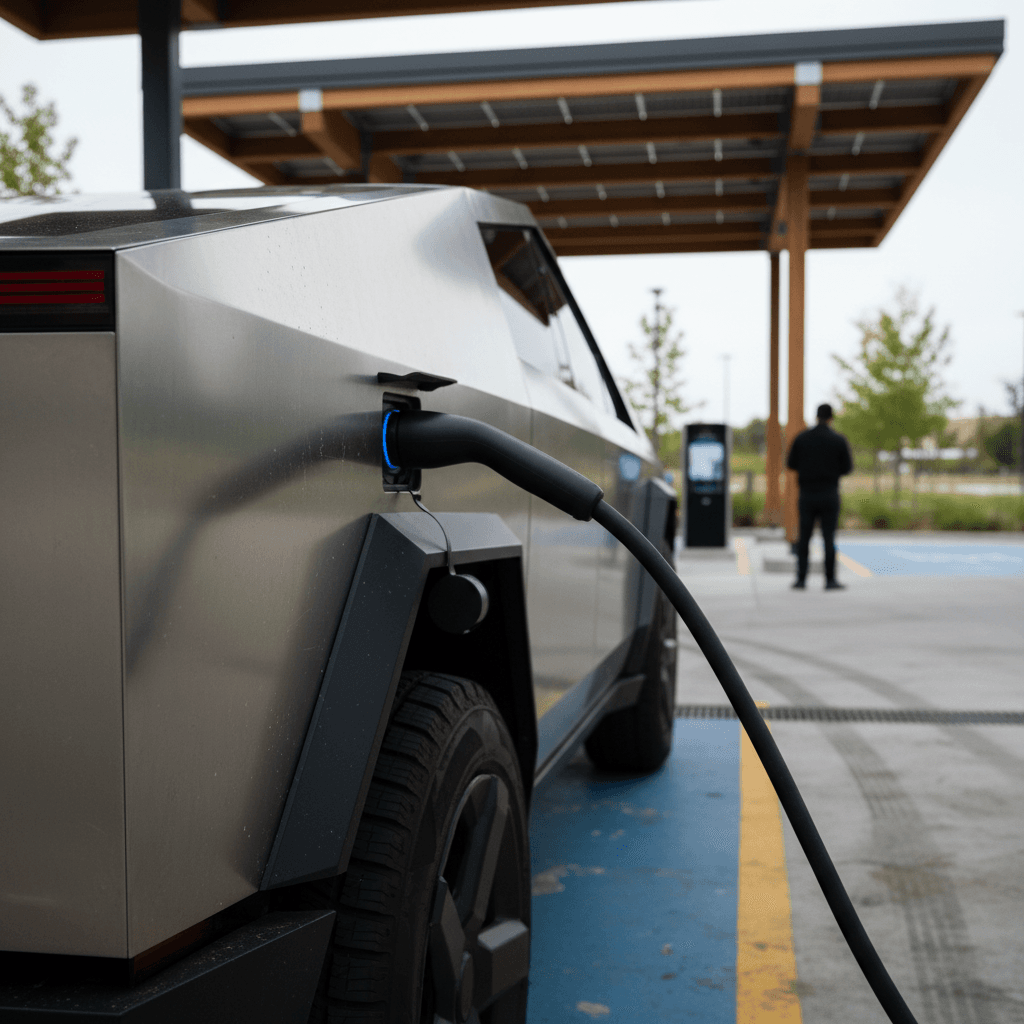
Plan charging like a diesel owner plans fuel stops
Reliability, recalls, and build quality so far
This is the point where the 2026 Cybertruck stops being a spec sheet and starts being a real‑world ownership story. Early 2024 and 2025 builds accumulated a long list of NHTSA recalls, from sticky accelerator pedals to lighting issues, along with owner reports of panel gaps, loose trim, windshield‑wiper failures, and interior squeaks and rattles. By 2026 Tesla has addressed some of these through hardware fixes and over‑the‑air updates, but independent reliability scores still rate the Cybertruck well below average versus other 2024–2025 vehicles.
- Multiple federal recalls in the first two years on sale, affecting early builds in particular.
- Owner forums report inconsistent build quality, some trucks are solid, others require multiple service visits early on.
- Service access and parts availability can vary widely by region, adding downtime risk if you rely on the truck for work.
- The stainless‑steel body resists small dings but is difficult and expensive to repair when damage does occur.
Reality check on risk
Depreciation and resale value: where the numbers hurt
The other major question behind “is the 2026 Tesla Cybertruck a good buy” is resale value. Early expectations that Cybertruck would be a future collectible haven’t matched reality. Discounted new inventory, shifting trims, and negative headlines have all pushed used values down faster than many Tesla loyalists anticipated.
What we’re seeing in Cybertruck depreciation
Why paying today’s price matters more than ever
Steep early drops
Third‑party pricing guides and auction data show early Cybertrucks losing a big chunk of value in the first 1–2 years, especially for buyers who paid above sticker or loaded trucks with options.
That’s unusual compared with popular full‑size pickups, which often retain value well in their first few years.
Wide spread between asking and trade‑in
When Tesla and dealers quote trade‑ins, owners are frequently seeing trade allowances far below what they expected. If you may swap trucks in two to four years, factor a heavier‑than‑average hit into your cost of ownership math.
Overpaying on a 2026 Cybertruck magnifies the pain
Cybertruck vs. other electric trucks in 2026
2026 Cybertruck vs. key EV pickup rivals
High‑level comparison of where Cybertruck stands against other electric trucks popular in the U.S. market.
| Model | Character | Strengths | Watch‑outs |
|---|---|---|---|
| Tesla Cybertruck | Futuristic stainless wedge | Blistering performance, access to Tesla Supercharger network, massive curb appeal for some buyers | Reliability record still forming, rough depreciation, polarizing styling, stainless repair complexity |
| Ford F‑150 Lightning | Traditional full‑size pickup gone electric | Familiar F‑150 layout, strong dealer network, good work‑truck ergonomics | Range can drop quickly when towing, charging speeds vary by trim |
| Rivian R1T | Adventure‑oriented lifestyle truck | Excellent on‑ and off‑road manners, upscale interior, clever storage (Gear Tunnel) | Smaller dealer footprint, pricing can rise quickly with options |
| Chevy Silverado EV / GMC Sierra EV | Work and fleet‑oriented full‑size EV twins | Huge battery capacity on some trims, big‑truck capability | Weight, price, and availability can be limiting factors for retail buyers |
Specs vary by trim. Always compare the exact configurations you’re considering.
How Cybertruck’s identity changes the equation
Who the 2026 Cybertruck actually makes sense for
Not everyone asking if the 2026 Tesla Cybertruck is a good buy has the same needs. For some, the answer is a hard no. For others, it’s a calculated yes. The trick is knowing which camp you’re in before you sign anything.
Best fits vs. bad fits for a 2026 Cybertruck
Match the truck to your real life, not the marketing sizzle
Good fit: Enthusiast early adopter
You love being first, don’t mind service visits, and want a vehicle that makes a statement. Performance and tech matter more to you than panel gaps or resale value. You’re comfortable absorbing extra depreciation as the price of admission.
Good fit: Image‑driven business or brand
If your Cybertruck doubles as a mobile billboard, say, for a design studio, tech brand, or YouTube channel, the marketing value can offset some ownership headaches.
Poor fit: Depend‑on‑it work truck
If your livelihood depends on reliable uptime and predictable costs, a first‑generation EV truck with above‑average recalls and uncertain resale is a risky cornerstone for your fleet.
When a used Cybertruck could be a smart buy
Where things get more interesting for value‑minded shoppers is the used market. Because early depreciation has been so aggressive, a well‑sorted 2024 or 2025 Cybertruck in 2026 can sometimes be bought for far less than original buyers paid, while still carrying plenty of factory warranty coverage.
Upside of shopping used
- Someone else took the big hit on early depreciation and any over‑MSRP excitement pricing.
- You can often see a paper trail of warranty work that shows which issues have been fixed.
- Plenty of life remains in the 8‑year battery and drive‑unit warranties on low‑mileage examples.
Risks that don’t go away
- A truck that’s been hard‑driven, heavily modified, or poorly repaired may hide developing issues.
- Not all recalls or service bulletins may have been completed; you’ll need to verify VIN history.
- Value could still drop further if demand stays soft or Tesla reshuffles the lineup again.
How Recharged can help on a used Cybertruck
Checklist: Questions to ask before you buy
Key questions for any 2026 Cybertruck purchase
1. Am I okay treating this as a high‑risk, high‑reward vehicle?
If you need boringly reliable transportation or a no‑drama workhorse, the Cybertruck’s recall history and depreciation trend should give you pause. If you’re comfortable taking on extra risk for the experience, that’s a different conversation.
2. How long do I plan to keep it?
If you tend to swap vehicles every two to four years, build heavy early depreciation into your budget. If you’ll keep it long‑term, short‑term value swings matter less, as long as you can live with the quirks.
3. Have I compared real, out‑the‑door pricing to rivals?
Don’t just compare base MSRPs. Put a configured Cybertruck next to equivalent builds of F‑150 Lightning, R1T, or Silverado EV, including destination, taxes, options, and likely incentives.
4. What’s my local service and charging situation?
Strong Supercharger coverage is a plus, but service access matters just as much. Check distance to the nearest Tesla Service Center and average appointment lead times in your area.
5. If shopping used, do I have objective condition and battery data?
Battery health, recall status, accident history, and prior repairs should all be documented. A platform like Recharged that provides a third‑party <strong>battery health report</strong> can take guesswork out of the equation.
6. Does the truck’s shape and size work for my daily life?
Cybertruck’s width, visibility, and sharp corners aren’t ideal for tight garages or old city streets. Measure your parking and think through the places you drive most often.
FAQ: 2026 Tesla Cybertruck buying questions
Frequently asked questions about buying a 2026 Cybertruck
Bottom line: Should you buy a 2026 Cybertruck?
So, is the 2026 Tesla Cybertruck a good buy? For the right buyer, at the right price, with eyes wide open, it can be a thrilling, conversation‑starting truck that delivers stunning acceleration, strong towing on paper, and easy access to Tesla’s charging network. But it’s also a first‑generation product with an above‑average recall record, real‑world build‑quality complaints, and depreciation that’s already humbled early speculators.
If you’re tempted, treat Cybertruck less like a spreadsheet‑perfect work truck and more like a high‑performance toy that happens to have a bed. Run the numbers on true cost of ownership, compare rival EV trucks carefully, and, if you’re shopping used, lean on objective tools like a Recharged Score battery‑health report before you commit. That way, whether you drive home in a stainless‑steel wedge or decide on something more conventional, you’ll know you made a clear‑eyed call, not an impulse buy on four giant tires.