If you’re looking at a used Hyundai Kona Electric in 2026, whether you’re selling one or hunting for a bargain, the big question isn’t just “what’s it worth today?” It’s how this small, brutally efficient EV is aging in a market that has been rough on electric resale values. This 2026 Hyundai Kona Electric resale value guide walks through real‑world depreciation, model‑year differences, and the battery and warranty details that actually move prices.
Quick 2026 snapshot
Why Kona Electric resale value matters in 2026
The EV market in 2025 and early 2026 hit a correction phase: more inventory, nervous first‑time EV shoppers, and falling prices on early, short‑range models. Older electric cars with modest range have seen steeper depreciation than most owners expected. That’s the macro picture. The Kona Electric sits in an interesting middle ground: not glamorous, but efficient, practical, and protected by a strong factory battery warranty, all of which help prop up resale value when other EVs are sliding.
If you understand how the Kona Electric’s value curve actually works, what model years buyers prefer, how battery health is measured, how incentives and gas prices play into this, you can price your own car more confidently or spot the under‑priced ones before everyone else does.
Hyundai Kona Electric value signals heading into 2026
How the Kona Electric generally holds its value
If you line up mainstream non‑Tesla EVs and rank them by resale strength at three to five years, the Kona Electric tends to land in the top half of the class. It usually trails the Tesla Model 3 but competes well with other small battery‑electric crossovers and hatchbacks. That’s partly math, partly reputation.
- Math: The Kona Electric starts with a relatively attainable MSRP, so absolute dollar depreciation looks less brutal than luxury EVs that fall $30,000 in three years.
- Reputation: Apart from the early‑run battery recall on some 2019–2020 cars, the Kona Electric has built a reputation for solid efficiency and low running costs.
- Segment: Subcompact crossovers are hot property on the used market; making one of them electric, without being weird or huge, helps demand.
But remember the EV headwinds
Depreciation by model year: 2019–2025
By 2026, we effectively have two Kona Electrics on the road: the original 2019–2023 generation and the heavily updated 2024–2025 redesign. The market treats them differently.
Hyundai Kona Electric depreciation trends into 2026
Broad directional bands only; real‑world values vary by region, trim, mileage, incentives and condition.
| Model years | What they are in 2026 | Typical mileage range | Relative depreciation | Buyer perception |
|---|---|---|---|---|
| 2019–2020 | First‑wave cars, some recall history | 40k–80k+ miles | Highest depreciation | Cheapest way into a Kona EV; buyers scrutinize battery history. |
| 2021–2022 | Refined first‑gen, mid‑cycle tweaks | 25k–60k miles | Moderate–high depreciation | Sweet‑spot mix of price and features if battery health checks out. |
| 2023 | Run‑out first‑gen | 15k–40k miles | Moderate depreciation | Often discounted against 2024+ redesign, good value if priced right. |
| 2024–2025 | New‑generation Kona Electric | 5k–30k miles | Early‑stage depreciation | Much fresher design and tech; commands a clear premium used. |
Use these as sanity checks, not as appraisal numbers.
2024 model year example
Key factors that move Kona Electric prices up or down
What the market rewards, and punishes, in 2026
The Kona Electric is simple; used‑EV pricing is not.
Battery health
Used‑EV shoppers in 2026 are far more literate about state of health (SoH) than they were five years ago. A Kona with a clean battery report that still shows strong usable capacity is worth real money over one that looks tired.
Range & use case
The Kona Electric’s EPA range isn’t headline‑grabbing, but its real‑world efficiency is excellent. For buyers with shorter commutes and home charging, the car looks like a long‑term bargain. For road‑trippers who live on DC fast charging, demand is softer.
Region & climate
Warm‑climate cars with modest mileage tend to command more money than high‑mileage cars from cold‑weather states that saw frequent fast‑charging and winter salt. Local incentives and EV adoption rates also tilt prices.
Mileage & duty cycle
Like any used vehicle, mileage still matters. A Kona Electric just hitting 36,000 miles late in its warranty window is more attractive than the same model‑year car with 80,000 commuter miles.
Service & recall history
Because of the early battery recall and evolving EV software, a tidy stack of service records and completed recall work reassures buyers, and justifies a higher number.
Incentives & financing
As more used EV tax credits and special financing programs appear, buyers can sometimes stretch to a newer, higher‑trim Kona Electric, which depresses prices on older, base trims.
Model‑year positioning tip
Battery health and warranty: what buyers pay a premium for
For any EV, resale value starts with the battery. Hyundai covers the Kona Electric’s high‑voltage battery for up to 10 years or 100,000 miles (from original in‑service date, in the U.S.), and that long horizon is a major reason these cars don’t fall completely off a cliff at year six or seven like some early competitors.
What gives your Kona a value edge
- Years left on the battery warranty. A 2021 Kona with four years of battery coverage remaining in 2026 is materially more attractive than a 2019 about to age out.
- Verified state of health. A proper diagnostic snapshot (not just a dash guess) showing minimal degradation is catnip for cautious buyers.
- Calm charging history. Vehicles used mainly for home Level 2 charging, with modest DC fast‑charging usage, are perceived as lower‑stress cars.
What raises eyebrows
- Recall history without documentation. Early 2019–2020 cars involved in battery‑related recalls but lacking paperwork spook informed shoppers.
- Heavy DC fast‑charge use. A car that lived on road‑trip duty with aggressive fast charging invites closer inspection of range and thermal management.
- Unexplained range loss. If the owner “remembers getting 280 miles” but the car now struggles to show 180, expect a price haircut.
Where Recharged fits in
Real‑world Hyundai Kona Electric price bands in 2026
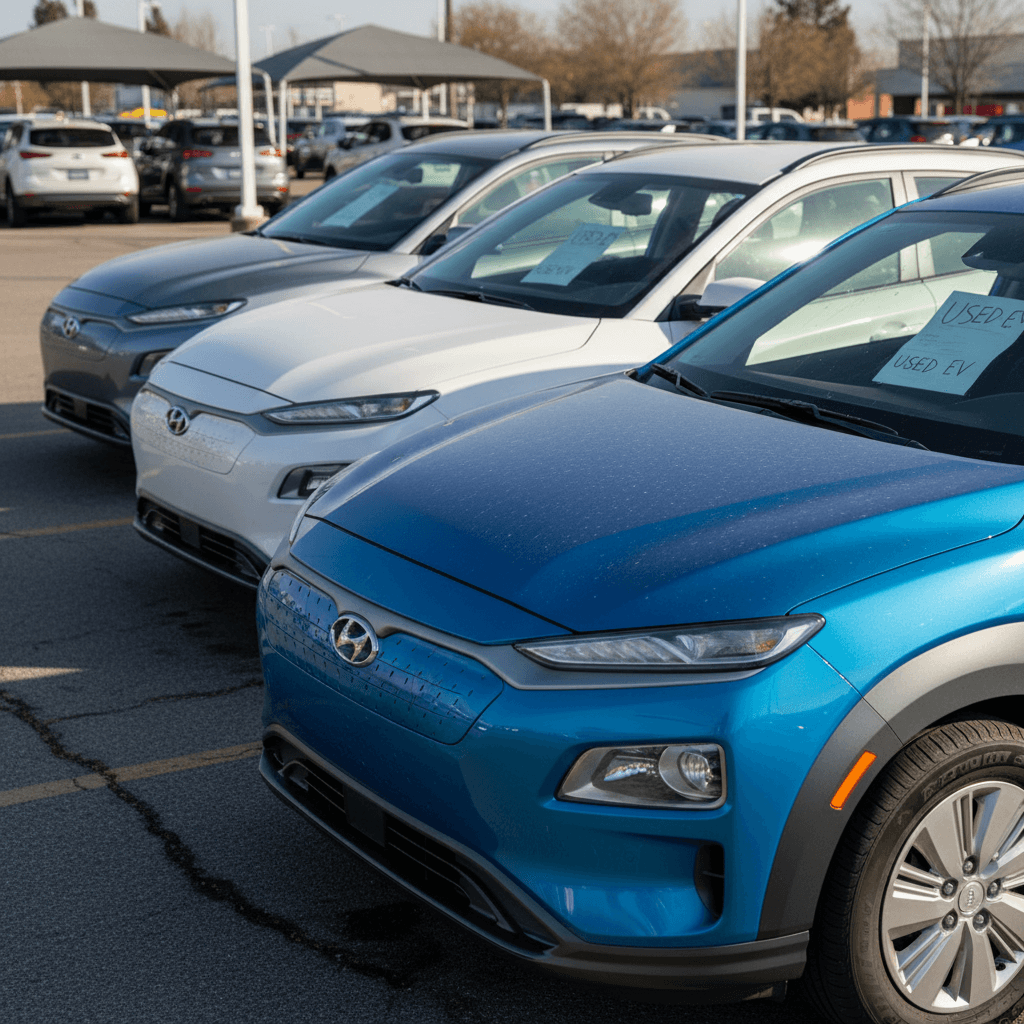
Price guides update constantly, but by spring 2026, a pattern has emerged. Clean‑title Kona Electrics with average mileage and no major stories tend to cluster into overlapping bands. Think of these as gravity wells, your individual car may float above or below, but only with a reason.
Directional used Kona Electric price bands for 2026
Assumes typical mileage, clean history, and average condition in the U.S. market. Actual prices vary by region and equipment.
| Model years | Miles (typical) | Rough private‑party band | Rough dealer / marketplace band | Notes |
|---|---|---|---|---|
| 2019–2020 | 45k–80k+ | Low‑$10,000s to mid‑$ teens | Mid‑$ teens to high‑$ teens | Cheapest entry; buyers want proof of recall completion and a recent battery check. |
| 2021–2022 | 30k–65k | Mid‑$ teens to low‑$20,000s | High‑$ teens to mid‑$20,000s | Strong value zone; good mix of warranty, price, and features. |
| 2023 | 20k–45k | High‑$ teens to low‑$20,000s | Low‑ to mid‑$20,000s | Bridges old and new generations; often discounted versus 2024 redesign. |
| 2024–2025 | 5k–30k | Low‑ to mid‑$20,000s | Mid‑$20,000s to low‑$30,000s | Redesigned cars keep a meaningful premium, especially high‑spec trims. |
These are broad, ballpark bands to frame your expectations, not appraisal values.
Important caveat on numbers
How to maximize your Kona Electric’s resale value
7 steps to protect your Kona Electric’s value
1. Document every service and recall
Keep a tidy folder, or digital scan, of scheduled maintenance, tire rotations, and any recall or warranty work. Buyers will pay a premium to avoid mystery cars.
2. Get a real battery‑health report
Before listing, invest in a professional battery health check instead of guessing from the dash gauge. On Recharged, the Recharged Score does this automatically for every EV we sell.
3. Show charging habits, not just miles
If you’ve mainly used home Level 2 charging, say so in your listing. A brief log or screenshots from your charging app can reassure data‑savvy buyers.
4. Refresh the mundane wear items
A Kona Electric with fresh tires, straight wheels, new wipers, and a clean interior feels “move‑in ready” and can nudge you toward the top of the price band.
5. Price against EVs and gas Konas
Some shoppers are cross‑shopping a Kona Electric against a gas Kona. Make sure your pricing narrative includes total‑cost‑of‑ownership, fuel and maintenance savings over five years are non‑trivial.
6. Be honest about range and usage
If you’ve seen some degradation, acknowledge it and price accordingly. Under‑promising on range and over‑delivering in the test drive builds trust and keeps deals from blowing up later.
7. Consider the timing
Tax‑credit rules and new‑car incentives often reset early in the calendar year. Listing just after a big new‑EV discount can hurt; listing when new‑car inventory is tight can help.
When in doubt, get a no‑pressure quote
Is a used Kona Electric a good buy in 2026?
From a pure cost‑of‑ownership perspective, the Kona Electric keeps looking better as gas prices refuse to behave. Recent comparisons between the gas Kona and the electric version show exactly what you’d expect: the EV costs more up front but saves thousands in fuel over a typical five‑year, 60,000‑mile ownership window, especially if you charge mostly at home at reasonable electricity rates.
- Pros as a used buy: Outstanding efficiency, simple footprint that fits city life, long battery warranty coverage on many model years, and relatively affordable asking prices compared with bigger, flashier EVs.
- Cons to weigh: Modest DC fast‑charging performance versus the latest EVs, earlier‑generation infotainment on pre‑2024 cars, and the general uncertainty that still shadows older EV resale in some markets.
- Buyer profile that wins: Someone with home or workplace Level 2 charging who drives a stable daily route and wants to slash fuel and oil‑change bills rather than chase maximum range.
In a market that has been cruel to first‑generation EVs, the Kona Electric is quietly hanging on to more of its dignity than you’d expect. It’s the anonymous accountant of small EVs: not glamorous, but very good with numbers.
How Recharged helps with Kona Electric resale and purchase
Kona Electric shoppers in 2026 don’t just want low prices, they want clarity. How strong is the battery? Is this price fair in today’s twitchy EV market? How fast can I actually close a deal? That’s the gap Recharged was built to close.
Buying or selling a Kona Electric with Recharged
Data, transparency, and EV‑specific support, not guesswork.
Recharged Score battery report
Every Kona Electric listed on Recharged includes a Recharged Score Report with verified battery health and range diagnostics, so you’re not relying on vague promises.
Flexible selling options
Trade in your Kona Electric, get an instant cash offer, or consign it on our marketplace. We’ll help you decide which path makes the most sense for your car and your timeline.
Nationwide EV delivery
Found the right Kona Electric but it’s not nearby? Recharged offers nationwide delivery and a fully digital purchase flow, plus an Experience Center in Richmond, VA if you prefer an in‑person handoff.
EV‑savvy financing
Our financing partners understand EV residuals and battery warranties, which can make approvals smoother on a Kona Electric than at a gas‑first lender.
Specialist EV support
Recharged’s team lives in the EV world. If you’re debating between model years, or worried about depreciation and charging, you’ll get straight, model‑specific guidance.
Fair‑market pricing tools
We benchmark Kona Electric listings against national and regional data so both buyers and sellers can see where a specific car sits on today’s curve, not last year’s.
Ready to find your next EV?
Browse VehiclesHyundai Kona Electric resale value FAQ (2026)
Frequently asked questions about Kona Electric resale in 2026
The Hyundai Kona Electric may never dominate Instagram feeds, but in the spreadsheets that matter, resale value, running costs, range per kilowatt‑hour, it shows its work. In a 2026 market that has punished sloppy EV bets, the Kona Electric has settled into a role as the sensible used EV: efficient, warranty‑backed, and increasingly affordable. If you understand where your specific car sits on the curve, its model year, mileage, battery health and remaining warranty, you can price or shop with a clear head. And if you’d rather not navigate that curve alone, Recharged exists precisely for this moment in the EV story.