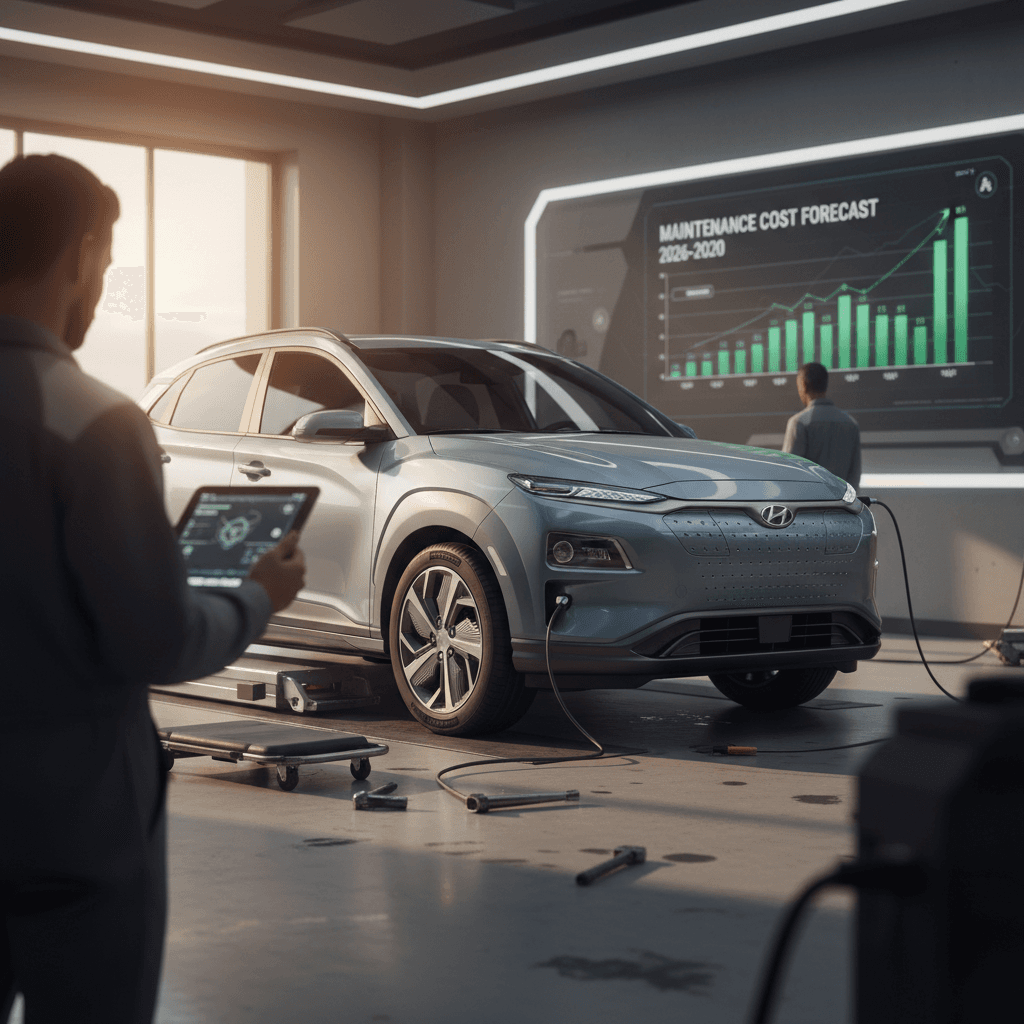
If you’re looking at a Hyundai Kona Electric in 2026, you’ve probably heard that EVs are cheaper to maintain than gas cars, sometimes **half the cost** over the long haul. That’s broadly true, but it helps to translate the averages into something concrete: what does **Hyundai Kona Electric maintenance cost in 2026** for a real owner putting real miles on the odometer?
Quick takeaway
Kona Electric maintenance cost in 2026: overview
Let’s set the stage with some context. Across many brands, studies and fleet data show **EV maintenance and repair costs run roughly one‑third to one‑half lower** than similar gas vehicles over time. That’s because there’s no engine oil, spark plugs, timing belt, fuel system, or multi‑gear automatic transmission to service. Instead, you’re mostly dealing with **tire rotations, cabin filters, brake fluid, coolant checks, and inspections**.
Hyundai Kona Electric maintenance at a glance (2026)
Those are averages. Your **actual** Hyundai Kona Electric maintenance cost in 2026 will depend on how much you drive, road conditions (hello, potholes), and how religiously you follow Hyundai’s service schedule.
Service schedule and what actually gets serviced
Hyundai tweaks details by model year, but Kona Electric service in the U.S. generally runs on **time or mileage intervals**, for example, every 7,500 miles or 12 months. For an EV, most visits look almost boring, and that’s good news for your wallet.
- Visual inspection of the high‑voltage system and cooling components
- Tire rotation and tread/brake inspection
- Cabin air filter replacement (every 15,000–30,000 miles, depending on conditions)
- Brake fluid replacement (often around every 3 years)
- Coolant checks for battery and power electronics (replacement at long intervals, often 10+ years on many EVs)
- 12‑volt auxiliary battery check or replacement when it ages
- Software updates and on‑board diagnostics checks
Complimentary maintenance changes for 2026
Because the Kona Electric doesn’t need engine oil or transmission service, even paid visits are usually short and relatively inexpensive, often dominated by labor time and tire rotations rather than pricey fluids and filters.
Expected annual Hyundai Kona Electric maintenance costs
Let’s talk numbers. Assuming typical U.S. driving, about **12,000–15,000 miles per year**, and a mix of dealer and independent shop visits, a realistic **Hyundai Kona Electric maintenance cost in 2026** usually falls into these ranges:
Estimated annual Kona Electric maintenance costs (2026)
Approximate out‑of‑pocket routine maintenance costs for an owner in 2026, excluding insurance, registration, and accident repairs.
| Item | Frequency | Typical cost per visit | Annualized estimate |
|---|---|---|---|
| Tire rotation & inspection | 1–2x per year | $40–$80 | $40–$120 |
| Cabin air filter | Every 2 years | $60–$120 installed | $30–$60 |
| Brake fluid replacement | Every ~3 years | $120–$180 | $40–$60 |
| 12‑volt battery | Every 4–6 years | $200–$300 installed | $35–$75 |
| Misc. inspections & software updates | At routine visits | Often bundled | $50–$100 |
| Total typical annual routine cost | , , | , , | ≈ $350–$650 |
Actual prices vary by region, labor rates, and whether you use a dealership or independent shop.
DIY can trim the bill
Remember, these are **averages** spread over several years. In a given calendar year you might only pay for a rotation and filter, and in another year you add brake fluid and a 12‑volt battery. What matters is the long‑term pattern, not a single quiet or busy year.
Kona Electric vs gas SUV maintenance costs
To understand whether the Hyundai Kona Electric maintenance cost in 2026 is *good*, you need a comparison point. Think of a similarly sized gas compact SUV, a regular Kona, HR‑V, Corolla Cross, or Seltos.
Typical gas compact SUV
- Oil and filter changes 2–3 times per year
- Engine air filter, spark plugs, belts, and transmission fluid over time
- More complex exhaust and emissions hardware to maintain
- Similar tire and brake wear to the Kona Electric
Hyundai Kona Electric
- No oil changes, spark plugs, or exhaust system service
- Fewer moving parts, less heat and vibration
- Regenerative braking can reduce brake wear
- Same tires, but often heavier curb weight
Recent analyses and fleet data suggest EVs like the Kona Electric generally spend about **30–40% less per year on routine maintenance** than similar gas models once you average things out over several years. Dependable gas SUVs might see **$600–$900 per year** in routine maintenance by the time you factor in oil changes, fluids, and occasional minor repairs. That makes the Kona Electric’s **$350–$650** yearly maintenance band genuinely competitive, especially when you add the fuel savings from electricity versus gasoline.
Where the Kona Electric really wins
Big-ticket items: tires, brakes, and battery
Routine visits are only part of the Hyundai Kona Electric maintenance story. The big money shows up in **tires, brake hardware, and long‑term battery health**, and that’s where smart owners either save or overspend.
Major Kona Electric maintenance items to plan for
Most owners won’t see all of these in a 3‑year window, but over 5–10 years they matter.
Tires
Like many EVs, the Kona Electric is heavier than a comparable gas Kona and delivers strong torque from a stop. That can wear tires faster, especially if you enjoy the instant punch.
Plan on: $700–$1,000 for a quality set of four every 30,000–45,000 miles, depending on driving style and rotation discipline.
Brakes
Regenerative braking means the Kona Electric often uses its motor to slow down, so the physical pads and rotors can last a long time if you drive smoothly.
Plan on: Front pads and rotors in the $400–$700 range per axle at a shop when they finally wear out, often well past 60,000 miles.
High‑voltage battery
The traction battery is the most expensive component, but it’s also protected by a long warranty and designed to last many years.
Plan on: Monitoring health rather than budgeting for a full replacement. Replacement packs can cost many thousands, but most owners never pay out of pocket while under warranty.
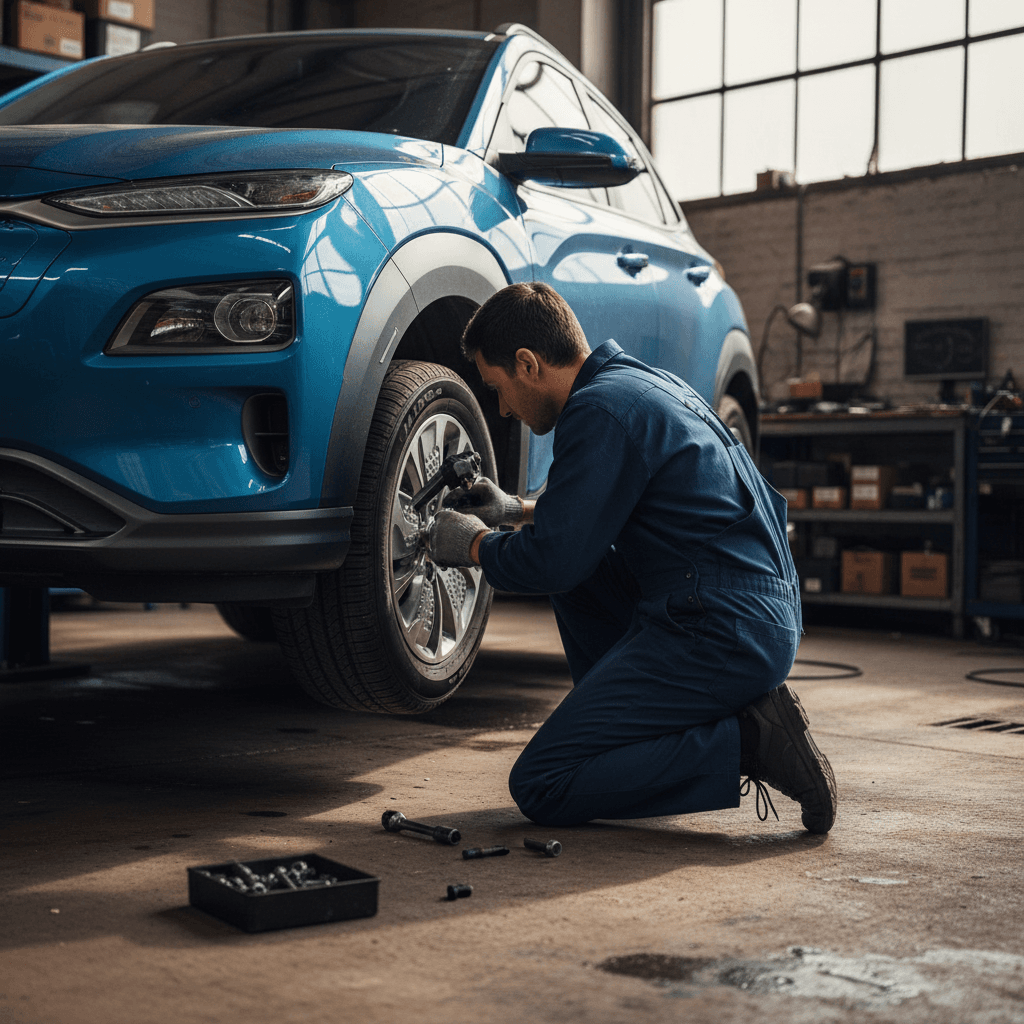
Don’t ignore the 12‑volt battery
Real-world 5‑year maintenance cost estimate
To make the Hyundai Kona Electric maintenance cost in 2026 concrete, let’s walk through an example: you buy a used 2022 Kona Electric in early 2026 with 30,000 miles on it, then keep it for five years to 90,000 miles. Here’s what you might spend on **maintenance only** (no insurance, registration, or charging costs).
Illustrative 5‑year Kona Electric maintenance costs (2026–2031)
Example owner starting at 30,000 miles in 2026 and driving 12,000 miles per year.
| Item | Approx. frequency over 5 yrs | Estimated total |
|---|---|---|
| Tire rotations & inspections | Once per year | $250 |
| Cabin filters | 2–3 replacements | $200 |
| Brake fluid | 2 services | $250 |
| 12‑volt battery | 1 replacement | $250 |
| Tires | 2 full sets | $1,600 |
| Occasional alignments & misc. | As needed | $350 |
| Total estimated 5‑year maintenance | , , | ≈ $2,900 (about $580/yr) |
These are estimates for planning, not quotes. Regional labor rates and driving style can move the numbers up or down.
This is only one possible scenario, but it lines up with the **$350–$650 per year** range. A light‑mileage driver might land lower; a high‑mileage commuter, or someone in an area with expensive tires, might come in higher.
What surprises many new EV owners is how quiet the service schedule becomes once you remove oil changes, spark plugs, and transmission work. Most of what’s left feels like owning an appliance, with better tires.
How to save money on Kona Electric maintenance
You can’t control every expense, but there’s a lot you can do to keep your Hyundai Kona Electric maintenance cost in 2026 pleasantly low without cutting corners on safety or reliability.
Smart ways to reduce Kona Electric maintenance costs
1. Be fanatical about tire pressure
Check tire pressures monthly and before long trips. Under‑inflated tires wear out faster and waste energy; over‑inflated tires can hurt traction. Sticking close to the door‑jamb spec helps you maximize tire life and range.
2. Use regenerative braking wisely
Learn your Kona Electric’s regen modes and use them to slow down early and smoothly whenever traffic allows. That sends energy back into the battery and saves your pads and rotors from heat and wear.
3. Shop around for tires and alignments
Dealers, warehouse clubs, and independent tire shops often run big promotions. A bit of shopping can knock **hundreds of dollars** off a full set of EV‑rated tires over the life of the car.
4. Separate warranty work from routine service
You’re free to have basic maintenance done at reputable independent shops, as long as they use appropriate parts and follow Hyundai guidelines. Don’t feel locked into dealer pricing for every rotation or filter change.
5. Keep software up to date
Ask your service advisor to check for updates at each visit. Software updates can improve charging behavior, fix glitches, and in some cases extend component life.
6. Watch for brake noise, not just mileage
EV brakes can go a long time, but corrosion from road salt or long periods of sitting can still create issues. If your Kona Electric sits for days in wet or salty climates, take it for a short drive and use the brakes firmly a few times to keep them clean.
Where Recharged can help
Buying a used Kona Electric: what to check
In 2026, many Hyundai Kona Electrics on the market will be **2019–2024 model years** coming off lease or early ownership. Maintenance costs on a used EV are all about **starting from a known baseline** and understanding battery health.
Maintenance and health checks before you buy
These checks help you forecast real‑world ownership costs on a used Kona Electric.
Service history & recalls
Ask for records showing regular tire rotations, brake fluid changes, and recall work. A spotty history isn’t a dealbreaker, but recent fluid service and inspections suggest a careful owner.
On a Recharged vehicle, this is summarized for you in the Recharged Score Report so you can see when key items were last done.
Battery health & usable range
Battery degradation is the big wild card. Two Konas with the same odometer reading can have very different real‑world ranges depending on fast‑charging habits, climate, and storage.
Recharged includes verified battery diagnostics, so you’re not guessing whether a particular Kona Electric will still meet your daily range needs in a few years.
Brake and tire wear
Look for even tire wear, decent tread depth, and quiet, smooth braking. If you’re close to needing tires or front brakes, factor that into your budget or negotiation.
This is exactly the kind of detail savvy buyers use to get a better out‑the‑door price.
Remaining warranty coverage
Check how much of the original Hyundai bumper‑to‑bumper and battery warranty is left by model year and mileage. A Kona still under high‑voltage warranty carries much lower risk of big surprise bills.
Why a Recharged Score matters for maintenance
Hyundai Kona Electric maintenance cost FAQ
Frequently asked questions about Kona Electric maintenance in 2026
The Hyundai Kona Electric has always been about offering real‑world EV practicality at a sensible price, and that carries through to **maintenance costs in 2026**. Routine service is simpler and generally cheaper than a comparable gas SUV, the big battery is well protected by warranty, and most of your long‑term spending comes down to tires, brakes, and how carefully the car has been maintained to this point. If you combine that with smart shopping, especially on a used Kona Electric with a **verified battery health report**, you can enjoy all the benefits of electric driving with running costs that stay comfortably predictable for years.