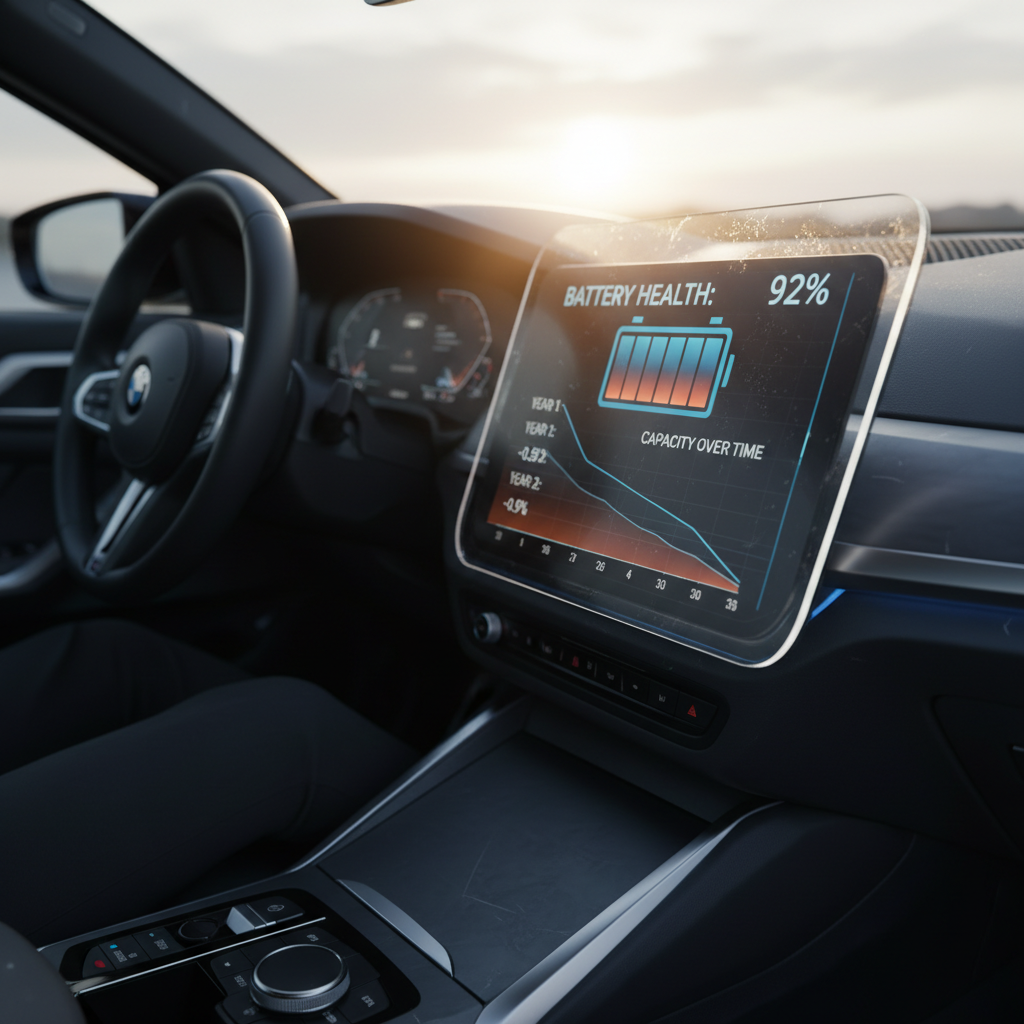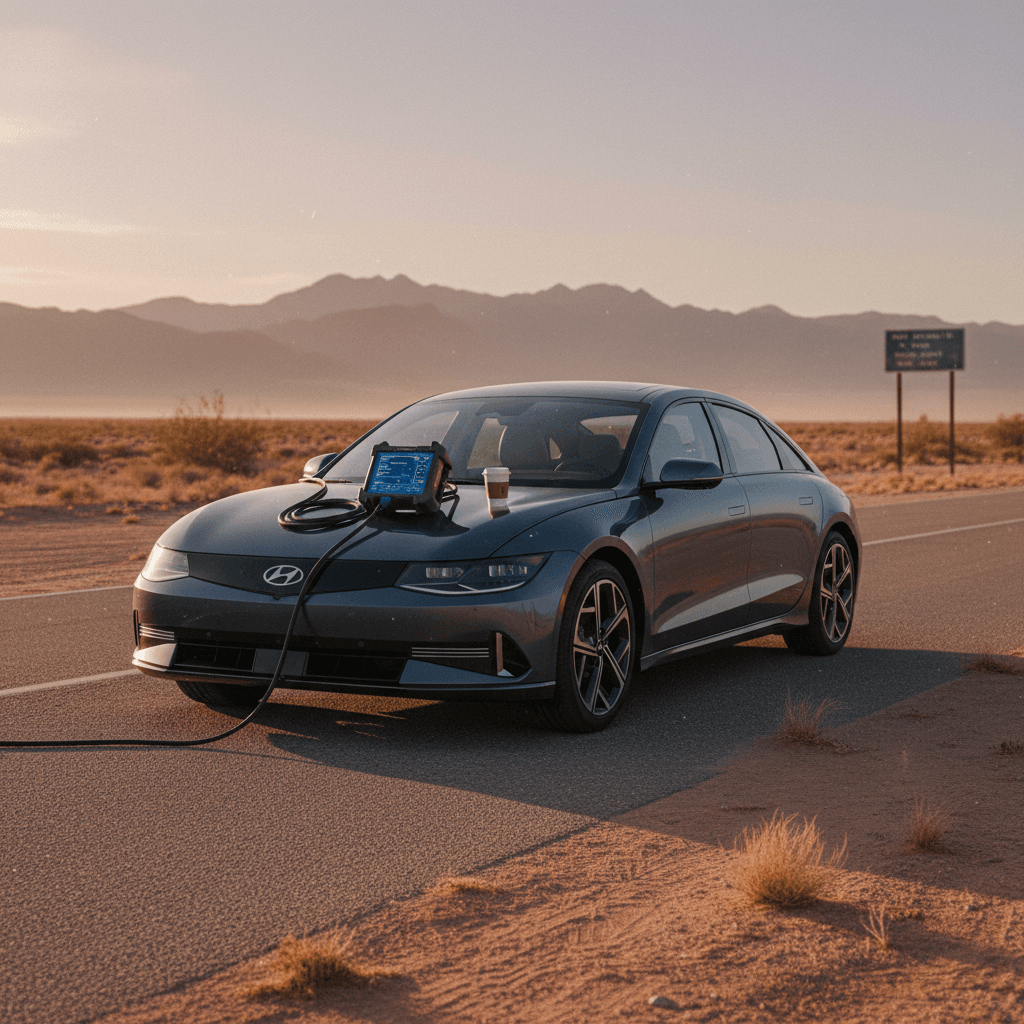
You don’t buy a Hyundai IONIQ 6 just to make it to the grocery store. You buy it because that slippery, art‑deco fastback promises big miles per charge. On paper, the IONIQ 6 offers up to 361 miles of EPA range, but what most shoppers really want to know is: what’s the real‑world highway range at 65–75 mph?
Quick answer
Why real‑world highway range matters more than the brochure
EPA numbers are produced on a controlled test cycle that blends city and highway driving, with lower average speeds and gentler acceleration than you’ll see on an American interstate. The IONIQ 6’s headline figures, up to 361 miles EPA range and a drag coefficient around 0.21–0.22, are real engineering achievements, but they don’t describe what happens when you set cruise to 72 mph and drive for three hours straight.
At steady highway speeds, aerodynamic drag is the enemy. It ramps up with the square of your speed, which is why the difference between 65 and 80 mph is night‑and‑day for range. Even ultra‑efficient EVs like the IONIQ 6 will give back a healthy chunk of their EPA rating when you drive like most of us actually do: fast lane, A/C on, podcasts streaming.
Think in miles per hour of driving, not just miles of range
Hyundai IONIQ 6 EPA range vs real‑world highway range
First, a quick snapshot of the IONIQ 6’s EPA ratings for U.S. models with the 77.4‑kWh long‑range battery. The star of the lineup is the SE Long Range RWD on 18‑inch wheels, rated at 361 miles. Step up to AWD or the bigger 20‑inch wheels and range falls into the low‑ to mid‑300s for RWD and high‑200s for AWD, with combined efficiency running from 140 MPGe down to around 103 MPGe depending on trim.
IONIQ 6 range: lab vs. highway reality
Independent testing and owner reports tell a consistent story: expect around three‑quarters of the EPA range at 70 mph in real traffic and weather. In one widely cited road‑trip test, an IONIQ 6 SE Long Range RWD on 18s covered just under 300 miles before the pack was essentially empty, about 80% of its 361‑mile rating. Many owners report similar results in the 3.6–4.0 mi/kWh range at true freeway speeds when conditions are friendly.
Real‑world highway range by IONIQ 6 trim and wheel size
Trim and wheel size make a big difference. The most efficient IONIQ 6 is the SE Long Range RWD on 18‑inch wheels; the least efficient are the dual‑motor AWD cars on 20‑inch wheels. Below is a realistic, big‑picture view for steady highway cruising at about 70 mph in mild weather (60–75°F), light wind, and relatively flat terrain.
Estimated real‑world highway range at ~70 mph
Approximate ranges assume a healthy battery, mild temperatures, and starting from 100% down to near 0%. Think of these as ballpark planning numbers, not guarantees.
| Trim (77.4‑kWh battery) | Drive / Wheels | EPA range (mi) | Realistic 70‑mph highway range (mi) | Good planning buffer (mi) |
|---|---|---|---|---|
| SE Long Range | RWD / 18" | 361 | 250–290 | 230 |
| SE Long Range | AWD / 18" | 316 | 220–260 | 210 |
| SEL / Limited Long Range | RWD / 20" | 305 | 220–250 | 200 |
| SEL / Limited Long Range | AWD / 20" | 270 | 190–225 | 180 |
| SE Standard Range* | RWD / 18" | 240 | 165–200 | 160 |
How different IONIQ 6 trims and wheels behave on real interstates.
About these numbers
The Standard Range 53‑kWh version is impressively efficient, but it simply has less energy in the pack. It can still do comfortable 2–2.5‑hour stints at 70 mph, but if you live somewhere with big distances between fast chargers, the long‑range battery is the one you want, especially in used‑market shopping where selection might be limited.
6 big factors that change your IONIQ 6 highway range
What really eats (or adds) miles on the highway
Same car, same battery, wildly different outcomes depending on how and where you drive.
1. Speed
2. Temperature
3. Wind and weather
4. Elevation & terrain
5. Wheels & tires
6. Load & driving style
The highway EV range trap
What efficiency looks like at 70 mph (mi/kWh)
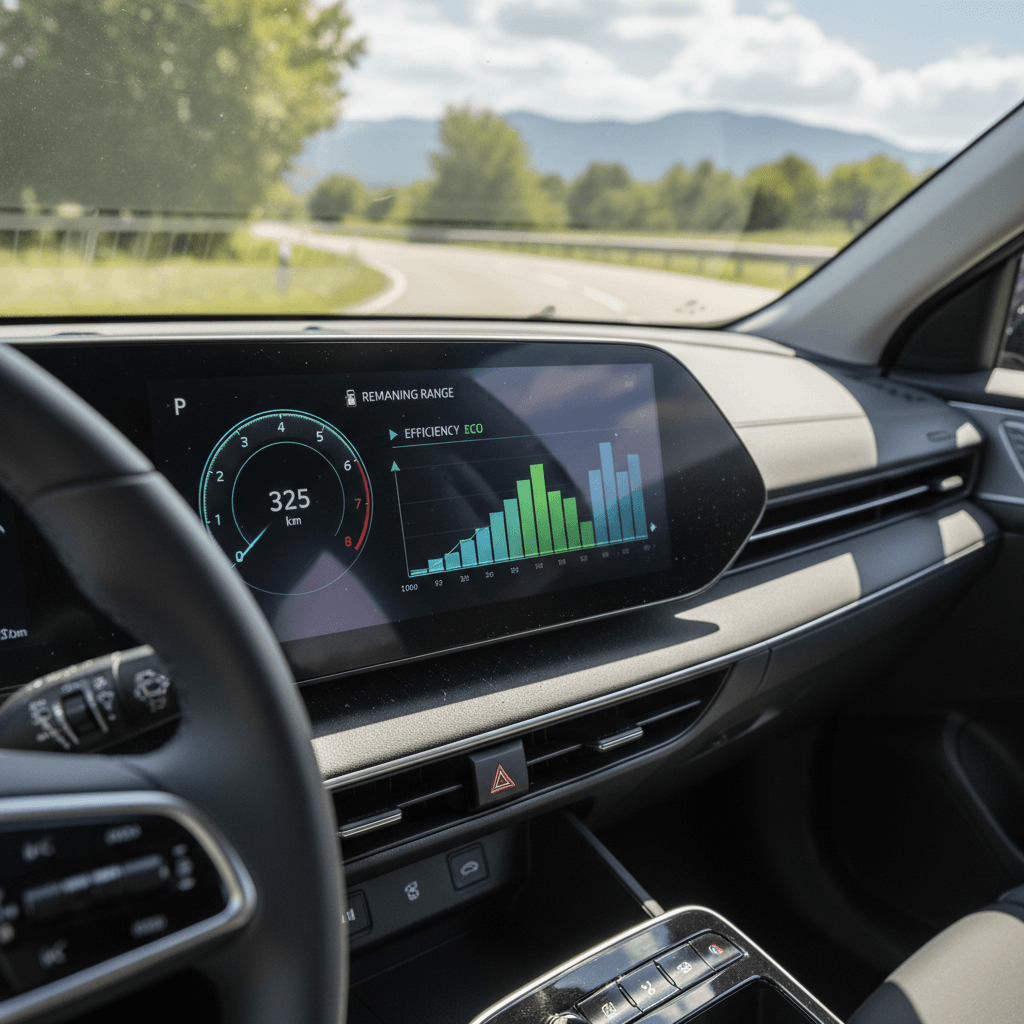
Range is just battery size multiplied by efficiency. With a net usable capacity in the mid‑70‑kWh range for long‑range models, the IONIQ 6 lives and dies by how many miles it squeezes from each kilowatt‑hour at speed. Owner logs and long‑distance tests offer a useful rule of thumb:
- SE Long Range RWD, 18" wheels: ~3.6–4.0 mi/kWh at 65–70 mph in mild temps
- Long‑range RWD, 20" wheels: ~3.2–3.6 mi/kWh under similar conditions
- Long‑range AWD, 18" wheels: ~3.1–3.5 mi/kWh
- Long‑range AWD, 20" wheels: ~2.8–3.3 mi/kWh
Multiply those numbers by roughly 74–77 kWh usable and you land squarely in the real‑world ranges we outlined earlier. That’s why a Limited AWD on 20‑inch wheels can feel like a 190–220‑mile highway car, while the skinny‑tired SE RWD can flirt with 280–300 miles if you’re gentle.
Why the IONIQ 6 still punches above its weight
Road‑tripping in an IONIQ 6: How often you’ll really stop
On a long‑distance run, the IONIQ 6’s 800‑volt E‑GMP platform is just as important as its efficiency. On a good 350‑kW DC fast charger, Hyundai quotes 10–80% in about 18 minutes. In the real world that might be 20–25 minutes once you fold in charger variability and sharing a station, but it’s still among the quickest charging in the segment.
How far between stops
In a long‑range RWD model, a realistic pattern is start at 90–100%, drive 230–260 miles down to about 10–15%, then charge back to 70–80% and repeat. That works out to roughly 3–3.5 hours of driving, then a 20‑minute stop, which actually lines up nicely with human needs.
How this feels compared to gas
You’re stopping a little more often than you might in an efficient gas sedan, but the breaks are shorter and forced, which isn’t a bad thing. The IONIQ 6’s quick charging means your total trip time often trails other EVs that technically have more range, but charge much more slowly.
Plan around 10–15% arrival, not 0%
Buying a used IONIQ 6: battery health and range checks
If you’re shopping a used Hyundai IONIQ 6, you’re buying a story as much as a car: how it was charged, how far it was driven, and what climate it lived in. Because highway range is where small battery issues show up first, it’s worth doing a bit more homework than you might for a gas sedan.
Key range and battery checks for a used IONIQ 6
1. Confirm which battery and wheels you’re getting
Ask whether the car is <strong>Standard Range vs Long Range</strong>, RWD vs AWD, and which wheel size it has. A used SE Long Range RWD on 18s is an entirely different highway animal than a Limited AWD on 20s.
2. Look at the lifetime efficiency
In the car’s settings, check the long‑term mi/kWh. A lifetime number around 3.0 with lots of highway use is normal. Anything drastically lower may suggest constant high‑speed or cold‑weather abuse, or just very spirited driving.
3. Take a real highway test drive
On the test drive, reset a trip meter, spend at least 20–30 minutes at 65–75 mph, and watch the mi/kWh and projected range. Compare it to the ballpark numbers in this guide.
4. Check fast‑charging behavior
If possible, do a brief DC fast‑charge session. A healthy IONIQ 6 should ramp quickly up to high power when the battery is warm and not already near full. Sluggish charging can hint at pack issues or outdated software.
5. Use a third‑party battery health report
A professional battery assessment, like the <strong>Recharged Score</strong> we include with every vehicle on our marketplace, gives you a verified look at pack health, usable capacity, and how closely the car still matches its original range potential.
How Recharged helps with IONIQ 6 range questions
Driving tips to squeeze more highway range from an IONIQ 6
You can’t change physics, but you can work with them. The IONIQ 6 is already one of the most slippery shapes on sale; a few smart habits can turn it into a true interstate specialist without feeling like hypermiling homework.
- Dial back your cruising speed a little. Going from 78 mph to 70 mph often buys you 10–15% more range for a trivial change in arrival time on anything under 300 miles.
- Use Eco or Normal, not Sport, on long drives. You still have full power when you need it; you just soften throttle response and let the car relax instead of constantly surging.
- Precondition the cabin while plugged in. On cold or hot days, use the climate timer or remote climate to get the cabin comfortable before you unplug, that saves battery energy for driving.
- Pack cleaner, not higher. Roof boxes and bike racks are range killers. Whenever you can, stash gear in the trunk and cabin rather than on the roof.
- Watch the live efficiency gauge. Treat mi/kWh like a game. If you’re seeing significantly under 3 mi/kWh at 70 mph in good weather, ask what’s causing it: speed, wind, temperature, or traffic style.
- Time your fast charges smartly. The IONIQ 6 charges fastest between roughly 10–60%. On road trips, multiple shorter stops in that window can beat one long push to 100% in total travel time.
Cold‑weather IONIQ 6 highway range reality
Hyundai IONIQ 6 real‑world range FAQ
Frequently asked questions about IONIQ 6 highway range
Bottom line: Should you trust the EPA number?
You should treat the Hyundai IONIQ 6’s EPA rating as the optimistic ceiling, not the everyday reality, especially on the highway. In the real world at U.S. freeway speeds, the IONIQ 6 is generally a 190–300‑mile car depending on trim, wheels, and weather, with the SE Long Range RWD on 18s sitting firmly at the top of that range.
The good news is that those are still excellent numbers, particularly when you pair them with near‑class‑leading fast‑charge times. For many drivers, the limiting factor is bladder range, not battery range. And if you’re shopping used, tools like the Recharged Score Report can translate all this into a simple, real‑world answer: how far this specific IONIQ 6 will go, on the kinds of highway drives you actually do.