Selling a Hyundai Kona Electric isn’t the same as selling a gas Kona. Buyers care about battery health, remaining Hyundai EV warranty, and charging history just as much as miles and cosmetics. This guide walks you step‑by‑step through how to sell your Hyundai Kona Electric in a private sale, from pricing and prep to test drives, paperwork, and when it may be smarter to let an EV‑specialist marketplace like Recharged handle the heavy lifting.
Quick overview
Why selling your Kona Electric is different
EV buyers ask different questions
- How healthy is the battery? (Hyundai’s EV battery is typically covered for 10 years/100,000 miles from first in‑service date.)
- What range do you actually get? Not just the EPA number on paper.
- How and where has it been charged? Home Level 2 vs. constant DC fast charging.
Kona Electric’s resale story
- Compared with the gas Kona, the Kona Electric has seen steeper depreciation, which can actually make your car attractive to value‑hunters.
- That means pricing it correctly and clearly documenting battery health can be the difference between lowball offers and serious buyers.
Depreciation reality check
Decide if a private sale is right for your Kona EV
Private sale vs. other ways to sell your Kona Electric
You have options, here’s how they stack up.
Private sale
Best for: Maximizing price when you can invest time.
- Typically highest sale price.
- You manage marketing, test drives, and paperwork.
- More messages and no‑shows to deal with.
Dealer trade‑in
Best for: Convenience when you’re buying another car immediately.
- Fast and simple.
- Usually thousands less than private sale.
- Limited EV expertise at some dealers.
EV marketplace (like Recharged)
Best for: Owners who want strong value without doing everything themselves.
- EV‑specialist pricing and marketing.
- Battery diagnostics (Recharged Score) and nationwide buyer reach.
- Options like instant offer, trade‑in, or consignment.
Rule of thumb
Step 1: Know what your Kona Electric is worth
Kona Electric value snapshot
Start with a realistic price range, then refine it based on your specific car.
- Use appraisal tools like Edmunds or similar to compare trade‑in vs. private‑party values for your model year, trim (SE/SEL/Limited), and mileage.
- Check local listings (Autotrader, Cars.com, Facebook Marketplace, etc.) for Hyundai Kona Electric models within a few hundred miles of your ZIP. Note asking prices, mileage, and trim levels.
- Adjust for battery warranty: a Kona Electric that’s still inside Hyundai’s 10‑year/100,000‑mile battery warranty window is more attractive than one close to or beyond it.
- Factor in options and history: tech packages, winter tires, one‑owner history, clean accident record, and complete service history all help justify a higher asking price.
Set an asking price with room to move
Step 2: Get your Kona EV and battery ready to sell
With EVs, “mechanically sound” isn’t enough. Buyers want confidence that your Kona Electric’s battery is healthy and the car has been cared for. A few hours of prep can add real money to your sale price.
Kona Electric pre‑sale prep checklist
1. Fix easy cosmetic issues
Wash, clay, and wax the exterior; clean wheels; touch up small chips where practical. Inside, deep‑clean seats, dash, and cargo area. Remove personal items and clutter so buyers can picture the car as theirs.
2. Address simple maintenance items
Replace wiper blades, top off washer fluid, and take care of any dash warning lights. Print a fresh tire rotation or brake inspection from your service shop if you can, it reassures buyers who are new to EVs.
3. Organize service and charging history
Gather Hyundai service records, tire receipts, and any documentation of software updates. If you’ve mostly charged at home on Level 2 and avoided frequent DC fast charging, mention that, it’s good for long‑term battery health.
4. Document real‑world range
Note what range you typically see at 80–100% charge in your normal driving, and in winter vs. summer. Buyers care more about what the car does today than the window sticker EPA number alone.
5. Highlight remaining warranty coverage
Confirm in your records the in‑service date and mileage so you can explain what’s left of Hyundai’s new‑vehicle, powertrain, and EV battery warranties. A Kona Electric with several years of battery coverage left is much easier to sell.
6. Make charging easy for the next owner
Include the OEM portable charge cable if you still have it, and consider offering your Level 2 home charger if you’re moving or switching brands. Make sure you have at least one working key fob and that any Hyundai connected services are reset for the new owner.
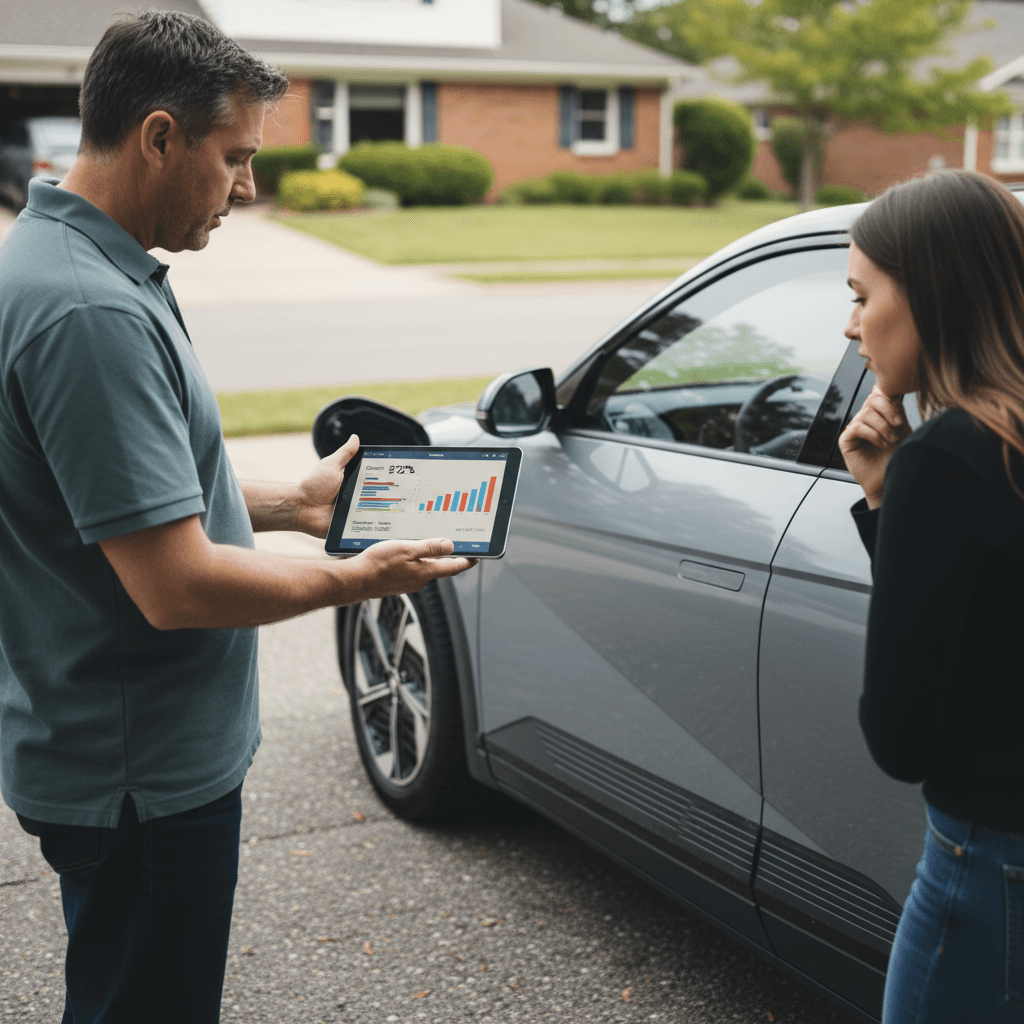
How Recharged can help on prep
Step 3: Create a Kona Electric listing that stands out
The right photos and description separate serious sellers from the “testing the waters” crowd. For a Kona Electric, that means answering EV‑specific questions before a buyer even messages you.
Must‑have elements of a strong Kona Electric listing
Think like a cautious, EV‑curious buyer.
Clear, honest photos
- Front, rear, both sides, 3/4 angles.
- Interior front and rear, cargo area, seats and steering wheel close‑ups.
- Close‑ups of wheels, tires, charge port, and blemishes (rock chips, curb rash, etc.).
Battery & range details
- EPA rated range for your model year and battery.
- Your typical everyday range at 80–100% charge.
- Type of charging you’ve used most (home Level 2 vs. frequent DC fast charging).
Story & paperwork
- Owners, accident history, and why you’re selling.
- Service history and remaining Hyundai warranties.
- Included accessories: portable charger, winter wheels, floor mats, etc.
Copy‑and‑paste description starter
Step 4: Handle inquiries, test drives, and safety
Once your Kona Electric is live, your phone will start pinging. Your job is to filter the curious from the serious and protect your time and safety.
Safe and efficient test‑drive playbook
Pre‑qualify buyers by message
Ask what they’re driving now, how familiar they are with EVs, and whether they’re pre‑approved for financing or paying in cash. Share your firm price range early to avoid time‑wasters.
Meet in a safe, public place
Choose a busy, well‑lit area, mall parking lot, large shopping center, bank branch during business hours. Consider bringing a friend. Avoid home addresses until you’re confident in the buyer.
Check ID and insurance before driving
Photograph the buyer’s driver’s license and confirm they have active insurance. Ride along on the test drive and keep the route modest, surface streets and a short highway stretch if practical.
Showcase EV features on the drive
Demonstrate regenerative braking paddles, drive modes, one‑pedal style driving if they’re new to EVs, and how to find nearby charging stations. A little coaching can turn an EV‑curious shopper into a confident buyer.
Protect your data
Before test drives, log out of personal accounts, remove saved home/work addresses from navigation, and disconnect your phone from Bluetooth. After the sale, factory‑reset infotainment and remove the car from any connected apps.
Safety non‑negotiables
Step 5: Negotiate like a pro on a Kona EV
Negotiation on a used EV feels a lot like any used‑car deal, except buyers may be nervous about batteries and charging. Your job is to stay calm, stick to your numbers, and use facts, not feelings.
Common buyer objections, and strong EV‑specific responses
Use these to stay confident without being combative.
| Buyer objection | How to respond | When a discount is reasonable |
|---|---|---|
| “EVs depreciate so fast; I need a big discount.” | Acknowledge that used EV prices have come down and highlight why that’s good for the buyer: they get a lot of car and tech for the money. Emphasize current market pricing, not your original MSRP. | If your asking price is clearly above similar local listings or you’re very close to the end of the battery warranty. |
| “I’m worried about the battery wearing out.” | Point to real‑world range, your charging habits, and remaining Hyundai battery warranty. If you have a third‑party battery health report, this is where it pays off. | If range has measurably declined vs. new or if you’ve fast‑charged heavily and disclosed it. |
| “I saw a cheaper Kona Electric two states away.” | Note differences in trim, mileage, accident history, and options. Remind them of the value of buying locally and being able to see and drive the car in person. | If a similar local Kona Electric recently sold for less and the buyer can show documentation. |
Be prepared for typical Kona Electric questions so you don’t get talked into a discount you don’t owe.
Know your walk‑away number
Step 6: Paperwork, payment, and handover
Laws vary by state, but the basic steps of a private‑party sale are similar across most of the U.S. It’s worth spending an hour reading your state DMV site before money changes hands.
Kona Electric private‑sale paperwork & payment checklist
1. Title and bill of sale
Make sure the title is in your name and free of liens, or have payoff info ready from your lender. Prepare a simple bill of sale with VIN, odometer reading, sale price, and buyer/seller information. Many state DMVs have templates.
2. State‑specific forms
Some states require emissions or safety inspections, odometer statements, or separate forms for release of liability. Check your state DMV website and print anything needed in duplicate.
3. Secure payment method
Prefer a <strong>cashier’s check drawn at the buyer’s bank while you’re present</strong>, or an instant transfer from a major bank where you can confirm funds. Avoid personal checks or convoluted wire stories.
4. Remove digital ties
Remove the car from Hyundai connected services and any third‑party apps, delete it from your insurance, and perform a factory reset of the infotainment system so your data isn’t riding along.
5. Final handoff
Hand over both keys, manuals, charging cables, and any service or battery‑health documentation you’ve promised. Take photos of the signed title and bill of sale for your records, and file any required notice of sale with your state.
About EV tax credits and private sales
Common pricing, battery, and warranty questions
How much does battery health matter?
On a Kona Electric, the battery is the single most expensive component. Hyundai’s 10‑year/100,000‑mile EV battery warranty gives buyers peace of mind, but used‑EV shoppers still want evidence that the pack is aging normally. Real‑world range, your charging habits, and any diagnostic reports all factor into what they’ll pay.
Being transparent here builds trust and makes it easier to hold your price.
What about over‑the‑air updates and software?
Newer Kona Electric models can receive over‑the‑air (OTA) software updates and have features tied to the MyHyundai app. Before you sell, make sure all updates are current and be prepared to walk the buyer through how to set up their own account so they can take advantage of the tech they’re paying for.
Disclose what you know
When to skip private sale and use an EV specialist
Private sale isn’t the right answer for every Kona Electric owner. Sometimes the smartest financial move is the one that also lets you sleep at night.
Situations where Recharged can make more sense than DIY
Leverage EV‑specific expertise when you need it most.
You’re short on time or out of state
If you’re relocating, selling a Kona Electric that’s still at a relative’s house, or just don’t have weekends to burn on test drives, Recharged can handle marketing, buyer screening, and paperwork through its digital marketplace and consignment options.
Buyers are nervous about your battery
If your Kona Electric has higher mileage or a lot of DC fast‑charging in its past, a Recharged Score battery‑health report can put numbers to the story and attract buyers from across the country instead of just your local classifieds.
You want dealer‑like convenience without the dealer haircut
Recharged offers instant offers, trade‑ins, and nationwide delivery on used EVs. You get EV‑savvy pricing and support without having to haggle in a showroom or meet strangers with envelopes of cash.
You care about a smooth, safe transaction
From digital paperwork to secure payments and title handling, Recharged is built to make EV ownership and selling simple and transparent. If this is your first EV sale, that guidance can be worth more than squeezing out the last few dollars on price.
Ready to find your next EV?
Browse VehiclesFAQ: Hyundai Kona Electric private sale
Frequently asked questions about selling a Kona Electric privately
Selling your Hyundai Kona Electric in a private sale takes a bit more thought than handing over the keys to a gas car. But if you prepare the car, document its battery health and warranty, and navigate test drives and payment with care, you can turn today’s softer EV prices into an opportunity, for you and for the next owner. And if you decide the DIY route isn’t worth the stress, Recharged is built to give Kona Electric owners a simpler path: expert EV pricing, Recharged Score battery diagnostics, financing for buyers, and secure, digital‑first transactions from your driveway to their next adventure.