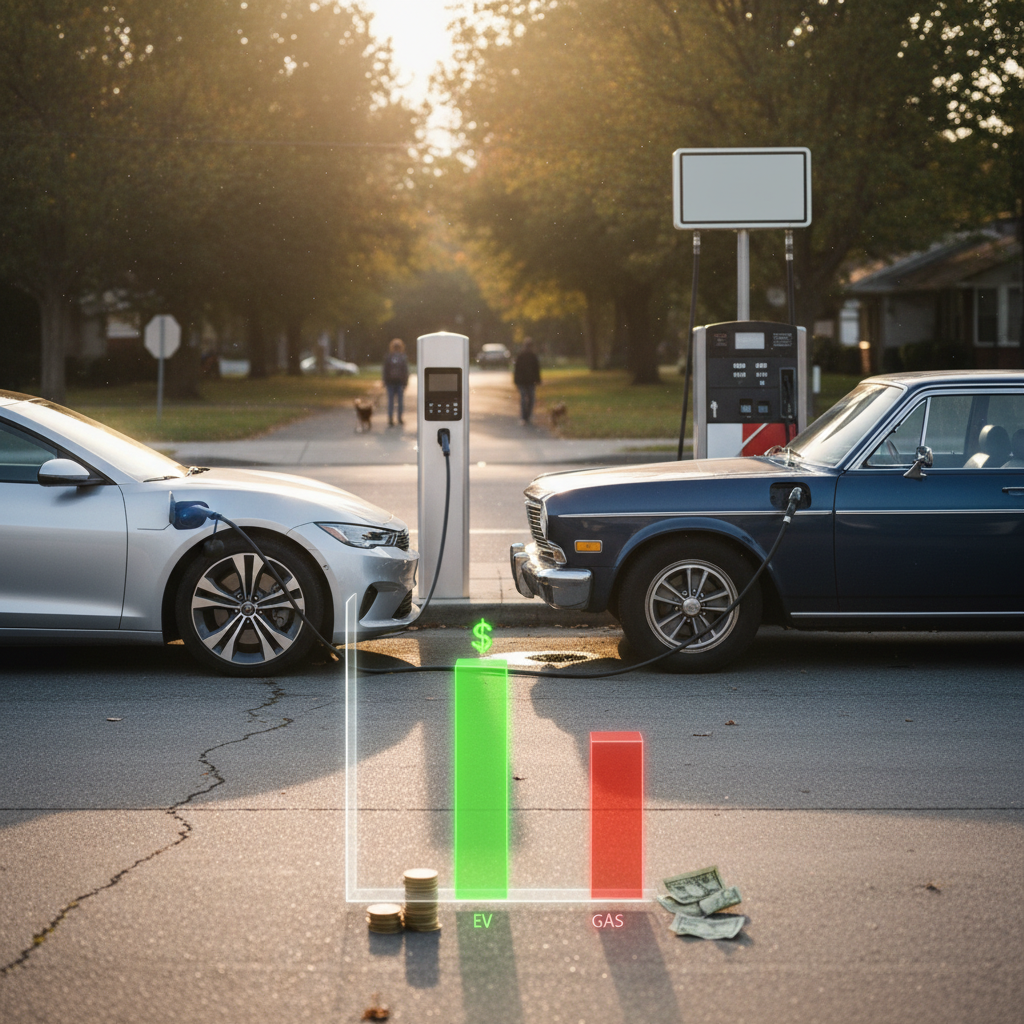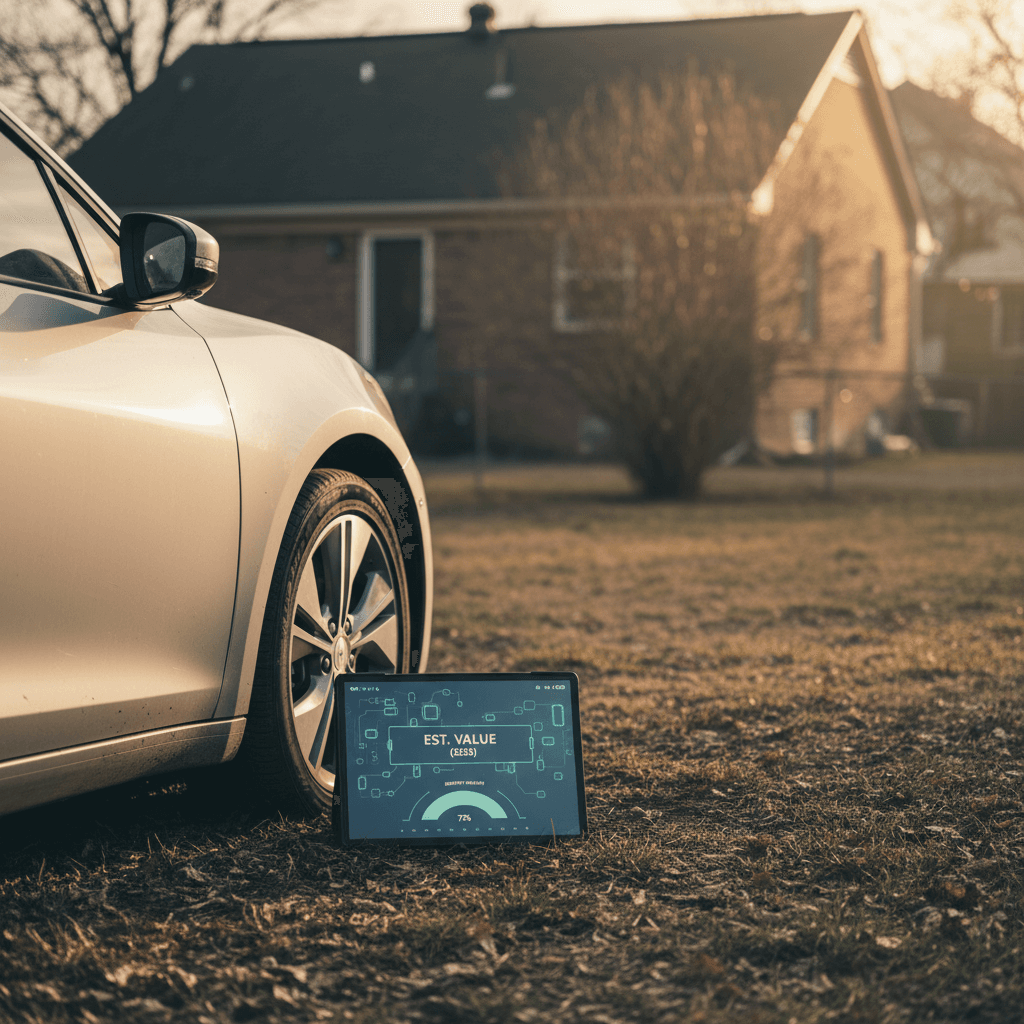
If you’re staring at your electric car in the driveway and wondering, **“How much is my used EV worth in 2026?”**, you’re not alone. EV prices have whipsawed over the last few years, federal tax credits ended for purchases after September 30, 2025, and depreciation headlines have been loud. The good news: there *is* a logic behind used EV values, you just have to know which levers matter most.
What this guide will do for you
Why used EV values feel confusing in 2026
If you try to price a used gasoline SUV in 2026, the playbook is familiar: age, miles, trim, and a glance at a valuation site. With EVs, the story’s messier. **Battery health** matters as much as miles, tech features go out of date faster, and values swung hard when new- and used-EV federal tax credits ended for purchases after September 30, 2025. On top of that, some EVs, especially certain Teslas, have recently **rebounded** in price while many other used EVs are still sliding.
Why “book value” can be wrong for EVs
Quick answer: what your used EV is likely worth
Typical used EV value ranges in 2026 (US market)
That’s the wide‑angle view. Your actual number will land where **depreciation curves**, **battery health**, **brand**, and **condition** intersect. In a minute, we’ll walk through a step‑by‑step way to ballpark your value at home, and how tools like the Recharged Score go deeper than a simple mileage guess.
How EV depreciation really works in 2026
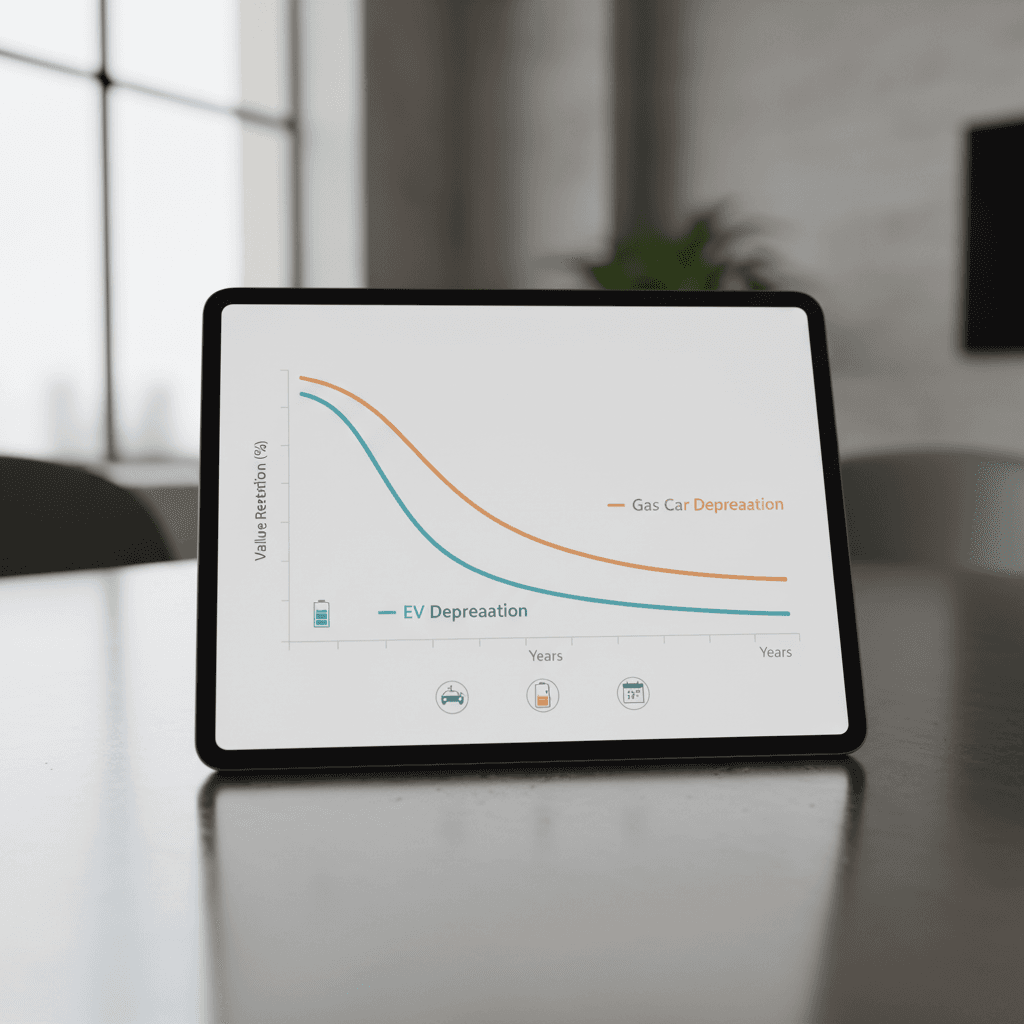
EV depreciation has been the headline villain, graphs showing 50% off in just a few years. The reality in 2026 is more nuanced. After pandemic‑era price bubbles, **all** used vehicles have been correcting, but EVs started from higher MSRPs and newer tech, so their downshift looks dramatic. Recent studies of five‑year‑old used vehicles show **battery‑electric models averaging close to 60% loss in value over five years**, versus lower rates for gas and hybrid vehicles.
- **Early years hit hardest.** Many EVs take their biggest value drop in the first 3 years as new tech, range, and safety features leap ahead.
- **Then the curve flattens.** Once an EV is 4–7 years old and its battery proves stable, values tend to settle into more predictable, gas‑car‑like depreciation.
- **Segment matters.** Luxury EVs and niche models usually lose value faster than mainstream crossovers and sedans with broad appeal.
Why this is actually good news for 2026 sellers
Battery health: the secret sauce in used EV pricing
If you only remember one thing about used EV values in 2026, make it this: **battery health is the new odometer.** A three‑year‑old EV with 50,000 miles and a strong, well‑managed pack can command more than a low‑mile car with signs of heavy fast‑charging abuse or thermal issues.
How buyers and dealers read your battery
These are the clues that move your used EV’s value up or down.
State of health (SoH)
Professional diagnostics can estimate remaining usable capacity as a percentage of original.
High‑80s or 90s% on a 3–5 year old EV is a strong selling point.
Real‑world range
Range at 100% charge, compared with the original EPA rating, is an easy shorthand for shoppers.
If your car still gets close, that supports a higher price.
Charging history
Frequent DC fast charging, extreme heat, and always charging to 100% can age a pack faster.
Service records showing reasonable use help confidence.
Why Recharged leans on battery data
Brand, model, and features that move the needle
Even in 2026, badge engineering is real. Some used EVs are holding value, or even ticking up, while others are bargain‑bin specials. That’s less about emotions and more about **charging access, reliability perception, and replacement cost**.
How brand and model affect used EV value in 2026
These aren’t exact prices, but patterns we see repeatedly across the U.S. used EV market.
| Segment | Typical 3–5 year value pattern | What helps value | What hurts value |
|---|---|---|---|
| High‑visibility brands (Tesla, some Ford/GM) | Volatile but stabilizing; some models saw price rebounds in late 2025–2026 | Large owner base, OTA updates, strong charging access, familiar styling | High new‑car price cuts, controversial news cycles |
| Mainstream imports (Hyundai, Kia, Toyota, Nissan) | Depreciation steeper than gas peers but smoothing as buyers gain confidence | Good range, warranties, improving fast‑charge networks | Older short‑range models (early LEAFs, first‑gen Ioniq) |
| Luxury EVs (Audi, BMW, Mercedes, Lucid) | Can lose a big chunk early, then become value plays used | Premium interiors, performance, brand cachet | High MSRPs, complex features, higher repair costs |
| Niche/low‑volume models | Most sensitive to headlines and incentives; pricing all over the map | Unique styling, loyal fan bases | Limited service network, uncertain long‑term support |
Your specific car may buck the trend, but this table reflects common 2026 value behavior by brand segment.
Features that add value
- Longer range packages (e.g., big‑battery trims)
- Heat pump for efficient cold‑weather driving
- Advanced driver‑assist suites (when current and reliable)
- Bidirectional charging or vehicle‑to‑home capability
- Up‑to‑date infotainment and software support
Features that age fast
- First‑gen driver‑assist systems with mixed reviews
- Old infotainment systems with weak app support
- Short‑range base models with tiny packs
- Proprietary charging solutions that are being phased out
These don’t make a car bad, but they do explain why your neighbor’s EV might be worth more than yours on paper.
Miles, age, and condition: how much they matter
Miles still matter in 2026, but not the way they do for a gas car. EV drivetrains have fewer moving parts, and a well‑cooled battery can shrug off highway miles better than an engine full of cold starts. That said, **age plus miles plus care** still add up to a story any buyer will read carefully.
Quick condition checklist that affects your EV’s value
1. Exterior and wheels
Curb rash on aero wheels, cracked plastic undertrays, and misaligned panels all chip away at value. Cosmetic reconditioning can pay off if your EV is otherwise desirable.
2. Interior wear and tear
Stained seats, worn steering wheel leather, or broken trim matter more on higher‑end EVs. A deep detail before listing your car almost always pays for itself.
3. Tires and brakes
Performance EVs chew through tires. Fresh, high‑quality rubber and healthy pads suggest a careful owner and can support a higher asking price.
4. Software status
Is the car on the latest software? Any warning lights? Buyers are wary of glitchy driver‑assist features and lingering error messages.
5. Service and recall history
Documented maintenance, battery or charging‑system recalls addressed, and clean history reports make your EV much easier to price at the top of its range.
Small fixes, big perception shift
How ending federal EV credits changed values
For U.S. buyers, a big plot twist hit on **September 30, 2025**. That’s when the federal clean‑vehicle tax credits, up to $7,500 for new EVs and up to $4,000 (30% of price, capped) for qualifying used EVs from licensed dealers, ended for vehicles purchased after that date. Those credits had been baked into new‑ and used‑EV pricing for years.
- In early 2025, used EV prices, especially Teslas, **fell sharply**, helped along by aggressive new‑car price cuts and buyers racing to use the last of the credits.
- Once the credit disappeared, some **used Tesla prices ticked up** a few percent into late 2025 and early 2026, even while many non‑Tesla EVs kept softening.
- By 2026, dealers and online marketplaces are pricing EVs on their own merits again: range, condition, and battery health, not just how they pencil out with a tax form.
No federal used‑EV credit on 2026 purchases
3 ways to estimate what your used EV is worth
Let’s get practical. Here’s how to come up with a **workable price range** for your used EV in 2026 before you ever talk to a dealer or list it online.
Three simple valuation paths
You don’t need to pick just one, use them together for a realistic range.
1. Start with online value guides
Enter your VIN, miles, and ZIP into a few valuation tools (KBB, Edmunds, etc.) and note the **trade‑in** and **private‑party** ranges.
For EVs, treat these as a rough sketch, they usually can’t see battery health.
2. Scan real listings
Search national and local listings for your exact year, trim, and similar miles.
Filter for "sold" prices if the platform allows it. This tells you what buyers actually pay, not just what sellers hope for.
3. Get EV‑specific offers
Request appraisals from at least two sources that **understand EVs**, online buyers, EV‑specialist dealers, or marketplaces like Recharged.
Compare their numbers to your research and note who discusses battery health and charging history, not just mileage.
Use ranges, not single numbers
Pricing strategies if you’re selling your EV
Once you’ve got a rough value range, the next question is **how to use it**. Your strategy changes a bit depending on whether you’re trading in, selling outright to a dealer or marketplace, or listing the car yourself.
Trading in or selling to a dealer
- Expect to land **toward the lower half** of your research range; the dealer has to recondition, warranty, and resell.
- Bring printouts of **recent listings and valuations** to anchor the conversation.
- If you still owe money on the car, ask to see the **full payoff and offer worksheet** so you understand equity.
- Shop your trade‑in to at least two places; even a $1,000 spread is worth 30 minutes of your time.
Selling privately or via a marketplace
- Price near the **middle or upper half** of your range if your EV is clean, with strong battery health.
- Be ready to show **charging habits, service history, and recent battery diagnostics**. EV buyers are more tech‑savvy and cautious now.
- Factor in the hassle cost: photos, test drives, paperwork, and possible financing hurdles for buyers.
- Consider a **consignment model** if you want close‑to‑retail pricing without having strangers at your house.
Smart pricing moves that work in 2026
Lead with battery honesty
If you have a recent battery health report or can show realistic range at 100% charge, put it in the first few lines of your listing. That can justify a higher ask than generic book values.
Write the ad you’d want to read
Spell out charging habits, where it’s been parked, and any warranty work. The more confidence you give a buyer, the less they’ll nitpick your price.
Offer both cash and financed paths
Buyers may need help lining up financing on a used EV. Marketplaces like Recharged can pre‑qualify them, making it easier for you to hold your price.
Watch the market for a week
If you’re not in a rush, list the car, watch how many serious inquiries you get in 5–7 days, then adjust your price by a few hundred dollars instead of panicking.
Getting a fair offer with Recharged
Selling or valuing a used EV should not feel like reading tea leaves. At Recharged, everything is built around **transparent, EV‑specific data**, not guesswork borrowed from gas cars.
How Recharged approaches used EV value in 2026
Designed from the ground up around battery health and EV ownership reality.
Recharged Score Report
Every vehicle on Recharged gets a **Recharged Score** with verified battery diagnostics, charging history indicators, and fair‑market pricing backed by current EV data.
Flexible ways to sell
Get an **instant offer**, consign your car to reach a wider national audience, or use your EV as a **trade‑in** toward another vehicle on the platform.
Nationwide EV expertise
Recharged supports **nationwide delivery** and operates an **Experience Center in Richmond, VA**, so you’re not limited to whoever happens to be buying EVs near your ZIP code.
Ready to find your next EV?
Browse VehiclesWhy this matters for your bottom line
FAQ: Used EV value questions for 2026
Frequently asked questions about used EV values in 2026
Bottom line: what your used EV is worth in 2026
Used EV pricing in 2026 can look chaotic from the outside, but it boils down to a few big levers: **how much the market has already corrected**, how healthy your **battery** is, how desirable your **brand and model** are, and whether you pick a selling channel that understands electric cars.
Start by using online guides and real‑world listings to find a **reasonable value range**, then let battery diagnostics, condition, and current demand nudge your number up or down. If you’d rather skip the guesswork, you can lean on Recharged for a **data‑driven offer and a Recharged Score Report** that shows exactly why your EV is worth what it’s worth. That way, whether you’re selling, trading in, or just sanity‑checking your investment, you’re working from facts, not rumors and headlines.