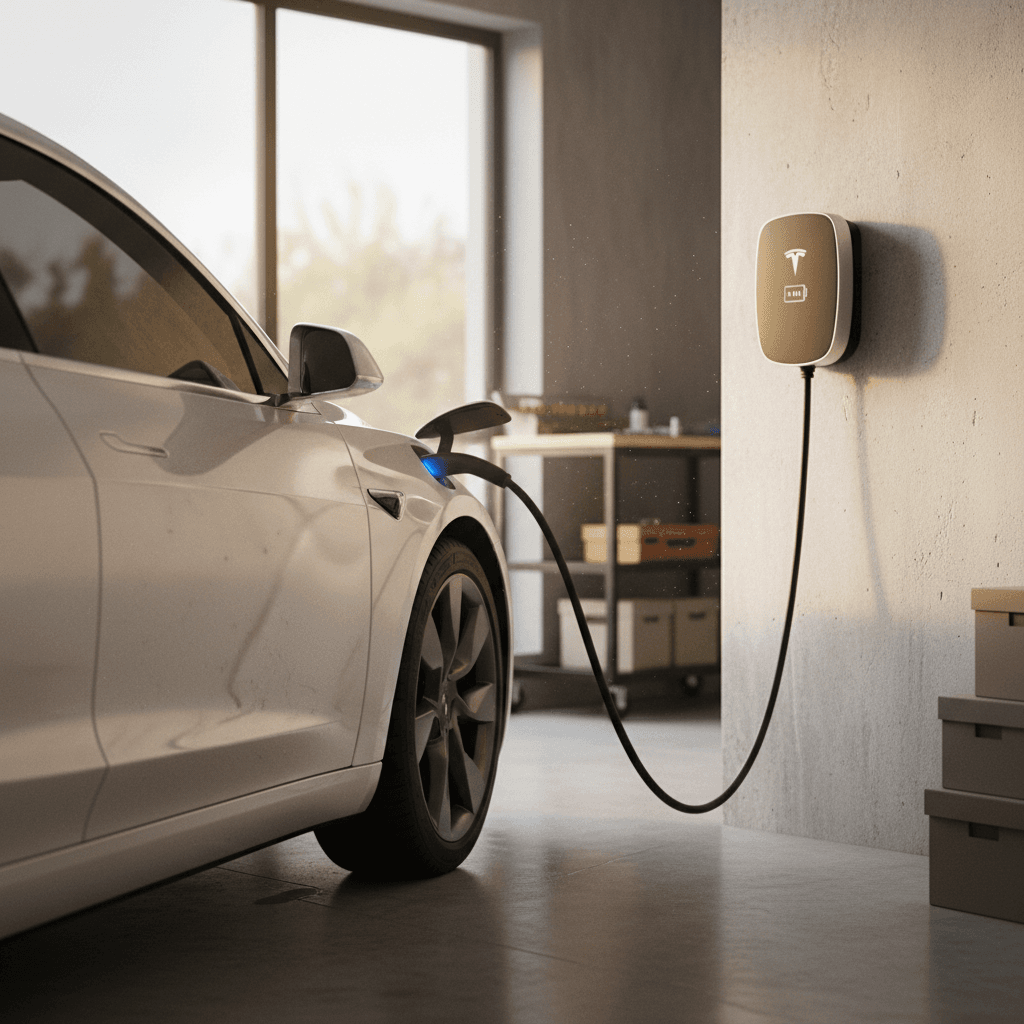
If you’re trying to figure out **how long it takes to charge a Tesla Model 3**, you’ll see answers that range from “20 minutes” to “three days.” They’re all technically true, because charging time depends almost entirely on *where* you plug in and *how much* you’re trying to refill. This guide breaks down real-world Model 3 charging times at home and on the road so you can plan your day, your commute, or your next road trip with confidence.
Quick answer
Tesla Model 3 charging time at a glance
Typical Tesla Model 3 charging times
Those numbers are ballpark averages for modern Model 3 variants (Rear-Wheel Drive and Long Range) with usable battery sizes roughly in the **57–75 kWh** span. Your exact time will shift up or down based on temperature, charger power, how full the battery is when you plug in, and battery health.
Key factors that change how long it takes
What actually controls your charge time?
It’s more than just "how big is the battery"
Battery size & variant
A Model 3 Long Range has a **larger battery** than a Rear-Wheel Drive, so it naturally takes longer to go from low to full, just like filling a bigger gas tank.
Charger power (kW)
Charging speed is measured in **kilowatts (kW)**. A 1.4 kW Level 1 outlet trickles energy in. An 11.5 kW home Wall Connector or 250 kW Supercharger pours it in much faster.
Start & end state of charge
Filling from **10% to 80%** is much faster than insisting on 100%. The last 10–20% tapers to protect the battery, so charge “slows down” as you approach full.
Temperature & preconditioning
Cold batteries charge slower. Preconditioning (warming the battery before you arrive at a fast charger) lets your Model 3 accept higher power, especially in winter.
Shared vs. dedicated power
At some public stations, multiple cars **share the same power cabinet**. If the stall next to you is occupied, your charge rate may be lower than the headline number.
Battery age & health
Healthy batteries can take higher peak power. Older packs or ones that have been fast-charged heavily may charge a bit slower, especially at high states of charge.
Rule of thumb
Home charging: how long on Level 1 vs. Level 2
If you own a Tesla Model 3 in the U.S., most of your charging will likely happen at home. That’s where the bulk of your time (and cost) savings live, especially if you’re coming from gasoline.
Level 1 (120V household outlet)
- Power: ~1.3–1.4 kW
- Typical speed: **2–5 miles of range per hour**
- Plug: Standard 3-prong outlet, 15–20A circuit
At that rate, completely refilling a nearly empty Model 3 battery can easily take **40–90+ hours**. Level 1 is fine if you only drive 20–30 miles a day and can stay plugged in for long stretches, but most owners upgrade.
Level 2 (240V home charging)
- Power: ~7.7–11.5 kW with a properly wired circuit
- Typical speed: **25–44 miles of range per hour**
- Hardware: Tesla Wall Connector or 240V outlet with Mobile Connector
With Level 2, going from a low state of charge to around 80–90% usually happens **overnight in 6–10 hours**. For many Model 3 owners, plugging in when you get home and unplugging in the morning means you **never wait for charging**.
Electrical safety reminder
DC fast charging: how long at a Supercharger or DC fast station?
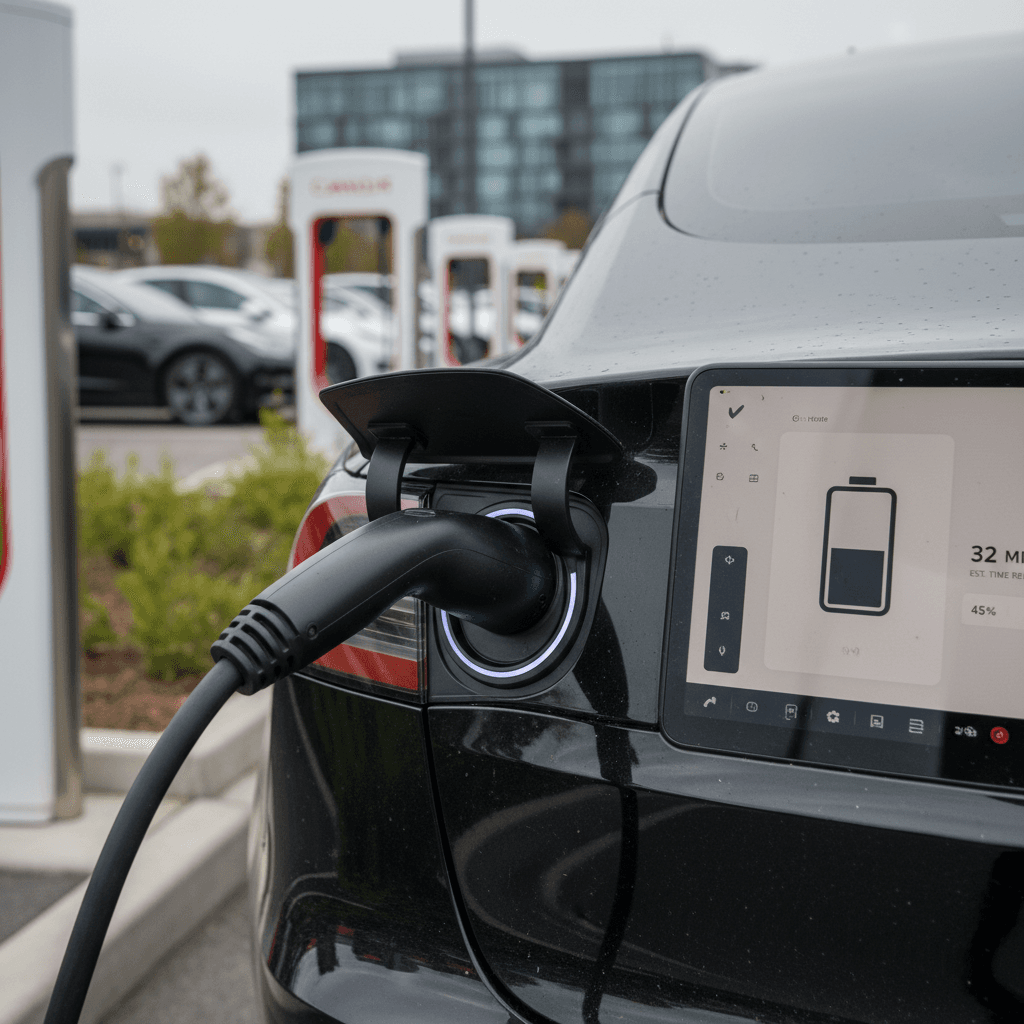
Tesla built the Model 3 to take full advantage of DC fast charging. On a healthy battery and a strong station, you can add meaningful range in less time than it takes to grab a coffee and hit the restroom.
- Modern Model 3 variants can **accept up to ~170–250 kW** briefly at high‑power DC chargers (Tesla Supercharger V3/V4 or strong third‑party stations).
- The **fastest part of the session** is usually between **10% and ~50–60%** state of charge.
- Above ~80%, the car tapers power aggressively to protect the battery, so adding the last 10–20% can **take as long as the first 70%**.
In real-world testing, a healthy Model 3 on a good high‑power DC charger often takes about **20–35 minutes to go from 10% to 80%**, depending on temperature, station quality, and whether you’re on a shared power cabinet.
Road-trip strategy
Charging time table for Tesla Model 3
Below is an approximate **charging time table** for common Tesla Model 3 situations. These are simplified estimates assuming a healthy battery and decent conditions; your results will vary, but they’re good planning numbers.
Approximate Tesla Model 3 charging times by scenario
Times assume modern Model 3 RWD (~57 kWh usable) and Long Range (~70–75 kWh usable) batteries under moderate conditions.
| Charger type | Power (kW) | Typical speed | RWD: 10%→80% | Long Range: 10%→80% | Near-full charge (10%→100%) |
|---|---|---|---|---|---|
| Level 1 – 120V outlet | ~1.3–1.4 | ~2–5 mi/hr | 30–50 hrs | 40–60 hrs | 40–90+ hrs |
| Home Level 2 – modest (30A / ~7 kW) | 6–7 | ~24–30 mi/hr | 7–9 hrs | 8–11 hrs | 8–12+ hrs |
| Home Level 2 – strong (48A / ~11.5 kW) | 10–11.5 | ~30–44 mi/hr | 4–6 hrs | 5–8 hrs | 6–10 hrs |
| Public Level 2 – destination (6–11 kW) | 6–11 | ~20–40 mi/hr | 4–8 hrs | 5–9 hrs | 6–12+ hrs |
| DC fast – ~75 kW cap | 50–75 | Fast; **hundreds** mi/hr initially | 35–45 min | 40–55 min | 60–90+ min |
| Tesla Supercharger V3/V4 – high power | 120–250 (peak) | Very fast at low SOC | 20–30 min | 25–35 min | 45–75+ min |
Use these as planning estimates, not promises. Real‑world conditions can easily swing times by ±20–30%.
RWD vs. Long Range: why times differ
How to make your Model 3 charge faster in real life
Practical ways to reduce charging time
1. Install proper Level 2 at home
If you can, install a **240V Level 2 charger** (Tesla Wall Connector or equivalent) on a ~40–60A circuit. Going from Level 1 to Level 2 turns charging from a multi‑day event into a standard overnight routine.
2. Size your breaker correctly
A Model 3 can use up to **48 amps** on AC. Even if you don’t go that high, a 40A or 50A circuit (set to 32–40A continuous) often hits the sweet spot between speed, cost, and your home’s electrical capacity.
3. Use scheduled departure & preconditioning
In the Tesla app or on the center screen, set a **departure time**. The car will precondition the battery and cabin so it’s warm when you leave and, for road trips, warm when you arrive at a fast charger, reducing charge time.
4. Arrive low at DC fast chargers
You’ll get the **highest power when the battery is low**. It’s more time‑efficient to arrive at ~10–20% and charge to ~60–80% than to show up at 50% and sit for marginal gains.
5. Avoid topping to 100% on fast chargers
Save 100% charges for **slower home Level 2** and only when you need maximum range (like before a long leg). On DC fast, stopping around 80% usually gives you more miles per minute spent charging.
6. Watch the station, not just the map
If a Supercharger or DC site is almost full, your car may share power. If you have options, favor **less crowded stations** or stalls that aren’t paired to reduce your time on-site.
Battery health: how often should you fast charge?
Tesla designed the Model 3 to handle regular fast charging, but like any EV, constantly hammering the pack with high‑power DC sessions can add stress over the long term. You don’t need to baby the battery, but you do want to use fast charging strategically.
Fast charging & degradation
- For **daily driving**, aim to live between **20–80%** state of charge and use Level 2 whenever possible.
- Save **100% charges** for days when you truly need the full range, and avoid letting the car sit for many hours at 100%.
- On long trips, don’t stress about using fast charge often, that’s what it’s for. Just understand you’re trading some long‑term battery gentleness for short‑term convenience.
When you’re considering a **used Tesla Model 3**, this is where battery history matters. Cars that lived on fast chargers may charge a bit slower and offer slightly less range than their odometers suggest. Recharged’s **battery‑health focused Recharged Score** is designed to surface that kind of detail, so you’re not guessing how the previous owner charged the car.
Home vs. public charging: which is better for time and cost?
Home charging: slowest peak, fastest overall
- Set‑and‑forget: plug in at night, wake up full.
- Effective "time cost" is near zero, charging happens while you sleep.
- Per‑kWh rates at home are usually lower than public pricing, especially with off‑peak EV plans.
For most owners who can install it, **Level 2 home charging is the backbone** of a good ownership experience. It eliminates almost all day‑to‑day waiting and turns your garage or driveway into your own private “station.”
Public charging: fastest power, highest hassle
- Superchargers and strong DC fast stations are **vital for road trips**.
- On a per‑minute basis they’re very fast, but you still need to **detour, park, plug, and wait**.
- Pricing can be noticeably higher than home electricity, especially at peak hours.
If you can’t charge at home (apartment, condo, street parking), using reliable public Level 2 plus occasional fast charging can still work, you’ll just want to be **strategic** about when and where you plug in.
Ideal setup for most owners
Charging tips when shopping for a used Tesla Model 3
If you’re cross‑shopping new and used Tesla Model 3s, charging behavior and battery health belong near the top of your checklist, right alongside price, mileage, and options.
Used Model 3: charging and battery questions to ask
1. Ask about daily charging habits
Did the previous owner mostly charge at **home Level 2**, or lean heavily on Superchargers? A road‑warrior car that lived on DC fast may have slightly more battery wear than a commuter car that charged gently every night.
2. Verify home-charging compatibility
Check whether the car includes a **Mobile Connector**, which plug adapters it has, and whether the seller used a Wall Connector or third‑party EVSE. This helps you understand what you’ll need to buy (or upgrade) at home.
3. Review battery health data
Look at rated range at 100% and how it compares to factory numbers for that trim. Recharged’s **Recharged Score Report** goes further, using battery‑health diagnostics so you’re not buying blind.
4. Consider your driveway situation
Before you fall in love with a car, make sure you can **actually charge it where you live**. For homes, that usually means a path for a 240V circuit. For apartments and condos, that might mean relying on workplace and public Level 2.
5. Factor charging into total cost
Level 2 hardware, installation, and your local electricity rates all affect your **true cost per mile**. When you shop on Recharged, you can talk through these numbers with an EV specialist before you commit.
FAQ: how long to charge a Tesla Model 3
Frequently asked questions about Model 3 charging times
Bottom line: how long to charge a Model 3
In day‑to‑day life, a Tesla Model 3 doesn’t feel like it “takes hours to charge”, because you’re usually charging while you sleep or do something else. With a solid **Level 2 setup at home**, most owners wake up to a full battery after **6–10 hours** of unplugged, off‑duty time. On the highway, a well‑planned Supercharger stop adds **hundreds of miles of usable range in 20–35 minutes**, then you’re back on the road.
The real key is matching **your driving pattern, home setup, and budget** to the right charging strategy, and, if you’re buying used, to the right car. That’s where Recharged comes in. Every used Tesla Model 3 we sell includes a **Recharged Score Report** with verified battery health, transparent pricing, and EV‑savvy guidance on home charging options, so you know exactly what to expect from your charge times on day one and years down the road.