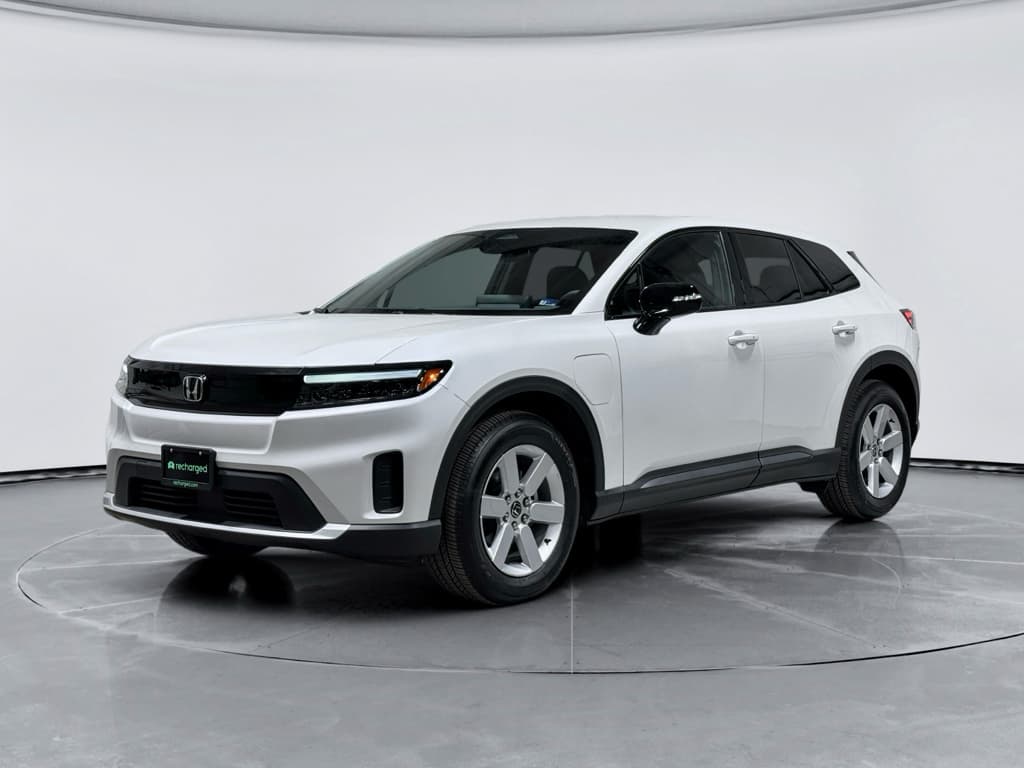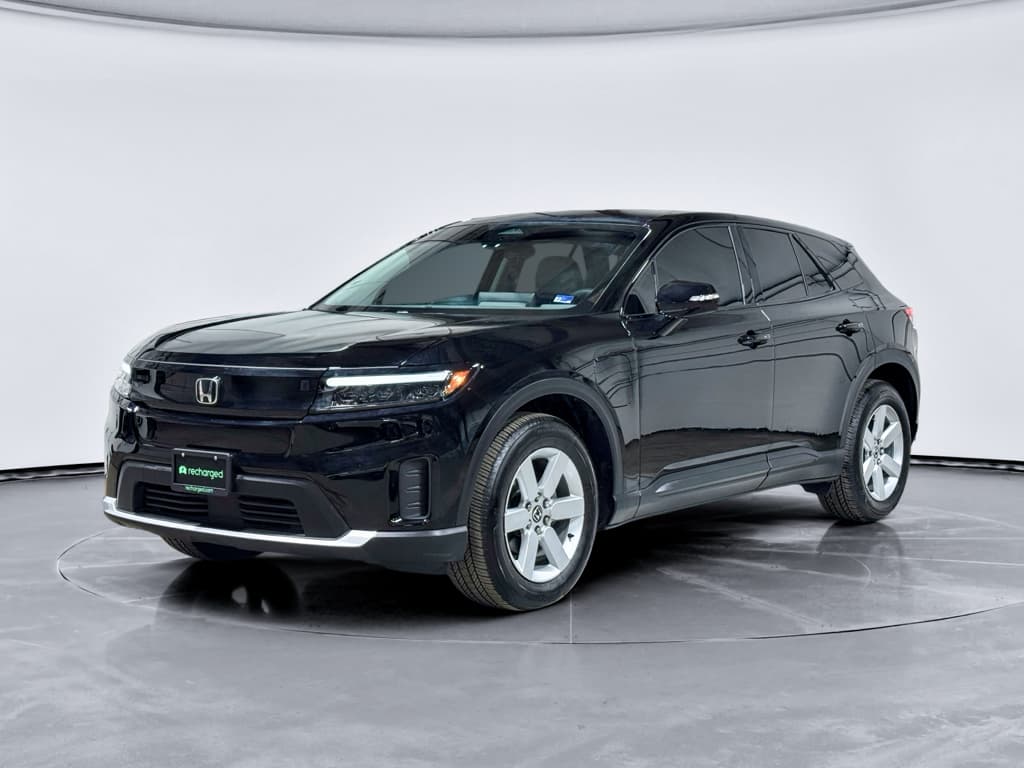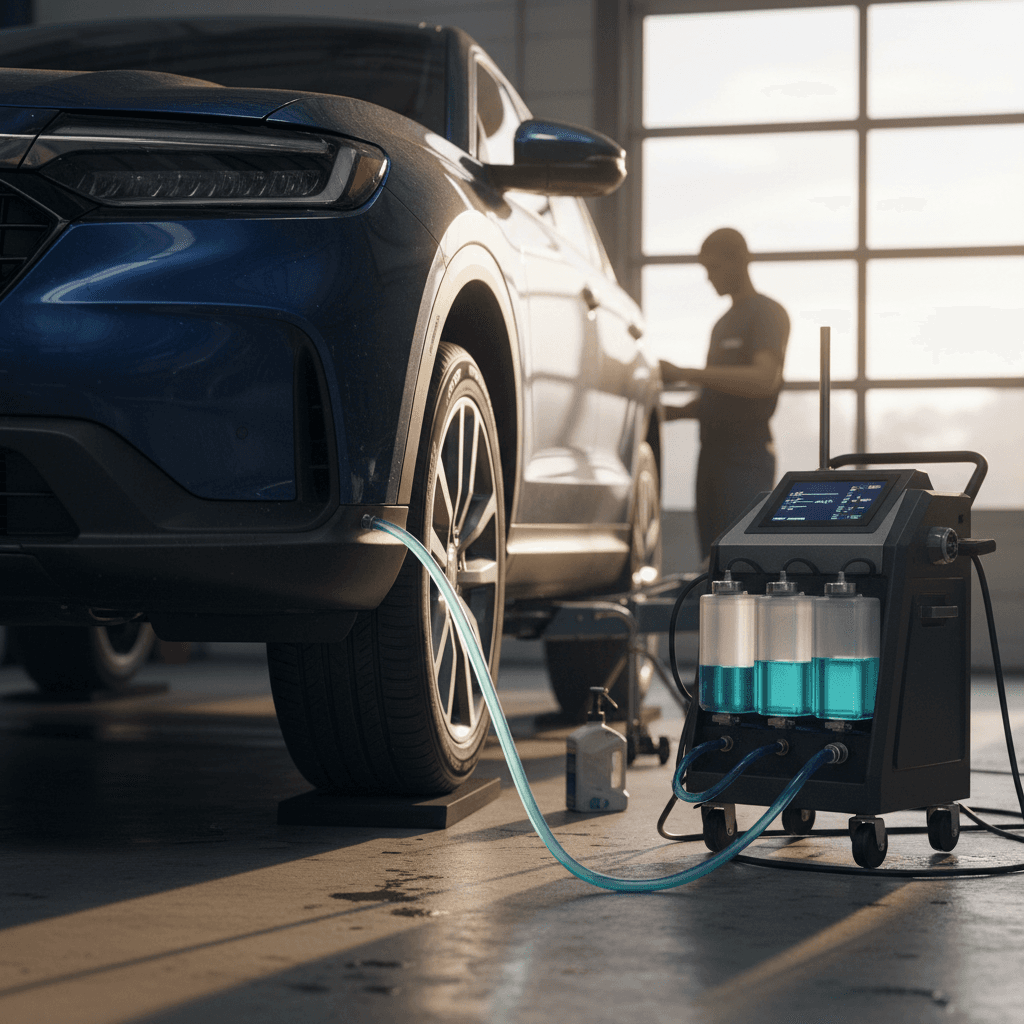
If you’re budgeting long-term maintenance on your new Honda Prologue, the phrase “coolant flush” can raise a lot of questions. The Prologue’s Ultium-based cooling system is more complex than a traditional radiator, and many owners aren’t sure what a Honda Prologue coolant flush cost looks like, or how often they’ll actually see it on the bill.
Big picture
Honda Prologue coolant flush cost overview
Typical Honda Prologue coolant flush pricing in 2026
Those ranges reflect what owners are seeing for coolant service on comparable Hondas and modern crossovers today. The Prologue’s Ultium‑based thermal system is specialized, so you should expect to be at the upper half of the national coolant flush averages, especially at a Honda dealer.
Watch for upsells
How the Honda Prologue’s cooling system works
The Honda Prologue rides on GM’s Ultium platform, which means its thermal management setup looks more like a Chevrolet Blazer EV than a traditional Honda CR‑V. Instead of a single radiator loop for an engine, you have an integrated system that controls temperatures for the high‑voltage battery pack, the drive units, onboard charger, and cabin HVAC components.
Multiple coolant loops
The Prologue uses electric coolant pumps and valves to route coolant where it’s needed, battery, power electronics, and cabin heat pump. These loops may share a common reservoir but operate under different conditions than an old‑school engine radiator.
Why coolant matters more on an EV
On an electric SUV, coolant isn’t just about comfort. It protects your battery from overheating in summer, from getting too cold in winter, and helps preserve long‑term battery health. Neglected coolant can lead to corrosion, clogged passages, and reduced range or performance over time.
Think “battery health,” not “radiator”
When does a Honda Prologue actually need a coolant flush?
Because the Prologue is new to the market, Honda’s exact intervals will live in the owner’s manual and the Maintenance Minder system, not on a generic dealership postcard. However, based on Ultium‑platform guidance and modern extended‑life coolants, most owners should expect their first coolant service around the 5–10 year mark or roughly 100,000–150,000 miles, unless a specific issue appears sooner.
- Follow the in‑dash Maintenance Minder. When the system flags a coolant code, that’s your cue, regardless of what a generic coupon says.
- Don’t schedule a flush just because your Prologue hit a round number like 30,000 or 45,000 miles if Honda hasn’t called for it.
- Plan for one or two coolant services over the life of the vehicle if you keep it long term, not every other service visit.
New EV, long interval
Honda Prologue coolant flush cost breakdown
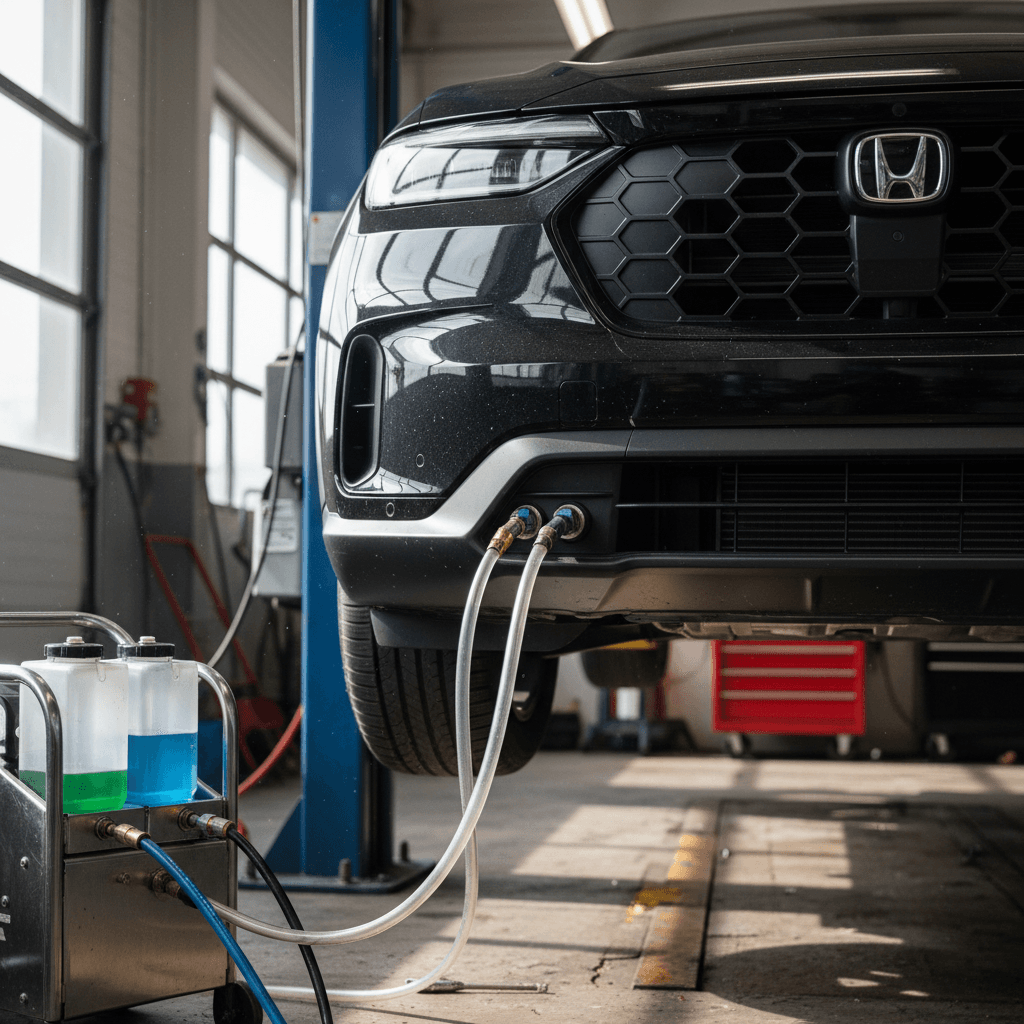
When you see a Honda Prologue coolant flush on a service estimate, you’re usually paying for two things: specialized coolant and a technician who understands high‑voltage thermal systems. Here’s how that typically breaks down in 2026.
Estimated Honda Prologue coolant flush cost by provider type
Approximate 2026 pricing for a single coolant service on a Honda Prologue or similar Ultium‑based EV.
| Provider type | Labor (USD) | Coolant & supplies (USD) | Estimated total (USD) | What’s included |
|---|---|---|---|---|
| Honda dealership | $140–$220 | $80–$130 | $220–$350 | Drain and refill, system bleed with scan tool, OEM OAT coolant, basic inspection |
| Independent EV‑savvy shop | $110–$180 | $70–$110 | $160–$260 | Drain and refill, proper bleeding, OEM or equivalent OAT coolant |
| DIY (experienced owner) | $0 | $120–$180 | $120–$180 | Coolant purchase, catch pan, basic hand tools; limited to simple drain‑and‑fill on accessible loops |
Actual pricing will vary by region, dealer, and whether additional diagnostics or parts (hoses, sensors) are required.
If your estimate is much higher than these ranges, look closely at what’s being bundled in. Some shops combine coolant service with other flushes or fluid changes and roll everything into one big number.
Beware bundled “fluid flush packages”
Dealer vs. independent shop vs. DIY
Where should you service Prologue coolant?
Pros and cons of each option for a Honda Prologue coolant flush.
Honda dealership
- Pros: Technicians trained on the Prologue, access to latest service bulletins, guaranteed OEM coolant, warranty alignment.
- Cons: Highest labor rate, more aggressive upsell culture at some stores.
Independent EV shop
- Pros: Often 10–30% cheaper than dealers, more flexible scheduling, can still use OEM‑spec coolant.
- Cons: Need to confirm Prologue/Ultium experience and access to the right bleeding procedures.
Experienced DIY
- Pros: Lowest cash outlay if you already own tools, full control over coolant brand.
- Cons: Risky without Ultium‑specific repair information; improper bleeding or contamination can be an expensive mistake.
High‑voltage caution
Signs your Prologue may need coolant service sooner
Most Prologues will reach their first coolant interval without drama, but there are situations where you shouldn’t wait for an arbitrary mileage number. Pay attention if you notice:
- HV battery or electric drive unit temperature warnings on the dash
- Repeated DC fast‑charging that suddenly slows down more than usual in moderate weather
- Sweet, “hot” smell around the front of the vehicle after driving or charging
- Visible coolant leaks under the SUV or around the reservoir
- Discolored, rusty, or cloudy coolant visible in the reservoir
Use the visit to get a full EV health check
Coolant type on the Prologue and why it matters
Because the Prologue is built on GM’s Ultium platform, it doesn’t use traditional Honda Type 2 blue coolant. Instead, it specifies a Dex‑Cool–type OAT (organic acid technology) coolant, often pre‑mixed with deionized water for EV applications. Honda may brand its own variant for the Prologue, but the key is that it meets the Ultium spec, not just “any orange coolant” off a parts‑store shelf.
Don’t mix coolant types
- Confirm that the coolant on your estimate is Honda‑branded or explicitly listed as meeting the Prologue/Ultium specification.
- Avoid topping off at home with random coolant, if the level is low, schedule an inspection to find out why.
- If you’re buying a used Prologue, ask for service records that show coolant type and any prior coolant work.
How coolant flush cost fits into EV ownership
It’s easy to fixate on a future $250–$300 coolant service, but zoom out and it becomes one line on a much simpler maintenance picture than a gas SUV. There are no oil changes, timing belts, spark plugs, or emission‑system repairs on a Prologue. Over 5–8 years, most EV owners spend less on maintenance even after factoring in specialized items like battery coolant service.
Budgeting if you own a Prologue now
- Expect mostly tire rotations, cabin filters, brake service, and periodic inspections for the first several years.
- Set aside a small reserve for EV‑specific items like coolant and brake fluid service once you’re past the 5‑year mark.
Shopping a used Honda Prologue
If you’re looking at a 5–8‑year‑old Prologue, ask whether the first coolant service has been done, or budget for it soon after purchase. At a typical dealer rate, adding $250–$300 to your first‑year ownership budget is realistic.
Where Recharged fits in
Ready to find your next EV?
Browse VehiclesCoolant flush cost & service checklist
Honda Prologue coolant flush checklist
1. Verify that it’s actually due
Check your Prologue’s Maintenance Minder and owner’s manual. Don’t authorize a coolant flush just because it’s printed on a generic service menu.
2. Request a line‑item estimate
Ask the shop to separate labor, coolant, shop fees, and any extra diagnostics. Compare the total to the ranges in this guide so you know if you’re in the ballpark.
3. Confirm coolant specification
Make sure the estimate lists Honda‑approved Dex‑Cool–type OAT coolant for the Prologue/Ultium platform, not a generic universal mix.
4. Ask how the system is bled
On an EV, proper bleeding often requires scan‑tool procedures to run electric pumps and open valves. A shop that can’t describe its process may not be ready for Ultium work.
5. Keep records for resale
Save invoices that show date, mileage, and coolant type. Proper coolant service is one more proof point that your Prologue was cared for when it’s time to sell or trade.
6. Compare with broader maintenance costs
Look at coolant service as part of your total EV maintenance picture. If you’re coming from a gas SUV, you may still come out ahead even with a higher coolant‑flush ticket once or twice in the vehicle’s life.
Honda Prologue coolant flush FAQ
Frequently asked questions
Key takeaways for current and future owners
A Honda Prologue coolant flush isn’t a cheap $70 add‑on like the radiator service you might remember from older gas cars, but it also doesn’t show up nearly as often. If you follow Honda’s Maintenance Minder, insist on the correct Dex‑Cool–type coolant, and choose a shop that understands Ultium‑platform EVs, you’re looking at a well‑spaced, high‑value maintenance item that helps protect your battery investment.
Whether you already own a Prologue or you’re thinking about buying one used, build this service into your long‑term plan instead of fearing it. And if you’re comparing EVs, remember that Recharged can help you cut through the fine print with transparent condition reports, real‑world ownership cost guidance, and expert support from your first search to delivery.