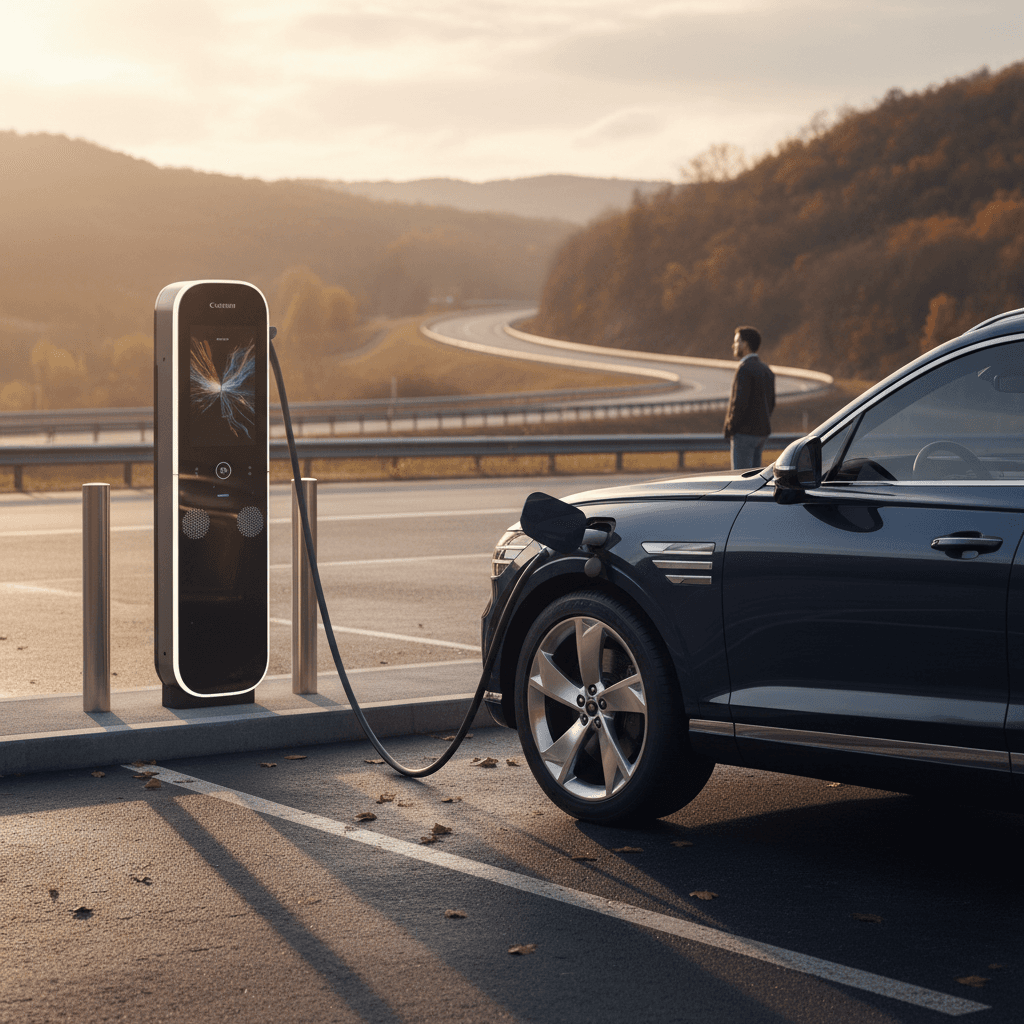
If you’re eyeing the Genesis GV70 Electrified for family trips or interstate drives, you’re probably wondering how it behaves far from home. The good news: with smart planning, this luxury EV is more than capable of comfortable, long-distance travel. This guide walks you through practical Genesis GV70 Electrified long distance driving tips based on real-world range, charging behavior, and ownership experience, not just brochure numbers.
Quick spec snapshot
Can the Genesis GV70 Electrified really do long trips?
The Electrified GV70 isn’t a range champion on paper, but it’s one of the best road‑trip EVs in its class because of how quickly it charges. On a capable 150–350 kW DC fast charger, many owners see 10–80% in around 18–25 minutes. That’s enough to add roughly 150–170 miles of highway range in the time it takes to use the restroom and grab a snack.
Electrified GV70: long-distance basics at a glance
Bottom line for road trips
Know your real-world range before you leave
The official EPA rating for the Genesis Electrified GV70 in the U.S. is around 236 miles of combined range, but that’s not what you’ll see at 75 mph with luggage, passengers, and climate control running. For trip planning, you want a realistic, repeatable number.
Realistic range targets for trip planning
Use these as planning numbers, then adjust for your conditions.
Mild weather, 65–70 mph
Plan on 200–220 miles from 100% down to 5–10% if you’re gentle on the throttle. This is your best‑case real‑world scenario.
Typical highway, 70–75 mph
Plan on 185–200 miles per full charge. This is where most U.S. road trips land, and it’s the safest assumption for planning.
Cold weather, 70–75 mph
Plan on 140–170 miles, especially in sub‑freezing temps. Cabin heat and a cold battery both eat into range.
Build your personal baseline
- For stress‑free planning, assume you’ll comfortably use 70–80% of the pack between fast charges (for example, 10–80% or 15–85%).
- Multiply that usable percentage by your real‑world efficiency. If you see about 2.4–2.6 mi/kWh at 75 mph, 70% of an ~84 kWh pack gives you roughly 140–155 usable miles between ideal fast charges.
- Always add a buffer for weather, elevation, or traffic. Think of 10–15% battery on arrival as the new “empty.”
Plan your charging stops the smart way
A well‑planned EV road trip feels surprisingly similar to stopping for fuel and food in a gas car, you just stop a bit more often and a bit longer. The Electrified GV70’s fast‑charge capability means your focus should be on charger quality and spacing, not squeezing every last mile out of the pack.
Step-by-step route planning for the Electrified GV70
1. Start with ~150–180 mile legs
On interstate routes, begin by spacing your DC fast charging stops about 150–180 miles apart. That keeps you in the battery’s fastest‑charging window and leaves room for headwinds or detours.
2. Prioritize high-power networks
Look for reputable 150–350 kW stations from major networks along your route. The GV70 Electrified can take advantage of high‑power hardware; slower 50 kW units will noticeably lengthen your stops.
3. Use multiple planning tools
Combine the car’s built‑in navigation (which can show chargers along your route) with third‑party apps. Cross‑checking helps avoid out‑of‑service stations and lets you see live status where available.
4. Aim to arrive around 10–20%
Plan your stops so you reach fast chargers somewhere between 10–20% state of charge. Charging is fastest at low battery percentages and slows dramatically as you approach 80–90%.
5. Don’t chase 100% on the road
On road trips, it’s almost always faster overall to charge from ~10 to 70–80% and then drive to the next stop than to stay plugged in while the last 20% trickles in.
6. Book lodging with Level 2 if possible
If your hotel or rental offers a 40‑ or 48‑amp Level 2 charger, you can leave every morning near 100%. That makes the next day’s legs shorter and more flexible.
Avoid this common mistake
How to use the GV70 Electrified’s fast charging advantage
One of the biggest strengths of the Electrified GV70 is its 800‑volt architecture and impressive DC fast‑charging curve. In plain English, the car can accept a lot of power early in the session and hold it for much of the 10–60% window. Used correctly, that makes your stops feel short and predictable.
DC fast charging strategy for long-distance trips
Approximate behavior on healthy hardware with a preconditioned, warm battery.
| Battery % window | Typical power on strong charger | Best use on a road trip | What it feels like |
|---|---|---|---|
| 5–10% | Power ramps up quickly toward 200+ kW | Ideal starting point for a fast session | Car goes from “low” to healthy range rapidly |
| 10–60% | Often 150–220 kW sustained | Core fast‑charging zone | You’ll add most of your miles here |
| 60–80% | Tapers down but still decent | Use only when you need a longer next leg | Good time to finish restrooms/food and unplug |
| 80–100% | Heavily tapered, sometimes <50 kW | Generally avoid on the road | Feels slow; better to leave and charge again later |
Numbers are approximate and will vary with charger, temperature, and state of charge.
Precondition for faster charging
For most interstate travel, a simple rule works well: drive 2–3 hours, charge 20–25 minutes, repeat. That cadence lines up nicely with natural breaks and keeps you in the sweet spot of the GV70’s charging curve.
Speed, weather, and driving modes: what actually matters
Long‑distance efficiency in the Electrified GV70 comes down to three main variables you can control: speed, climate use, and driving mode. You don’t need to hypermile, but a few tweaks can add meaningful range or shorten your charging time.
Speed and lane choice
- Above about 65 mph, aerodynamic drag climbs quickly. Jumping from 70 to 80 mph can cost you 10–15% of your range.
- If you can live at 70–72 mph instead of 78–80 mph, you may be able to skip one stop over a long day.
- Use adaptive cruise or Highway Driving Assist to smooth out speed changes; constant micro‑accelerations hurt efficiency.
Climate and comfort settings
- In moderate weather, use seat and steering‑wheel heaters first; they draw less power than blasting cabin heat.
- Eco or Normal modes soften throttle response, helping you avoid wasteful bursts of power.
- On very hot days, pre‑cool the cabin while plugged in so the battery doesn’t have to pay for that big initial A/C load.
Regenerative braking on the highway
Packing and prepping your GV70 Electrified for a road trip
The Electrified GV70 is a luxury crossover first and an EV second, which means you have generous cargo space and a quiet, comfortable cabin. But a few prep steps will make the electric part of the equation as smooth as the ride quality.
Road-trip prep checklist
A few minutes before departure can save hours of hassle later.
Charging gear
- Include your home Level 2 cable or portable EVSE if you have one.
- Pack any adapters you own (NEMA 14‑50, 120V, network cards, etc.).
- Bring a compact extension cord only for low‑power 120V use, if needed, and never daisy‑chain multiple cords.
Route and backup plans
- Save your planned stops in at least two apps.
- Identify a backup fast charger near each planned stop in case of issues.
- Screenshot key legs so you’re not stuck if you lose data coverage.
Cargo and weight
- Extra weight reduces efficiency, but in an SUV like this it’s modest, don’t obsess, just avoid hauling unnecessary heavy items.
- Keep bulky items low and secure; roof boxes hurt range more than weight in the trunk.
Do a systems check the night before
Using tech and driver assistance on long drives
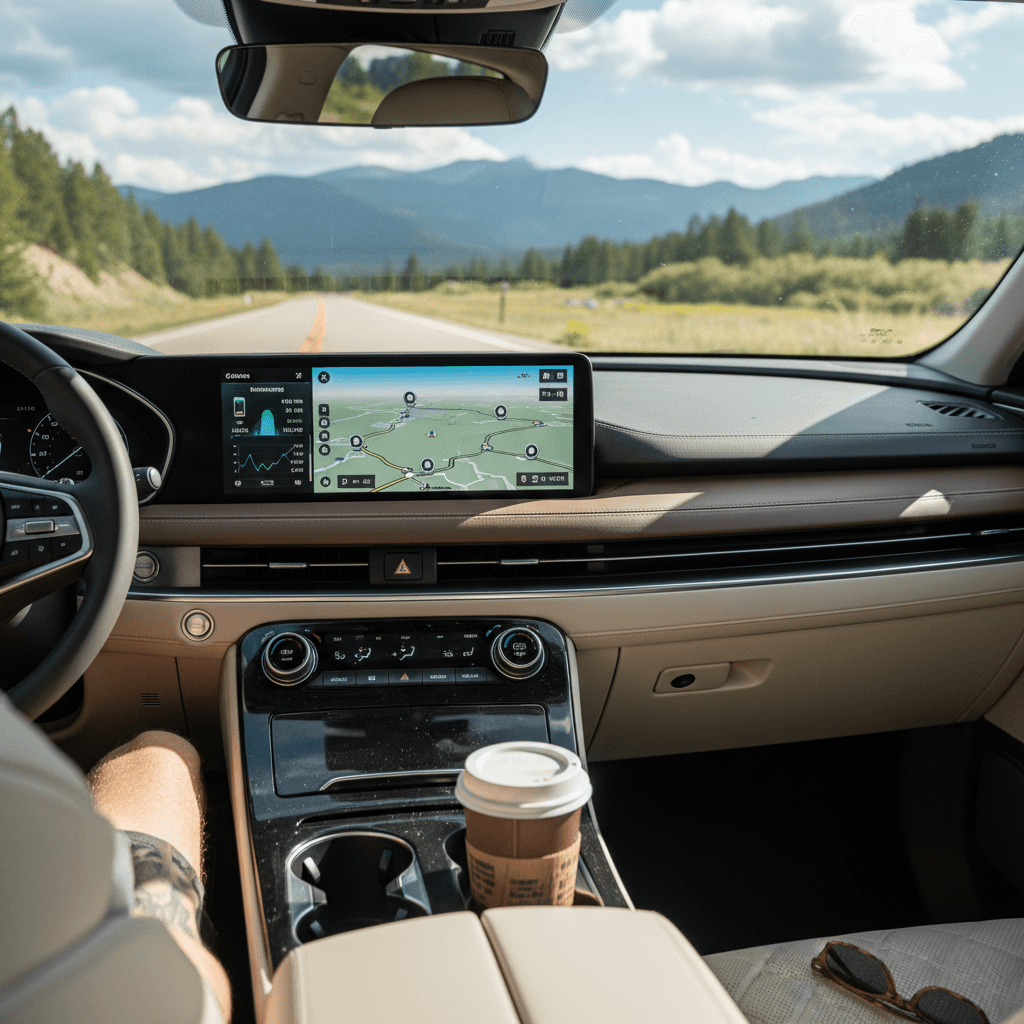
One of the big advantages of the Electrified GV70 over many mainstream EVs is how relaxing it is to drive over long distances. Use the car’s technology to stay comfortable and consistent, it’s good for you and for efficiency.
- Highway Driving Assist can handle much of the lane‑keeping and distance management on well‑marked highways. Used attentively, it reduces fatigue and smooths out inefficient surges in speed.
- The head‑up display keeps your eyes closer to the road when checking speed limits, navigation prompts, and driver‑assist status.
- Use the built‑in EV routing when available so the car knows you’re headed to a charger and can precondition the battery on approach.
- Leverage profile and seat memory so swapping drivers doesn’t mean 10 minutes of seat and mirror readjustment at every stop. Less hassle equals shorter breaks and more real miles.
Comfort equals endurance
Winter and bad-weather strategies for the Electrified GV70
Cold weather and nasty conditions are where many new EV owners get nervous. The Electrified GV70’s dual‑motor AWD and traction systems make it a confident winter machine, but you’ll want to adjust expectations and routines around range and charging speed.
Cold-weather long-distance tips
Preheat while plugged in
Use scheduled departure or remote start to warm the cabin and battery while you’re still on the cord. That way, more of your battery is reserved for driving, not defrosting.
Shrink your leg length
In sustained sub‑freezing temperatures, treat 130–160 miles as your typical planning window between DC fast charges, depending on speed and conditions.
Watch arrival state-of-charge
Aim to reach chargers with at least 10–15% in winter. Range estimates can swing more in snow, heavy rain, or strong headwinds.
Expect slower initial charging
Even with preconditioning, a very cold pack may not immediately hit peak speeds. Don’t panic if your first few minutes on a fast charger are slower, rates should climb as the pack warms.
Use seat and wheel heaters
They use far less energy than cranking cabin heat, and they make it easier to keep the cabin set a few degrees lower without sacrificing comfort.
Don’t rely on the last 10% in winter
Long-distance tips if you’re buying a used Electrified GV70
If you’re shopping used, especially for road‑trip duty, you care about more than leather quality and option packages. You want to know how the battery has held up and whether the car still fast‑charges properly. That’s where a structured inspection and verified data really matter.
Road-trip specific checks for a used Electrified GV70
Focus on battery health, fast-charging behavior, and long-haul comfort.
Battery health & range
- Look for verified battery diagnostics rather than guessing from the dash estimate.
- Ask for recent highway‑range experience: what speeds, what weather, and what energy use.
- On a test drive, note whether the car’s projected range at 80–90% fits your trip expectations.
Fast-charging performance
- If possible, do a monitored DC fast‑charge from ~10–20% to ~60–70%.
- The car should ramp quickly and hold strong power for much of that window when plugged into a healthy 150–350 kW unit.
- Watch for unusual behavior, frequent charge faults, very low power on multiple stations, or sudden drops.
How Recharged helps here
You can also lean on Recharged’s EV‑specialist team for route‑planning questions, charging‑network choices, and trade‑in or financing options if you’re moving from a gas GV70 or another SUV into the Electrified version.
Genesis GV70 Electrified long-distance FAQ
Frequently asked questions
Key takeaways for confident GV70 Electrified road trips
The Genesis GV70 Electrified trades eye‑popping range numbers for rapid charging and a truly comfortable cabin, an equation that works out very well if you plan your trips intelligently. Think in terms of 150–180‑mile legs, keep your charging sessions in the 10–80% window, and let the car’s navigation and driver‑assist features handle the grind of highway miles.
If you’re considering a used Electrified GV70, pay close attention to battery health and fast‑charge behavior. A Recharged vehicle comes with a Recharged Score Report and EV‑specialist support, so you know up front whether the car you’re buying will comfortably handle the kind of road trips you have in mind, and you can finance, trade in, and arrange nationwide delivery without leaving your couch.
Get those pieces right, and the Electrified GV70 is more than just a stylish electric SUV. It becomes a capable long‑distance cruiser that turns fast‑charge stops into quick, predictable intermissions instead of trip‑ruining delays.