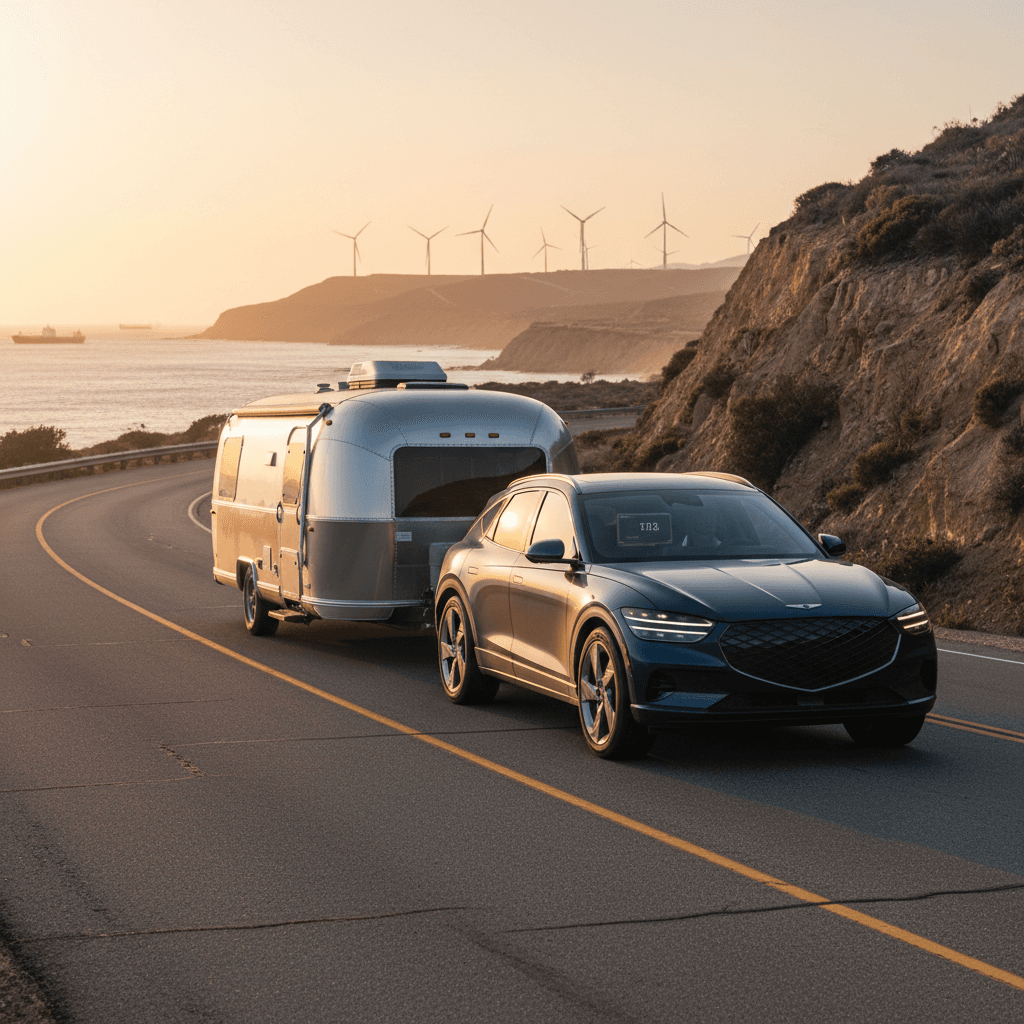
You don’t buy a Genesis GV60 to cosplay as a one‑ton pickup, but you might very well want to drag a teardrop camper into the woods, haul track wheels, or run a couple of e‑bikes out of town. That’s where understanding the Genesis GV60 towing capacity and range loss stops being trivia and starts being trip‑saving math.
Key takeaway
Genesis GV60 towing overview: the short version
Genesis GV60 towing & range: fast facts
On paper, the GV60’s tow rating lines up with other compact luxury crossovers: it’s meant for light trailers, not horse boxes. In practice, the 800‑volt E‑GMP platform, big brakes, and all‑wheel drive make it a confident tow vehicle, right up until the moment you look at the remaining range. Pull a boxy camper at 70 mph and your sleek Korean coupe‑ish SUV suddenly thinks it’s a brick with mood lighting.
U.S. vs Europe: confusing numbers
Genesis GV60 towing capacity by market and trim
The GV60 is sold in several trims and in multiple markets, and Genesis has not exactly made the towing story idiot‑proof. Here’s how to think about it without memorizing spec sheets.
GV60 towing capacity: global overview
Approximate factory ratings; your exact limits are defined by your VIN‑specific owner’s manual and door‑jamb stickers.
| Market / spec | Typical trims | Max braked tow rating | Max unbraked tow rating | Notes |
|---|---|---|---|---|
| United States | Advanced, Performance AWD | ≈2,000 lbs | Not typically recommended | Tow capacity often bundled with factory hitch; some dealers market hitch for accessories only. |
| Europe / UK | Sport, Sport Plus (AWD) | 1,600 kg (3,527 lbs) | 750 kg (1,653 lbs) | Rated more generously; GV60 has already won tow‑car awards there. |
| Australia | AWD, Performance AWD | 1,600 kg (3,527 lbs) | 750 kg (1,653 lbs) | Similar to Europe; detailed in local Genesis spec PDFs. |
| RWD Standard (select markets) | Single‑motor RWD | Varies by market | Varies | Some RWD variants may be rated lower or not for towing at all. |
Use this table as a starting point, then confirm numbers against your specific vehicle documentation.
Never exceed the weakest link
There’s also a cultural footnote here: some U.S. dealers have reportedly told customers the hitch is “for bike racks only,” especially when parts supply has lagged behind demand. That doesn’t change the engineering, but it does hint at a brand still getting comfortable with the idea of its pretty EV being treated like a workhorse.
How towing affects Genesis GV60 range
Towing range loss in an EV lives at the intersection of bad aerodynamics and harsh physics. The GV60 shares its E‑GMP platform with the Hyundai Ioniq 5 and Kia EV6, and their behavior under load is instructive. Slap a trailer on any of these and you’ve done three things simultaneously:
- Added weight the motors must accelerate and climb with.
- Added rolling resistance from extra tires and wheel bearings.
- Usually added frontal area and turbulence, parasitic drag that scales brutally with speed.
Speed hurts more than weight
Drivers coming from gasoline tow vehicles often assume EVs will completely implode under load. The reality is subtler. E‑GMP cars tend to deliver 70–85% of their rated range in normal highway use with no trailer. Add a modest trailer and that can drop to roughly 50–70% of the original EPA number, depending on conditions. It’s not catastrophic, but it does turn a 250‑mile highway leg into something closer to 140–170 miles between fast charges.
Realistic GV60 range estimates while towing
Let’s put some non‑marketing numbers around this. Below are broad, conservative estimates based on the GV60’s EPA ratings, what we’ve seen from related E‑GMP cars, and how trailers usually clobber efficiency. Consider these a planning baseline, not gospel.
GV60 range scenarios: no trailer vs towing
Approximate real‑world highway ranges (70 mph) on a healthy battery in mild weather.
| Trim / setup | EPA range (no trailer) | Likely highway range (no trailer) | Estimated highway range with light trailer* | Estimated loss when towing |
|---|---|---|---|---|
| RWD Standard (19" wheels, where offered) | ≈294 mi | ≈220–240 mi | ≈130–170 mi | ~30–40% |
| AWD Advanced (19" or 20" wheels) | ≈248–264 mi | ≈200–230 mi | ≈120–160 mi | ~30–40% |
| AWD Performance (20"–21" wheels) | ≈235 mi | ≈180–210 mi | ≈100–140 mi | ~35–50% |
| *Light trailer example | ≤2,000‑lb teardrop, pop‑up, or utility | , | , | Assumes sensible speeds and no extreme hills or weather. |
Numbers are rounded estimates for planning only. Your results will vary based on terrain, wind, temperature, driving style, and trailer design.
How to calibrate these numbers to your car
You’ll also want to mentally subtract a safety buffer. Running an EV down to 0% with a trailer behind it is a uniquely stressful experience. Most seasoned tow‑owners plan to arrive at fast chargers with 15–20% state of charge, which effectively trims range even further.
Charging and route planning with a trailer
The GV60’s ace card is its 800‑volt charging architecture. When you do stop, you charge very fast, on the right hardware. That’s the difference between tow‑touring that feels like a vacation and tow‑touring that feels like a hostage situation in the Wendy’s parking lot.
Charging strategy when towing a GV60
Design your route around plugs, not postcard views.
1. Target high‑power DC fast chargers
Look for 200–350 kW DC fast chargers. The GV60 can take advantage of these and go from low state of charge to road‑trip‑ready in around 18–25 minutes in ideal conditions.
2. Shorten your legs
Instead of running 200–230 miles between stops, think in 100–150 mile hops when towing. Shallow charges from 10–60% are quicker than deep 5–90% sessions.
3. Mind charger access with a trailer
Many charging sites are nose‑in only. You may need to drop the trailer or block multiple bays. Scout locations in apps with photos and satellite view before you arrive.
Use Tesla Supercharger access to your advantage
On a multi‑day tow trip, you’re not just managing electrons; you’re managing fatigue. A comfortable rhythm for many EV owners is 90–120 minutes of driving, 20–30 minutes of charging. When you’re towing, that cadence is almost a feature, not a bug: you’ll build in snack breaks, stretch your legs, and keep your concentration from fraying.
Hitches, weight limits, and what you can tow safely
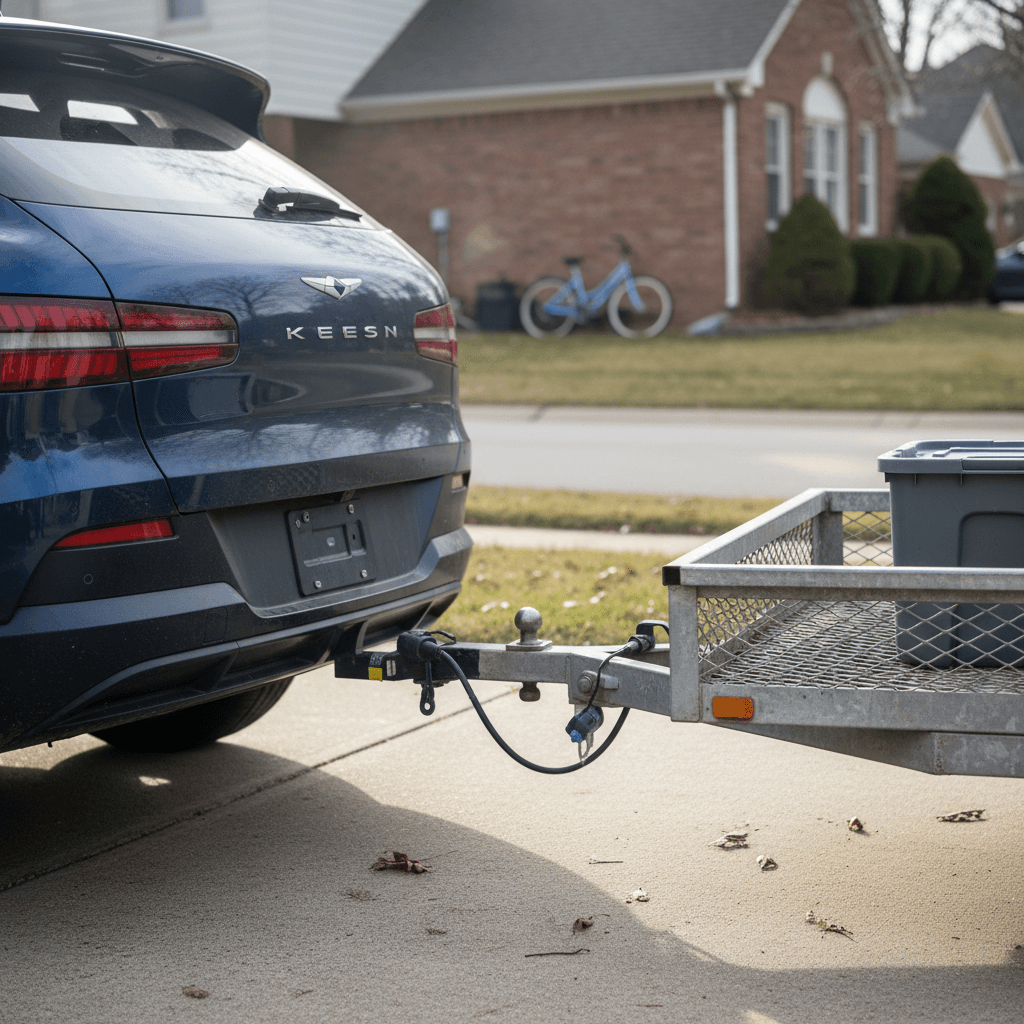
Capacity numbers are one thing; metal hardware and tongue weight are another. Before you post a campsite glamour shot on Instagram, you need a boring, practical checklist.
Pre‑tow checklist for your GV60
Verify your specific tow rating
Open your <strong>owner’s manual</strong> and confirm the maximum braked trailer weight for your exact VIN, trim, and wheel/tire combination. Check the door‑jamb label for Gross Vehicle Weight Rating (GVWR) and Gross Combined Weight Rating (GCWR).
Use a rated hitch for your vehicle
Have a <strong>vehicle‑specific hitch</strong> installed by a qualified shop or Genesis dealer. Generic universal hitches are not your friend; you want one matched to the GV60’s structure and crash management.
Respect tongue‑weight limits
Typical tongue weight is <strong>10–15% of trailer weight</strong>. For a ~2,000‑lb trailer, that’s ~200–300 lbs hanging off the back of the GV60, plus cargo in the hatch. Check both the hitch’s tongue rating and the vehicle’s maximum rear axle load.
Balance the trailer
Load heavier gear low and slightly forward of the axle(s). An unbalanced or tail‑heavy trailer will wag the dog, and the dog, in this case, is a 5,000‑lb electric sculpture with a lot of torque.
Upgrade mirrors and lighting if needed
If the trailer blocks your rear three‑quarter view, consider clamp‑on tow mirrors. Verify trailer lights every time you plug in; EVs are ruthless about low‑voltage lighting faults.
Practice braking and regen behavior
With a trailer, the GV60’s <strong>regenerative braking feel changes</strong>. Do a few slow‑speed test stops in an empty lot to get a sense of how the setup behaves before joining freeway traffic.
Watch your payload, not just trailer weight
How the GV60 compares to other EV tow vehicles
Where the GV60 shines
- Ultra‑fast DC charging: The 800‑volt system means short, sharp charging stops, perfect when you’re stopping more often because of towing range loss.
- Compact footprint: Easier to maneuver in crowded campgrounds and tight charging plazas than a full‑size truck or three‑row SUV.
- Refinement: Genesis does silence and ride quality extremely well. With a properly set‑up trailer, the whole rig feels more like a grand‑touring coupe than a work truck.
Where it falls short
- Limited tow rating: Around 2,000 lbs in the U.S. keeps you in the world of small campers and light toys. This is not a car hauler.
- Moderate range: Even in its best‑case trims, the GV60 doesn’t have the huge battery reserves of something like a Rivian R1S, so towing eats into a smaller pie.
- Packaging: Add four passengers and their gear plus a trailer tongue weight, and you’re quickly flirting with payload and axle limits.
If your idea of a good time is towing 5,000 lbs of enclosed car trailer through the Rockies, you’re shopping in the wrong segment. But if you want a luxury daily driver that can credibly pull a small camper to the mountains a few times a year, and do it on electrons, the GV60 holds its own against other compact premium EVs.
Buying a used Genesis GV60 for towing and road trips
On the used market, GV60s are quietly interesting tow candidates. Depreciation has done its brutal, democratic work, and you can now get E‑GMP performance and Genesis‑grade interiors for less than the cost of many new mainstream crossovers. If towing and road‑tripping are on your wish list, look a little harder at the fine print.
What to look for in a used GV60 if you plan to tow
The right options, and battery health, matter more than paint color.
Factory tow prep & hitch
Ideally, buy a car that already has a factory or professionally installed hitch. Retrofitting can be expensive and, if done poorly, compromises crash performance.
Battery health & fast‑charge history
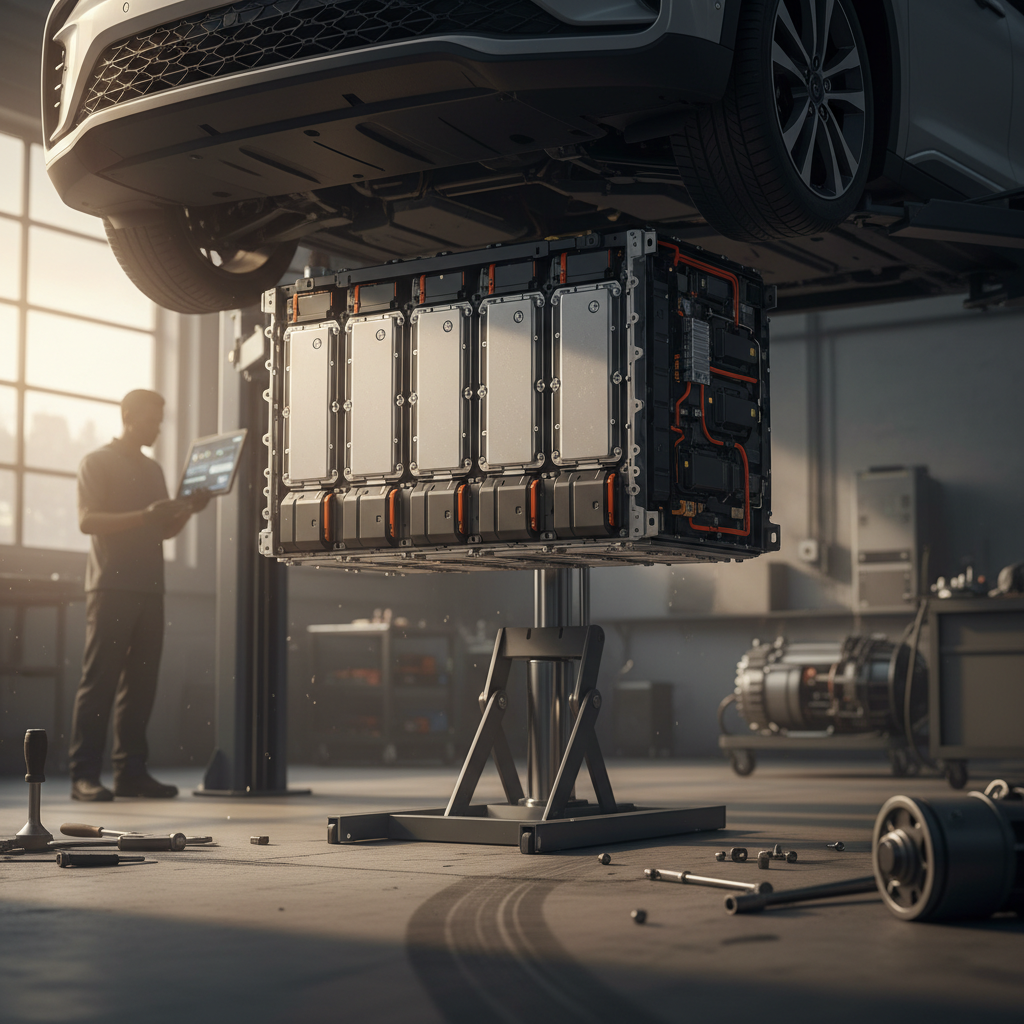
Heavy towing and frequent DC fast charging put extra stress on the pack. A Recharged Score battery health report can tell you how the GV60’s pack is aging before you sign anything.
Trim, wheels, and range
All‑wheel‑drive Performance models on big wheels look great but start with less range. For towing, a less flashy trim with smaller wheels can be the better tool.
Every vehicle sold through Recharged includes a Recharged Score Report with verified battery health and fair‑market pricing, so you’re not guessing how many road‑trip summers the pack has left. Pair that with EV‑specialist support, nationwide delivery, and trade‑in options, and you can shop for a GV60 that fits both your daily commute and your towing ambitions, entirely online.
Genesis GV60 towing capacity & range loss FAQ
Frequently asked questions about GV60 towing
Bottom line: Is the GV60 good for towing?
Think of the Genesis GV60 as a luxury compact GT that can tow, not a dedicated tow rig that happens to be luxurious. Within its roughly 2,000‑lb tow envelope, it’s composed, quiet and, thanks to its 800‑volt hardware, surprisingly convenient on the charging side of the equation. The trade‑off is range: the moment you hitch up, you’re living in a world of 30–50% fewer miles per charge and more frequent stops.
If that sounds like a feature rather than a bug, if you like the idea of structuring your road trips around short, predictable fast‑charge breaks and quiet nights at smaller campgrounds, the GV60 starts to look like a very modern answer to an old question: how do you take your stuff and still enjoy the drive? And if you’re considering a used example, letting Recharged pair you with a GV60 that has verified battery health, transparent pricing, and expert guidance can turn the towing math from stressful guesswork into a clean, confident plan.