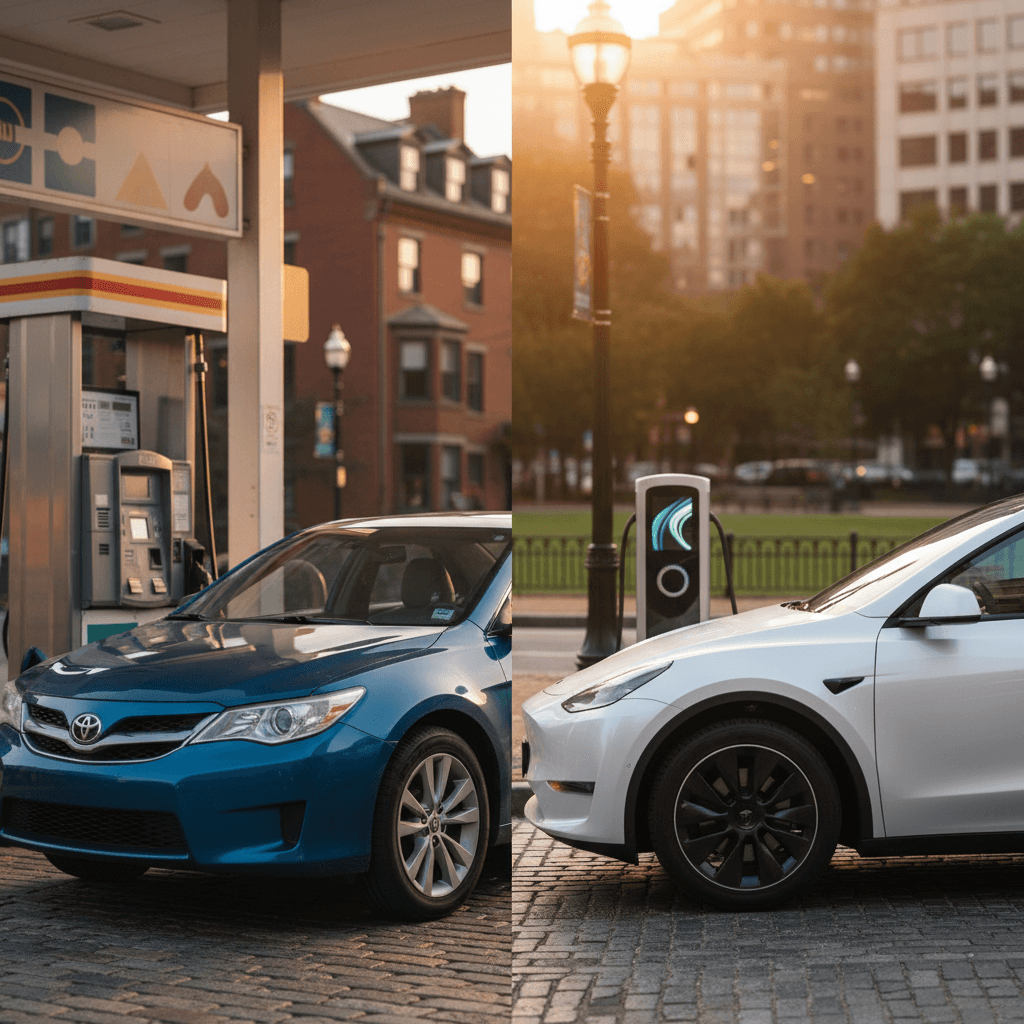
If you live in Greater Boston, you’re feeling it: **gas prices are volatile again in 2026**, while electricity rates are among the highest in the country. That makes the “gas prices vs EV charging cost in Boston 2026” question more complicated, but when you work through the math, an electric vehicle still comes out ahead for most drivers, especially if you can plug in at home.
Why Boston is a special case
Boston gas vs. EV cost in 2026: quick overview
2026 Boston fuel cost snapshot (typical assumptions)
Translate those prices into **cost per mile**, and you get a useful rule of thumb for 2026 in Boston: - A typical **gas car** (30 mpg) burns about **12–13 cents per mile** at $3.75/gal. - A typical **EV charged at home** in Boston runs around **6–9 cents per mile**, depending on your electricity rate and efficiency. - Relying heavily on **public fast charging** can get you closer to gas, **roughly 10–16 cents per mile**, but usually doesn’t exceed it unless you use the most expensive DC fast chargers all the time.
Fast take
Key 2026 price assumptions for Boston
To compare **gas prices vs EV charging cost in Boston for 2026**, we need realistic local assumptions. Prices change week‑to‑week, but you shouldn’t build a buying decision on yesterday’s spike or dip. Instead, think in **reasonable 2026 planning numbers**:
- **Gasoline in Greater Boston (2026 planning value):** recent reports put the U.S. national average around or above $4.00/gal, with Boston often running higher. Using **$3.75/gal** as a conservative average for regular unleaded in Eastern Massachusetts is reasonable for medium‑term planning.
- **Residential electricity in Boston (2026):** Massachusetts residential rates are among the highest in the country. Between basic utility service and Boston’s Community Choice Electricity options, a typical **all‑in rate of about $0.24–$0.30/kWh** is a fair planning range for 2026, before any EV‑specific discounts.
- **Public Level 2 charging:** city‑owned ChargePoint stations in Boston have been in the **$0.19–$0.25/kWh** ballpark, while some private locations charge a bit more. Planning on **$0.25–$0.35/kWh** for public Level 2 keeps you on the safe side.
- **Public DC fast charging:** Boston‑area DC fast chargers commonly price in the **$0.35–$0.55/kWh** range, depending on the network, speed, and whether you have a membership discount. We’ll use **$0.45/kWh** as a middle‑of‑the‑road estimate.
Prices in Boston vary a lot
Cost per mile: gas vs. EV charging in Boston
The fairest way to compare “gas prices vs EV charging cost in Boston 2026” is **cents per mile**. Let’s run the math for realistic vehicles and conditions you’d actually see in Massachusetts.
Typical 2026 cost per mile in Boston
Estimated fuel/energy cost per mile using 2026‑style prices and realistic vehicle efficiency.
| Vehicle type & fueling | Key assumption | Cost per unit | Efficiency | Estimated cost per mile |
|---|---|---|---|---|
| Gas compact sedan | Regular gas | $3.75/gal | 30 mpg | $0.125/mi (12.5¢) |
| Gas small SUV | Regular gas | $3.75/gal | 25 mpg | $0.150/mi (15¢) |
| EV, home charging (efficient hatchback) | Home electricity | $0.24/kWh | 4.0 mi/kWh | $0.060/mi (6¢) |
| EV, home charging (midsize crossover) | Home electricity | $0.28/kWh | 3.0 mi/kWh | $0.093/mi (9.3¢) |
| EV, public Level 2 only | Public L2 | $0.30/kWh | 3.2 mi/kWh | $0.094/mi (9.4¢) |
| EV, mixed: 70% home / 30% DC fast | Home + DCFC | $0.26 & $0.45/kWh | 3.0 mi/kWh | ≈$0.102/mi (10.2¢) |
| EV, DC fast only (not recommended) | DC fast | $0.50/kWh | 2.8 mi/kWh (winter‑heavy) | ≈$0.179/mi (17.9¢) |
Assumes 12,000 miles/year and mixed city/suburban driving. EV efficiency is lower in winter and higher in mild weather; we use blended estimates.
Why “DC fast only” is a bad idea
What home EV charging really costs in Boston
Home charging is where EVs usually shine, even in a high‑cost state like Massachusetts. Let’s break down what “plugging in at home” actually means for your bill and your budget.
3 factors that drive Boston home charging costs
Know these knobs before you assume electricity is “too expensive.”
1. Your all‑in kWh rate
Your bill has two big pieces: supply (the energy itself) and delivery (the wires and grid). In Boston’s Community Choice program, many drivers land near $0.22–$0.26/kWh all‑in; others on basic service or certain third‑party suppliers may see closer to $0.28–$0.32/kWh.
2. When you charge
Several Massachusetts utilities and partners offer off‑peak EV charging incentives or rebates if you plug in overnight. That can effectively drop your EV energy cost several cents per kWh, especially in managed charging programs.
3. Your EV’s efficiency
A compact, aerodynamic EV might average 3.8–4.2 mi/kWh over the year; a heavier AWD SUV in Boston stop‑and‑go traffic might see more like 2.8–3.2 mi/kWh. The fewer kWh per mile you need, the less those expensive kilowatt‑hours matter.
Back‑of‑the‑napkin home‑charging math
Example A: Boston condo with garage outlet
You install a Level 2 charger in a shared or deeded garage spot and pay standard Boston Community Choice rates, say $0.24/kWh all‑in. You drive a compact EV that averages 3.8 mi/kWh over the year.
- Per‑mile cost: 24¢ ÷ 3.8 ≈ 6.3¢/mi
- Annual “fuel” at 12,000 mi: ≈ $756
- Comparable 30‑mpg gas car at $3.75/gal: ≈ $1,500/year
You’re saving about $744 per year just on fuel, before maintenance differences.
Example B: Suburban home with off‑peak incentives
In some Massachusetts territories, EV drivers can enroll in off‑peak charging programs that rebate money for charging after 9–11 pm. If your effective overnight rate drops to around $0.18–$0.20/kWh and your crossover EV averages 3.2 mi/kWh:
- Per‑mile cost: 19¢ ÷ 3.2 ≈ 6.0¢/mi
- Annual fuel at 12,000 mi: ≈ $720
That’s roughly **half** the fuel cost of a comparable gas SUV in Greater Boston.
Don’t ignore installation and equipment
Public EV charging cost around Boston
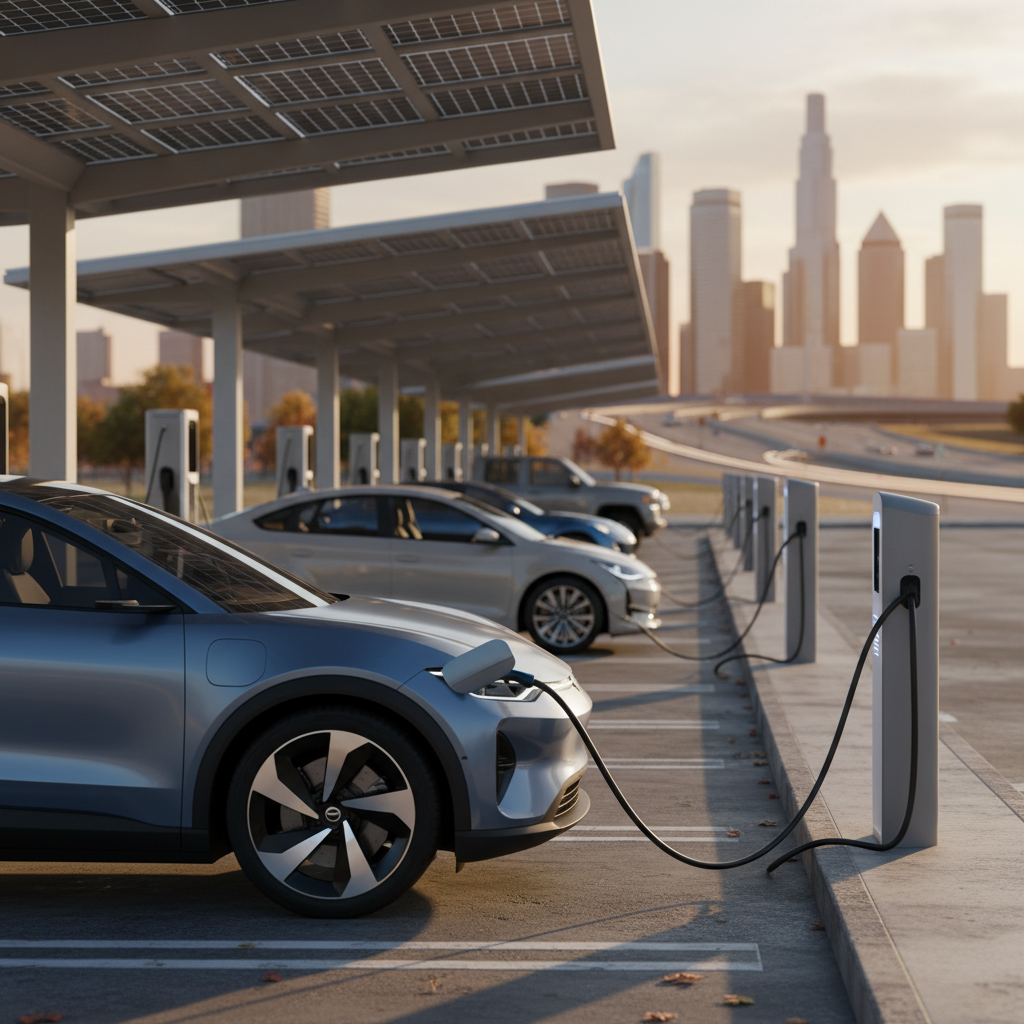
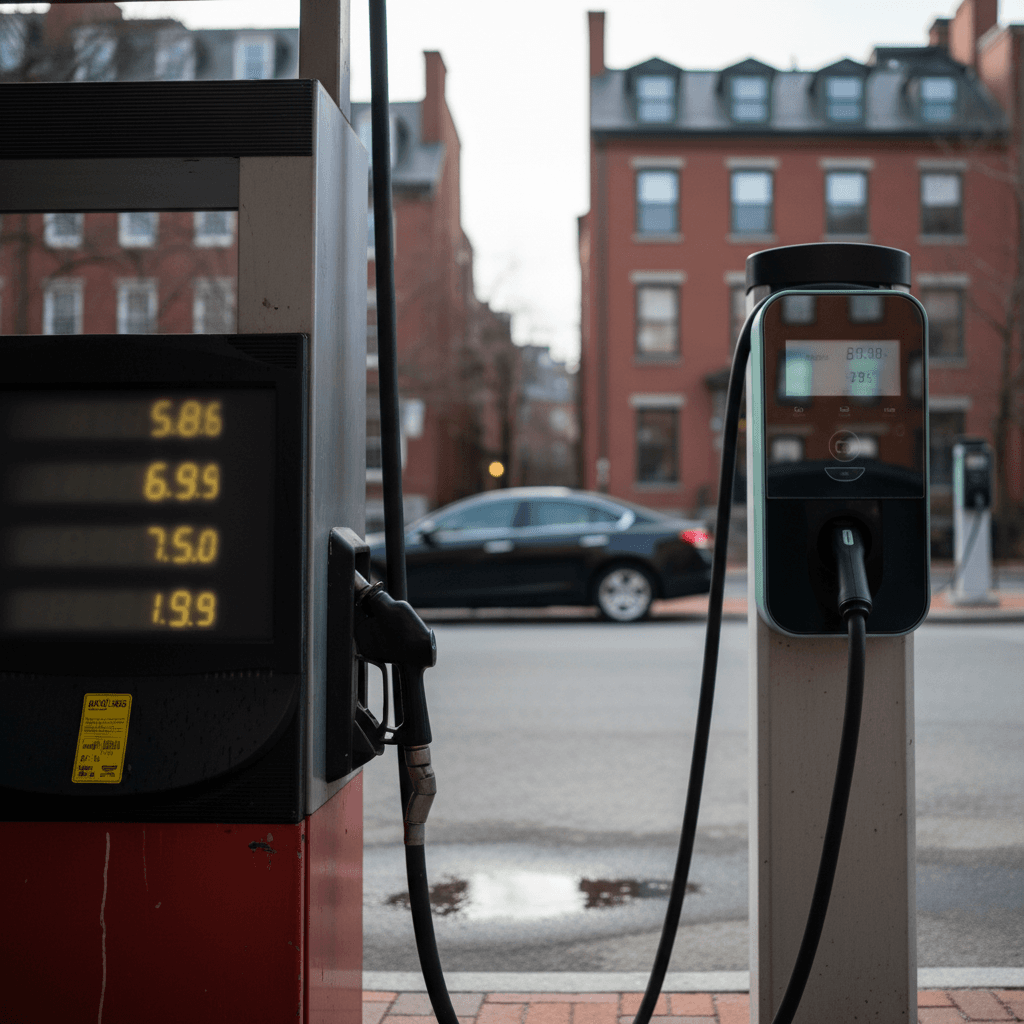
Public charging in Boston is a patchwork: city‑operated ChargePoint units, private garages, workplace stations, and high‑speed DC fast chargers on major corridors. The **spread in pricing is wide**, and that’s what makes or breaks the comparison with gas.
Typical Boston‑area public charging costs
What you’ll roughly pay in 2026, before memberships and promos.
Municipal & curbside Level 2
City‑owned ChargePoint stations in Boston lots and curbs have been around $0.19–$0.25/kWh. Figure roughly **6–9 cents per mile** depending on your EV’s efficiency.
Garage & private Level 2
Some garages and private lots price Level 2 closer to $0.30–$0.40/kWh (sometimes with parking fees on top). That can push you into the **9–13 cents per mile** range.
DC fast charging
High‑speed chargers in and around Boston often charge $0.35–$0.55/kWh, with memberships sometimes knocking that down a bit. Real‑world cost ends up around **10–18 cents per mile**.
Watch the parking meter, not just the kWh price
Real‑world cost scenarios for Boston drivers
Let’s walk through how **three typical Boston‑area drivers** might experience gas prices vs EV charging costs in 2026. These are simplified, but they’ll give you a feel for how your own situation stacks up.
Three Boston driver profiles: who saves what?
1. City renter, mostly public charging
You live in Jamaica Plain with street parking and no driveway. You rely on municipal Level 2 during errands plus occasional DC fast charging on weekends. Your blended EV cost might be around **10–12¢/mi**, similar to or slightly lower than a 30‑mpg gas car at Boston prices. You still gain in maintenance, but your pure “fuel” savings are modest unless you lean heavily on cheaper city Level 2.
2. Suburban commuter with a driveway
You live in Medford or Quincy with a driveway and standard Boston‑area electricity. You charge at home overnight, maybe using off‑peak incentives, and hit DC fast chargers only on road trips. Your **six–nine‑cent‑per‑mile** charging cost undercuts a comparable gas commuter by hundreds of dollars a year.
3. Low‑mileage urban household
You live in a Somerville condo, drive only 6,000–8,000 miles a year, and can share a garage Level 2 charger. At that mileage, **fuel savings alone won’t justify an EV**, but they do help offset higher purchase price. Here the real value may be in convenience (no gas stations) and lower maintenance, not massive fuel‑bill cuts.
Annual “fuel” cost comparison at 12,000 miles
How annual energy cost stacks up for typical Boston‑area usage patterns in 2026.
| Scenario | Energy source & rate | Per‑mile cost | Annual energy cost (12,000 mi) |
|---|---|---|---|
| Gas compact car | Regular gas at $3.75/gal, 30 mpg | 12.5¢/mi | $1,500 |
| Gas small SUV | Regular gas at $3.75/gal, 25 mpg | 15.0¢/mi | $1,800 |
| EV, home only | Home charging at $0.26/kWh, 3.5 mi/kWh | 7.4¢/mi | $888 |
| EV, 70% home, 30% DC fast | Home $0.26/kWh & DC $0.45/kWh, 3.0 mi/kWh | ≈10.2¢/mi | ≈$1,224 |
| EV, DC fast only | DC fast at $0.50/kWh, 2.8 mi/kWh | ≈17.9¢/mi | ≈$2,148 |
All figures rounded; real costs depend on your exact rates, driving style, and vehicle choice.
Who wins on fuel in Boston?
Beyond fuel: maintenance and longevity
Fuel or electricity is only part of the story. When you compare gas vs EV ownership in Boston, **maintenance and long‑term durability** matter just as much, often more.
- **EVs have far fewer wear items.** No oil changes, timing belts, spark plugs, or exhaust systems. Regenerative braking can stretch brake‑pad life far beyond what you’re used to with a gas car in city traffic.
- **Boston’s stop‑and‑go is harder on gas cars.** Frequent cold starts, idling, and short trips are tough on combustion engines and traditional transmissions. EVs actually do best in this environment; you’re not burning fuel at stoplights and regen captures energy in traffic.
- **Battery health is the big question mark.** In a used EV, the biggest long‑term cost risk is battery degradation, not the electricity itself. That’s why an objective battery‑health assessment is so important when you’re shopping pre‑owned in 2026.
Where Recharged’s battery data fits in
How Recharged helps Boston buyers shop smart
With Boston’s high electricity prices and unpredictable gas costs, the right move isn’t “EV at any cost.” It’s choosing **the right EV, at the right price, with clear data**, so the math works in your favor for years in Massachusetts.
Shopping a used EV in Boston? Here’s how Recharged can help
Make sure the cents‑per‑mile story and the purchase price both pencil out.
Transparent battery & price data
Every vehicle includes a Recharged Score Report with verified battery health and fair‑market pricing. That’s especially valuable in Boston, where winter range loss and hilly terrain can make a worn battery more noticeable.
Financing & total‑cost guidance
Recharged offers financing and trade‑in options and can help you compare the payment on a used EV to your current gas car once you factor in fuel and maintenance savings, not just the sticker price.
Nationwide delivery to Massachusetts
See an EV you like that’s not in New England? Recharged offers nationwide delivery, so Boston‑area drivers can shop a wider pool of well‑vetted used EVs instead of settling for whatever’s on the nearest lot.
EV‑specialist support
From explaining home‑charging options in older Boston housing stock to talking through winter range expectations on Route 2, Recharged’s EV‑specialist team can help you pick a car that fits your actual commute and fueling options.
Ready to find your next EV?
Browse VehiclesBoston gas vs. EV cost FAQ
Frequently asked questions: gas prices vs EV charging cost in Boston (2026)
Bottom line for Boston drivers in 2026
In 2026 Boston, **high electricity rates don’t erase the EV advantage**, but they do make the details matter. If you can charge at home, or at reasonably priced municipal Level 2 stations, an EV will typically beat a comparable gas car on energy cost by hundreds of dollars a year, and even more when you factor in reduced maintenance. If you’re locked into expensive DC fast charging and city garages, the math is tighter and you’ll want to be very selective about which EV you buy and what you pay for it.
The smart move is to run **your** numbers: where you live, where you park, what you drive today, and what you’re considering next. Recharged can help by pairing transparent **battery‑health and pricing data** with practical total‑cost‑of‑ownership guidance, so whether you stay with gas a bit longer or move into a used EV, you’re doing it with **Boston‑specific economics** in mind, not generic national averages.