If you drive in New York, you already know the ritual: crawl into a tight station, stare at the glowing numbers, and wonder how much higher they can go. Thinking about gas prices in New York in 2026 isn’t exactly uplifting, but if you’re deciding whether your next car should still drink gasoline, it’s the right question.
Context, not clairvoyance
Why gas prices in New York 2026 matter more than you think
When you live in New York, city or upstate, fuel is not an abstract economic indicator. It’s rent-adjacent: one more line item with the power to wreck a monthly budget. And in 2026, those gas prices in New York intersect with three big realities: higher living costs, aggressive climate policy, and a used EV market that finally has real depth.
- New York has historically paid more for gas than the U.S. average, thanks to higher taxes, supply constraints, and expensive real estate for stations.
- Climate laws are nudging refineries and distributors to invest or exit, which can tighten supply and keep prices elevated even when crude oil is calm.
- At the same time, used EVs, especially 3–6 years old, are becoming common and relatively affordable, which gives you a practical way to opt out of the pump.
The risk isn’t a price spike, it’s volatility
How gas prices in New York are actually set
To make sense of where gas prices in New York 2026 might land, you need to understand what actually drives that LED sign above the pumps. Spoiler: it’s not just crude oil.
Four main forces behind New York gas prices
The parts of the price you never see on the receipt
Crude oil markets
Global supply and demand set the baseline. Conflicts, OPEC decisions, and economic slowdowns all ripple into New York pump prices, often with a lag of weeks, not months.
Refining & distribution
The Northeast has limited refining capacity, and New York depends heavily on fuel shipped in. When a refinery goes offline or logistics get snarled, prices jump quickly.
Taxes & fees
New York State fuel taxes and fees add a meaningful layer on top of wholesale prices. Cities and counties can tack on more, especially in the NYC metro area.
Environmental rules
Clean-fuel blends, emissions rules, and climate legislation shape how much it costs to produce and deliver gasoline, and whether companies even want to stay in the market long term.
Watch the seasonal switch
Realistic scenarios for gas prices in New York 2026
Any headline that tells you exactly what a gallon will cost in 2026 is selling something. What you can build, though, are sensible scenarios based on how New York prices have behaved over the past decade: generally above the national average, periodically spiking on global shocks, rarely staying “cheap” for long.
Illustrative scenarios for gas prices in New York 2026
Not predictions, but reasonable ranges you can use for budgeting and deciding whether it’s time to go electric.
| Scenario | New York pump price | What it feels like | Likely triggers |
|---|---|---|---|
| Soft landing | $3.40–$3.80 | Annoying, but manageable | Stable global supply, mild demand, no major refinery outages |
| Business as usual | $3.80–$4.40 | A familiar New York sting | Normal volatility, occasional short spikes, steady climate-policy pressure |
| Stress test | $4.40–$5.00+ | Budget-breaking for commuters | Refinery issues, strong global demand, or geopolitical shocks layered on local constraints |
Numbers below are ballpark planning assumptions per gallon for regular gas in 2026, not guarantees or official forecasts.
Treat these as planning tools, not promises
What 2026 gas prices mean for your annual driving budget
Dollars per gallon are abstract; dollars per year are not. So let’s translate those gas prices in New York 2026 into what they do to a typical driver’s budget. We’ll use round numbers so you can plug in your own commute.
At-the-pump costs for a typical New York driver
Even if your personal numbers wiggle, maybe you only drive 8,000 miles, maybe your SUV manages 22 mpg, the pattern holds: as long as New York gas hovers in the high-$3 to low-$4 band, you’re spending four-figure money just to feed the tank.
Gas vs EV in New York 2026: cost-per-mile showdown
The obvious escape from volatile gas prices in New York 2026 is electricity. And in New York, the electric bill has its own politics. But once you get past the headlines, the per‑mile math is lopsided.
Gasoline: paying for explosions
- Assumed efficiency: 28 mpg
- Assumed fuel price: $4.10/gal
- Cost per mile: about 14.6¢/mile
Drive 12,000 miles, and you’re in the neighborhood of $1,750/year purely in fuel.
EV: paying for electrons
- Assumed efficiency: 3.0 miles/kWh (many EVs do better in mild weather)
- Home electricity: use a simple $0.22–$0.24/kWh planning number for New York
- Cost per mile: roughly 7–8¢/mile
Those same 12,000 miles cost around $850–$950/year in electricity if you charge mostly at home.
Roughly half the fuel spend, before incentives
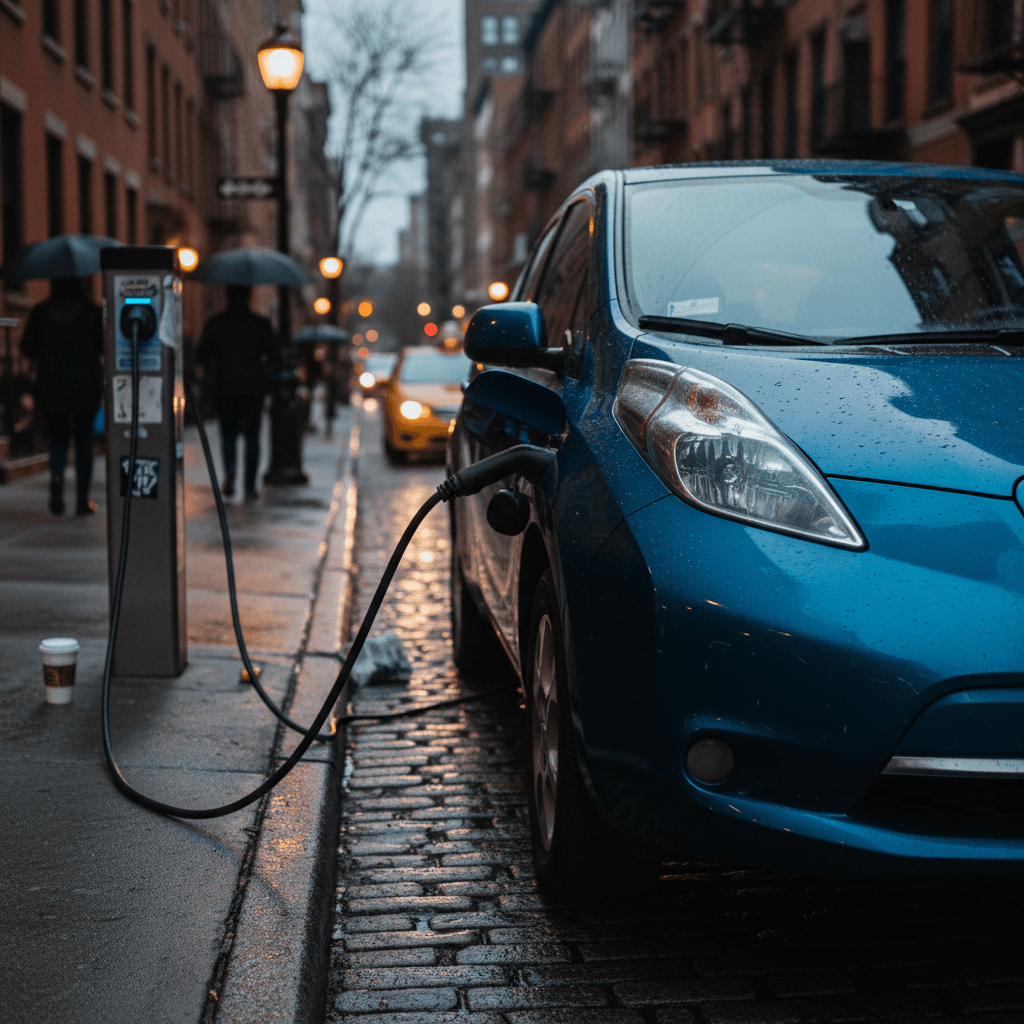
Public DC fast charging is more expensive, often closer to parity with gasoline on a per‑mile basis, but if most of your charging happens overnight at home or regularly at work, your annual fuel bill is still dramatically lower than feeding a comparable gas car.
Beyond the pump: parking, tolls, and other New York costs
New York is a masterclass in hidden car costs: parking, insurance, tolls, tickets, and the occasional wheel sacrificed to a heroic pothole. High gas prices in New York 2026 are just one line of the bill.
EV perks are evolving
Who gets hit hardest by high gas prices in NY?
Not all New York drivers feel $4‑plus gas equally. A Brooklyn owner who drives 5,000 miles a year in a compact car has options; a Hudson Valley nurse doing 22,000 miles a year in an aging SUV does not. When you think about gas prices in New York 2026, think in terms of exposure.
- Long‑distance commuters (suburbs ➝ NYC or cross‑county) rack up miles quickly, so every 25¢ swing at the pump shows up as real money.
- Drivers in older, less efficient vehicles, think 18–22 mpg crossovers, pickups, and minivans, see the worst of any price spike.
- Gig and delivery drivers who spend all day in motion have a business model that lives or dies on fuel cost and reliability.
- Households with multiple gas cars feel the hit twice; a single used EV in the driveway can act as a pressure‑release valve for the family budget.
If fuel is already a stress point, 2026 won’t help
How a used EV changes the math in 2026
The traditional knock on EVs was simple: too expensive to buy, even if they’re cheap to run. That argument gets weaker every year, especially in New York. As early‑ and mid‑2020s models come off lease, the used EV market is finally big enough that you have real choice, and real leverage.
How a used EV fights back against 2026 gas prices
Deep discount vs new EV pricing
Three‑ to six‑year‑old EVs have already taken the steepest part of their depreciation curve. You’re not paying for the bleeding edge; you’re buying the moment when EVs become appliances, quiet, efficient, and dramatically cheaper to run than gas cars.
Energy costs you can partly control
Unlike gasoline, electricity lets you play the game: charge overnight, plug in at work, time it around lower‑rate periods if your utility offers them. Gas stations don’t do off‑peak pricing.
Less mechanical complexity
No oil changes, no exhaust system, no timing belt, far fewer moving parts. You still have tires, brakes, and suspension, but you’re deleting an entire category of fiddly, combustible hardware.
Predictable commutes
With a home charger (or even a reliable curbside spot), you start most days with a full “tank.” High gas prices in New York 2026 may fill headlines but not your headspace.
But what about the battery?
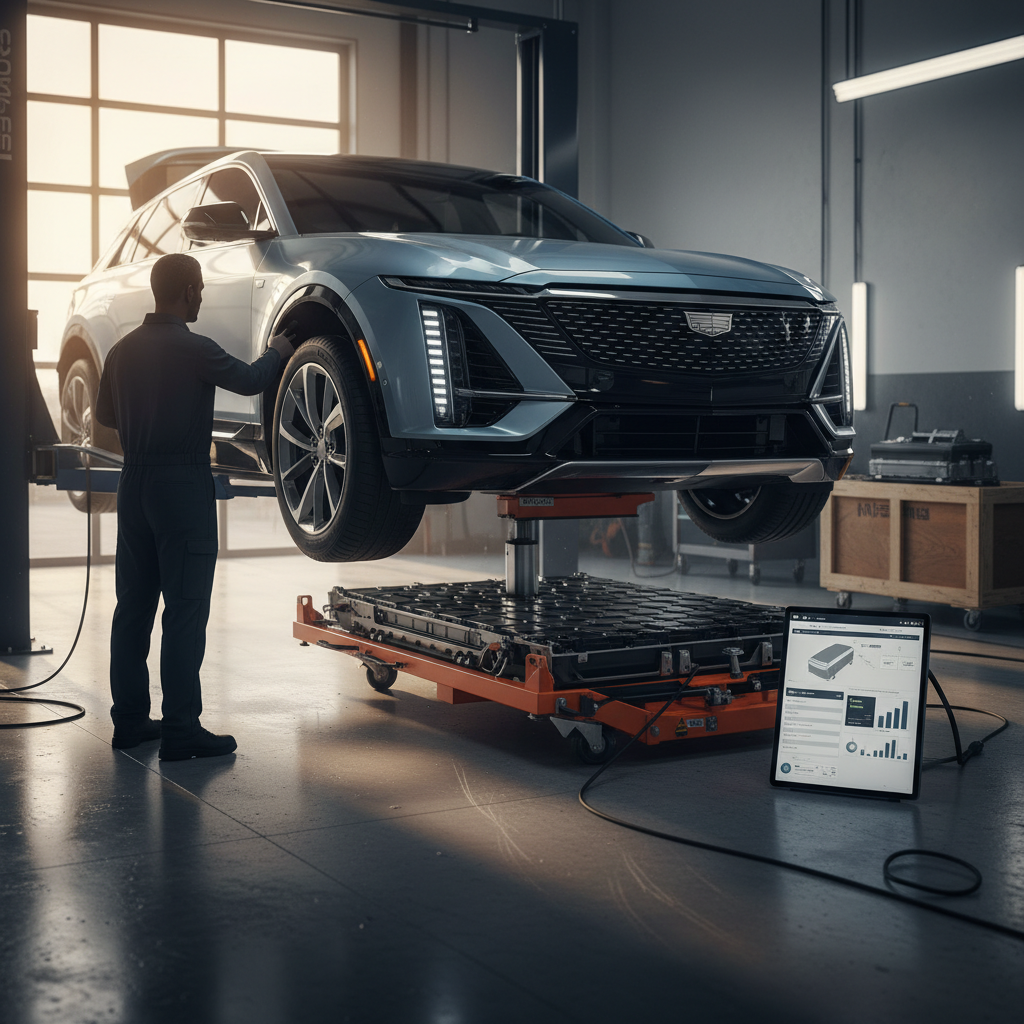
That kind of transparency matters more in 2026, not less. As more EVs change hands, you’ll see a wider spread in how cars have been treated. A well‑cared‑for battery pack with healthy range is what lets you actually capture those 7–8¢ per‑mile energy costs instead of spending your savings on anxiety and public fast‑charging.
Checklist: should you ditch gas before 2026?
If you’re staring down another year or two of New York gas prices and wondering whether to jump into a used EV, work through this quick, brutally honest checklist.
Six questions before you keep your gas car into 2026
1. How many miles do you actually drive?
If you’re over 10,000–12,000 miles a year, you’re exactly the kind of driver high gas prices punish. Under 6,000 miles a year? The economics still favor an EV, but the payback period is longer.
2. What’s your real‑world mpg?
Don’t use the window sticker; use your fuel receipts. If you’re under ~28 mpg in mixed driving, every gas‑price uptick bites harder than you think.
3. Do you control where you park overnight?
A driveway, garage, or dedicated lot near your home makes EV life easy. Even if you rely on street parking, check whether your neighborhood or workplace already has Level 2 charging options.
4. Is fuel already limiting your choices?
If you’ve skipped trips or side gigs because of gas prices, that’s a signal. A used EV gives you back some freedom to simply drive where you need to go.
5. How long will you keep your next car?
If you tend to keep cars 5–8 years, the cumulative fuel savings from an EV in New York can be enormous, easily five figures over the life of the vehicle.
6. Do you have access to trustworthy battery info?
Buying a used EV blindly is no better than buying a high‑mileage gas car with no service records. Look for vehicles with transparent battery health diagnostics, like the <strong>Recharged Score</strong> on every EV sold through Recharged.
Run your own numbers in 10 minutes
FAQ: gas prices in New York 2026 and switching to an EV
Frequently asked questions
Bottom line: gas prices in New York 2026 and your next car
When you zoom out, the story of gas prices in New York 2026 isn’t about a specific number on a station sign. It’s about direction and risk. All the structural forces, policy, supply, urban density, point away from cheap, predictable gasoline and toward ongoing volatility that lands hardest on people who drive the most and earn the least.
A well‑chosen used EV flips that script. Instead of budgeting around the next price shock, you’re paying a largely fixed monthly payment and a much smaller, more manageable energy bill. And because every vehicle Recharged sells comes with a Recharged Score Report, including verified battery health, you’re not trading fuel uncertainty for range anxiety.
If you expect to still be driving in New York in 2026, and you almost certainly do, then it’s worth asking a blunt question: do you really want to keep renting your mobility from the pump? Or is it time to start shopping the used‑EV market and lock in a future where gas prices are just something you pass on the way home?