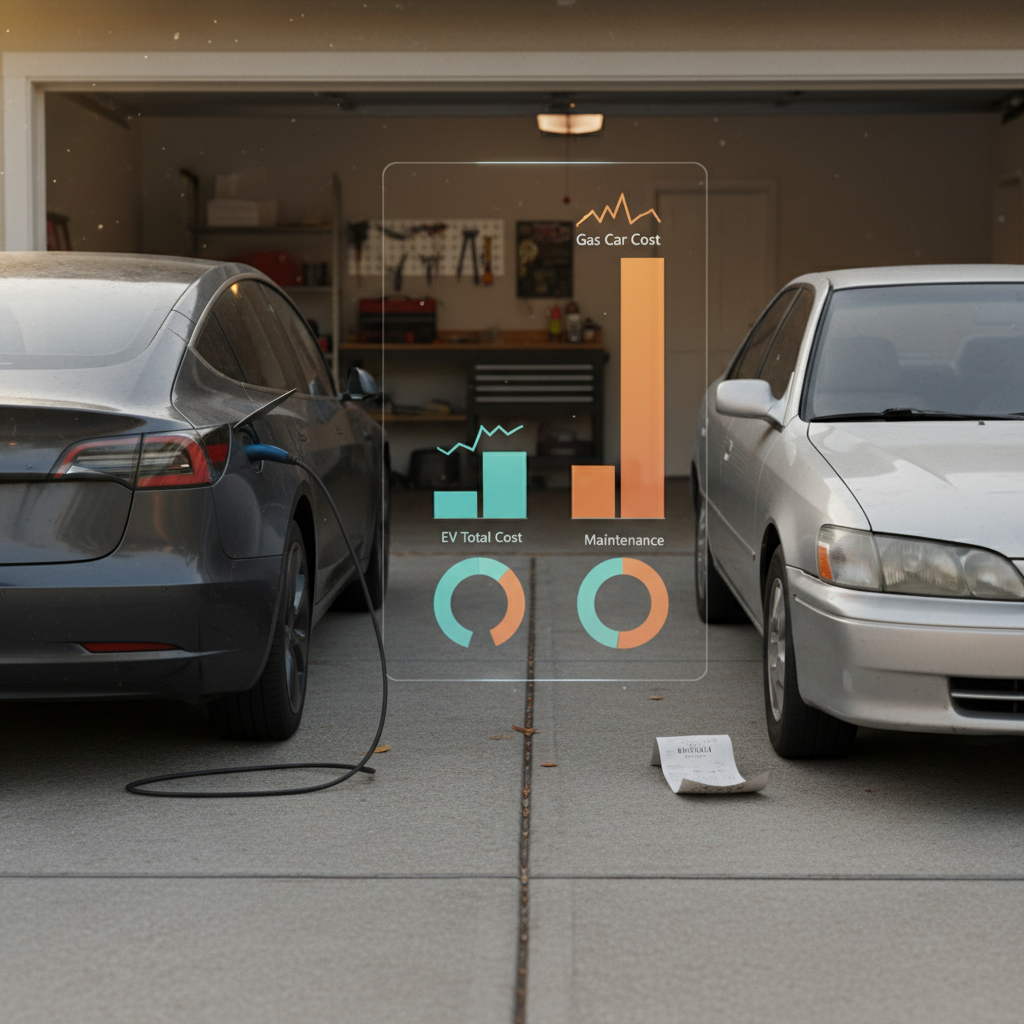
If you’re cross‑shopping a Ford Mustang Mach‑E vs a gas car, you’re probably wondering if the electric SUV really saves you money once you add everything up: fuel, maintenance, insurance, depreciation, and the changing tax rules in 2025–2026. Let’s walk through the real numbers so you can see where the Mach‑E shines, where it doesn’t, and how to decide what makes sense for your driveway.
What we’ll compare
Ford Mustang Mach-E vs Gas Car: Cost Overview
Mach-E vs gas: quick cost snapshot (typical 5‑year ownership)
At a glance, the Mach‑E is significantly cheaper to operate day‑to‑day than a similar gas vehicle, thanks to much lower energy and maintenance costs. But new‑vehicle ownership studies in 2024–2025 still show higher total annual ownership costs for many new EVs once you fold in purchase price, depreciation, insurance, and fees. That’s why drilling into the details, and considering a used Mach‑E, matters.
Key Cost Drivers: Where EVs Win and Lose
Mach-E vs gas: where the money moves
Think in categories, not just fuel economy stickers.
Fuel & energy
Mach‑E wins big when you can charge mostly at home. Per‑mile energy cost is often less than half that of gasoline, even with 2025 electricity prices creeping upward.
Maintenance & repairs
With no oil changes, spark plugs, or exhaust system, the Mach‑E typically needs fewer services and fewer parts. Brake wear is lower thanks to regenerative braking.
Insurance, fees & depreciation
This is where EVs can give back savings. Higher insurance premiums, faster early depreciation, and new EV fees can narrow or erase the advantage for some buyers, especially on brand‑new models.
Don’t compare to the wrong car
Fuel Cost: Mach-E Electricity vs Gasoline
Fuel (or electricity) is where EVs typically deliver the most obvious savings. A Ford Mustang Mach‑E gets roughly 2.7–3.3 miles per kWh in real-world mixed driving, depending on your model, climate, and driving style. With national residential electricity averages in the mid‑teens (cents per kWh), home charging your Mach‑E often works out to the equivalent of paying around $1.30–$1.70 per gallon of gas.
Illustrative annual fuel cost: Mach-E vs gas car
Assumes ~12,000 miles per year. Numbers are simplified averages for comparison, not quotes.
| Scenario | Mach-E: Energy Cost | Gas SUV / Coupe: Fuel Cost | Notes |
|---|---|---|---|
| Best case (mostly home charging) | $450–$550/yr | $1,400–$1,700/yr | Cheap overnight home electricity and typical U.S. gas prices around the mid‑$3 range. |
| Mixed (home + some fast charging) | $650–$900/yr | $1,400–$1,700/yr | Occasional pricey DC fast charging still keeps Mach‑E fuel costs well below gas in most regions. |
| Heavy fast charging | $1,100–$1,400/yr | $1,400–$1,700/yr | Relying heavily on public fast chargers can nearly wipe out the energy‑cost advantage. |
Home‑heavy charging is where the Mach‑E shines. Heavy use of public fast charging reduces or eliminates the fuel savings.
How to estimate your own energy cost
Maintenance: Mach-E vs Gas Mustang or SUV
This is where EVs quietly earn their keep. Once you strip out oil changes, engine air filters, spark plugs, and transmission service, the average electric vehicle owner typically spends 30–50% less on routine maintenance than a comparable gas driver at similar mileage. Regenerative braking means brake pads and rotors often last significantly longer as well.
Typical annual maintenance: Mach-E vs comparable gas car
Illustrative averages over the first 5–6 years for a mainstream compact SUV / sporty coupe at ~12,000 miles/year.
| Item | Mach-E (EV) | Gas SUV / Coupe |
|---|---|---|
| Oil & filter changes | None | $150–$250/yr |
| Engine & exhaust work | Very rare in early years | $150–$300/yr average over time |
| Brakes | Less frequent; many sets last 70k+ miles | More frequent pad/rotor work |
| Routine inspections & fluids | $200–$400/yr (tires, cabin filter, brake fluid, checks) | $350–$600/yr |
| Typical annual total | ≈$300–$500 | ≈$800–$1,200 |
Exact numbers vary by model and region, but the maintenance gap between EVs and gas cars is consistent across many 2024–2025 studies.
What this means over 5 years
Insurance, Fees, and New EV Charges
Here’s the part many EV shoppers underestimate. In 2024–2025, most insurers still charge higher premiums for EVs, including the Mustang Mach‑E, largely because of higher repair and parts costs. Depending on your driving record and market, quotes for an EV can run hundreds of dollars more per year than a similar gas SUV.
- EV insurance premiums in many states run roughly 15–25% higher than comparable gas vehicles, though this gap is slowly narrowing as repair networks mature.
- Several states already charge extra annual registration fees for EVs to replace lost gas‑tax revenue, and federal proposals would add around $250 per year nationally if enacted.
- Because of strong performance and advanced safety tech, Mach‑E owners sometimes see higher collision and comprehensive rates than buyers of more modest gas crossovers.
Run real insurance quotes before you decide
Purchase Price, Depreciation, and Used Mach-E Deals
Purchase price and resale value can easily swamp fuel and maintenance savings, especially if you trade frequently. New EVs, including the Mach‑E, have seen heavier early depreciation than many gas vehicles as prices have fallen and incentives shifted. The flip side: that same depreciation has made used Mach‑E pricing extremely attractive in 2024–2025.
The federal EV tax credit landscape has changed
Buying new
- Pros: Full warranty, latest tech and range, best chance of qualifying for remaining state/local incentives, and attractive lease programs that sometimes bake in federal credits.
- Cons: Higher sticker prices, heavier first‑owner depreciation, and higher insurance. Over 3–5 years, total cost of ownership can still edge out a gas car if you don’t drive much.
Buying used
- Pros: Depreciation has already done much of its damage. Many used Mach‑Es are now priced close to, or below, similar gas crossovers, while still carrying long battery warranties.
- Cons: You’ll want confidence in battery health and charging history. Not all used EVs have been treated kindly.
Leaning used? Make the battery your first question
5‑Year Cost Scenarios: Mach-E vs Gas Car
Let’s put the pieces together. These are simplified 5‑year illustrations for a typical buyer driving about 12,000 miles a year, using middle‑of‑the‑road assumptions. Your exact results will vary, but the examples show how the tradeoffs work in the real world.
Illustrative 5‑year cost of ownership: Mach-E vs gas car
Approximate numbers for discussion purposes only, based on 60,000 miles over 5 years.
| Category (5 yrs) | New Mach-E | New gas SUV / coupe | Used Mach-E (3‑yr‑old) |
|---|---|---|---|
| Fuel / energy | $2,500 | $7,500 | $2,500 |
| Maintenance | $2,000 | $4,000 | $2,500 |
| Insurance | $8,000 | $6,500 | $7,500 |
| Fees & EV charges | $1,000 | $500 | $1,000 |
| Depreciation | High (e.g., $20k–$25k) | Moderate (e.g., $15k–$20k) | Lower (e.g., $12k–$15k from used price) |
| Very rough 5‑yr total | Often similar to or slightly higher than gas | Often similar to or slightly lower than new Mach‑E | Frequently competitive or cheaper than a similar used gas SUV if you buy right |
Fuel and maintenance push the Mach‑E ahead on operating costs. Depreciation and insurance determine whether it wins overall.
Why the answer depends on how you buy and drive
Who Actually Saves Money With a Mach-E?
Profiles that favor the Mach-E, or a gas car
Match yourself to the scenario that looks most like you.
High‑mileage commuter
If you drive 15,000+ miles a year, can install a home Level 2 charger, and mostly charge off‑peak, a Mach‑E’s lower energy and maintenance costs can save you thousands vs gas, even if your insurance is higher.
Homeowner, keeps cars 8–10 years
Long‑term owners benefit from lower operating costs and skip multiple trade‑in hits. In this scenario, the Mach‑E often undercuts a comparable gas car in lifetime dollars.
Short‑term, low‑mileage driver
If you drive under 8,000 miles a year and trade every 3–4 years, a relatively simple gas crossover can be cheaper overall. Fuel and maintenance savings don’t have enough time to pay back the higher EV price and depreciation.
Quick checklist: will a Mach-E likely beat a gas car for you?
1. Estimate your annual miles
If you’re over ~12,000–15,000 miles per year, EV fuel savings become much more meaningful. Under ~8,000 miles a year, the premium for a new EV gets harder to justify purely on cost.
2. Evaluate your charging setup
Do you have a driveway or garage for home charging? Can you use off‑peak electricity rates? Heavy reliance on public fast chargers erodes most of the Mach‑E’s fuel advantage.
3. Compare real insurance quotes
Price out the specific Mach‑E trim and the gas vehicle you’re considering, with identical coverage and deductibles. Use those actual numbers in your 5‑year estimate.
4. Decide how long you’ll keep the car
If you typically keep vehicles 7–10 years, the Mach‑E’s lower operating costs have time to work in your favor. If you swap every 3 years, depreciation on a new EV can hurt.
5. Consider buying used instead of new
A late‑model used Mach‑E with good battery health can give you much of the EV benefit without the steepest years of depreciation, especially when you buy from a seller who can verify pack condition.
How Recharged Helps You Make the Numbers Work
If you decide a Mach‑E, or another EV, fits your driving pattern, the next question is how to buy with confidence. That’s where Recharged comes in. We’re built from the ground up around used electric vehicles, with tools and support you won’t find at a traditional dealership.
- Every EV we sell includes a Recharged Score report with verified battery health, so you can compare a used Mach‑E not just on miles and price, but on real pack condition.
- We provide fair market pricing grounded in current EV resale trends, so you’re not overpaying just because a model is hot this month.
- Our team of EV specialists can walk you through total cost of ownership vs a gas car, using your real driving pattern and local energy prices, not generic national averages.
- You can trade in or sell your current gas vehicle, finance your EV, and arrange nationwide delivery entirely online, or visit our Experience Center in Richmond, VA if you prefer to sit in a Mach‑E before committing.
Turn theory into real monthly numbers
Ford Mustang Mach-E vs Gas Car Cost: FAQ
Frequently Asked Questions
Bottom Line: Is a Mach-E Cheaper Than a Gas Car?
If you stand back from all the line items, a clear pattern emerges. The Ford Mustang Mach‑E almost always wins on fuel and maintenance costs, often by thousands of dollars over a typical 5‑year period. But higher upfront prices, steeper early depreciation, and sometimes higher insurance and fees mean the total cost edge isn’t guaranteed, especially for low‑mileage drivers who swap cars frequently.
If you drive a lot, charge mostly at home, and are open to a well‑priced used Mach‑E, the odds are good that you’ll come out ahead of a comparable gas vehicle while enjoying quiet, instant‑torque performance every day. If you’re more of a low‑mileage, short‑term owner, a simple gas crossover might still be the cheaper play on pure dollars and cents, even if it costs more at the pump.
Either way, you don’t have to guess. Recharged can show you real used‑EV options with transparent battery health, walk you through the cost math with your actual driving pattern, and help you decide whether a Mustang Mach‑E, or another used EV, makes more financial sense than sticking with gas.