If you search for “Ford Mustang Mach-E things I wish I knew”, you’ll see a pattern: owners love the way it drives, but many were surprised by charging realities, winter range, software bugs, and recalls. If you’re considering a new or used Mach-E, understanding those “I wish I’d known…” lessons up front can save you money, stress, and time at the service bay.
Who this guide is for
Why the Mustang Mach-E Is Still Worth a Look
What owners tend to love
- Fun-to-drive character: Quick acceleration, sharp steering, and a planted feel that lives up to the Mustang badge more than you might expect from an SUV.
- Distinctive styling: It doesn’t disappear in a parking lot the way some anonymous crossovers do.
- Solid range options: Extended-range models give competitive real-world range when driven reasonably.
- Over-the-air (OTA) updates: Ford can add features and fix bugs without a dealer visit for many issues.
Where expectations often clash with reality
- Public fast charging quality: The car is capable; the networks you rely on aren’t always as dependable.
- Software glitches: Frozen screens, buggy phone-as-a-key, and occasional driver-assistance hiccups still appear in owner reports.
- Recalls and hardware campaigns: Early cars, in particular, have a history you need to understand before you buy used.
- Depreciation: Like most EVs, the Mach-E sheds value quickly, which is bad news for first owners but an opportunity for used buyers.
Why used shoppers should pay attention
Charging Reality vs. Brochure Claims
On paper, the Mustang Mach-E’s DC fast-charging times and home-charging rates look great. In the real world, several things trip owners up. When people say, “I wish I’d known this before buying a Mach-E,” they’re often talking about charging.
Mach-E charging: expectations vs. reality
What the spec sheet says and what you’ll actually experience day to day
Fast-charging speeds
The brochure: DC fast charging from about 10–80% in roughly 40–45 minutes on a strong charger.
The reality: That’s on a healthy station, in mild weather, starting at low state of charge. Older or crowded public chargers can be much slower, and the car tapers aggressively as it approaches 80%.
Public charger reliability
The brochure: A growing network of CCS fast chargers nationwide.
The reality: Many Mach-E owners report error messages and failed charging sessions, especially on older high-power stations. That’s not the car’s fault, but it affects your experience.
Home charging assumptions
The brochure: “Charge overnight at home and wake up full.”
The reality: That assumes a 240V Level 2 setup. If you rely on a standard 120V outlet, charging is very slow and road trips require more planning.
Plan for a solid home-charging setup
How long will a Mustang Mach-E take to charge at home?
Approximate overnight charging times from 10–80% for typical Mach-E battery sizes. Exact times vary by model year, battery, and conditions.
| Home power source | Approximate power | Typical 10–80% time | Best for |
|---|---|---|---|
| Standard 120V outlet (Level 1) | ~1–1.4 kW | 20–30+ hours | Emergency top-ups, very light daily use |
| 240V / 30A Level 2 | ~7 kW | 8–10 hours | Most suburban homeowners |
| 240V / 40–48A Level 2 | ~9–11 kW | 6–8 hours | Larger battery packs, high-mileage drivers |
Use this as a planning tool, not a promise, weather and driving habits matter.
Tesla Supercharger access isn’t magic
Winter Range and Battery Behavior
Cold-weather range is one of the top “I wish I knew” topics for Mustang Mach-E owners, especially in northern states and Canada. Like every EV, the Mach-E’s battery is less efficient in the cold, and drivers who go in expecting gas-car behavior can be disappointed.
What Mach-E owners often see in winter
- Precondition the car while plugged in so the battery and cabin are warm before you drive.
- Use heated seats and steering wheel instead of blasting cabin heat whenever possible.
- Park in a garage or at least out of the wind to reduce overnight losses.
- Expect your first winter with the Mach-E to be a learning curve, track efficiency on a few regular routes so you know what to expect.
Ford’s own cold-weather guidance
Software Glitches and Tech Quirks
The Mustang Mach-E is as much rolling software as it is hardware. That’s a plus, Ford can fix and improve things over the air, but it also means glitches. Many owners say, “I wish I knew how finicky the tech could be,” before they depended on it for everything.
Common Mach-E tech quirks owners talk about
Most are manageable, but you should know them going in
Phone as a Key (PaaK)
Ford’s pitch: leave the fob at home and just use your phone. In reality, many owners still experience connection delays or failures, especially when Bluetooth or the FordPass app misbehaves.
Practical takeaway: always set up the door keypad code and carry the fob for trips you absolutely can’t afford to miss.
Frozen or black SYNC 4A screen
The big vertical screen controls climate, navigation, and drive settings. Some owners still report occasional screen freezes or reboots.
Quick reset trick: press and hold the steering-wheel Volume Down and Next Track buttons together for about 10 seconds; the screen will reboot while you continue driving.
Driver-assist behavior
BlueCruise (on equipped models) and adaptive cruise can work very well, but lane-centering, automatic lane changes, and speed-limit recognition aren’t flawless.
Tip: treat them as helpful assistants, not autopilots. Always be ready to take over.
Over-the-air updates
OTAs can fix bugs and add features, but they can also introduce new quirks or temporarily change behavior. Some updates require the car to sit parked for a while.
Used-buy angle: verify that major OTA campaigns have been applied, especially those related to high-voltage battery and driver-assist systems.
Test the tech on a long drive before you buy
Recalls and Known Issues You Should Ask About
Every modern EV has recalls, but the Mach-E has had a few high-profile ones that matter a lot if you’re shopping used. The key isn’t to avoid the car outright; it’s to make sure the right fixes have already been done on the specific vehicle you’re considering.
High-priority Mach-E issues and recalls to verify
High-voltage battery junction box (HVBJB) recall
Early 2021–early 2022 vehicles could suffer from contactor overheating, triggering a “Stop Safely Now” message and loss of power. Ford issued a major recall that involved software changes and, in some cases, hardware replacement. If you’re looking at an early build, insist on documentation that the HVBJB campaign was completed.
Door-latch software that can trap rear passengers
Model years 2021–2025 were recalled for a software issue that could keep rear doors from unlocking when the 12V system was low, potentially trapping passengers. Confirm that the relevant software update has been installed.
Rearview camera and sensor glitches
Ford has recalled a wide range of models, including the Mach-E, for rear camera software that can freeze or go blank. Make sure the VIN shows completed camera-related recalls and that the camera works correctly in Reverse.
Park system / rollaway risk
Some 2024–2026 Mach-E models are part of a recall for a park system defect that may keep the vehicle from fully engaging Park. Ask for recall status by VIN and test that Park engages reliably on an incline, with the parking brake set.
General build quality items
Owners have reported issues like wind noise, misaligned panels, and rattles. These aren’t recalls, but they do affect daily satisfaction. Walk around the car in good light and take a highway drive to listen for whistles or vibration.
Non‑negotiable for used shoppers
Comfort, Cargo, and Daily Livability Surprises
Many shoppers focus on range and 0–60 times, only to discover later that small livability details matter more. The Mach-E is generally a comfortable, quiet EV, but there are a few things owners routinely say they wish they’d paid closer attention to upfront.
Interior comfort and space
- Front seats: Comfortable for most body types, but some taller drivers wish for slightly more thigh support on long trips.
- Rear seat room: Adequate for adults, tight for three across. Sloping roof can make getting in and out a bit awkward for taller passengers.
- Noise levels: Some owners report more wind and road noise than they expected in an EV, especially on coarse pavement.
Cargo and frunk expectations
- Cargo volume: With the rear seats up, cargo room is competitive but not best-in-class. If you haul bulky strollers or gear regularly, do a real-world test.
- Frunk changes: Earlier Mach-E models had a generous, washable frunk. Newer model years have seen size changes, and for 2026 the frunk has even been turned into a paid option on some trims, something shoppers often miss in the configurator.
- Loading floor height: The lift-over is a bit higher than some rivals; worth trying with the actual items you haul.
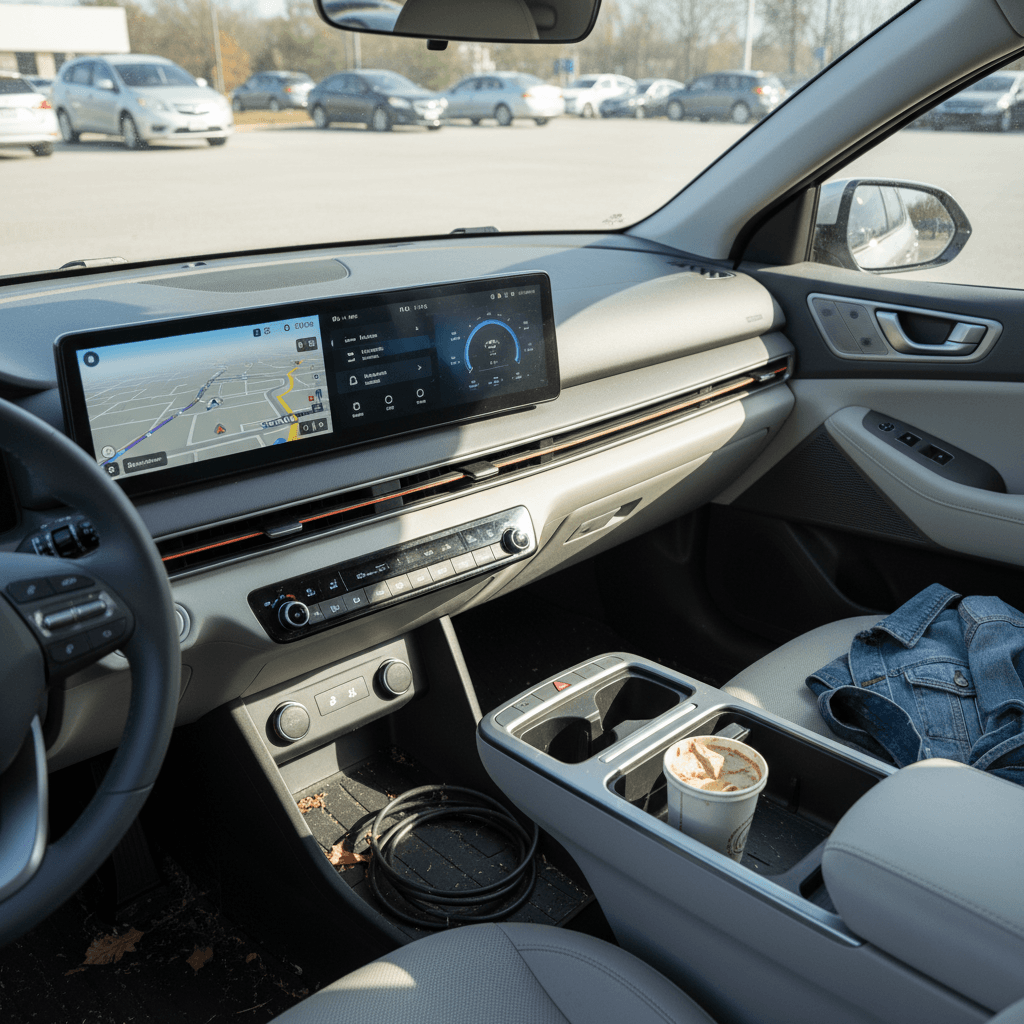
Try your real life in the car
Depreciation and Used-Market Insights
One of the biggest surprises for early Mustang Mach-E buyers has been how quickly values have dropped. That stings if you bought new, but it creates genuine bargains in the used market, especially if you’re cross-shopping gasoline SUVs with similar performance and features.
Mustang Mach-E depreciation snapshot
Why a Recharged Score helps here
What to Check When Buying a Used Mustang Mach-E
If you’re shopping used, this is where “things I wish I knew” turns into a practical checklist. Whether you’re buying from a dealer, a marketplace, or a private seller, go beyond the quick walkaround.
Used Mustang Mach-E buyer checklist
1. Confirm battery and range health
On a full charge, compare the displayed range to the EPA rating for that trim and battery. A modest difference is normal; a large gap could indicate aggressive past driving, extreme climates, or battery issues. A third-party battery report, like the Recharged Score, gives a deeper look than the dash alone.
2. Pull a full recall and service history
Ask for a printed service history and recall status by VIN. Verify completion of HVBJB, door-latch, camera, and park-system campaigns. Gaps or missing documentation should lower the price or send you to another car.
3. Test fast charging before you buy, if possible
If there’s a DC fast charger nearby, plug in and watch how the car behaves. Look for error messages, extremely slow rates, or immediate shutdowns. Even a 10–15 minute session can reveal a lot about charging reliability.
4. Drive it on mixed roads for at least 20–30 minutes
Include highway speeds and some rough pavement. Listen for wind or suspension noise, feel for steering wheel shake, and note any squeaks from the dash or seats. Try BlueCruise or adaptive cruise, if equipped.
5. Stress-test the tech
Pair your phone, use CarPlay/Android Auto if available, run navigation, and try voice commands. Pay attention to lag, freezes, or dropped connections. Reboot the screen with the steering-wheel shortcut to make sure it recovers cleanly.
6. Inspect tires and brakes closely
The Mach-E is heavy and torquey; tires and brakes can wear faster than on a typical crossover. Uneven tire wear or pulsing under braking may indicate alignment issues, aggressive driving, or overdue maintenance.
Don’t skip a professional inspection
How the Mach-E Compares to Other EV SUVs
When owners say, “I wish I’d cross-shopped more before choosing a Mach-E,” they’re usually thinking about charging networks, interior space, and software polish. On performance and style, the Mach-E holds its own; on other fronts, some rivals have edges you should be aware of.
Mustang Mach-E vs. popular EV SUV alternatives
High-level comparison for shoppers who are still deciding which direction to go.
| Model | Strengths | Potential drawbacks vs. Mach-E |
|---|---|---|
| Ford Mustang Mach-E | Fun to drive, distinctive styling, strong performance trims, competitive range, over-the-air updates. | Public charging experience can be inconsistent, software quirks, cargo and back-seat space not class-leading. |
| Tesla Model Y | Excellent fast-charging network, very efficient, strong software and app ecosystem. | More minimalist interior that some dislike, pricing volatility, ride quality can feel firm. |
| Hyundai Ioniq 5 / Kia EV6 | Ultra-fast charging on strong DC stations, roomy cabins, very comfortable rides. | Availability and dealer markups can be tricky; styling is more polarizing. |
| Volkswagen ID.4 | Comfortable, practical, often strong lease and purchase deals. | Less performance-oriented feel; infotainment interface can frustrate some users. |
Individual trims vary, but this gives a helpful directional feel.
Who the Mach-E tends to suit best
FAQ: Mustang Mach-E Things Owners Ask Later
Ford Mustang Mach-E: Things I Wish I Knew – FAQ
Bottom Line: Is a Mustang Mach-E Right for You?
The Ford Mustang Mach-E is not a perfect EV, but it is a memorable and rewarding one when your expectations match the reality. The big things owners wish they knew, winter range behavior, public charging quirks, software bugs, and recall history, are all manageable with a bit of homework and the right buying strategy.
If you’re shopping used, the current market and the Mach-E’s depreciation can play in your favor. A carefully chosen example, backed by verified battery health, recall completion, and transparent pricing, can deliver a lot of car for the money. That’s where a specialist marketplace like Recharged can help, with EV‑specific inspections, Recharged Score battery diagnostics, financing support, and nationwide delivery.
Take the time to drive a Mach-E for more than a quick loop, test the tech, and confirm the car’s history. If it still makes you smile when you press the accelerator and you’re comfortable with the trade-offs you’ve just learned about, you’ll be far less likely to join the chorus of owners saying, “I wish I’d known…”, and far more likely to say, “I knew exactly what I was getting, and I’d buy it again.”