You don’t choose a Ford Mustang Mach-E the way you pick out a pair of shoes. The big decision is under the floor: Standard Range vs Extended Range battery. That choice changes how far you can drive, how quick the car feels, how long you spend charging, and what you’ll pay, especially in the used market.
Quick take
Ford Mustang Mach-E battery options: the short version
Mach-E Standard Range vs Extended Range at a glance
Same stylish EV, very different personalities under the floor
Standard Range Mach-E
- Usable battery: about 73 kWh
- Peak DC fast charge: ~115 kW
- EPA range (recent models): ~240–260 miles*
- Available on: Select & Premium trims
- Best for: Daily commuters, budget-focused buyers, plenty of home charging
*Actual range depends on model year, wheel size, weather, and driving style.
Extended Range Mach-E
- Usable battery: about 88–91 kWh
- Peak DC fast charge: up to 150 kW
- EPA range (recent models): ~280–320 miles*
- Available on: Premium, GT, Rally (varies by year)
- Best for: Road-trippers, single-car households, cold climates
*Most efficient combo is Premium RWD Extended Range at about 320 miles on newer models.
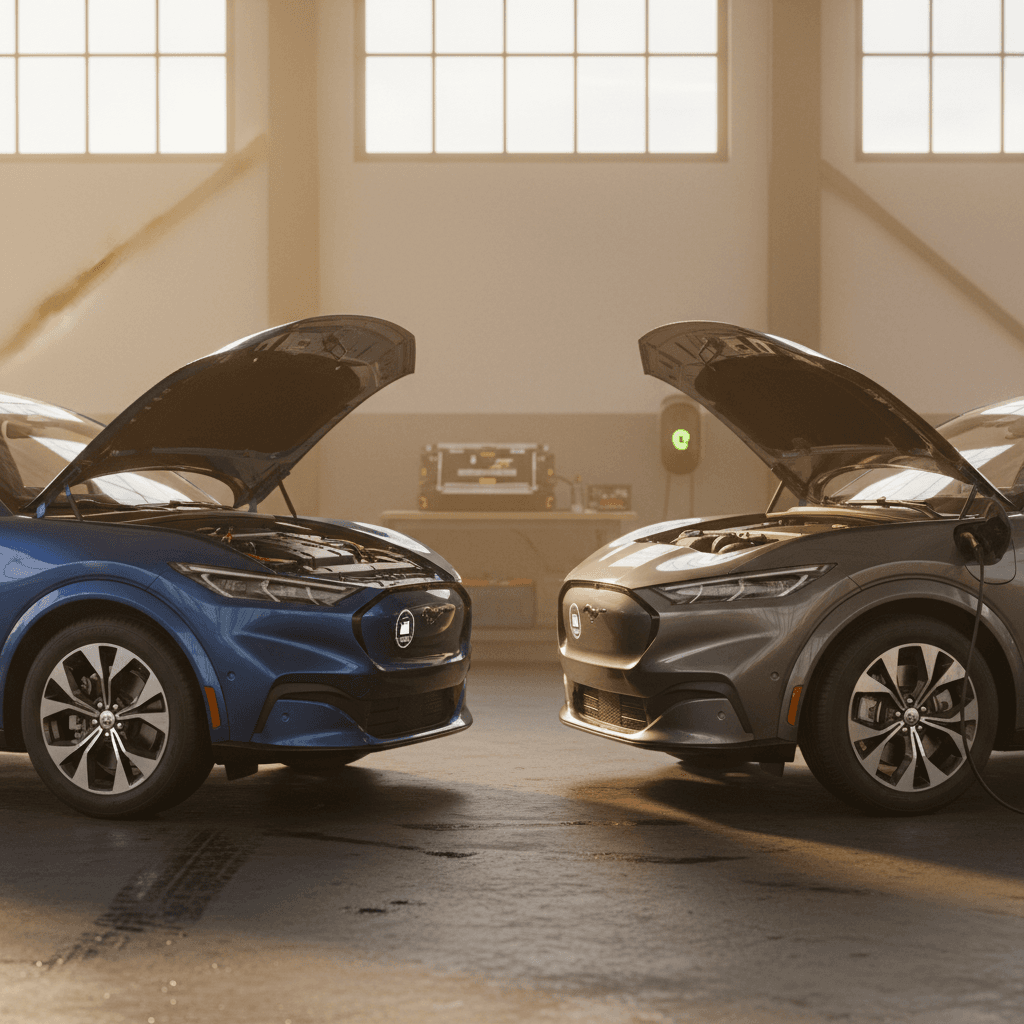
Both batteries live in the same basic Mach-E shell. What changes is how far you can go between charges, and in some trims, how much punch you get when you floor it. Let’s unpack the differences so you can match the battery to your life, whether you’re eyeing a brand-new Mach-E or a used one with a few road trips already in its past.
Standard Range vs Extended: battery size and specs
Ford Mustang Mach-E Standard Range vs Extended: key specs
Core battery and performance specs for recent-model Mach-E SUVs (figures vary slightly by model year and trim).
| Spec | Standard Range (SR) | Extended Range (ER) |
|---|---|---|
| Usable battery capacity | ~73 kWh | ~88–91 kWh |
| Typical trims | Select, Premium (RWD or eAWD) | Premium (RWD/eAWD), GT, Rally |
| Typical EPA range (RWD) | ≈ 260 miles | ≈ 320 miles |
| Typical EPA range (eAWD) | ≈ 240 miles | ≈ 300 miles |
| Peak DC fast-charging power | Up to ~115 kW | Up to ~150 kW |
| 0–60 mph (non-GT, approx.) | 5.6–5.2 seconds | 5.4–4.8 seconds |
| Torque (non-GT) | Up to 500 lb-ft (eAWD) | Up to 500 lb-ft (eAWD) |
| GT / Rally availability | Not available | Standard (ER only) |
Battery size and performance are the foundation of the Standard vs Extended Range decision.
Don’t obsess over gross kWh
In plain English: the Extended Range battery simply carries more energy. Think of it as a larger fuel tank that also feeds a stronger motor in some trims. The Standard Range pack is lighter and cheaper, and on paper it can be slightly more efficient in city driving. But the Extended pack gives the Mach-E its long legs and opens the door to the performance-oriented GT and Rally models.
Range comparison: EPA vs real-world driving
How far can a Mach-E really go?
EPA numbers are a decent starting point, but what you care about is real-world range on your commute or your favorite interstate. Across trims and years, Extended Range Mach-E models commonly deliver about 40–60 more usable miles than their Standard Range counterparts in mixed driving.
- In suburban commuting at moderate speeds, many drivers see efficiency in the 3.0–3.5 mi/kWh ballpark with either battery if they drive gently.
- On long highway runs at 70–75 mph, the difference between SR and ER really matters. With the bigger pack, you can often skip a charger or stop later and charge shorter.
- In winter, both packs lose range, but the Extended battery’s extra capacity means you can use cabin heat freely without worrying as much about arriving with 2% left.
Big wheels, big hit
Another overlooked factor is how often you want to think about charging. If you’re happy to plug in every night and rarely drive more than 50–60 miles a day, a Standard Range car will feel easy to live with. If your schedule is chaotic, you share the car with a partner, or you do regular 150–250 mile days, the Extended Range buffer can turn an anxious trip into a relaxed one.
Performance: does Extended Range feel different?
Standard Range: lighter and eager
- Power: roughly mid-260s hp RWD, low-300s hp eAWD in many recent models.
- Feel: Plenty quick off the line; instant torque masks the spec-sheet difference.
- Handling: Slightly less weight in the floor can make the SR feel a bit more tossable on back roads.
- Audience: Drivers coming from gas crossovers will already feel like this is a rocket ship.
Extended Range: more shove, more choice
- Power: modest bump in non-GT trims, but the real party starts with GT and Rally versions at up to 480 hp.
- Torque: GT/Rally trims can deliver 600–700 lb-ft of torque with upgrades, sports-car territory.
- 0–60 mph: Mid-3-second runs in GT Performance territory; still brisk in Premium ER models.
- Audience: Enthusiasts, frequent highway mergers, and anyone who wants their family EV to feel like a Mustang in a straight line.
Every Mach-E is quick
If you’re cross-shopping a used Mach-E with other EVs, remember that Ford gives you different drive modes, Whisper, Engage, and Unbridled, that change how aggressively the car responds to your right foot. The battery you choose doesn’t change the basic character of those modes; it changes how long you can enjoy them between plugs.
Charging time: will the bigger battery slow you down?
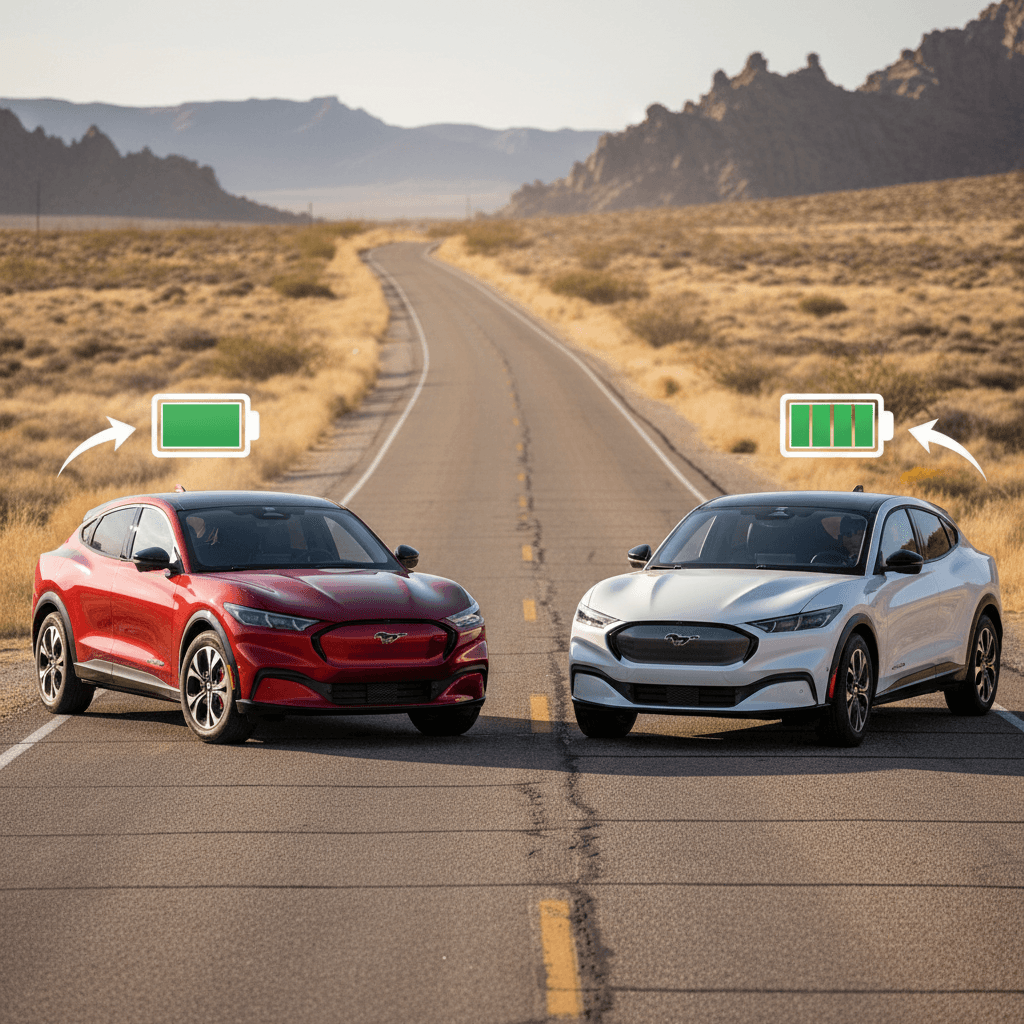
Typical charging experience for Standard vs Extended Range
At home on Level 2, both batteries behave a lot like filling different gas tanks from the same pump: the bigger one simply takes more energy, but over an 8–10 hour night it doesn’t matter much. Both SR and ER Mach-Es can comfortably go from low charge to “ready for tomorrow” while you sleep.
Fast-charging differences you’ll notice on the road
Standard Range tops up a bit faster
Because there’s less capacity to refill and the peak charge rate is slightly lower, a 10–80% session in a Standard Range Mach-E can be a few minutes quicker than the same percentage in an Extended Range car.
Extended Range stops are fewer, not always longer
On a long trip, you may skip one or two stops entirely in the Extended Range car. Even if each stop is a couple of minutes longer, the total trip time often comes out similar, or better, than in a Standard Range Mach-E.
Both batteries now plug into Tesla Superchargers
With Ford’s NACS adapter and software updates, Mach-E drivers can use many Tesla Superchargers in addition to CCS public fast chargers, making it easier to keep either battery topped up on the road.
Charging curve matters more than peak kW
Ford has improved charging curves in newer Mach-E model years so the car holds higher power deeper into the session. When you shop used, look for later years or cars that have received the latest software updates.
Don’t plan around 0–100%
Price, incentives and used-Mach-E value
On the new-car side, Extended Range Mach-E trims typically carry a several-thousand-dollar premium over comparable Standard Range versions. On the used market, that gap can be smaller in dollars but bigger in impact, because the battery choice influences both what the first owner paid and what the second owner actually needs.
How battery choice affects your wallet
Upfront price is just one part of the story
Purchase price
Extended Range cars usually list higher, especially in popular trims like Premium and GT. But when you calculate cost per mile of usable range, ER often makes financial sense if you drive a lot or plan to keep the car longer.
Resale value
In the growing used-EV market, shoppers gravitate toward the bigger battery. Extended Range Mach-Es can be easier to resell later and may lose a smaller percentage of their value over time.
Operating costs
Electricity cost per mile is similar between SR and ER. The bigger savings come from time saved, fewer public charging stops and less jockeying for a fast charger because you can be pickier about when you plug in.
Use total cost of ownership, not just sticker price
Which Mach-E battery is right for your driving?
Match your life to the right Mach-E battery
Daily commuter with good home charging
Round-trip commute under 60 miles, plus errands.
Reliable overnight Level 2 charging at home or work.
Occasional weekend trips under 150 miles.
Primary priorities: upfront price, comfort, tech.
<strong>Best fit:</strong> Standard Range Mach-E, especially Select or Premium RWD.
Road-trip family or single-car household
Regular 150–250 mile days or multi-state road trips.
You don’t want to plan your life around chargers.
Winters where heating and weather cut into range.
Primary priorities: flexibility and fewer charging stops.
<strong>Best fit:</strong> Extended Range Mach-E, ideally Premium RWD or eAWD.
Performance enthusiast
You care as much about 0–60 times as range.
You’re cross-shopping sports sedans and hot hatches.
You’re fine trading some efficiency for fun.
Primary priorities: acceleration, grip, and style.
<strong>Best fit:</strong> Extended Range GT or Rally with eAWD.
Budget-conscious used EV buyer
You want into EV ownership at the best possible price.
Most driving is local, with rare long trips.
You’re flexible about charging on the few big drives you do.
Primary priorities: value and reliability.
<strong>Best fit:</strong> Well-priced Standard Range Mach-E with documented battery health.
Think in “days of driving,” not miles
Special tips for used Mustang Mach-E shoppers
In the used market, the Standard Range vs Extended Range question gets tangled up with model years, software updates, and how the first owner treated the battery. This is where a structured inspection, and real battery data, matters more than the original window sticker.
What to check before you buy a used Mach-E
1. Confirm which battery you’re actually getting
Don’t rely on vague ad language like “long-range.” Verify the trim and battery: look for Standard Range (~73 kWh) or Extended Range (~88–91 kWh) in the build sheet, window sticker, or service records.
2. Look at real battery health, not just range guess-o-meters
Dashboard range estimates can be misleading. A professional <strong>battery health report</strong>, like the Recharged Score, uses diagnostics to measure pack condition and capacity so you know how much of that original kWh you still have.
3. Match battery size to your charging reality
If you’ll be relying on public DC fast charging more than home Level 2, Extended Range is usually worth it. If you’ll charge at home 95% of the time and rarely leave town, a healthy Standard Range pack can be a smart value play.
4. Pay attention to model-year updates
Later model years benefit from improved charging curves, software, and sometimes range tweaks. A slightly newer Standard Range car with better software can be easier to live with than an older Extended Range that’s been heavily fast-charged.
5. Test-drive your real-world route if you can
If possible, replicate a typical commute or highway run in the car you’re considering. Pay attention to consumption (mi/kWh), how quickly the percentage drops, and whether the car feels like it will comfortably cover your daily life.
6. Factor in financing and trade-in options
If the Extended Range car stretches your budget, explore financing and trade-in tools. A structured deal with good terms can make the more capable battery affordable without overextending your monthly payment.
How Recharged can help
Ford Mustang Mach-E Standard Range vs Extended: FAQ
Frequently asked questions
Bottom line: how to choose with confidence
Choosing between the Ford Mustang Mach-E Standard Range and Extended Range isn’t about bragging rights, it’s about how you actually live with your car. Standard Range shines for local driving, tight budgets, and drivers who plug in every night without fail. Extended Range rewards you with flexibility: fewer charging stops, more comfortable buffers in bad weather, and access to the quickest GT and Rally trims.
If you’re shopping used, don’t let the decision come down to a hunch. Compare real-world range needs against verified battery health data, financing options, and your long-term plans. Recharged was built precisely for this kind of decision: transparent reports, expert EV guidance, and a curated selection of used electric vehicles, including Standard and Extended Range Mustang Mach-E models ready for their next chapter.