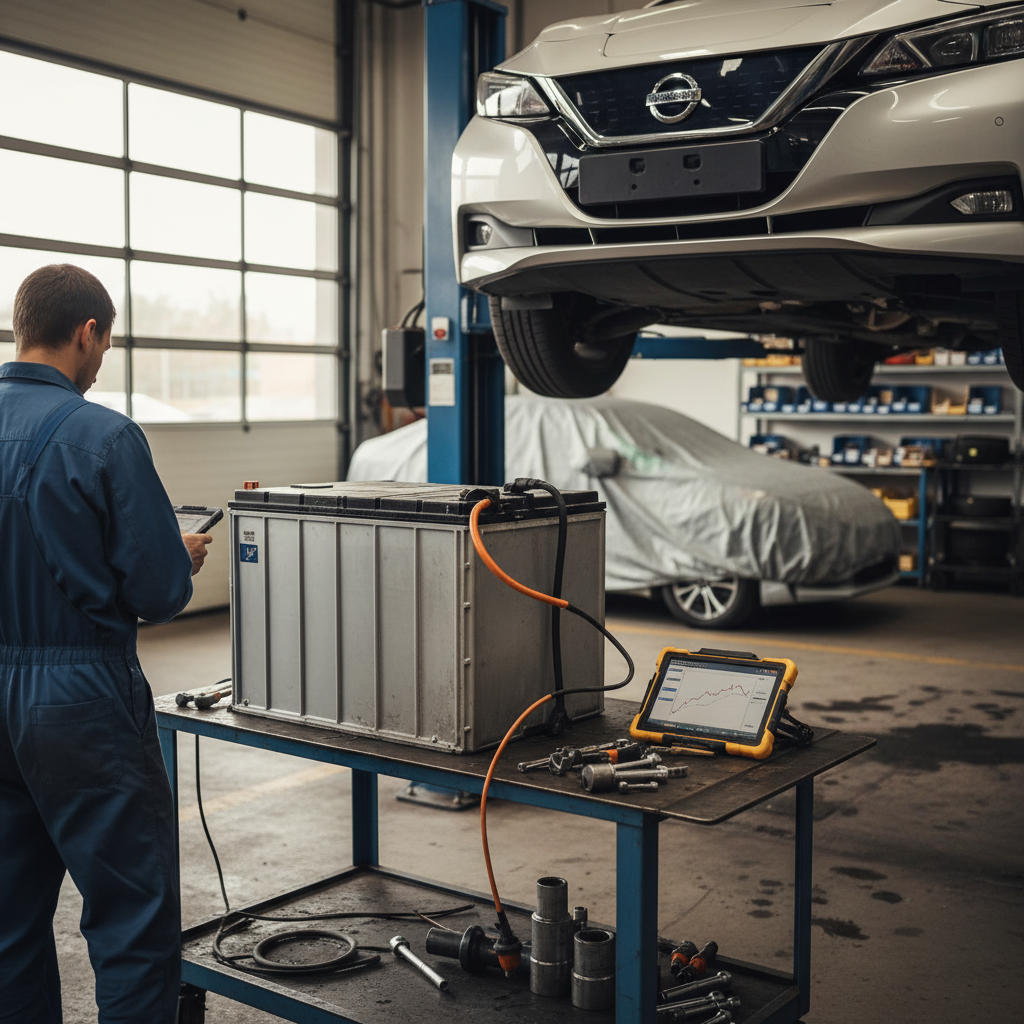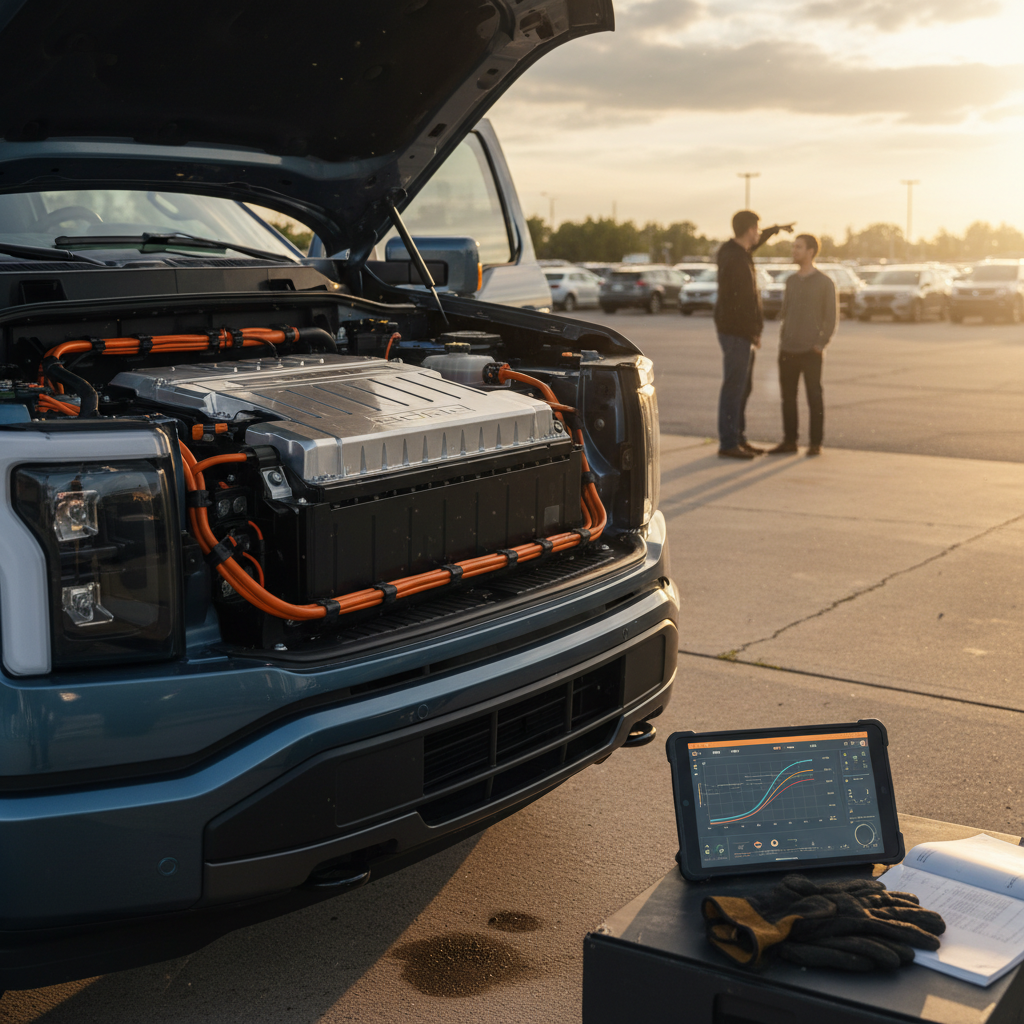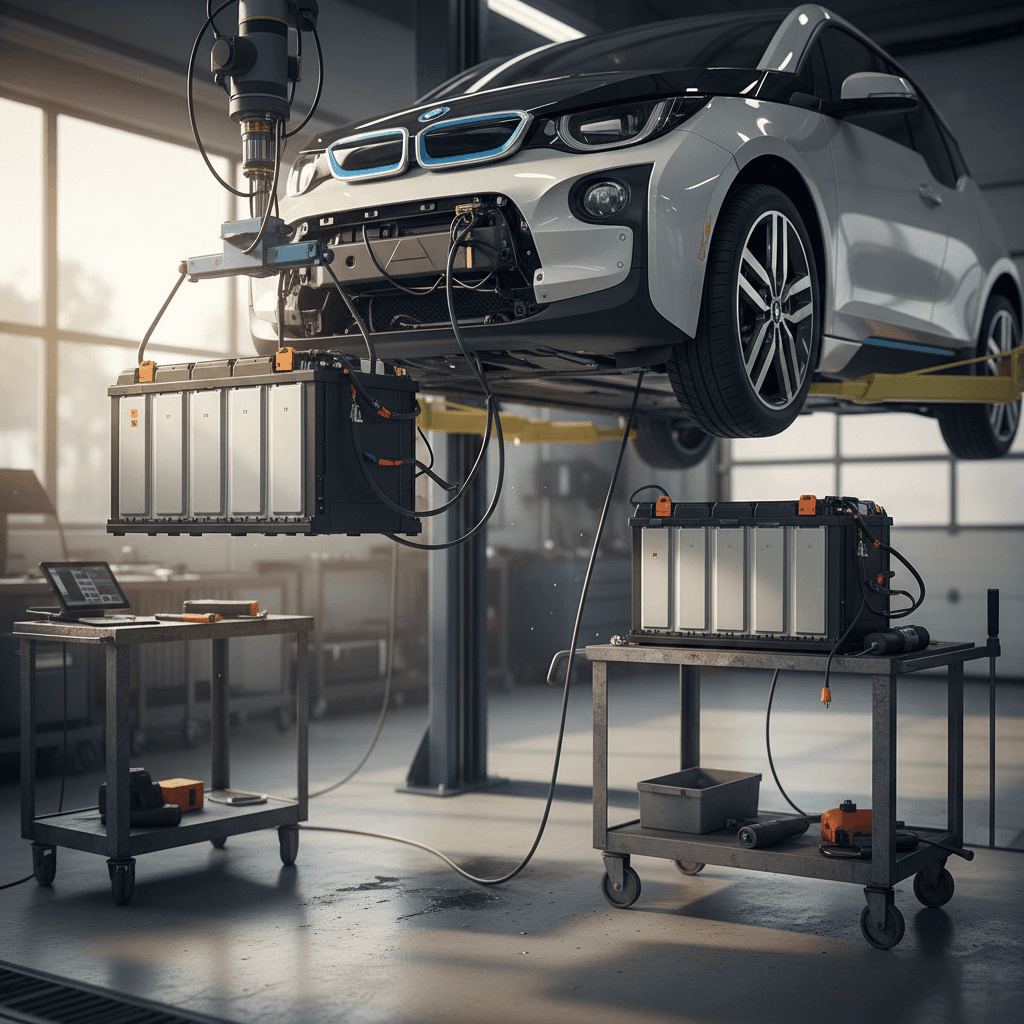
If you own, or are thinking about buying, a Ford F‑150 Lightning, the question eventually pops up: what happens if the battery needs to be replaced, and how much will it cost? With a massive pack under the floor, Ford F‑150 Lightning battery replacement costs sit at the top end of the EV world, but most trucks will never see a full pack swap if they’re driven and maintained normally.
Key takeaway on Lightning battery cost
Overview: What a Ford F‑150 Lightning battery really costs
Let’s set expectations. A Ford F‑150 Lightning isn’t a small hatchback, it’s an electric pickup with a battery roughly the size of two compact EV packs. That has two direct consequences:
- The battery is by far the most expensive component in the truck.
- Replacement costs scale with pack size, so electric pickups sit at the top of the EV battery cost chart.
- Labor is more involved than on a compact EV because the pack is larger and heavier.
Across EVs in general, recent 2024–2025 data puts typical full battery replacements (parts + labor) in the $5,000–$20,000 range, with electric pickups like the F‑150 Lightning and Rivian R1T at the top, in the $15,000–$25,000+ band for out‑of‑warranty pack swaps. That’s the context you should keep in mind when you see individual Lightning quotes.
F‑150 Lightning battery by the numbers
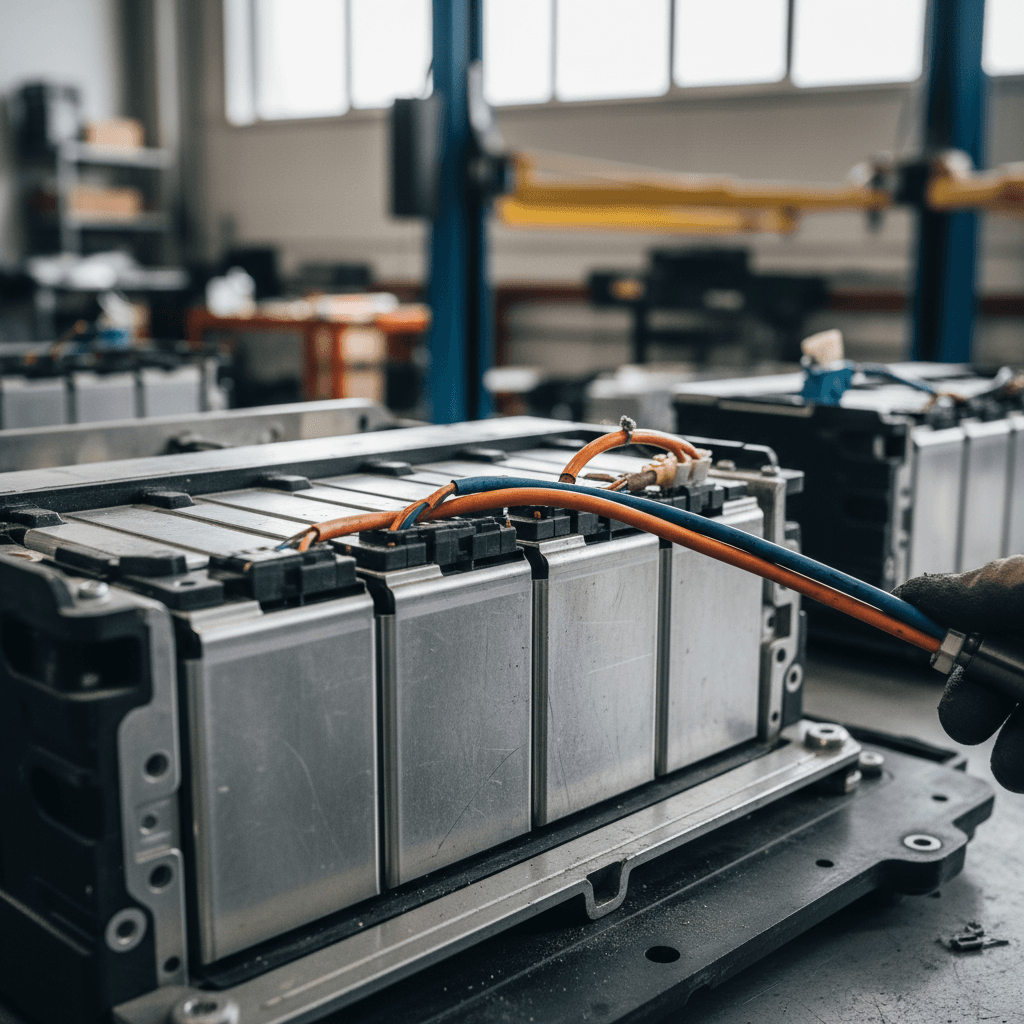
How big is the F‑150 Lightning battery?
Battery replacement cost starts with one simple fact: how many kilowatt‑hours are you buying? The F‑150 Lightning launched with two main pack sizes:
Ford F‑150 Lightning battery pack options
Approximate usable and gross pack sizes for common Lightning configurations.
| Trim / Option | Approx. usable capacity | Approx. total capacity | Real‑world range (EPA, unladen) |
|---|---|---|---|
| Standard‑range | ≈98 kWh | ≈110 kWh | Around 230–240 miles |
| Extended‑range | ≈131 kWh | ≈135+ kWh | Around 300–320 miles (varies by trim) |
Bigger packs are great for towing and range, but they drive replacement costs up because you’re buying more cells.
Even the smaller Lightning pack is larger than the pack in a Tesla Model 3 or Hyundai Ioniq 5. The extended‑range battery belongs in the same ballpark as the biggest luxury EVs on sale, which is why full pack replacement numbers come out looking more like an engine + transmission swap in a luxury truck than a simple “battery change.”
Ford F‑150 Lightning battery replacement cost in 2025–2026
Because the Lightning fleet is still relatively new, and many packs are still under warranty, real‑world invoices are limited. But between OEM parts listings, dealer quotes, and broader EV battery pricing, there’s enough signal to build realistic ranges for Ford F‑150 Lightning battery replacement cost if you were paying out of pocket today.
Estimated F‑150 Lightning battery replacement costs (2025–2026)
Ballpark out‑of‑warranty retail pricing for a full high‑voltage pack replacement on an F‑150 Lightning, including labor.
| Scenario | What’s being replaced | Estimated total cost (parts + labor) | Notes |
|---|---|---|---|
| Standard‑range pack, OEM new | Complete high‑voltage pack | $15,000–$20,000+ | Lower parts cost than extended‑range, but still a large pack. |
| Extended‑range pack, OEM new | Complete high‑voltage pack | $18,000–$25,000+ | Largest battery; long‑range Lightning quotes tend to fall here or higher. |
| Refurbished/used pack | Complete pack from recycler or remanufacturer | $12,000–$18,000+ | Availability is still limited; pricing depends heavily on mileage and state of health. |
| Module‑level repair | One or several internal modules | $3,000–$10,000+ | Only possible if damage is localized and the shop has OEM or high‑quality modules. |
These are approximate ranges, not quotes. Always price your specific VIN and ZIP code.
One data point that surprised a lot of owners: Ford’s own parts catalog shows extended‑range Lightning battery assemblies with MSRPs around $49,000 for certain part numbers, with discounted online pricing still in the mid‑$40,000s. That’s the raw parts price for a brand‑new pack, before labor, shop fees, and taxes. Dealers and third‑party repair shops typically quote well below those MSRPs for warranty work or negotiated retail jobs, which is how we get to the more realistic $18,000–$25,000+ range for complete, customer‑pay replacements.
Sticker shock vs. real‑world invoices
Parts vs. labor: Why the quotes are so high
1. Parts: you’re buying a whole second truck’s worth of cells
The F‑150 Lightning’s high‑voltage pack is a dense, liquid‑cooled structure containing thousands of cells plus sensors, contactors, and structural hardware. Even at falling battery prices, that much hardware isn’t cheap. For large packs in the 100–130+ kWh range, the pack itself often accounts for 80–90% of the total replacement cost.
That’s why OEM list prices can sit near $50,000 for an extended‑range assembly. Dealers and independent shops may source packs at lower internal costs, but the fundamental economics, lots of cells, lots of materials, don’t change.
2. Labor: heavy, high‑voltage, and specialized
Dropping a Lightning battery pack is not a quick job. Technicians have to:
- Safely de‑energize the high‑voltage system.
- Support and lower a pack that weighs close to a small car’s entire powertrain.
- Transfer cooling lines, shields, and sensors.
- Install, torque, and re‑seal the pack, then re‑commission the truck’s software.
Across EVs, labor for full battery replacements typically adds $1,000–$3,000 to the bill, and a big, body‑on‑frame pickup like the Lightning tends to be on the higher end of that spectrum.
Battery work is not a DIY project
Warranty coverage: When the Lightning battery is Ford’s problem
Here’s the good news: for most current owners, Ford, not you, is on the hook if the Lightning battery fails early or loses too much capacity.
F‑150 Lightning battery warranty at a glance
8 years / 100,000 miles EV component coverage
All U.S.‑market F‑150 Lightnings carry an <strong>8‑year/100,000‑mile electric vehicle component warranty</strong> on the high‑voltage battery and related hardware. That coverage transfers to subsequent owners, which is crucial for used‑truck shoppers.
Capacity retention guarantee
Ford also warrants that the Lightning battery will retain at least <strong>70% of its original capacity</strong> during that 8‑year/100,000‑mile period. If it falls below that threshold under normal use, Ford is obligated to repair or replace it under warranty.
What’s typically covered
Defects in materials or workmanship, internal failures, and abnormal capacity loss are usually covered. Physical damage (like crash damage or flooding) and abuse (ignored warnings, unauthorized modifications) are not.
You still pay for wear items and diagnostics outside warranty
Software updates, general diagnostics, and ancillary parts that fail outside warranty may still cost you money even if the main battery is healthy, so it’s worth understanding where the coverage lines are.
Used truck advantage
Repair options: Full pack vs. module‑level fixes
Not every Lightning battery issue means a full $20,000+ replacement. High‑voltage packs are modular, and in some cases technicians can replace individual modules or sub‑assemblies rather than the entire pack.
Two main repair paths for Lightning battery issues
Your options depend heavily on what actually failed and what Ford or a third‑party shop is willing to service.
Full pack replacement
When it’s used: Catastrophic pack failure, severe internal damage, or warranty replacements where Ford authorizes a complete assembly swap.
- Highest cost but simplest from a diagnostic standpoint.
- Often used in early‑life warranty failures.
- Truck ends up with a basically new battery pack.
Module‑level repair or refurb
When it’s used: One or a few modules show faults or reduced capacity, but the rest of the pack is healthy.
- Can dramatically reduce cost compared with a full pack.
- Requires access to compatible replacement modules and specialized teardown facilities.
- More common at independent EV specialists and recyclers as the used market matures.
Ask for a detailed battery report before agreeing to a full replacement
Used F‑150 Lightning? How to avoid a surprise battery bill
The much bigger story for most shoppers isn’t “How do I pay for a Lightning battery replacement?”, it’s “How do I avoid ever needing one out of warranty?” If you’re considering a used F‑150 Lightning, a bit of due diligence goes a long way.
Used F‑150 Lightning battery checklist
1. Verify remaining battery warranty
Match the truck’s in‑service date and mileage to Ford’s 8‑year/100,000‑mile battery coverage. A 2023 Lightning with 30,000 miles still has a lot of runway left; a high‑mileage fleet truck may be much closer to the edge.
2. Get a real battery health report, not just a range guess
Dashboard range estimates are noisy. Look for a <strong>measured state‑of‑health (SoH)</strong> report that estimates remaining usable capacity relative to new. Recharged’s trucks, for example, include a Recharged Score Report with verified battery health, not just a road‑test impression.
3. Check usage history, towing, fast‑charging, climate
Heavy towing, frequent DC fast charging, and extreme heat can accelerate degradation. None of these are dealbreakers by themselves, but they matter when you’re deciding what you’re willing to pay and how long you plan to keep the truck.
4. Look for warnings, reduced power, or charging quirks
Any history of high‑voltage warnings, sudden loss of power, or DC fast‑charging problems should trigger deeper diagnostics before you commit. These can be early clues to pack or cooling issues.
5. Price in long‑term risk
If you’re buying a Lightning that’s close to the end of its battery warranty, adjust your budget accordingly. A lower purchase price can offset the small but real chance you’ll face a major battery repair later on.
How Recharged helps de‑risk used Lightning ownership
How Recharged evaluates F‑150 Lightning battery health
For a truck as battery‑intensive as the Lightning, you want more than a casual once‑over. At Recharged, battery health isn’t an afterthought, it’s the starting point for valuing and selling used EVs.
Inside a Recharged battery health evaluation
What happens before a used Lightning ever gets listed on Recharged.com.
Deep‑dive diagnostics
Technicians pull detailed battery and charging data from the truck’s onboard systems, looking at state of health, cell balance, temperature history, and error codes instead of relying on a single range number.
Capacity & degradation modeling
That data is compared against known patterns for similar Lightning packs, age, mileage, climate, and usage, to estimate how much capacity has been lost and how quickly.
Pricing tied to real battery health
The Recharged Score blends battery health, cosmetic condition, and market trends into a fair price recommendation. That way, shoppers can see how a particular Lightning’s battery health is reflected in the asking price.
Thinking of selling your Lightning?
Cost comparison: Lightning vs. other EV battery replacements
It’s easy to fixate on the Lightning’s price tag in isolation, but it helps to zoom out. In 2025, electric pickups as a group sit at the top of the EV battery replacement cost ladder simply because their packs are huge.
Where the F‑150 Lightning sits in the EV battery cost spectrum
Approximate 2025 full pack replacement ranges (parts + labor) for popular EV segments.
| Segment / Example models | Typical pack size | Typical replacement cost (pack + labor) | How Lightning compares |
|---|---|---|---|
| Compact EVs (Nissan Leaf, Chevy Bolt) | 30–65 kWh | $5,000–$8,000 | Lightning packs are roughly 2x–3x larger, so costs are much higher. |
| Mid‑size EVs (Tesla Model 3/Y, Hyundai Ioniq 5) | 60–80 kWh | $8,000–$15,000 | Lightning costs are usually 1.5x+ these figures because of pack size. |
| Luxury EVs (Tesla Model S/X, BMW iX) | 90–110 kWh | $12,000–$20,000 | Extended‑range Lightning packs live in a similar or slightly higher band. |
| Electric pickups (F‑150 Lightning, Rivian R1T/R1S) | 100–135+ kWh | $15,000–$25,000+ | Lightning sits squarely in this top segment due to its large battery. |
Use this as a sanity check, if a quote for your Lightning comes in below the truck segment range, that’s a relative win.
Remember the total cost of ownership, not just the worst‑case repair
FAQ: Ford F‑150 Lightning battery replacement
Frequently asked questions about F‑150 Lightning battery costs
Bottom line: Should battery cost scare you away from a Lightning?
A Ford F‑150 Lightning battery is a big, expensive piece of hardware, that’s the honest part. If you ever had to pay for a full out‑of‑warranty replacement, you’d be looking at a $15,000–$25,000+ decision, which is enough to change whether a repair or replacement truck makes more sense.
But that’s only part of the story. The 8‑year/100,000‑mile battery warranty, the emerging ecosystem for refurbished packs, and the reality that most drivers will move on to another truck before a worst‑case failure all mean Lightning ownership isn’t the ticking time bomb some headlines suggest. As with any major vehicle purchase, the key is buying the right truck at the right stage of its life and making sure its price realistically reflects its battery health and remaining coverage.
If you’re weighing whether a used Ford F‑150 Lightning fits your budget and risk tolerance, platforms like Recharged exist specifically to make that decision simpler. A transparent Recharged Score Report, verified battery diagnostics, and expert EV support from first click to final delivery let you focus on how the truck fits your life, not just what a worst‑case battery bill might look like a decade down the road.