If you own a Ford F-150 Lightning, you’ve watched prices bounce around, new truck MSRPs cut, federal incentives changing, and used EV values repricing in real time. That makes it tricky to pin down your Ford F-150 Lightning trade in value when you’re ready to move into a different truck or EV.
Quick snapshot: what Lightnings are trading for
Why F-150 Lightning trade-in values are in the spotlight
The F-150 Lightning is still a relatively young product, launched for the 2022 model year and updated rapidly since. Ford has adjusted pricing several times and, for 2024–2026, cut MSRPs on key trims such as XLT/Flash/STX and Lariat. That’s good news for new buyers, but it compresses used values and makes trade-in math more complicated for current owners.
F-150 Lightning value and warranty at a glance
Layer in Ford’s evolving trim strategy, like the new STX replacing XLT for 2026, and a temporary pause in Lightning production to re-balance capacity, and you get a used market that’s still finding its footing. For you as a seller, that means the spread between a weak offer and a strong one can be much wider than on a typical gas F-150.
Why this matters to you
What actually determines F-150 Lightning trade-in value
Every dealer or marketplace will plug your VIN into software, but there’s more going on than just a price from a book. Your Ford F-150 Lightning trade in value typically comes from six main buckets:
Six core factors that drive your Lightning’s trade-in price
1. Model year & trim
2. Mileage & usage
3. Battery health
4. Condition & history
5. Local demand
6. New-truck pricing & incentives
A strong offer reflects all six, not just the mileage and a generic “good” or “fair” box on a form. That’s why you’ll often see a gap between instant quote tools and what a specialist EV buyer will pay after reviewing battery data and options in detail.
Typical trade-in price ranges by year and trim
Exact numbers shift weekly, but you can still sanity-check the ballpark of your Ford F-150 Lightning trade in value before you walk into a store. Below is a simplified look at where many trucks land in early 2025, assuming average mileage and clean condition. Your VIN, options, and zip code can move you above or below these bands.
Illustrative Ford F-150 Lightning trade-in value ranges (early 2025)
These are directional examples only, based on national pricing data for average mileage and clean condition. Local markets, options, and battery health can move values materially.
| Model year | Typical trims | Approx. mileage | Illustrative trade-in range |
|---|---|---|---|
| 2025 | Flash, Lariat, Platinum | 5,000–15,000 mi | $50,000–$68,000 |
| 2024 | Pro, XLT/Flash, Lariat | 10,000–25,000 mi | $44,000–$62,000 |
| 2023 | Pro, XLT, Lariat, Platinum | 20,000–40,000 mi | $38,000–$55,000 |
| 2022 | Pro, XLT, Lariat, Platinum | 30,000–60,000+ mi | $32,000–$48,000 |
Use this table as a starting point, not a final number, highly optioned or low-mileage trucks can price higher.
Don’t anchor on a single number
How EV-specific factors impact your Ford Lightning offer
Trade-in conversations around gas F-150s usually center on mileage, accidents, and trim level. With the Lightning, there are several EV-specific levers that can quietly move your number up or down.
- Battery warranty status. Ford’s EV component warranty runs 8 years or 100,000 miles and promises the pack will retain at least 70% of its original capacity over that period. Trucks comfortably inside that window with healthy diagnostics are easier to resell.
- Fast-charging history. A truck that spent most of its life on DC fast chargers and heavy towing may be treated differently than one mostly home-charged at Level 2, especially if there’s limited service history.
- Software & feature set. Later Lightnings gained heat pump systems, improved range estimates, and interface updates. Those upgrades can make a 2024–2025 truck feel meaningfully more modern than an early build.
- Towing and payload use. Signs of heavy commercial use, bed wear, hitch wear, suspension fatigue, can push offers down if buyers expect harder previous duty cycles.
- Charging hardware. OEM charge cords, installed home chargers, and adapter bundles don’t always add one-to-one value, but a complete package is easier to retail and can improve your net proceeds.
Get your battery health documented
Depreciation: what to expect over 5 years
EV trucks carry a lot of technology up front, so dollar depreciation can feel steep even when percentage retention is competitive. Independent residual-value forecasts suggest the Ford F-150 Lightning may retain around 40–45% of its original MSRP after five years of typical use, roughly in line with or slightly better than the broader EV market, but below the best-performing gas pickups.
What that looks like in real money
If your 2024 Lightning stickered at $75,000 and follows a 43% five-year retention curve, the truck might be worth roughly $32,000 after five years in average condition. That’s more than a $40,000 drop from MSRP, even though the percentage is similar to other EVs.
Why trade-in values feel volatile
Ford’s mid-cycle price cuts and shifting incentives mean two owners who paid very different prices new can end up with similar trade-in values. In other words, what you originally paid doesn’t automatically translate into what your truck is worth today.
Lightning vs. other electric trucks
How dealers and marketplaces really price your Lightning
On the back end, nearly every appraiser is looking at three things at once: real-time auction data, retail listing trends, and risk. EV trucks are still a small but growing slice of the used market, so there’s less historical data than with gas half-tons. That uncertainty can show up as conservative offers, unless the buyer specializes in used EVs.
Inside a typical F-150 Lightning trade appraisal
What happens to your VIN after you hand over the keys for an evaluation
1. Book & auction checks
2. Condition & battery review
3. Risk and exit strategy
“For a lot of dealers, a used Lightning is still a homework assignment. The ones that understand EV trucks best are usually the ones willing to write the strongest checks.”
7 steps to maximize your F-150 Lightning trade-in value
You can’t change the market, but you can control how your truck shows up when it’s time to get numbers. Here’s a practical checklist to protect your Ford F-150 Lightning trade in value.
Pre-trade checklist for Ford F-150 Lightning owners
1. Pull your service and charging history
Gather invoices for warranty work, recalls, tire rotations, and any software or hardware updates. If you’ve mostly charged at home with Level 2, mention it, moderate fast-charging use can reassure EV-savvy buyers.
2. Get a battery health report
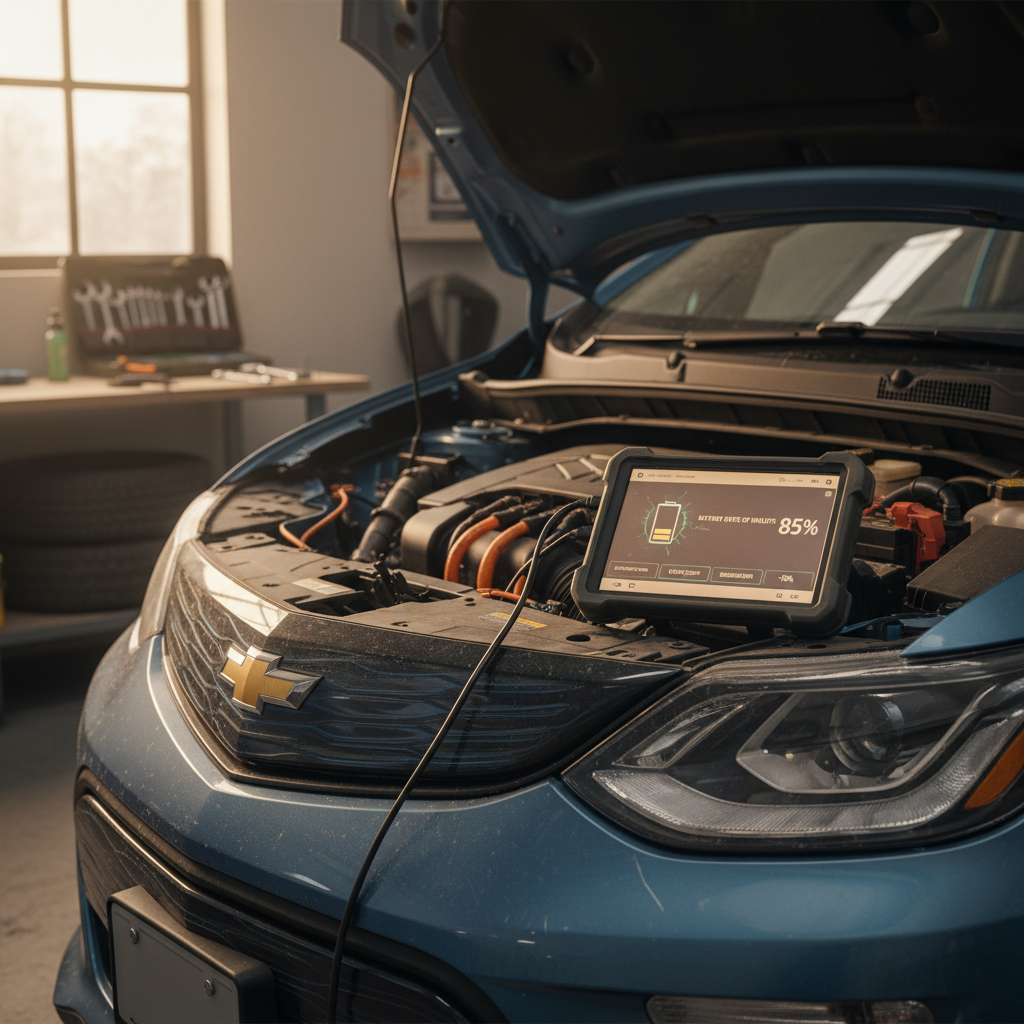
Request diagnostics from a Ford dealer or EV specialist, or use a third-party tool if you’re comfortable. Having documentation that your pack is healthy and within expected degradation goes a long way.
3. Fix inexpensive cosmetic issues
Touch up curb rash, repair small windshield chips, and address obvious interior stains. Hundreds of dollars spent smartly can support thousands more in perceived value, especially on a premium trim.
4. Remove clutter and personal accessories
Clear the bed, cab, and frunk of personal items and heavy aftermarket add-ons that don’t clearly add value. A clean, neutral truck photographs and appraises better.
5. Reinstall original equipment where possible
If you swapped wheels, suspension, or lighting, consider reinstalling the OEM parts that typical buyers prefer. Keep tasteful, reversible upgrades with clear documentation.
6. Time your trade around seasonality
In many markets, EV interest and truck demand both rise in spring and early summer. If you have flexibility, avoid trading in the dead of winter unless you must.
7. Get more than one offer
Compare at least one instant offer, one local dealer bid, and a specialist EV buyer or marketplace. The spread between the low and high number is often your negotiation room.
Leverage your strongest metric
Using your F-150 Lightning as a trade at Recharged
Because Recharged focuses specifically on used EVs, including electric trucks, we look at your Ford F-150 Lightning differently than a generalist dealer whose main plan is to send it to auction.
How the process works
- Share your VIN, photos, and basic condition details online.
- We review real-time EV market data plus your specific options and mileage.
- Our team runs Recharged Score diagnostics to understand battery health and overall vehicle condition.
- You receive a transparent offer that can be used as a trade-in toward another EV or as a straight sale.
Why Lightning owners come to Recharged
- EV-specific expertise instead of generic book values.
- Battery health verified and reflected in our pricing.
- Financing and trade support if you’re moving into another EV, including used EV trucks and SUVs.
- Nationwide, digital experience plus our Experience Center in Richmond, VA if you prefer in-person help.
Whether you’re trading your Lightning toward another EV on Recharged or simply taking an instant offer, the goal is the same: a fair, data-backed number that reflects the real condition of your truck, not just a generic depreciation curve.
When to trade in vs. sell your Lightning privately
With a relatively high-value vehicle like the F-150 Lightning, it’s natural to wonder if you should chase every last dollar with a private sale. The right answer depends on your risk tolerance, timing, and comfort level with EV-savvy buyers.
Trading in your Lightning
- Pros: Fast, simple, and can reduce sales tax on your next vehicle in many states when the trade value is deducted from the purchase price.
- Cons: You may leave some money on the table versus the absolute top-dollar private-sale scenario.
- Best for: Owners prioritizing convenience, tax efficiency, and a predictable timeline.
Selling privately
- Pros: Potential to net more, especially for rare trims or exceptionally clean, low-mileage trucks.
- Cons: More time, test drives, payment risk, and the need to educate buyers about EV trucks and charging.
- Best for: Owners comfortable marketing the truck themselves and managing buyer questions about EV ownership.
Watch your tax position
Common mistakes that cost Lightning sellers thousands
Even savvy owners can unintentionally depress their Ford F-150 Lightning trade in value. Here are patterns that show up repeatedly in dealer and auction lanes.
- Showing up with an incomplete set of keys, charge cords, or manuals, forcing the buyer to discount for replacement costs and hassle.
- Ignoring minor but obvious reconditioning items, bald tires, chipped windshields, dashboard warning lights, that make the truck harder to retail and therefore worth less to a dealer.
- Accepting the first offer without shopping around, even when it’s clear that the buyer has limited EV experience or is openly nervous about battery risk.
- Letting negative equity snowball instead of exploring refinance, pre-qualification, or waiting a few months until you’re in a less upside‑down position.
- Over-personalizing the truck with niche wraps, lighting, or suspension changes that narrow the pool of retail buyers.
Don’t skip battery diagnostics
Ford F-150 Lightning trade-in FAQ
Frequently asked questions about F-150 Lightning trade-in value
The bottom line: your Ford F-150 Lightning trade in value isn’t just a single number pulled from a generic guide. It’s a moving target shaped by battery health, evolving new-truck pricing, and how comfortable buyers are with EV trucks. By documenting your truck carefully, timing your move, and getting offers from EV-savvy buyers, not just the first store on your route, you can turn a volatile market into an opportunity and keep more of your Lightning’s value when you move into your next vehicle.