If you’re researching a Fisker Ocean safety rating and crash test results, you’re probably finding a mix of glowing Euro scores and worrying headlines about recalls and bankruptcy. This guide pulls those threads together so you can see what the lab tests say, what’s been happening in the real world, and what it all means if you’re considering a used Fisker Ocean today.
Quick safety snapshot
Fisker Ocean safety rating at a glance
Fisker Ocean safety highlights & red flags
On paper, the Fisker Ocean looks impressive: a 5‑star European rating and modern passive‑safety hardware. In practice, the story is more complicated. U.S. agencies have opened multiple investigations into critical issues like loss of power, rollaway, brake performance and door handles that can stick, and Fisker itself has gone through a Chapter 11 bankruptcy filing. When you look at safety, you need to weigh both the crash‑test scores and how the vehicle behaves day‑to‑day, and what future support will look like.
Who actually crash‑tested the Fisker Ocean?
Most of the public crash‑test data for the Fisker Ocean comes from Euro NCAP, the European New Car Assessment Programme. They test both active and passive safety: how well the structure protects occupants and pedestrians and how well driver‑assist features help you avoid a crash in the first place. That’s where the widely cited 5‑star rating comes from.
Euro NCAP (Europe)
- Independent, government‑backed program used across Europe.
- Scores cars on adult and child occupant protection, vulnerable road users, and safety assist tech.
- Uses its own test speeds and protocols that differ somewhat from U.S. tests.
NHTSA & IIHS (United States)
- NHTSA runs the 5‑Star Safety Ratings (front, side, rollover).
- IIHS focuses on crashworthiness and crash‑avoidance with ratings like Good, Acceptable, Marginal, Poor.
- As of early 2026, neither agency has published full crash ratings for the Fisker Ocean.
Don’t assume global ratings carry over
Euro NCAP crash test results for the Fisker Ocean
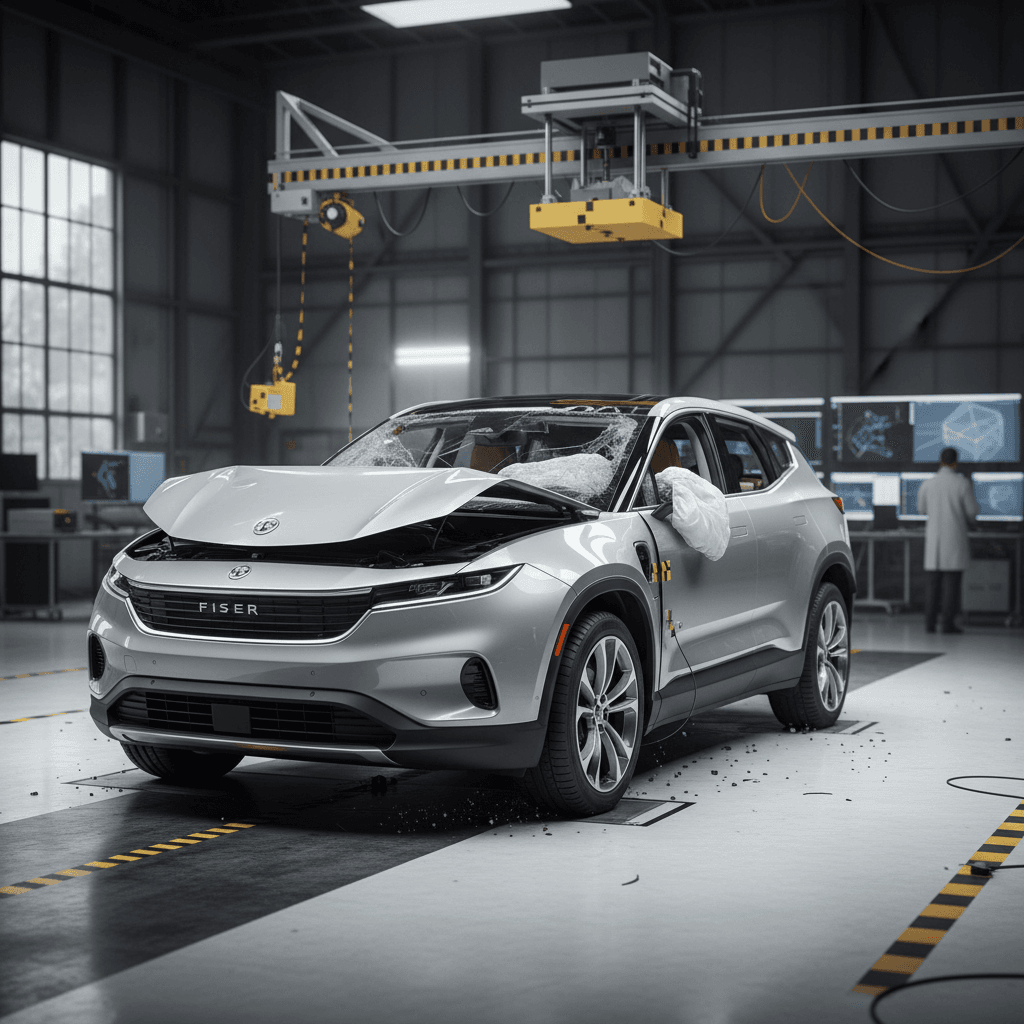
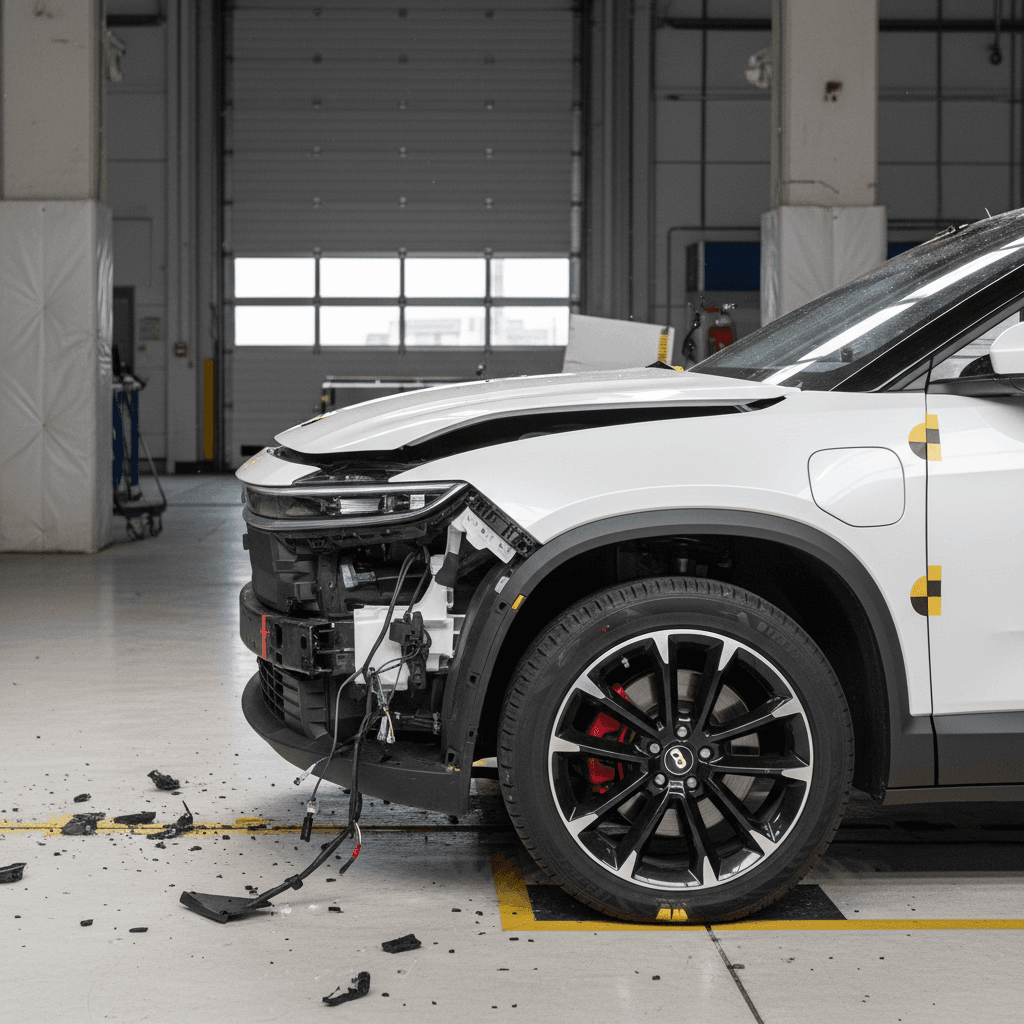
Euro NCAP tested the Fisker Ocean and awarded it a 5‑star overall safety rating, putting it in the top tier of vehicles they evaluate. The structure held up well in frontal and side impacts, and protection for child occupants was particularly strong. Those are the fundamentals you want to see in any family EV.
Fisker Ocean Euro NCAP scores (summary)
Approximate category scores from Euro NCAP’s evaluation of the Fisker Ocean SUV. Exact percentages can vary slightly by trim and equipment, but the pattern is clear: strong occupant protection and solid safety assist tech.
| Category | Fisker Ocean score | What it means |
|---|---|---|
| Adult Occupant Protection | High 80s–90% range | Strong structural performance and restraint systems for the driver and front passenger in frontal and side impacts. |
| Child Occupant Protection | Around 80–90% | Good protection for children in a variety of restraint types and seating positions. |
| Vulnerable Road Users | Mid‑70s–80% | Front‑end design and automatic braking offer reasonable protection for pedestrians and cyclists. |
| Safety Assist | High 70s–80% | Presence and performance of features like AEB, lane keeping and speed assistance score well against Euro benchmarks. |
Euro NCAP categories don’t map perfectly to U.S. NHTSA or IIHS ratings, but they provide a useful benchmark.
How to read these scores
Does the Fisker Ocean have NHTSA or IIHS ratings?
As of early 2026, there is no public 5‑Star Safety Rating from NHTSA and no crashworthiness rating in the IIHS database for the Fisker Ocean. That’s unusual for a vehicle that has been on U.S. roads since 2023, but it reflects how quickly Fisker’s business unraveled and how small its sales volume was compared with mainstream brands.
- NHTSA has opened multiple investigations into the 2023 Fisker Ocean for issues including rollaway, braking concerns and doors that may not open properly.
- Those investigations are separate from NHTSA’s full crash‑test program, which produces the familiar 5‑Star Safety Ratings that appear on new‑car window stickers.
- IIHS, a private crash‑testing organization funded by insurers, has not publicly rated the Fisker Ocean in its moderate overlap, small overlap, side, roof‑strength or head‑restraint tests.
Why U.S. ratings may never appear
Beyond stars: recalls, investigations and real‑world issues
Crash tests tell you how a car behaves in a single violent moment. For the Fisker Ocean, some of the bigger safety questions show up in daily driving: how reliably doors open, how the software behaves and whether critical systems work as intended over time. That’s where the Ocean’s record is more troubling.
Key safety‑related issues reported on the Fisker Ocean
These are the themes you should understand if you’re considering a used Ocean SUV.
Door handles & egress
Fisker recalled more than 12,000 Oceans globally for outer door handles that can stick, potentially making it hard or impossible to enter or exit the vehicle quickly in an emergency.
Rollaway complaints
NHTSA has investigated reports of the Ocean moving unexpectedly when parked, creating rollaway risk if the parking system doesn’t properly hold the vehicle.
Loss of power & braking
Owners have reported sudden loss of motive power, inconsistent brake feel and other software‑related glitches. Some issues were addressed by over‑the‑air updates, but not all vehicles are guaranteed to be updated now that the company is in bankruptcy.
Bankruptcy changes the risk calculus
Strong crash structure, shaky software: how that affects safety
The strange thing about the Fisker Ocean is that the hard stuff appears to be done well, the crash cage, airbags and basic occupant protection, while the “soft” layers of software and quality control have struggled. In modern EVs, those software layers control everything from brake‑by‑wire to door latches and power delivery. If they misbehave, you can end up in hazardous situations even if the vehicle would protect you well once a crash actually happens.
Where the Ocean looks solid
- 5‑star Euro NCAP rating suggests strong structural integrity.
- Good child‑occupant and side‑impact performance.
- Standard airbags and safety systems broadly comparable to rivals in its class.
Where owners have raised concerns
- Reports of power loss, rollaway and inconsistent braking.
- Door handles and latches that may not function reliably.
- Software updates slowed or paused as Fisker’s finances deteriorated.
How to balance the two
If you’re shopping used: Fisker Ocean safety checklist
Because Fisker has gone through bankruptcy and stopped production of the Ocean, any example you see on the used market is effectively an orphaned vehicle. That doesn’t automatically make it unsafe, but it does mean you should be far more rigorous about due diligence than you might be with a used Hyundai or Tesla.
Used Fisker Ocean safety due‑diligence checklist
1. Verify all recalls have been completed
Ask the seller for documentation showing that <strong>door handle, software and any other safety recalls</strong> have been performed. Because Fisker’s dealer network was still evolving, some vehicles may have slipped through the cracks.
2. Confirm current software version
Many early safety complaints were linked to buggy software. Have a qualified EV technician check that the vehicle is on the latest available version and that <strong>brake, powertrain and driver‑assist systems</strong> are behaving normally during a test drive.
3. Test every door, every time
Check all four exterior door handles and the interior releases repeatedly. In daily use, doors should <strong>open and close smoothly</strong> even after the vehicle has been sitting in heat, cold or rain. Any sticking or resistance is a red flag.
4. Park on an incline and check for movement
On a safe, lightly traveled road or lot, park facing uphill and downhill, engage Park and the parking brake, and <strong>see if the SUV stays put</strong>. You’re looking for any sign of rollaway or difficulty engaging Park.
5. Pull vehicle history and warranty details
Because Fisker has filed for bankruptcy, <strong>warranty coverage is uncertain at best</strong>. A vehicle history report can show prior repairs, accidents and title issues. Ask whether any third‑party or extended coverage now applies.
6. Get an independent EV‑savvy inspection
Before you sign, have a technician who understands EVs, and ideally the Ocean platform, inspect the vehicle. At Recharged, every used EV goes through a comprehensive inspection and a <strong>Recharged Score battery health report</strong> so you’re not guessing.
How Recharged can help
Ready to find your next EV?
Browse VehiclesSafer alternatives to the Fisker Ocean
If the Fisker Ocean’s combination of strong crash tests and shaky real‑world record has you hesitating, you’re not alone. The good news is that there are plenty of compact and midsize electric SUVs with well‑documented U.S. safety ratings and manufacturers that are very much alive and investing heavily in software updates and recall support.
Electric SUVs with stronger documented safety records
Examples of EV SUVs that pair solid crash performance with better‑established support networks. Always check the latest ratings directly at NHTSA.gov and IIHS.org, as scores can change with new tests and updates.
| Model | Key safety credentials (U.S.) | Why shoppers consider it |
|---|---|---|
| Tesla Model Y | Strong NHTSA 5‑Star rating; IIHS Top Safety Pick or better in many years | Proven crash performance, extensive software update pipeline and large service network. |
| Hyundai Ioniq 5 | Good IIHS ratings; robust active safety suite | Modern EV platform with good crash scores and a mainstream brand backing long‑term support. |
| Kia EV6 | Good IIHS and NHTSA performance, depending on year | Sporty alternative with solid safety tech and more traditional dealer/service network. |
| Volkswagen ID.4 | Tested by both NHTSA and IIHS with competitive scores | Compact SUV format similar to the Ocean, backed by a major global automaker. |
This isn’t a complete list, but it illustrates the kind of safety track record you can find in the used EV market today.
How to compare safety across models
Fisker Ocean safety rating FAQ
Fisker Ocean safety rating & crash test FAQ
Bottom line on Fisker Ocean safety
The Fisker Ocean is a reminder that modern vehicle safety is about more than surviving a crash. On one side of the ledger, it delivers a 5‑star Euro NCAP rating and solid occupant protection. On the other, it has racked up serious investigations, recalls and a bankruptcy that clouds the future of parts and software support.
If you’re captivated by the Ocean’s design or pricing on the used market, go in with clear eyes: insist on thorough recall documentation, an independent EV inspection and an extended road test that stresses brakes, doors and driver‑assist tech. For many shoppers, especially families who value predictable support and transparent ratings, a used EV SUV from a healthier brand will be the safer long‑term bet.
At Recharged, our job is to help you make that call with data, not guesswork. Whether you ultimately choose an Ocean or a rival EV, lean on verified battery health, inspection reports and clear safety histories so that the SUV you bring home is one you can trust.