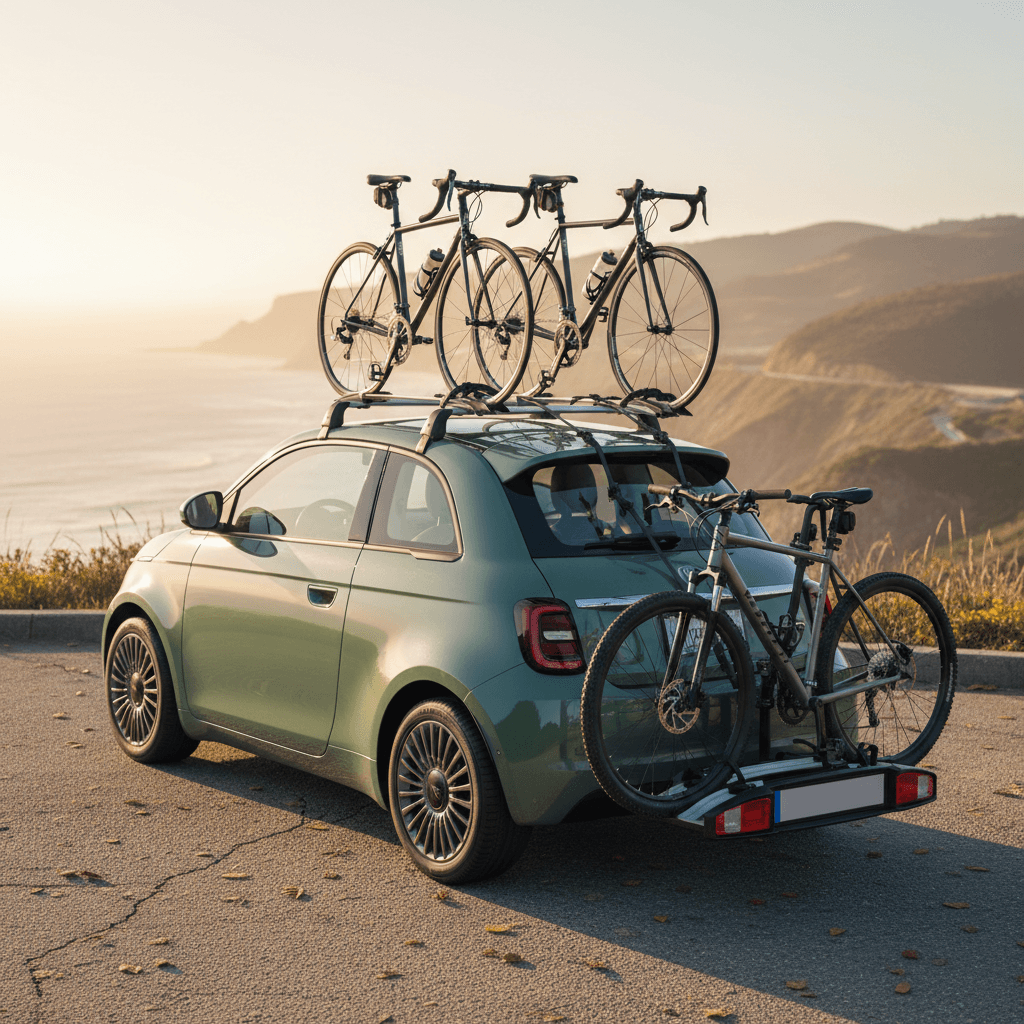
You buy a tiny, charming Fiat 500e to sip electrons and thread city streets, not to play pickup truck. And then biking season rolls around, and you realize the car is about the size of your bike. The good news: there are solid Fiat 500e bike rack options, hitch, trunk, and roof, if you understand the quirks of this very small EV.
Two different Fiat 500e generations
Fiat 500e bike rack overview
The constraints
- Short, curved hatch makes some trunk racks awkward.
- Limited roof length and low roof load ratings narrow roof options.
- No official towing capacity on many 500e variants, even though aftermarket hitches exist.
- Low ride height means any hitch rack can scrape on steep driveways if you’re careless.
The realistic options
- Hitch-mounted platform rack – the cleanest long‑term solution on the earlier 500e, and emerging options for the new 500e.
- Trunk / hatch strap rack – cheapest upfront, finicky to live with.
- Roof rack + bike trays – works, but loading bikes onto a tall roof over a tiny wheelbase is… a workout.
- Bike inside the car – front wheel off, seat down; not glamorous, surprisingly practical.
Quick recommendation
Step 1: Which Fiat 500e do you have?
Fiat 500e generations and rack implications
Your bike rack options depend heavily on which generation of 500e you own.
| Model / years (U.S.) | Body style | Hitch options | Best rack types | Notes |
|---|---|---|---|---|
| 2013–2019 Fiat 500e | 3‑door hatch | Widely available Class 1 aftermarket hitches (1¼") | Hitch platform rack; some trunk racks; some universal roof systems | Based on 2007–2019 Fiat 500; most real‑world bike‑rack experience exists on this car. |
| 2024+ Fiat 500e | 3‑door hatch (new platform) | Limited aftermarket hitches; often “bike rack or cargo carrier only” ratings | Lightweight hitch rack where allowed; careful trunk rack; selected roof systems | Check owner’s manual and local laws; Fiat and Mopar do not always endorse towing or tow bars. |
Always confirm hitch fitment and load ratings for your exact model year before buying anything.
Check the badge, check the book
Hitch-mounted bike racks for the Fiat 500e
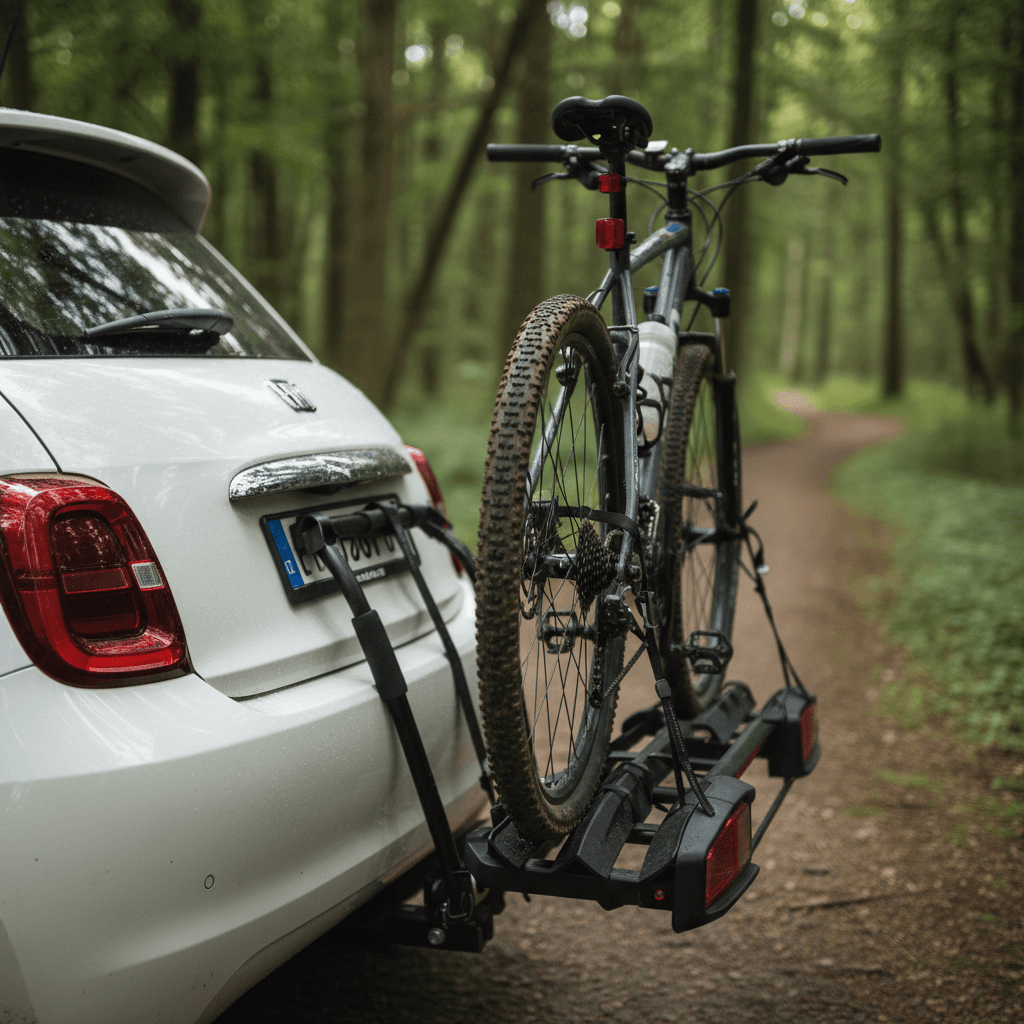
On a small hatchback, a hitch-mounted platform rack is the gold standard: stable, easy to load, and it keeps metal-on-paint contact to a minimum. With the original 2013–2019 Fiat 500e, owners have been installing Class 1 hitches from brands like Curt, Draw‑Tite, and similar, then running lightweight two‑bike platforms from Yakima, Thule, and others.
Typical hitch-bike-rack specs for a Fiat 500e
Hitch rack types that work on a Fiat 500e
Think light, compact, and as high‑riding as possible to protect departure angle.
Platform (tray) racks
Best overall choice for the 500e. The bike’s wheels sit in trays and are held by arms at the tires, so there’s minimal frame contact and good stability.
- Easier to load than roof racks.
- Works with most frame shapes.
- Look for tilting designs so you can open the hatch.
Hanging-style racks
Cheaper and lighter, but the bikes hang from their top tubes. That’s fine for a simple road bike, less fun for step‑throughs or small frames.
- Often rated for 2–3 bikes.
- May need adapter bars for some frames.
- More chance of bikes swinging into the hatch.
High‑rise, compact racks
Because the 500e sits low, a rack with the bikes carried higher and closer to the bumper is less likely to scrape on driveways.
- Avoid super‑long wheelbase trays.
- Check departure angle in your own driveway.
- Test fit before fully tightening everything.
When to pay for professional hitch install
- For the 2013–2019 500e, search for hitches listed for the 2012–2019 Fiat 500 hatch (non‑Abarth) and double‑check 500e compatibility in the notes.
- For the 2024+ 500e, offerings are still catching up. Some European‑market goose‑neck and concealed hitches are rated for “bike rack only,” and U.S. options are beginning to appear. Always confirm local legality and manufacturer guidance.
- Stick to Class 1 or light Class 2 hitches intended for accessories, not towing. You’re hanging a couple of bicycles, not a ski boat.
Don’t ignore the “no towing” fine print
Trunk-mounted bike racks on the Fiat 500e
The next‑cheapest path to bike freedom is a trunk‑mounted strap rack. These clamp onto the hatch with arms and nylon straps. On the Fiat 500e, they do work, but the short, rounded tail and large glass area mean you have to choose carefully and accept some compromises.
Trunk rack pros and cons on a 500e
Why they’re tempting, and why many owners eventually move on to a hitch.
Why riders choose trunk racks
- Low upfront cost compared with a hitch + rack combo.
- Nothing permanent: no cutting, no drilling, no hardware under the car.
- Works on leased cars without awkward conversations at turn‑in.
- Easy to move between multiple vehicles in the household.
Limitations on the Fiat 500e
- Contact points on paint and glass can scuff or crack if mis‑adjusted.
- Short hatch means the bike often sits very high, blocking rear visibility.
- Can interfere with the charge port door and rear wiper.
- Clamps and feet must clear the 500e’s spoiler and rounded edges.
Checklist: choosing a trunk rack for a Fiat 500e
1. Confirm fitment for Fiat 500 hatch
Use the manufacturer’s online fit guide and pick a rack that specifically lists the Fiat 500/500e hatchback. “Universal” isn’t good enough on a car this small.
2. Look at the upper feet and hooks
You want the upper support bar to land on metal, not only glass. Make sure the hooks and feet can reach solid hatch edges without bending the spoiler.
3. Prioritize rubberized, replaceable pads
Thicker, softer pads and rubber‑coated hooks reduce the odds of chewing up paint on such a tiny hatch. Replace worn pads before they harden or crack.
4. Keep it to one or two bikes
Even if the rack is rated for three bikes, loading the full “bike shop sale rack” onto the back of a 500e is asking for flex, sway, and panel damage.
5. Add frame padding and strap redundancy
Use extra straps to tie the bike’s front wheel and frame to the rack, and add foam where cables or pedals might touch the hatch.
6. Re‑check tension often
With a short, bouncy wheelbase, check and snug all straps after the first few miles and at each fuel, or rather, kWh, stop.
Protect your paint like you mean it
Roof racks and roof‑mounted bike carriers
Roof racks on a Fiat 500e are the visual equivalent of putting a backpack on a chihuahua, but they can work. You’ll either use an aftermarket base rack with feet that clamp into the door openings or a system that anchors to factory mounting points, depending on your specific year and trim.
Roof-based bike transport on a Fiat 500e
Short roof, short wheelbase, lots of caveats. But if you must go up top, here’s the lay of the land.
| Option | What it is | Pros | Cons |
|---|---|---|---|
| Full roof rack + fork-mount or wheel-on bike trays | Crossbars attached to the roof with bike carriers mounted on top. | Stable, keeps hatch and charge port clear; good for one or two light bikes. | Hard to lift bikes that high; short bar spread; wind noise; range hit at highway speeds. |
| Suction-cup racks (e.g., three‑cup roof mounts) | Vacuum cups attach directly to glass or painted roof, with the bike secured to a small platform. | Quick to install and remove; works even without traditional rack fitment for some owners. | Relies entirely on clean surfaces and proper use; psychological barrier for many; not everyone trusts suction at 70 mph. |
| Roof box + bike inside car | Roof box for gear, bike rides in the folded rear seats area. | Great for longer trips where space is the issue, not just the bike. | Still loading the bike into the cabin; box and crossbars add drag and noise year‑round if you leave them on. |
Always respect the roof load rating in your owner’s manual; remember it includes the rack + bikes, not just the bikes.
Mind your aero and your range
Strap vs. suction vs. hitch: which is right for you?
Hitch + platform rack
- Best for: Regular riders, owners planning to keep the car for years.
- Pros: Easiest loading; minimal paint contact; fastest to use weekly.
- Cons: Highest upfront cost; uncertain warranty stance on some 500e models; low hitch height requires care.
Trunk / hatch rack
- Best for: Occasional bike trips, leases where hitch isn’t an option.
- Pros: Cheap; no permanent mods; easy resale.
- Cons: More fiddly; potential for scuffs; awkward loading on the tiny hatch.
Roof or suction setups
- Best for: Owners already using a roof rack for skis/gear; one light bike.
- Pros: Keeps rear hatch and charge port free; transfers to other cars.
- Cons: Harder lifting; range penalty; requires meticulous setup and cleaning.
The hidden fourth option: inside the car
Installation, safety, and warranty concerns
Any time you hang weight off a very small car, you’re stacking tolerances: bike weight, rack weight, leverage over bumps, and how well everything is attached. With an EV, you’re also adding the manufacturer’s conservative stance on towing, since extra loads can stress components the engineers didn’t budget for.
Pre‑drive safety checklist for Fiat 500e bike racks
Confirm load ratings
Add up the weight of the rack + bikes and compare it to the <strong>tongue weight (hitch)</strong> or <strong>rack capacity (trunk/roof)</strong>. The smallest component in the chain sets the limit.
Watch wheelbase and overhang
The 500e’s stubby wheelbase means big pitch motions over bumps. Keep bikes as close to the car as possible and avoid excessive rear overhang that can amplify movement.
Check visibility and lights
The rack and bikes should not block brake lights or the license plate where it’s legally required. If they do, consider a hitch rack with an integrated light board where local laws allow.
Protect charging access
On the 500e, make sure no rack hardware presses near the charge port door and that you can still open it fully at public chargers.
Re‑torque and re‑tension
Re‑check hitch bolts (if accessible), rack clamps, and strap tension periodically, especially after the first few drives with a new setup.
Store racks properly
Don’t leave trunk or suction racks clamped on the car all the time. UV and heat degrade straps and cups; long‑term pressure can flatten weather‑seals.
Warranty and liability reality check
What it really costs, and what it’s like to live with
Numbers vary by brand and shop, but the basic economics are consistent: you either spend money once for a hitch and a good rack, or you spend less up front for a trunk or suction solution and pay in fiddling time, paint touch‑ups, and extra nervousness.
Typical cost ranges for Fiat 500e bike transport setups
Approximate U.S. retail pricing for mainstream brands as of 2025.
| Solution type | Upfront cost (approx.) | Ongoing costs | Best for |
|---|---|---|---|
| Hitch + 2‑bike platform rack | $600–$1,000 (hitch, wiring if needed, install, midrange rack) | Occasional replacement straps/lock cores; maybe one alignment check if you scrape. | Frequent riders, year‑round commuters, owners planning to keep the car. |
| Trunk-mounted rack | $150–$350 for a quality 2‑bike model | Replacement pads/straps; occasional paint correction or PPF patches. | Occasional riders, leases, tight budgets. |
| Roof rack + 1–2 bike trays | $700–$1,200 for crossbars + carriers | Slight energy cost from reduced efficiency; wind noise if left on. | Households already using roof racks, or those needing mixed gear + bikes. |
Used gear can dramatically cut these numbers, especially hitch racks, which hold value but also show up often on local marketplaces.
Where used 500e owners have an edge
At Recharged, every used EV comes with a Recharged Score battery health report, so you’re not guessing how your 500e’s pack has been treated before you start adding gear. And if you’re cross‑shopping small EVs with better factory‑endorsed rack options, like certain crossovers, our specialists can walk you through trade‑in, financing, and nationwide delivery so your next bike‑hauler is sorted from day one.
Fiat 500e bike rack FAQ
Frequently asked questions about Fiat 500e bike racks
Bottom line: how to carry bikes with a Fiat 500e
The Fiat 500e is not an obvious adventure rig, but that’s the charm: a cartoon‑cute city EV with a serious secret life as a bike shuttle. The cleanest solution, especially on the earlier 500e, is a properly installed hitch and a compact platform rack, used strictly for bikes and cargo carriers, not for towing. If your car’s warranty terms or budget won’t support that, a carefully chosen trunk rack or a bike in the cabin will still get you to the trailhead just fine.
If you’re still deciding whether a Fiat 500e is the right tool for your riding life, start with the fundamentals: battery health, real‑world range, and how you’ll use the car day to day. That’s exactly what the Recharged Score is designed to clarify when you shop used EVs with us, so you know up front whether you’re getting an urban runabout, a weekend bike shuttle, or, ideally, both.