If you live in a cold climate, you’ve probably heard horror stories about EV winter range loss by model, claims that some cars lose half their range the moment temperatures dip below freezing. The reality is more nuanced: cold weather does cut range, but the size of the hit varies a lot by model, how you drive, and how you charge.
Quick takeaway
How much range EVs lose in winter (big picture)
Typical winter range impact for EVs
Two things matter when you think about winter range: 1. Temperature, Below freezing, batteries hold less usable energy and resist charging. Cabin heating also draws significant power. 2. Trip pattern, Short, stop‑and‑go trips where the car can’t fully warm up are much harder on range than long highway drives where everything reaches operating temperature. On top of that, there are real differences between models driven by battery chemistry, thermal management, and whether the car uses an efficient heat pump or a resistive heater.
EV winter range loss by model: key comparison tables
Let’s get to what you’re probably here for: model‑by‑model winter range numbers. These tables pull together recent independent winter testing and fleet data from North America and Europe. The absolute numbers will vary by test, but the relative differences between models are a useful guide.
EV winter range loss by model – recent controlled winter test
Based on a Canadian winter road test where EVs were driven in sub‑freezing conditions and compared to their official rated ranges. Percent loss shows how much range dropped versus the official rating.
| Model | Approx. Rated Range (mi) | Observed Winter Range (mi) | Approx. Range Loss (%) |
|---|---|---|---|
| Polestar 2 | ≈ 238 | ≈ 205 | 14% |
| Chevrolet Silverado EV | ≈ 440 | ≈ 380* | 14% |
| Kia EV9 | ≈ 304 | ≈ 243 | 20% |
| Volkswagen ID.4 (recent heat pump) | ≈ 291 | ≈ 233 | 20% |
| Honda Prologue | ≈ 273 | ≈ 207 | 24% |
| Kia Niro EV | ≈ 253 | ≈ 177 | 30% |
| Tesla Model 3 | ≈ 341 | ≈ 239 | 30% |
| Ford Mustang Mach‑E | ≈ 270 | ≈ 186 | 31% |
| Chevrolet Equinox EV | ≈ 319 | ≈ 210 | 34% |
| Ford F‑150 Lightning | ≈ 320 | ≈ 208 | 35% |
| Hyundai Ioniq 5 | ≈ 256 | ≈ 164 | 36% |
| Toyota bZ4X | ≈ 222 | ≈ 140 | 37% |
| Volvo XC40 Recharge | ≈ 254 | ≈ 155 | 39% |
Lower % loss means the EV holds its rated range better in winter.
Don’t fixate on 1 exact number
Real‑world winter range loss by model – cold U.S. states
Illustrative examples from fleet and owner data in northern U.S. markets, comparing EPA range to typical winter range on mixed driving routes.
| Model | EPA Range (mi) | Typical Winter Range (mi) | Approx. Range Loss (%) |
|---|---|---|---|
| Tesla Model Y Long Range | 330 | ≈ 230 | 30% |
| Tesla Model 3 RWD | 272 | ≈ 190 | 30% |
| Hyundai Ioniq 5 AWD | 256 | ≈ 180 | 29% |
| Chevy Bolt EUV | 247 | ≈ 172 | 30% |
| Ford Mustang Mach‑E AWD | 270 | ≈ 198 | 26% |
| Nissan Ariya e‑4ORCE | 267 | ≈ 190 | 29% |
These numbers assume sub‑freezing temps and normal use of cabin heat.
Models that handle winter best
Some EVs are simply better winter companions than others. The common threads: efficient heat pumps, well‑tuned battery thermal management, and often slightly more conservative official range ratings.
EVs that tend to lose less range in winter
These models consistently show below‑average winter range loss in independent tests and fleet data.
Polestar 2
In controlled cold‑weather tests, the Polestar 2 has posted some of the lowest winter range losses, around the mid‑teens in percentage terms. Its efficient heat pump setup and solid thermal management help it punch above its rated range in milder weather.
Chevrolet Silverado EV
Despite its size, the Silverado EV has impressed with only modest winter range loss in testing, roughly in line with the best‑performing crossovers. Careful battery conditioning and smart energy management make a difference.
Nissan Ariya
Across European and U.S. data sets, the Ariya tends to lose mid‑20s percent of its range in winter, better than many rivals. Later trims with standard heat pumps perform especially well in cold climates.
Hyundai Ioniq 5 / Kia EV6 (latest trims)
Early Ioniq 5 and EV6 models were mixed in the cold, but hardware and software updates plus broader use of heat pumps have improved winter performance. In newer builds, range loss in typical winter driving often sits in the mid‑20s percent range.
Volvo EX30, Polestar 4, newer European crossovers
Recent European market testing has highlighted several newer crossovers, like Volvo’s EX30 and Polestar 4, that cluster in the mid‑20s range loss band in cold conditions, thanks to right‑sized batteries and efficient HVAC systems.
Legacy EVs with small losses: Hyundai Ioniq Electric, Jaguar I‑PACE
Certain older models, like the original Hyundai Ioniq Electric and Jaguar I‑PACE, show surprisingly small winter losses in some studies, likely reflecting conservative ratings and efficient powertrains.
Look beyond the badge
Models that struggle most in cold weather
On the other side of the spectrum, some EVs see steeper winter range loss. That doesn’t make them bad cars, but it does mean you need to plan more conservatively if you live somewhere like Minnesota, Michigan, or upstate New York.
EVs that typically lose more range in winter
These models often show 30–40% winter range loss in independent testing.
Nissan Leaf (older generations)
Older Leafs, especially pre‑heat‑pump models with smaller battery packs and simpler thermal management, can lose around a third of their range in serious cold. Limited DC fast‑charging performance in winter is another consideration.
Tesla Model S / Model Y in harsh cold
Some winter studies have found large percentage drops, north of 50% in extreme cases, for long‑range Teslas in very low temperatures. Those numbers tend to reflect worst‑case scenarios: high speeds, deep cold, and heavy HVAC use. In typical winter commuting, many owners see something closer to a 25–35% hit.
Volkswagen ID.4 (early U.S. builds)
Early ID.4s without standard heat pumps tended to lose around a third of their range in winter testing. Later model years with heat pumps and software refinements appear to do better, closer to the mid‑20s.
Chevy Bolt / Bolt EUV
With a relatively small pack and no heat pump, the Bolt family often experiences upper‑20s to 30% range loss in winter, and DC fast‑charging speeds can slow sharply when the pack is very cold.
Toyota bZ4X, Volvo XC40 Recharge
Recent cold‑weather tests have shown these crossovers losing mid‑30s percent or more versus rated range, putting them toward the bottom of the winter performance rankings in comparative testing.
Large, high‑drag SUVs & trucks in general
Physics is relentless: big, boxy EVs with huge frontal areas and heavy curb weights tend to suffer more in the cold, especially at highway speeds. Expect on the order of 30–40% range loss on tough winter days.
Beware of worst‑case stories
Why some EVs lose more range than others
1. Battery chemistry & thermal management
All lithium‑ion batteries dislike the cold, but how the car heats and manages that pack matters a lot. Systems that actively warm the battery before fast charging and maintain temperature during driving can preserve more usable energy and keep charging speeds up.
- Active liquid cooling/heating tends to be better in winter than passive air‑cooled systems.
- Some brands heavily pre‑heat the pack when you navigate to a DC fast charger, which improves both range and charging time in cold weather.
2. Cabin heating: heat pump vs resistive heater
Early and budget EVs often rely on a simple resistive heater, which is basically an electric space heater for your cabin. It works, but it’s power‑hungry. A heat pump is more like an efficient reverse A/C unit, delivering the same warmth with much less energy.
- Heat pumps are most effective in the common winter range (roughly 15–45°F).
- They matter more on short trips, where HVAC load is a big share of total energy use.
3. Vehicle size, aerodynamics, and drivetrain
Big trucks and SUVs with large frontal areas and less‑slippery shapes simply push more air, especially at highway speeds. Add the extra rolling resistance of winter tires and snow, and their energy use climbs faster than that of a compact hatchback.
All‑wheel drive systems can also use more energy than single‑motor versions, though clever software can mitigate some of that.
4. Software, driving patterns, and features
Software decides how aggressively to warm batteries, how to blend friction and regenerative braking, and how to manage climate control. Over‑the‑air updates can materially change winter performance over time.
Your habits matter, too: many short trips, high speeds, or parking outside overnight in deep cold will all increase range loss, regardless of model.
Software updates really do matter
How to cut winter range loss in any EV
Practical steps to protect winter range
1. Precondition while plugged in
Use your vehicle app or in‑car settings to warm the cabin and, where supported, the battery <strong>before you drive</strong>, while the car is still plugged in. That shifts a lot of the heating energy to the grid instead of your battery.
2. Use seat and wheel heaters first
Seat and steering‑wheel heaters draw far less power than cranking the cabin heat. You stay comfortable while easing the load on the main HVAC system, especially on shorter trips.
3. Dial back highway speeds
Aerodynamic drag increases with the square of speed. Dropping from 75 mph to 65 mph can save a striking amount of energy, often more than any hardware upgrade, especially in dense, cold air.
4. Avoid many short, cold starts
If possible, combine errands into fewer, longer trips so the battery and cabin only need to be heated once. Constantly warming a cold pack for 5‑minute drives is a range killer.
5. Park indoors or in sheltered spots
A simple garage, even an unheated one, can keep your car significantly warmer overnight. That reduces how much energy is spent just bringing the pack and cabin up to temperature in the morning.
6. Plan charging with cold in mind
Expect slower DC fast‑charging on a cold, un‑preconditioned pack. If your car supports it, navigate to the charger in the OEM app so it can heat the battery on the way.
Winter road‑trip strategy that works
Used EV shopping: how to factor in winter range
If you’re evaluating EV winter range loss by model because you’re shopping, especially for a used EV, the stakes are a little higher. You’re not just comparing spec sheets; you’re trying to understand what a 5‑year‑old battery will deliver on a January morning.
Winter questions to ask before you buy a used EV
Whether you’re buying locally or online, these questions help you avoid cold‑weather surprises.
1. What’s the real battery health?
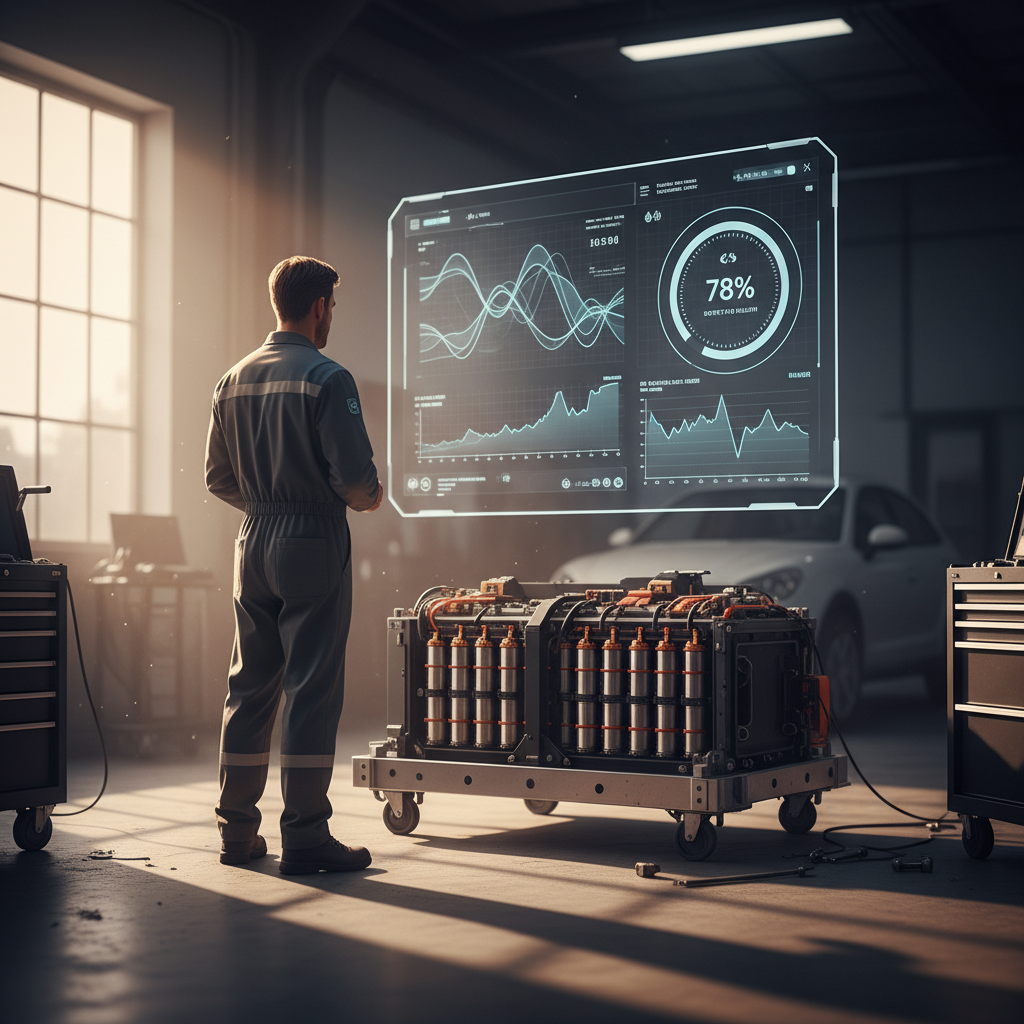
Two identical models can behave very differently in winter if one has significantly more degradation. Ask for a verified battery health report rather than relying on guesswork or dash estimates.
Every EV sold through Recharged includes a Recharged Score Report with lab‑grade battery diagnostics, so you know how much usable capacity is left before you commit.
2. Does this trim have a heat pump?
On many models, the heat pump is optional or tied to a specific package. A used EV with a heat pump is often worth paying a little more for if you live in a cold climate, it can cut winter range loss noticeably.
3. How was the car used and stored?
A car that lived its life in Arizona and is moving to Minnesota will likely behave differently than one already proven through several winters. Ask about climate history, typical daily mileage, and whether it was routinely garaged.
4. How fast does it charge in the cold?
Range is only half the story. A model that loses a bit more range but retains solid DC fast‑charging performance in winter may be easier to live with than one that keeps more range but charges slowly on cold packs.
5. Is it on the latest software?
OTA updates can noticeably improve cold‑weather behavior. For used Teslas, Hyundais, Fords and others, verify that software is current or can be updated as soon as you take delivery.
6. Does it realistically fit my winter routine?
Work backwards from your real life: daily round‑trip distance, worst‑case cold snaps, parking situation, and access to charging. A car that looks borderline on paper may be perfectly fine if you can charge at home overnight.
How Recharged helps de‑risk winter for used EV buyers
EV winter range loss FAQ
Frequently asked questions about EV winter range loss by model
Bottom line: what EV winter range loss by model really means
When you look closely at EV winter range loss by model, the story turns out to be less about one “good” brand and one “bad” brand, and more about matching the right car to the right use case. Almost every EV will lose some range in the cold, but models with efficient heat pumps, solid thermal management, and conservative ratings handle winter predictably and reliably.
As a buyer, especially of a used EV, the smart move is to combine data by model with verified battery health and an honest look at your own driving and climate. That’s exactly the gap Recharged is built to fill: transparent battery diagnostics, fair‑market pricing, and EV‑savvy guidance that doesn’t stop when the temperature drops. Get those pieces right, and winter driving in an EV becomes routine, not a range‑anxiety stress test.