If you’re shopping for an electric vehicle in Virginia in 2026, you’ve probably heard confusing, even conflicting things about the EV tax credit in Virginia in 2026. The short version: the big federal credits for new and used EVs largely ended for purchases after September 30, 2025, but there are still ways to lower your cost of going electric, especially if you focus on used EVs, charger incentives, and smart shopping.
First, an important clarification
Overview: EV tax credit in Virginia in 2026
Quick status of EV incentives for Virginians in 2026
The landscape in 2026 looks very different from the early Inflation Reduction Act years. For most Virginia drivers, the headline federal EV purchase credits are no longer available on new purchases. But if you’re willing to consider a used EV, time a home charging upgrade before key deadlines, and take advantage of utility programs, you can still knock a meaningful amount off your total ownership cost.
What happened to the federal EV tax credit?
For a few model years, Virginians could rely on two big federal incentives: the new Clean Vehicle Credit (up to $7,500 under section 30D of the tax code) and the Previously Owned Clean Vehicle Credit (up to $4,000 under section 25E). Both came with income limits, vehicle price caps, and, after 2023, strict battery sourcing rules.
In late 2025, Congress passed new tax legislation that phased out these EV purchase credits by September 30, 2025. The result: for vehicles placed in service on or after October 1, 2025, the familiar $7,500 and $4,000 purchase credits are no longer available. You might still see older articles or dealer ads talking about these credits, but for 2026 Virginia shoppers, they’re history except in two narrow cases:
- You ordered an eligible EV earlier and it was delivered and placed in service before October 1, 2025, but you’re only filing the tax return now.
- You bought a qualifying used EV before October 1, 2025 and are claiming the credit on your 2025 return.
Watch out for outdated ads
Can you still claim any EV tax credit for 2026?
Even though the big federal EV purchase incentives are gone for new 2026 purchases, there are still a few narrow tax situations where Virginians will see EV‑related credits show up on their 2025 and 2026 returns.
Where EV‑related credits may still show up
Think beyond the sticker price, look at your whole tax and charging picture.
1. Late claims for 2025 purchases
If you bought an eligible new or used EV before October 1, 2025 and didn’t transfer the credit at the dealership, you may still be able to claim it on your 2025 federal return using Form 8936. That’s about past purchases, not cars you buy in 2026.
2. EV charger tax credit (deadline)
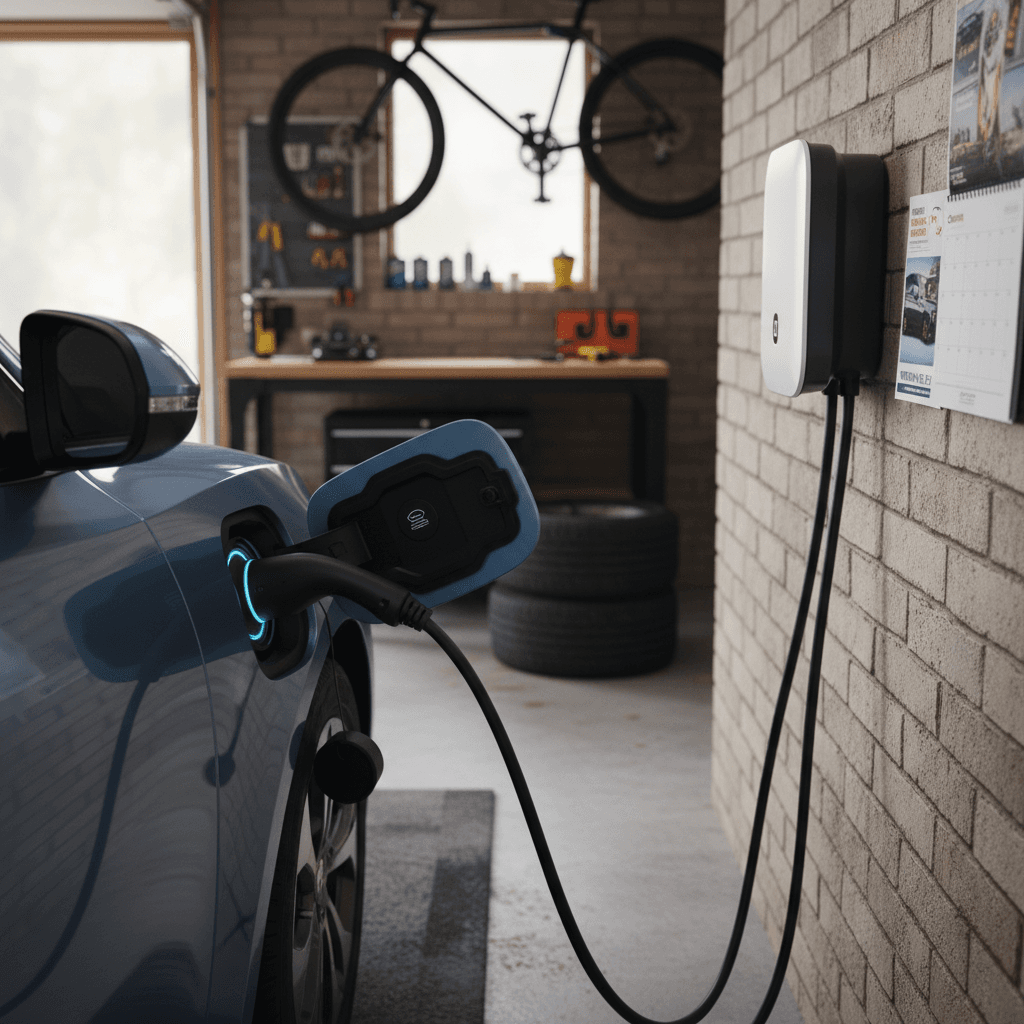
A separate federal credit for charging equipment remains available for projects completed through June 30, 2026. That can reduce the real cost of installing a Level 2 charger at home.
3. Home energy upgrades
Some Virginians used broader home energy credits for panel upgrades or wiring that supported EV charging. Most of these credits phase down or expire by the end of 2025, but if you completed work earlier, you may still be filing for them in spring 2026.
Talk to a tax pro before you assume credits are gone
EV charger tax credit and Virginia utility incentives
For a lot of Virginia drivers, the remaining federal opportunity in 2026 is not the car, it’s the charger. A separate credit has covered a portion of the cost of purchasing and installing EV charging equipment, including Level 2 chargers and, for businesses, DC fast chargers. Under 2025 tax changes, this credit is scheduled to expire for property placed in service after June 30, 2026.
EV charger incentives for Virginians in 2026
How federal and Virginia utility benefits work together for home charging.
| Program | Who it helps | What it can cover | Key 2026 deadline |
|---|---|---|---|
| Federal EV charger tax credit | Homeowners & businesses | Portion of charger hardware and installation costs | Charger must be placed in service by June 30, 2026 |
| Dominion Energy EV Charger Rewards | Dominion residential customers | $125 rebate for qualifying Level 2 smart chargers plus ongoing bill credits for managed charging | Program terms reviewed periodically; confirm current eligibility before purchase |
| Dominion Residential Charger Program | Dominion residential customers wanting turnkey install | Turn‑key Level 2 installation, financing on bill, plus participation in managed charging events | Program introduced in 2024 and active in 2026; equipment choices and pricing may change |
| Other Virginia utilities | Co‑op & municipal utility customers | Varies: upfront rebates, bill credits, or TOU rates | Check your utility’s website; programs are utility‑specific |
Always confirm terms before you buy or install, because utility programs and federal rules can change mid‑year.
Dominion’s EV Charger Rewards program has typically offered a one‑time enrollment rebate (around $125) for approved smart chargers plus annual incentives, often $40–$80 per year, for allowing Dominion to adjust your charging during peak hours. Combined with the federal charger credit, that can make a Level 2 home setup dramatically more affordable if you move quickly enough.
Charger choice matters
State and local Virginia EV incentives in 2026
Unlike some neighboring states, Virginia does not currently offer a broad state income tax credit or rebate for buying an electric vehicle in 2026. But there are still a few Virginia‑specific benefits worth knowing about:
- Some local governments temporarily waive permit fees for home EV charger installations (Fairfax County, for example, has waived certain EV charging station permit fees through at least late 2025; similar local measures may be renewed or copied elsewhere).
- Certain utilities and regional programs support public and workplace charging infrastructure, which may benefit you indirectly if your employer or landlord participates.
- Virginia previously allowed many EVs to access HOV lanes with special plates; that federal authority expired in late 2025, so don’t count on HOV access alone as an EV “perk” in 2026.
Where to look for local perks
Why used EVs make more sense in Virginia now
Back when a $7,500 federal credit was widely available on new EVs, the price gap between new and used could be surprisingly small. With that credit gone for post‑September 2025 purchases, used EVs in Virginia have become the real value play, especially if you care about total cost of ownership more than having the very latest model year.
Used EV advantages in a post‑credit world
Why many Virginia drivers are pivoting to pre‑owned electric vehicles in 2026.
Lower upfront price without chasing credits
With no big federal tax credit offsetting new‑car pricing, the gap between a new EV and a 2‑ to 4‑year‑old model is often thousands of dollars in your favor. You see the savings in the selling price, not months later at tax time.
Proven real‑world range and battery health
A used EV has a track record. With tools like the Recharged Score battery health report, you can see how the pack has held up in Virginia’s climate, and what kind of range you can expect on your commute today, not in lab tests.
Less policy risk
When you buy used, you’re not betting on Congress to keep a credit in place or the IRS to certify a specific trim. The price is the price. That simplicity is appealing now that EV incentives have become a moving target.
Cheaper insurance and taxes
Because used vehicles generally carry lower values, you’ll often see savings on insurance premiums and personal property taxes compared with a brand‑new EV, especially in urban parts of Virginia.
This is exactly where a marketplace like Recharged fits in. Every used EV on Recharged comes with transparent pricing, a Recharged Score battery health report, and expert guidance so you’re not guessing about range, degradation, or fair value in today’s incentive‑light environment.
How to approach pricing without a big EV tax credit
In the early EV years, shoppers built the tax credit into their mental math: sticker price minus $7,500 (maybe minus a state rebate) equaled the "real" price. In 2026 Virginia, you’ll get better results if you flip that logic around and focus on total cost of ownership instead of chasing disappearing credits.
1. Compare all‑in monthly cost, not just MSRP
Two cars with the same sticker can have very different monthly costs once you roll in financing, insurance, fuel or electricity, and expected maintenance. Factor in:
- Loan payment or lease
- Insurance quote for your ZIP code
- Estimated electricity cost vs. gas (Dominion and many co‑ops offer calculators)
- Routine service and tires
2. Treat incentives as a bonus, not a requirement
Any EV or charger incentive you qualify for in 2026, utility rebates, remaining charger credits, local fee breaks, should be considered upside, not the core of your deal. That mindset keeps you from overpaying today for a benefit that might change or disappear.
Checklist: Smart EV shopping in Virginia with minimal tax credits
Confirm whether you’re actually eligible for any remaining credit
If you bought an EV or installed a charger in 2024 or 2025, talk with a tax professional or consult IRS guidance to see if you can still claim something on your 2025 return.
Decide on new vs. used before you visit dealers
With purchase credits gone, used EVs often deliver the best value. Take a look at used inventory on Recharged to calibrate your expectations before you walk into a new‑car showroom.
Get real insurance quotes on specific VINs
Insurance costs can vary widely by model and trim. Ask your insurer for quotes on the actual EVs you’re considering so there are no surprises after you sign.
Price in home charging up front
If you’ll install a Level 2 charger, get estimates now. Ask your electrician to schedule work before the June 30, 2026 federal charger credit deadline where possible, and save all invoices.
Run the numbers on your utility’s EV programs
Check Dominion or your local utility for EV‑specific rates, charger rebates, and managed charging credits. These can easily be worth a few hundred dollars over several years.
Lean on third‑party valuation and battery health data
For used EVs, use independent pricing tools and, where available, battery health diagnostics like the Recharged Score to judge whether the price truly reflects the car’s condition.
How Recharged helps you see the real deal
Ready to find your next EV?
Browse VehiclesStep-by-step: How to check your 2026 EV incentives
Because so much has changed in a short time, it pays to run through a simple checklist before you assume anything about EV tax credits in Virginia in 2026.
Two paths: buying in 2026 vs. installed equipment earlier
If you’re planning to buy an EV in 2026
Decide whether you’re open to a used EV, this is where most of the value is now that purchase credits are gone.
Browse used EV listings on platforms like Recharged to understand realistic prices for the range and features you need.
Check your utility’s EV page (Dominion or local co‑op) for current rebates, off‑peak rates, or managed charging programs.
Estimate your annual miles and electricity rates to see how much you’ll save on fuel vs. your current vehicle.
Get pre‑qualified for financing so you’re clear on what monthly payment fits your budget without counting on tax credits.
When you’re close to a decision, confirm with a tax professional that no special tax rule applies to your situation (for example, if you run a business that might use the commercial clean vehicle credit for fleet vehicles).
If you installed a charger or bought an EV before Q4 2025
Gather receipts and contracts showing when the vehicle was placed in service or when the charger installation was completed.
Check whether you elected to transfer any EV credit to the dealer at the time of purchase (if so, that benefit is already baked into your deal).
Review IRS Form 8936 and current guidance to see if you can still claim a credit on your 2025 return.
Confirm whether your home is in a location that qualifies for any location‑specific charger credits (some rules favor low‑income or rural census tracts).
If your electrician completed work in 2024 or 2025, ask if they structured the project to meet all the EV charger credit requirements.
Schedule time with a tax professional if the amounts involved are significant, a short appointment can easily pay for itself if a credit is available.
FAQs: EV tax credit Virginia 2026
Frequently asked questions about the EV tax credit in Virginia (2026)
Bottom line for Virginia EV shoppers in 2026
The phrase “EV tax credit Virginia 2026” doesn’t mean what it used to. For brand‑new EVs purchased this year, the big federal purchase credits are gone, and Virginia doesn’t offer its own replacement. But that doesn’t mean EV ownership stopped making financial sense. It does mean the smart move is to focus on solid used EVs, realistic pricing, and the incentives that are still on the table for charging infrastructure.
If you’re in Virginia and ready to go electric, start by looking at used EVs with verified battery health, then layer in utility programs and any remaining charger credits. From there, compare your total cost of ownership, fuel, maintenance, insurance, and financing, against the gas car in your driveway today. In most cases, especially for commuters and families, the math still favors going electric. And if you’d like a guide through that process, Recharged’s EV specialists are built for exactly this post‑tax‑credit world.