If you’re trying to figure out the EV tax credit in South Carolina for 2026, you’re walking into a landscape that changed dramatically in late 2025. The big federal EV purchase credits many shoppers got used to have ended, South Carolina still doesn’t offer a state-level EV purchase credit, and what’s left is a patchwork of charger tax credits, utility rebates, and smart used‑EV shopping. This guide walks you through what is and isn’t available in 2026, and how to make the numbers work in your favor.
Dates to keep straight
Overview: EV tax credits in South Carolina for 2026
South Carolina EV incentives snapshot for 2026
In 2026, there are three main buckets of incentives that matter if you’re a South Carolina driver thinking about going electric, or upgrading your charging setup: 1. **Federal EV purchase credits that ended in 2025.** These still matter if you bought in time and are filing 2025 returns, but not for vehicles bought in 2026. 2. **Charger and “alternative fuel property” credits.** These apply to charging equipment, not the car itself, and some are still active into mid‑2026. 3. **Utility rebates and smart used‑EV shopping.** These aren’t tax credits, but they can move the out‑of‑pocket cost in ways that feel just as real as a credit on your return. Let’s unpack how each of these works and what you can realistically plan on for 2026.
What happened to the federal EV tax credit before 2026?
For several years, the federal government offered a Clean Vehicle Credit worth up to $7,500 for new EVs and $4,000 for qualifying used EVs. Those credits were reshaped by the Inflation Reduction Act and then ultimately phased out by new legislation that took effect in late 2025. In practical terms for today: - If you **bought a qualifying new or used EV on or before September 30, 2025**, you may still be able to claim a federal credit on your 2025 tax return (filed in 2026), assuming you met income, price, and vehicle requirements. - If you **buy an EV in 2026**, you should not count on receiving a federal purchase credit under the old rules; those incentives have ended for new purchases. That’s frustrating if you’re shopping now, but it also means you need to focus on the incentives that are still live, especially for home and business charging.
Don’t assume “the dealer took care of it”
Does South Carolina have its own EV tax credit for 2026?
This part is simple, even if it’s not the answer EV shoppers hope for: **South Carolina does not offer a state income‑tax credit for buying an electric vehicle in 2026.** There’s been discussion about expanding incentives, especially for charging infrastructure, but as of early 2026, the state has focused its tax relief on **alternative fuel property**, not on the vehicles themselves. You won’t find a line on your South Carolina income tax return that gives you a dollar‑for‑dollar credit just for purchasing an EV.
What South Carolina doesn’t offer in 2026
- No state income tax credit for buying a new EV.
- No state income tax credit for buying a used EV.
- No state rebate program that sends you a state‑issued check after purchase.
What South Carolina does offer instead
- An income‑tax credit for installing alternative fuel property, including qualifying EV charging equipment.
- Local and utility‑level rebates that can reduce the installed cost of a home charger.
- A manufacturing‑friendly policy environment that indirectly supports EV availability and pricing.
Why you may still see “$2,000” in some charts
South Carolina alternative fuel property tax credit (chargers)
South Carolina’s key EV‑related state‑level incentive in 2026 is the **Alternative Fuel Property Income Tax Credit**, found in Section 12‑6‑3695 of the state tax code. The law was updated to explicitly include **electric vehicle charging equipment** under the definition of eligible property and treats electricity as an “alternative fuel” for purposes of the credit.
South Carolina alternative fuel property tax credit at a glance
How the state income tax credit for EV charging equipment generally works for individual taxpayers.
| Feature | How it typically works | Why it matters |
|---|---|---|
| What’s covered? | Alternative fuel property, which now includes certain EV charging equipment and related electrical infrastructure | Your home Level 2 charger and required wiring may qualify, not just commercial stations. |
| Who can claim? | Taxpayers who purchase and place eligible property in service in South Carolina | Homeowners and some business owners can both benefit. |
| Credit size | Up to a percentage of the cost of eligible property (commonly cited around 25%), subject to caps and rules | The credit helps offset your installed cost rather than the vehicle price. |
| Timing rules | Credit generally available only for property placed in service before January 1, 2026, and claimed in three equal annual installments | If you installed a charger before year‑end 2025, you may still be taking installments on your 2025, 2026, and 2027 returns. |
| Interaction with other incentives | You can often combine the SC credit with federal charger credits and utility rebates, but not for more than you actually spent | Stacking incentives can dramatically cut your net cost when done carefully. |
Always confirm the latest language in South Carolina’s tax instructions or with a tax professional before claiming any credit.
Look backward as well as forward
Federal EV charger credit through June 30, 2026
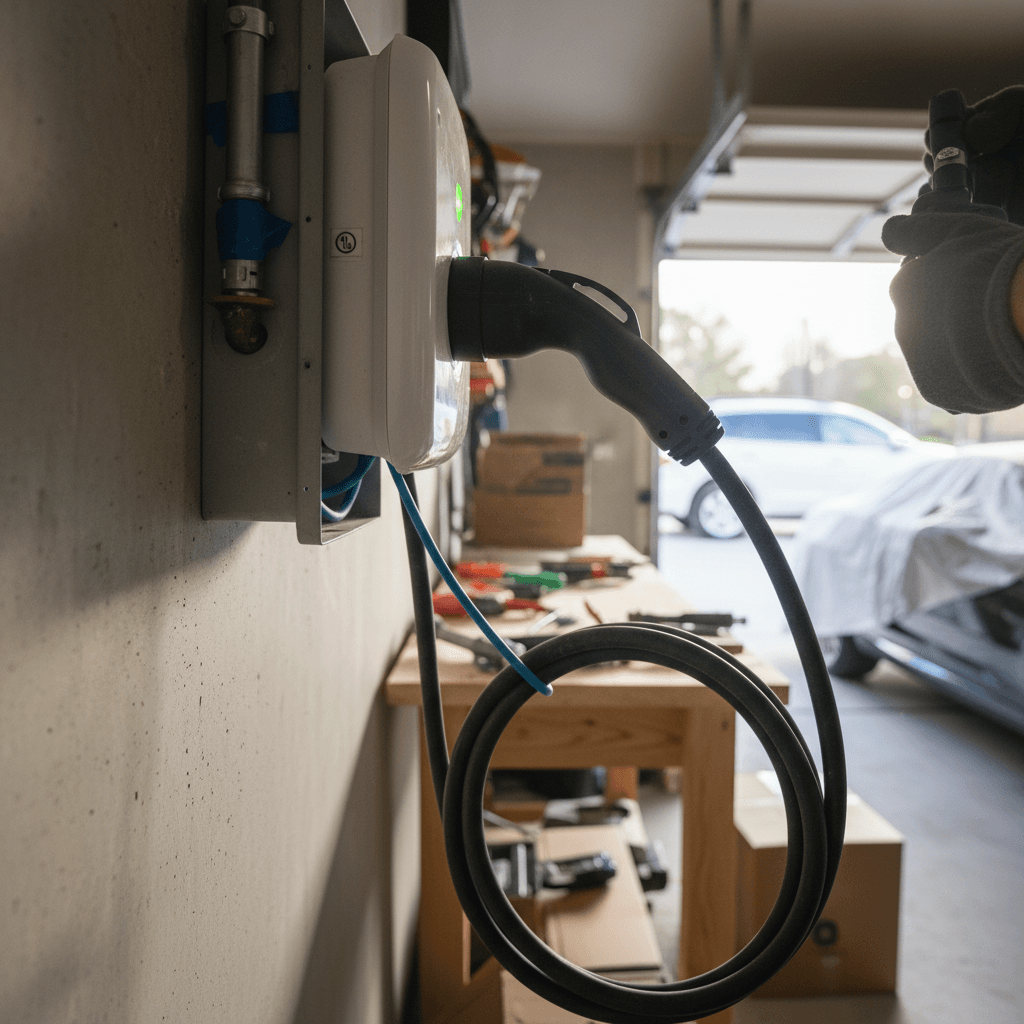
Even though the **federal EV purchase credits** ended for vehicles bought after September 30, 2025, there’s a different credit you can still use in 2026: the **federal credit for installing EV charging equipment**. Under the current rules that survived into 2026, individuals can claim a credit for a portion of the cost of **qualified residential charging equipment** placed in service at their home. The headline points are:
- The credit only applies to charging equipment, not the vehicle itself.
- It typically equals a percentage of the cost of the charger and professional installation, up to a dollar cap.
- Based on the most recent legislation, the federal EV charging credit is scheduled to sunset for property placed in service after June 30, 2026.
- You’ll generally claim it for the tax year the charger is first placed in service (for example, a charger installed and energized in March 2026 would go on your 2026 return).
Watch that June 30, 2026 deadline
Used EV tax credit and savings options in 2026
The end of the federal used EV tax credit for purchases after September 30, 2025, left a lot of shoppers wondering if there’s any special help left for buying a used electric car in 2026. The short answer is:** there is no new federal or South Carolina state used‑EV purchase tax credit for 2026 under current law.** That doesn’t mean buying used stopped making sense, it just shifts how you find value:
Where used EV shoppers can still save in 2026
With formal tax credits gone, focus on pricing, financing, and charging incentives.
Lower purchase prices
Used EV prices have come down from their early‑pandemic highs. A well‑priced used EV can easily cost thousands less than a comparable new gas car when you shop carefully.
Better financing terms
Specialized EV retailers like Recharged can help you structure financing so your monthly payment fits your budget, even without a stand‑alone tax credit.
Smart charger incentives
Stacking federal and state charger credits with utility rebates can shave hundreds of dollars off the cost of making your home EV‑ready.
How Recharged helps used EV buyers
Ready to find your next EV?
Browse VehiclesHow a South Carolina driver might stack incentives in 2026
To see how these pieces fit together, imagine a Charleston‑area driver buying a used EV in mid‑2026 and installing a home charger. There’s no direct EV purchase credit anymore, but there are still meaningful savings on the charging side.
Example: Making a 2026 used EV pencil out in South Carolina
1. Buy a well‑priced used EV
Instead of chasing a tax credit, focus on buying a used EV with strong battery health and a price that already reflects the end of federal incentives. A Recharged Score Report can help you see exactly how that battery is performing.
2. Install a Level 2 charger before June 30, 2026
Schedule your electrician early in 2026 so your charger is fully installed and energized before the federal EV charger credit’s June 30 deadline.
3. Claim the federal charger credit
On your 2026 federal return, claim the EV charger credit for a portion of your equipment and installation cost, subject to the percentage and dollar caps that apply that year.
4. Review South Carolina’s alternative fuel property credit
If your charger was placed in service before January 1, 2026, work with a preparer to see if you’re eligible for the state’s alternative fuel property income tax credit and whether 2026 is one of the installment years.
5. Add utility rebates to the mix
Check with your local utility, Dominion Energy, Duke Energy, or your co‑op, to see if they offer <strong>home charger rebates or off‑peak bill credits</strong>. Those programs can add hundreds of dollars in savings on top of tax credits.
6. Run a total cost of ownership comparison
Compare your all‑in monthly cost, payment, electricity, insurance, and maintenance, against a comparable gas car. Many South Carolina drivers find that, even without a 2026 purchase credit, a used EV still wins over a three‑ to five‑year horizon.
How to claim EV- and charger-related tax credits
If you bought an EV before October 1, 2025
You may still be eligible to claim a federal Clean Vehicle Credit on your 2025 tax return (filed in 2026) if you:
- Purchased a qualifying new or used EV on or before September 30, 2025.
- Met the income and vehicle price caps that applied at the time.
- Didn’t already fully monetize the credit at the dealership.
Work with a tax professional and keep your purchase agreement, window sticker, and any dealer documentation about tax credits handy.
If you installed a charger in 2024–2026
For home charging equipment, you’ll typically need to:
- Keep receipts for the charger, electrician labor, permits, and panel upgrades.
- Confirm whether you qualify for the federal EV charger credit in the year you placed it in service.
- Review South Carolina’s instructions for the Alternative Fuel Property Income Tax Credit if your installation occurred before January 1, 2026.
In most cases, you’ll complete a specific federal form and attach it to your return, and you may need a separate state form for South Carolina’s property credit.
This article is not tax advice
Common pitfalls South Carolina EV buyers should avoid
- Counting on a 2026 EV purchase credit that doesn’t exist. For cars bought in 2026, there’s no federal or South Carolina state purchase credit like the ones that applied before October 2025.
- Missing the June 30, 2026 federal charger deadline. If you install a charger after that date under current law, you may leave the federal credit on the table.
- Assuming your charger automatically qualifies. Not all equipment or installations meet the technical definitions for federal or state alternative fuel property credits. Always verify before filing.
- Letting incentives drive a bad vehicle choice. A poor‑condition EV with no remaining battery warranty is a bad idea even if the charger incentives look great. Start with the right car, then layer in the credits.
- Forgetting about utility programs. In a state with limited tax incentives, utility rebates and special EV rates can make a bigger difference than you expect.
FAQ: EV tax credit South Carolina 2026
Frequently asked questions about South Carolina EV credits in 2026
Bottom line for South Carolina EV shoppers in 2026
In 2026, South Carolina is not the place to shop if you’re purely chasing an EV purchase tax credit. The generous federal credits that helped kick‑start the market wrapped up for vehicles bought after September 30, 2025, and the state never added its own purchase‑side credit on top. Where South Carolina drivers can still win is on the charging side: by using the remaining federal EV charger credit before June 30, 2026, claiming the state’s alternative fuel property credit where it applies, and layering in utility rebates.
That’s why, in 2026, smart EV ownership in South Carolina is less about chasing incentives and more about buying the right used EV at the right price, then using incentives to make your home charging affordable. Recharged is built for exactly that world, providing transparent battery‑health data, fair market pricing, expert guidance, and financing options that work even without a big tax credit doing the heavy lifting. If you’re ready to run the numbers on a used EV in South Carolina, we’re ready to help you make a confident decision.