If you live in or own a home in the Outer Banks, you’re in a sweet spot for electric vehicles: plenty of scenic miles to drive, but also real concerns about cost, charging, and salt-air wear. The good news is that a mix of EV rebates, tax credits, and utility incentives can take a serious bite out of the price of both your car and your home charger, if you know where to look and how to stack them.
Quick snapshot for 2025–2026
Why EV rebates matter in the Outer Banks
Driving the Outer Banks usually means longer distances, higher fuel costs, and seasonal traffic. An EV can dramatically lower your per‑mile cost, but only if you keep upfront expenses in check and have a smart charging setup at your beach home, rental property, or year‑round residence. That’s where rebates and credits come in.
Why incentives are especially valuable on the OBX
Unique local conditions make EV savings more important
Long, linear drives
Second homes & rentals
Storms & outages
Local mindset tip
Current EV incentives in North Carolina (2025–2026)
Let’s start with the basics: what’s actually available right now for North Carolina drivers who live in or frequently visit the Outer Banks? As of early 2026, here’s the landscape.
Key numbers Outer Banks EV shoppers should know
1. Federal EV and charger tax credits
The federal Clean Vehicle Credit remains the single biggest incentive for Outer Banks drivers buying today. Qualifying new EVs can earn up to $7,500 in tax credits, and qualifying used EVs up to $4,000, on purchases made from licensed dealers before September 30, 2025. Many buyers can now transfer the credit to the dealer at the point of sale, effectively lowering the purchase price immediately.
- New EVs: Up to $7,500 federal credit on qualifying models, subject to income, price caps, and vehicle assembly requirements.
- Used EVs: Up to $4,000 (or 30% of the sale price, whichever is less) on qualifying used EVs purchased from a dealer.
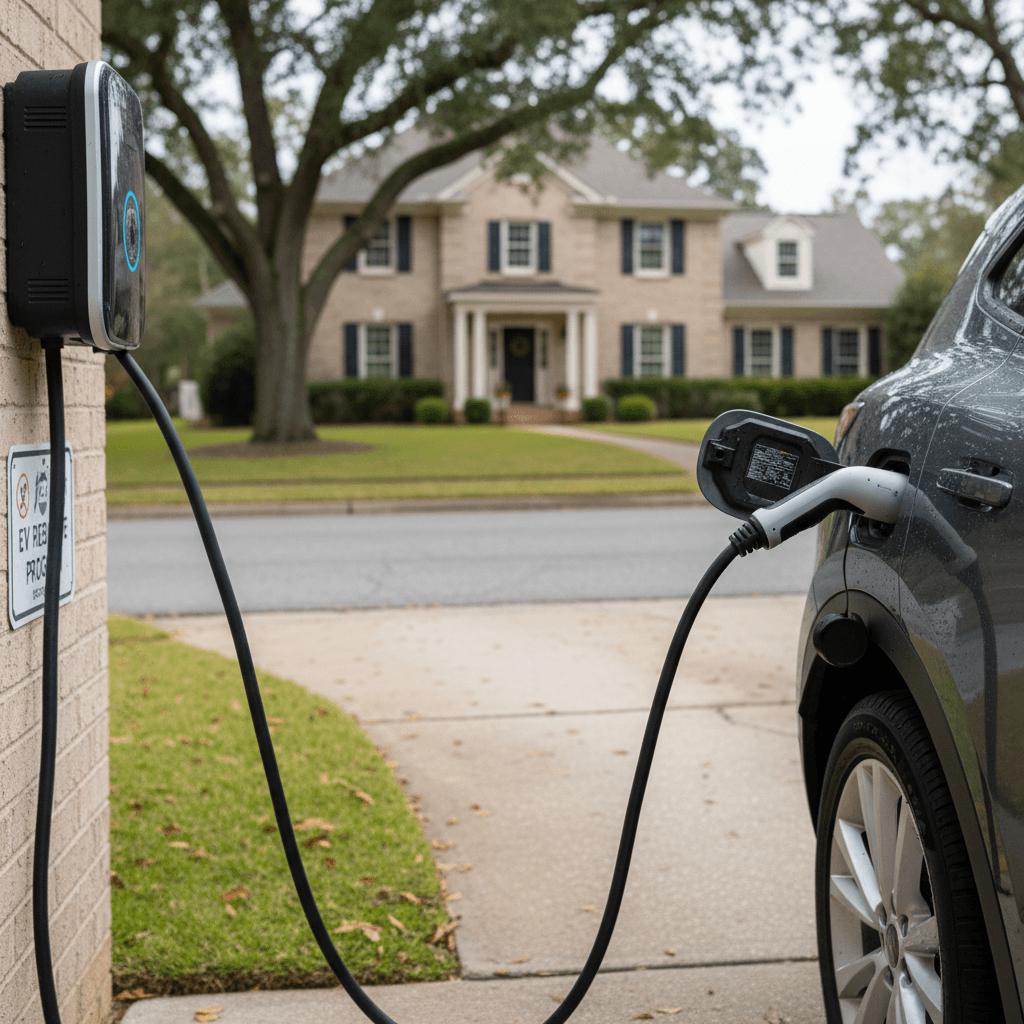
- Home chargers: Federal 30C credit covers 30% of the cost of a home EV charger and installation, up to $1,000, for chargers placed in service by June 30, 2026.
Time-sensitive deadlines
2. North Carolina state programs that touch EV charging
North Carolina still doesn’t offer a direct, statewide EV purchase rebate. Instead, the state has focused on infrastructure and home energy programs that you can often leverage when you install charging at your Outer Banks property.
- Energy Saver North Carolina (HOMES & HEAR): Launched January 2025, this state‑run program uses federal Inflation Reduction Act dollars to rebate qualifying home efficiency and electrification projects, including electric panel and wiring upgrades and some heat pump equipment that pairs well with EV ownership.
- Federal Clean Energy Tax Credits: North Carolina highlights the federal 30C EV charger credit and other clean‑energy credits that can be combined with Energy Saver North Carolina, provided you don’t double-count the same cost for two different rebates.
- Charging infrastructure focus: Through NEVI funding and state programs, North Carolina is expanding public charging along coastal corridors, which benefits Outer Banks driving even if you don’t install your own charger right away.
Don’t forget EV registration fees
Outer Banks EV rebates by residency type
The Outer Banks is a patchwork of primary homes, second homes, and rental properties. Which rebates you can tap often depends on how you use the property and which utility serves you.
Year‑round Outer Banks residents
If this is your primary residence and you file North Carolina taxes, you’re in the best position to claim:
- Federal Clean Vehicle Credits for a new or used EV.
- Federal 30C EV charger credit for a Level 2 home charger.
- Energy Saver NC rebates for panel and wiring upgrades that support EV charging.
- Utility programs from Duke Energy, Dominion Energy North Carolina Electric, or your local co‑op, depending on your exact service area.
Second homes & vacation rentals
If you own a beach house you visit seasonally or rent out, incentives get more nuanced, but there are still options:
- You may be able to claim federal EV charger credits if you personally use the property and meet IRS rules.
- Some utility rebates apply regardless of whether the property is owner‑occupied or tenant‑occupied, as long as it’s a residential account.
- Energy Saver NC programs may apply to rental properties, particularly if tenants are low‑ or moderate‑income. Check program fine print or call for guidance.
Action step
Stacking federal tax credits with local EV rebates
When people search for “EV rebates Outer Banks,” what they’re really asking is: how do I combine everything without breaking the rules? The basic principle is that you can often stack a federal tax credit with state or utility rebates, as long as you’re not claiming two different rebates on the same exact dollar of cost.
Smart stacking strategy for an OBX homeowner
1. Start with the vehicle credit
If you’re eligible, plan your purchase so you can use the federal Clean Vehicle Credit for a new or used EV. This is usually the largest single incentive.
2. Add the 30C home charger credit
Design your home charging project so the hardware and installation qualify for the federal EV charger credit before it expires in mid‑2026.
3. Layer in Energy Saver NC
If you’re upgrading your panel or wiring to support EV charging, see if those costs can be rebated through Energy Saver NC’s HEAR or HOMES programs instead of, or in addition to, the 30C credit, avoiding double‑counting.
4. Apply any utility rebates last
Use Duke, Dominion, or co‑op rebates to reduce your out‑of‑pocket cost further. Keep careful records so you don’t claim a tax credit on dollars that were already reimbursed by a utility rebate.
Mind the “double-dip” rules
Utility EV programs that reach the Outer Banks
On the barrier islands, your utility options are more limited than in a big city, but they still matter a lot for EV ownership. Your precise incentives will depend on which company serves your address, Duke Energy, Dominion Energy North Carolina Electric, Cape Hatteras Electric Cooperative, or another local provider.
Examples of North Carolina utility EV and charger incentives
Exact eligibility depends on your service area and program rules. Always confirm with your utility before starting work.
| Utility | Typical OBX Coverage | Example EV Incentive | What It Usually Covers |
|---|---|---|---|
| Duke Energy (Carolinas/Progress) | Parts of eastern NC | Charger Prep Credit & residential rebates | Rebates for panel upgrades, new 240V circuits, or wiring to support Level 2 or faster EV charging. |
| Dominion Energy North Carolina Electric | Northeastern NC service territory | Energy efficiency and equipment rebates | Rebates or instant discounts on energy‑efficient equipment that can pair with EV ownership (e.g., heat pump water heaters, smart home kits). |
| Electric co‑ops & munis (e.g., Cape Hatteras EC) | Specific Outer Banks communities | Pilot programs, time‑of‑use rates, occasional charger rebates | Off‑peak rates for EV charging, rebates on chargers or load‑management devices, or special pilot programs. |
Use this as a starting point, not a substitute for reading your utility’s current program details.
How to check your exact eligibility
Step-by-step: How to claim your EV rebates
Because rebates and credits are split across federal, state, and utility programs, the cleanest path is to tackle them in a deliberate order. Here’s a simple roadmap tailored to Outer Banks drivers.
Two paths: already own an EV vs. shopping now
You already own an EV on the OBX
Confirm whether you claimed any federal credit when you bought the car; if not, talk with a tax pro to see if retroactive options exist.
Plan your home charging upgrade: get quotes for a Level 2 charger and installation that meets 30C guidelines before June 30, 2026.
Check Energy Saver NC for eligibility on panel or wiring upgrades that were done or are planned for EV charging and other electrification.
Contact your utility to see if any rebates apply to a charger you’re adding now or added recently.
Keep copies of invoices, rebate approvals, and utility credits for tax filing and future property records.
You’re shopping for a used or new EV now
Verify which new and used models still qualify for federal EV tax credits based on price caps, assembly, and your income.
Compare out‑the‑door pricing from dealers that apply the tax credit at the point of sale versus dealers that don’t.
Before installation, confirm that your planned home charger and electrician’s bid will qualify for the federal 30C charger credit.
Ask your installer to break out labor, materials, panel upgrades, and other line items, this makes it easier to assign costs to specific rebates or credits.
Apply for any Energy Saver NC and utility rebates as soon as work is complete; then file federal credits when you do your taxes.
Documentation you’ll want to save
Purchase agreement and window sticker
For a new EV, keep paperwork that shows VIN, final sale price, and that it’s a qualifying clean vehicle. For used EVs, keep proof that you bought through a dealer.
Chargers and installation invoices
Make sure your electrician’s invoice clearly lists the charger hardware, wiring, panel work, and permits so you can match each cost to the right rebate or credit.
Utility account and program approvals
Print or save confirmations of rebate approvals, completed program forms, and any time‑of‑use rate enrollments that relate to EV charging.
Common pitfalls for Outer Banks EV buyers
Living on a narrow strip of sand between the ocean and sound is special, but it also creates quirks that most generic EV rebate guides never mention. Here are some traps Outer Banks drivers and homeowners should avoid.
Outer Banks–specific issues to watch for
Avoid these mistakes so you keep every dollar of incentive you’re entitled to
Ignoring salt-air corrosion
Undersizing your panel
Poor cost tracking
Safety first
How Recharged helps you maximize incentives
Sorting through the fine print of EV rebates is nobody’s idea of a beach vacation. This is where a specialized used‑EV marketplace like Recharged can quietly do a lot of the heavy lifting for you.
- Every vehicle on Recharged comes with a Recharged Score Report, including verified battery health, so you know what you’re getting before you think about credits or rebates.
- Our EV‑specialist team can walk you through which federal used EV credits may apply to the vehicles you’re considering and how point‑of‑sale credits work with dealers.
- If you’re planning a Level 2 charger at your Outer Banks home, we can help you understand how charger installation, wiring, and panel upgrades fit into the 30C EV charger credit and Energy Saver North Carolina programs.
- Because Recharged is built around a fully digital experience, you can shop, finance, arrange trade‑ins, and schedule delivery to your North Carolina address without leaving home, and we’ll help you line up incentives along the way.
Bringing it all together
FAQ: EV rebates in the Outer Banks
Frequently asked questions about EV rebates in the Outer Banks
Bottom line for Outer Banks EV rebates
For Outer Banks drivers, there’s no single “Outer Banks EV rebate” you can claim and be done. Instead, your savings come from stacking federal EV tax credits, the federal charger credit, Energy Saver North Carolina home programs, and whatever utility EV incentives reach your street, plus choosing the right used EV at the right price. If you approach it methodically, you can cut thousands from the cost of going electric while making your coastal home more resilient and attractive to renters.
If you’re ready to run the numbers, browse used EVs with verified battery health on Recharged, then talk with our EV specialists about how to pair the right vehicle with rebates and credits that make sense for your Outer Banks lifestyle.