What does preconditioning actually do?
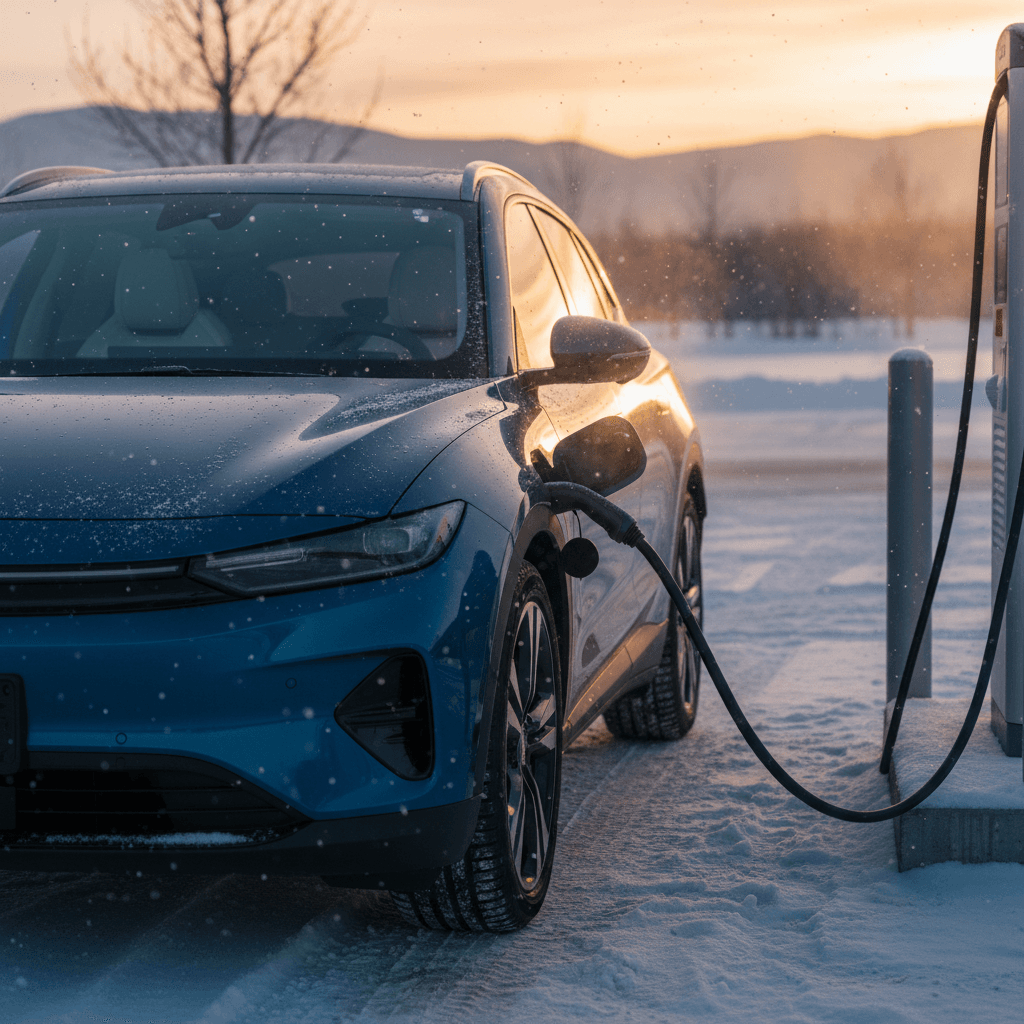
Preconditioning uses the car’s thermal system to prepare the cabin and, in compatible EVs, the high-voltage traction battery before you leave. Heating the cabin, clearing the glass, and bringing a cold battery toward a more useful operating temperature all require energy; if the car is plugged in, much of that initial demand can come from the grid instead of the battery. That doesn’t create extra battery capacity, but it can leave more stored energy available for driving. For the broader effect of temperature, see how cold weather affects EV range.
A warm cabin is the part you immediately notice, but battery preparation can matter too. A cold traction battery, the large battery that powers the vehicle, may deliver energy and accept charging less readily until it warms. Whether remote climate control also warms that battery depends on the vehicle, its software, and the conditions.
Cabin and battery preconditioning are different
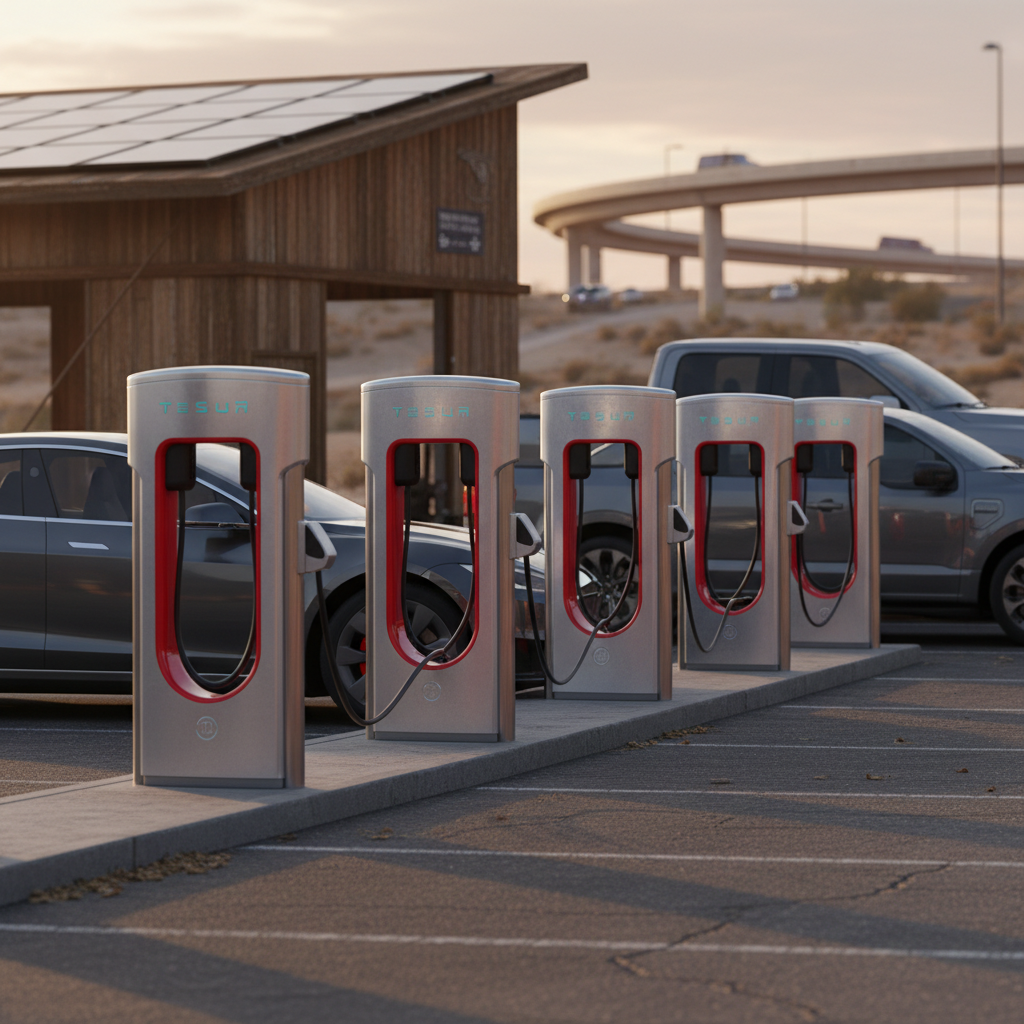
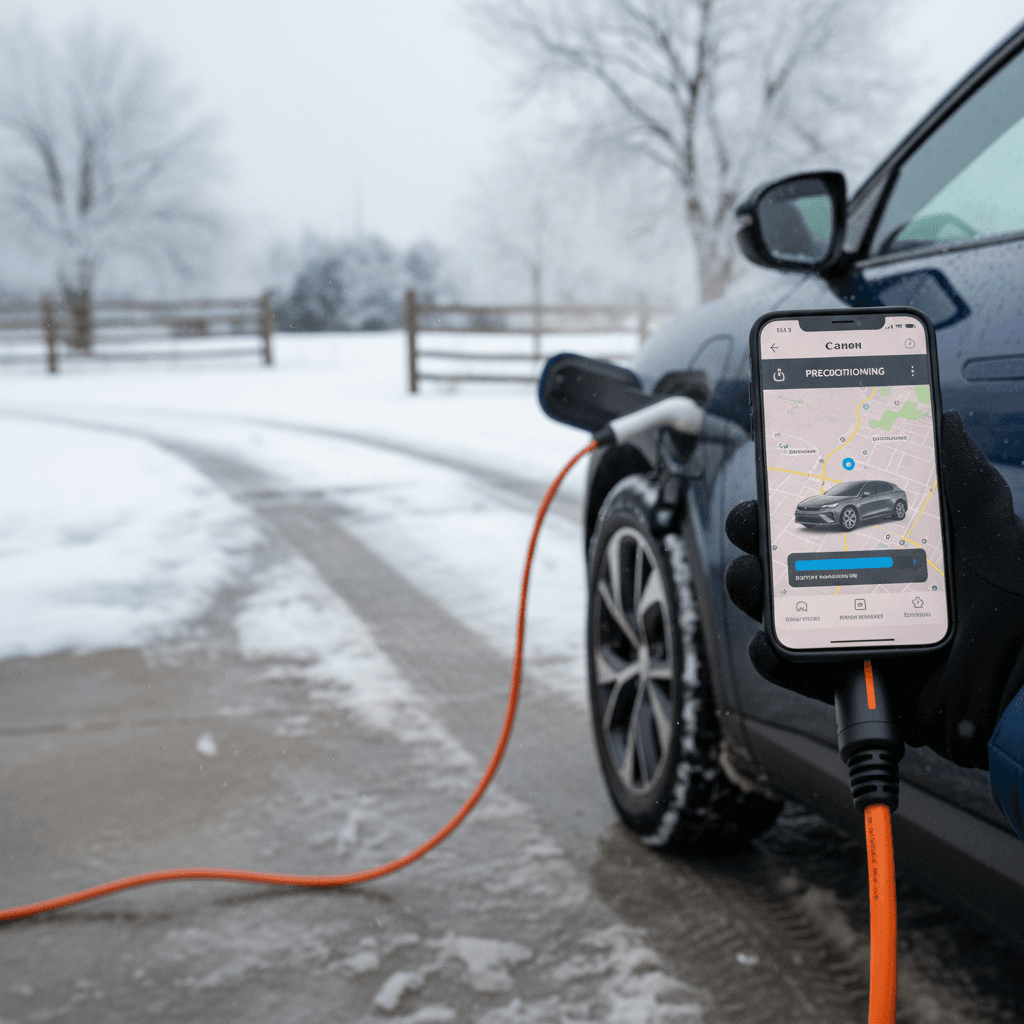
Cabin preconditioning makes you comfortable, while battery preconditioning manages the traction battery’s temperature for driving or charging. Some EVs coordinate both automatically; others primarily run the heater when you start climate control remotely. Battery preparation for DC fast charging, high-power public charging, may require selecting the charger in the factory navigation system.
Three common preconditioning modes
Names and behavior vary by vehicle, so confirm the controls in the app or owner’s manual.
| Mode | What it prepares | Best use | Energy source |
|---|---|---|---|
| Scheduled departure | Cabin; battery if supported | Routine mornings | Grid when plugged in |
| Remote climate | Cabin first | Last-minute starts | Grid or battery |
| Fast-charge preparation | Traction battery | Upcoming DC stop | Battery while driving |
Preconditioning functions vary by model and software version.
The practical distinction is simple: departure preconditioning is about leaving comfortably and efficiently, while fast-charge preconditioning is about reaching a charger with the battery ready to accept power. If your EV supports automatic charger preparation, use its built-in route planner rather than assuming that turning on the cabin heater does the same job. Learn more in our EV fast-charging explainer.
How should you precondition an EV in winter?
The best routine is to plug in, set your departure time, and let the vehicle manage its heating before you unplug. A schedule is generally more reliable than remembering to start climate control as you walk out the door. The exact controls vary, but most systems place them in the vehicle’s app, charging menu, or climate settings.
A practical cold-morning routine
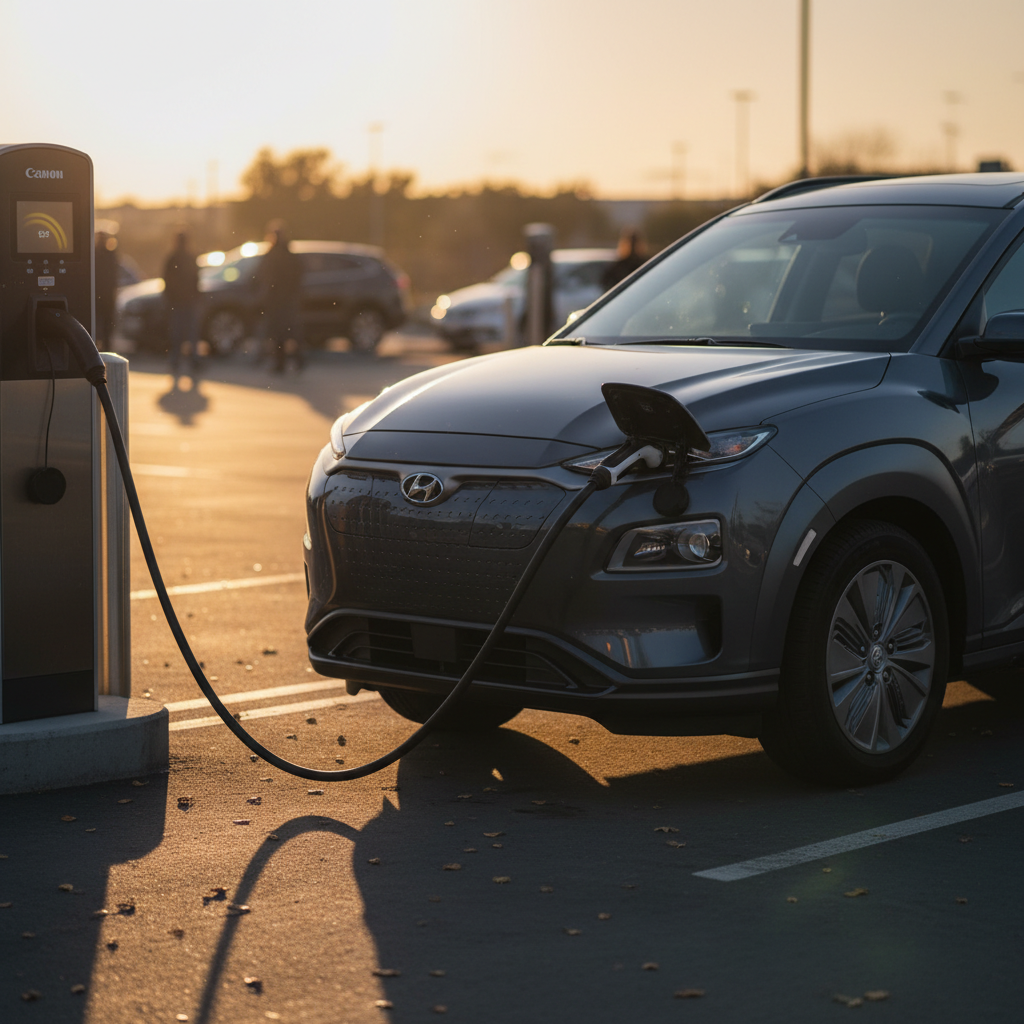
Plug in when possible
Grid power can cover part of the initial cabin and battery heating demand instead of drawing all of it from stored energy.
Set a departure schedule
Give the vehicle a target time rather than guessing how early to start the climate system.
Route to fast chargers
If supported, select the charging stop in the car’s native navigation so battery preparation can begin automatically.
Use targeted heat
Heated seats and a heated steering wheel can keep you comfortable with less reliance on aggressive whole-cabin heating.
Check tire pressure
Cold weather can lower tire pressure. Inflate the tires to the vehicle manufacturer’s specified pressure for proper efficiency and handling.
If you charge at home, keep the vehicle connected until you’re ready to leave; the car can still decide when to draw power according to its settings. Owners comparing charging setups can review Level 1 versus Level 2 home charging. After departure, smooth acceleration and sensible climate settings help protect the range that preconditioning preserved.
If the car is on the charger, precondition before you drive. Heat it up while it’s still attached to the grid so you’re not using as much of your stored range to do those jobs.
What Recharged battery data shows
Recharged’s battery inspections show why you should separate temporary winter range changes from long-term battery condition. Across 2,242 Recharged Score inspections, tested remaining capacity averaged 93.9% of original capacity, with a median of 94.9%. Tested real-world range across that mixed group averaged 266 miles and had a median of 268 miles.
Those fleet-wide results are not a winter experiment, and the vehicles span different models, ages, and usable battery sizes. Their value is the baseline they provide: a lower dashboard estimate on a freezing morning does not, by itself, prove permanent degradation. A proper EV battery-health assessment examines the battery directly rather than judging it from one cold-weather range reading.
Preconditioning is not a battery-health test
Recharged data
Used EV battery health
94%
avg remaining capacity
From Recharged battery inspections, not manufacturer estimates.
- Lowest
- 63%
- Median
- 95%
- Highest
- 100%
- Est. range
- 266 mi avg
- Cell balance pass
- 100%
- Quick charges
- 18 avg
- Slow charges
- 65 avg
Average cell imbalance: 7.3 mV
Based on vehicles Recharged tested
Recharged data
Used EV prices at Recharged
$30,997
median list price
Current list prices for matching inventory at Recharged.
- Lowest
- $12,996
- Average
- $34,803
- Highest
- $146,998
Average Recharged Score on these listings
4.8 / 5
Range
3.7 – 5.0
Based on available listings
Every EV is battery-tested with a Recharged Score. Nationwide delivery.
Preconditioning helps, but it cannot erase winter
Preconditioning reduces avoidable energy use after departure, but it cannot eliminate every cold-weather penalty. Recharged’s winter guidance uses a broad estimated range-loss band of 10% to 40% because the result depends heavily on the vehicle and how you use it. Temperature, cabin-heater demand, windshield defrosting, tire pressure, speed, acceleration, trip length, and whether the car was parked indoors can all change the outcome.
Short trips can feel especially inefficient because the vehicle repeatedly heats a cold cabin without spending much time cruising. Parking in a garage can help because the cabin and battery may not become as cold, but plugging in outdoors is still useful. The right expectation is better winter efficiency and comfort, not summer range recreated by software.
Don’t assume remote heat warms the battery
Instant offer, trade-in, or consignment. Pickup available.
EV winter preconditioning FAQ
The bottom line
Winter preconditioning works best when you treat it as a plugged-in departure routine, not a cure for every cold-weather range loss. Schedule the cabin before leaving, let the car manage its battery temperature where supported, and use factory navigation when heading to a compatible fast charger. When shopping for a used EV, verified battery capacity from a Recharged Score Report gives you a more meaningful measure of battery condition than a dashboard range estimate captured on one cold day.