If you’ve shopped for an electric car lately, you’ve probably seen "EV heat pump" listed right next to big-ticket specs like battery size and DC fast-charge speed. The promise is simple: more winter range and a warmer cabin using less energy. But what is an EV heat pump, how does it actually work, and is it something you really need, or just one more buzzword on a window sticker?
In a hurry? Here’s the short version
What is an EV heat pump?
In simple terms, an EV heat pump is a clever heating and cooling system that works a lot like a home heat pump or an air conditioner running in reverse. Instead of burning fuel or glowing red-hot heater coils, it uses a refrigeration cycle to move heat from one place to another, from outside air or waste heat from the car’s components into the cabin and battery.
Every modern EV already has an air-conditioning system. A heat pump turns that system into a two-way street. With a few extra valves and some smart plumbing, the car can use the same compressor and refrigerant loop to either cool the cabin in summer or pull heat into it in winter. The result: you stay warm while using far less energy from the battery than a simple electric heater would need.
Why cold weather hurts EV range
Cold weather is tough on every car, but it’s especially noticeable in EVs because you see your range estimate change in real time. Two things are happening at once: the battery chemistry slows down in low temperatures, and you’re asking the car to burn energy to keep the cabin and the pack warm.
- At around 32°F, most EVs lose about 20% of their range compared with ideal temperatures, mainly due to heating loads.
- Across large real-world datasets, EVs with heat pumps typically retain about 83% of their normal range in freezing temps, while those without are closer to 75%.
- Older EVs with small batteries and resistive heaters can see 30–40% range loss on long winter highway drives, especially at higher speeds.
Gas cars quietly cheat here. Their engines throw off so much waste heat that the cabin heater is essentially free. An EV is efficient enough that it doesn’t have spare heat lying around, so if it uses a traditional electric heater, every extra kilowatt going to warmth is a kilowatt you can’t use for miles.
How an EV heat pump actually works
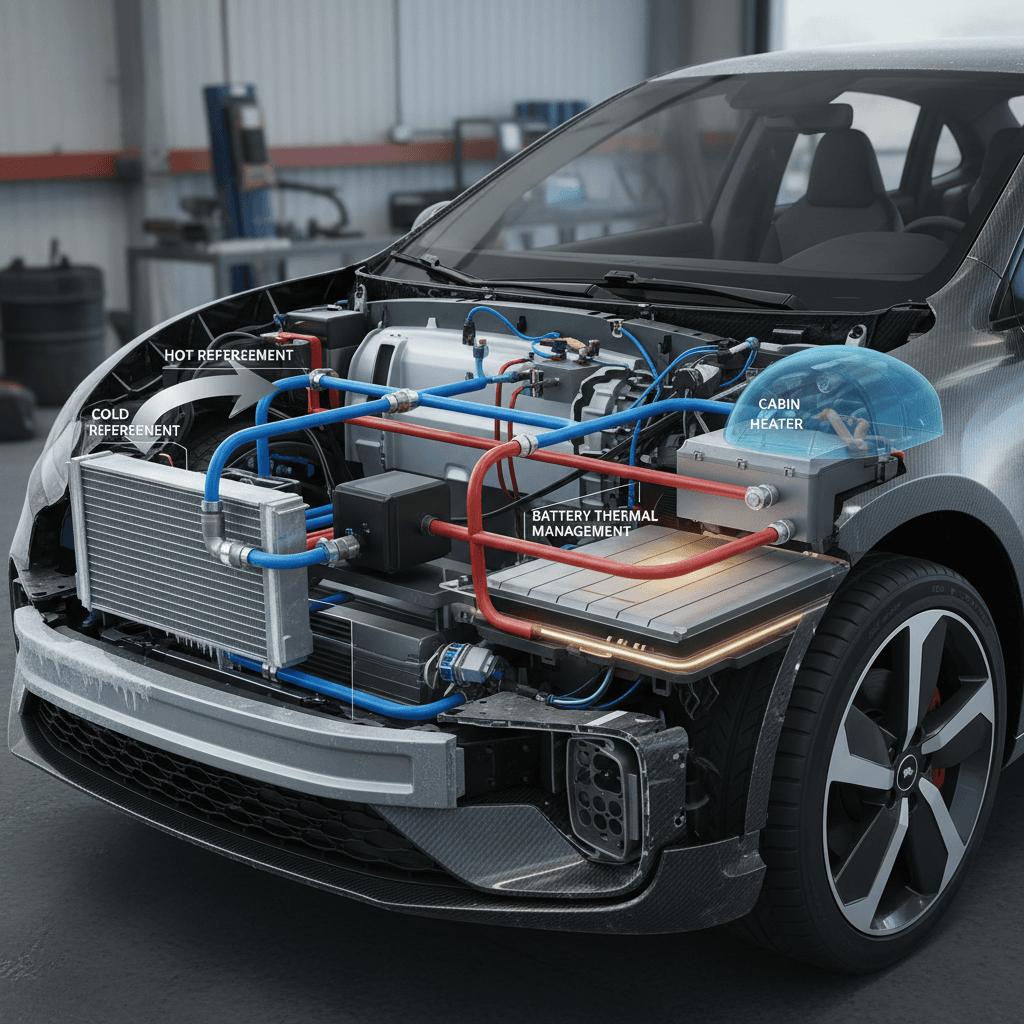
Under the skin, an EV heat pump is just a specialized vapor-compression refrigeration system. The components have intimidating names, compressor, condenser, evaporator, expansion valve, but the basic idea is the same as your kitchen refrigerator, only smarter and reversible.
1. Moving heat, not making it
A liquid refrigerant absorbs heat as it evaporates into a gas in one part of the system, then releases that heat as it condenses back to a liquid elsewhere. By running this loop and squeezing the gas with a compressor, the system can pull low-grade heat from cold air and concentrate it into useful cabin warmth.
2. Reversible plumbing
With additional valves, the refrigerant’s path can be flipped. In summer, the heat pump acts like a normal A/C system, moving heat from the cabin to the outside. In winter, it reverses, moving heat from outside air and drivetrain components into the cabin and battery.
3. Sharing heat around the car
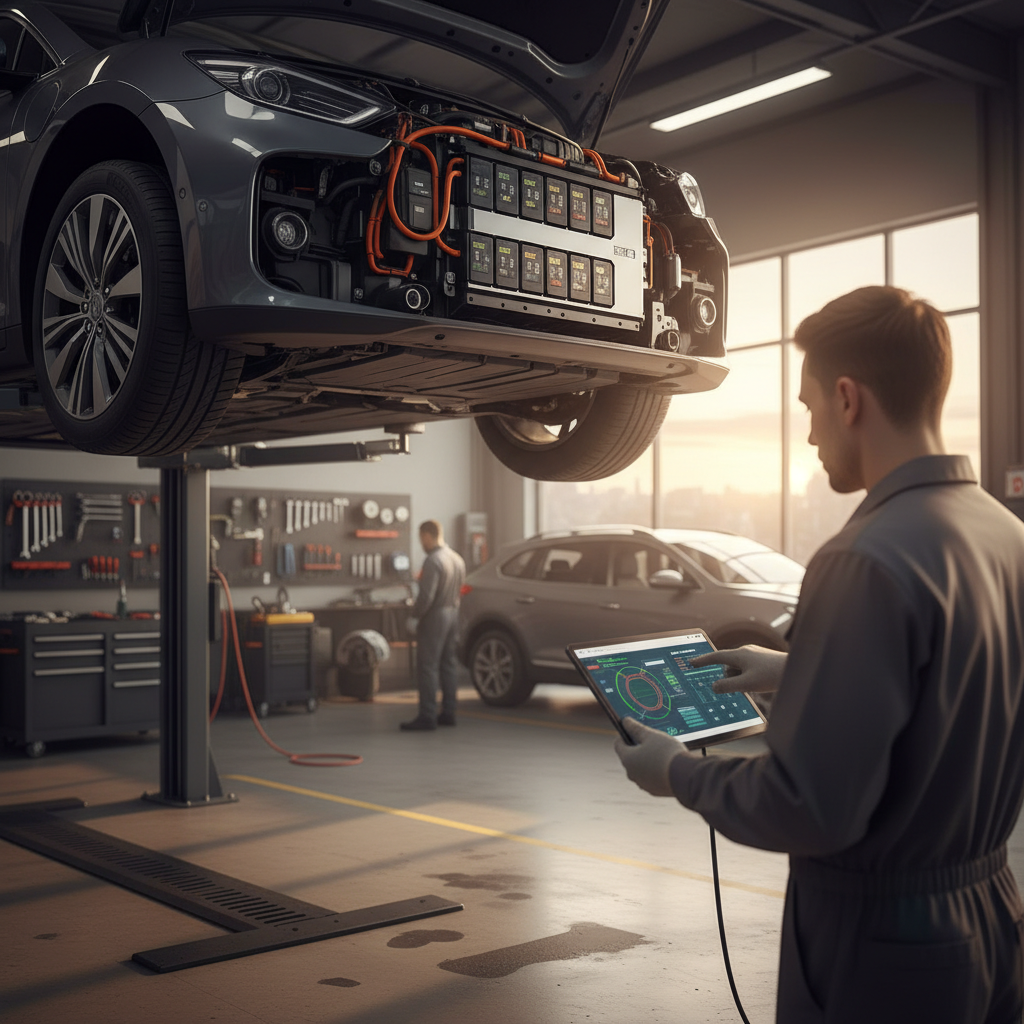
Modern EVs don’t just heat the cabin. The same loop can warm or cool the battery pack, the power electronics, and sometimes even the motor. Waste heat from those components can be scavenged instead of thrown away, then sent to wherever it’s most useful.
4. Smarts behind the scenes
Software decides what needs heat or cooling at any moment, your toes, the windshield, or the battery getting ready for a fast charge. That’s why you’ll see the car preconditioning the battery on its own when you navigate to a DC fast charger.
Heat pump vs. resistive heater: what’s the real difference?
The traditional way to heat an EV cabin is a resistive heater, essentially an electric space heater built into the car. Run current through a heating element, blow air across it, enjoy toastiness. It’s simple, reliable, and it always works, even in brutal cold. The catch: it’s energy-hungry.
Heat pump vs. resistive heater in your EV
Both keep you warm. One is much kinder to your range.
Heat pump
- Efficiency: Typically delivers 2–3 units of heat for every 1 unit of electricity.
- Energy use: Often 2–4 kW once the cabin is stabilized.
- Pros: Better winter range, gentler battery usage, can share heat with battery.
- Cons: More complex, less effective in extreme cold, not yet standard on every EV.
Resistive heater
- Efficiency: 1:1, every 1 kW in becomes 1 kW of heat.
- Energy use: Commonly 5–7 kW in cold weather, plus spikes for defrost.
- Pros: Simple, robust, provides heat even in very low temps.
- Cons: Significant range hit on long winter drives; all that power comes straight off the pack.
Think in miles, not kilowatts
How much range can an EV heat pump save?
What EV heat pumps typically save in winter
Different studies land on slightly different numbers, but they all agree on the direction: heat pumps meaningfully reduce winter range loss. Real‑world data from large EV fleets in North America and Europe shows that in typical freezing conditions, heat pumps can cut range penalties by about half compared with resistive-only systems.
That doesn’t magically erase winter losses, cold batteries still need extra care, and aerodynamics don’t love snow tires and slush. But if you live where winter coats aren’t optional, a heat pump can be the difference between a comfortable round-trip commute and a white‑knuckle watch-the-gauge drive back home.
When EV heat pumps work best, and their limitations
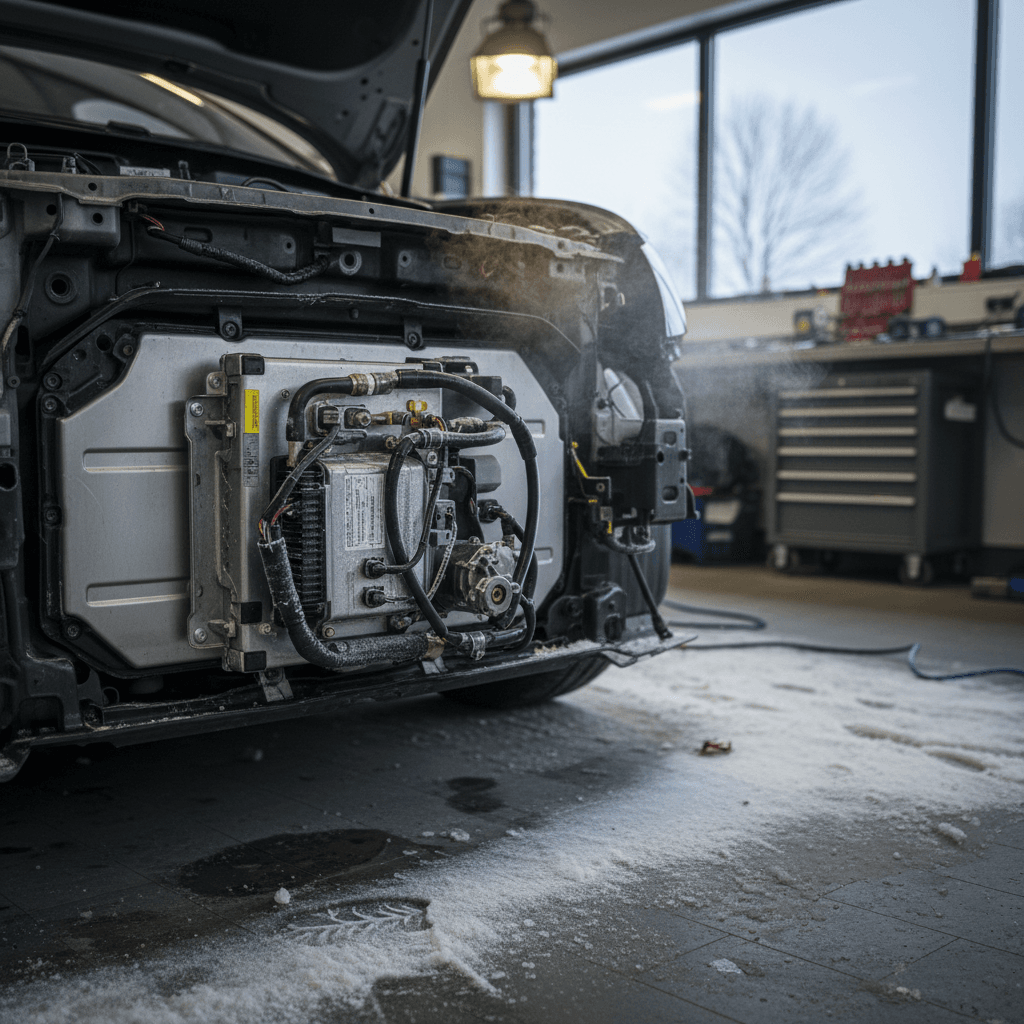
Heat pumps aren’t magic, and they do have a comfort zone. They shine in the kind of cold most people actually live with, think 20–40°F, then gradually lose their advantage as you head into deep‑freeze territory.
Where EV heat pumps help most
1. Typical winter days (20–40°F)
This is where heat pumps are at their best. There’s still enough heat in the air to harvest, so the system can deliver big efficiency gains versus resistive heating while keeping the cabin toasty.
2. Stop‑and‑go or mixed driving
At lower speeds, your EV already uses less power to move. Cutting HVAC draw by a few kilowatts makes a bigger dent in total energy use, and that’s where you really feel the extra range.
3. Preconditioning while plugged in
When you remotely warm the car before you leave, the heat pump can bring the cabin and battery into their comfort zones using grid power, not battery power.
4. Mild shoulder seasons
Even when it’s just chilly rather than truly cold, a heat pump avoids big spikes in heater use during short trips, so your displayed efficiency looks more like summer than winter.
Where heat pumps struggle
Which EVs have heat pumps today?
A few years ago, heat pumps were rare outside of premium European EVs. That’s changing fast. As real-world winter data has piled up, more automakers have started adding them, sometimes as standard equipment, sometimes as part of a cold‑weather or efficiency package.
Examples of EVs commonly offering heat pumps
Always double‑check the specific model year and trim, heat pumps can be standard, optional, or bundled in a package.
| Brand | Model (recent years) | Heat pump availability | Notes |
|---|---|---|---|
| Tesla | Model Y / newer Model 3 / Model X / Model S | Standard on most recent US builds | Earlier Model 3s used resistive heaters only. |
| Hyundai / Kia | Ioniq 5 / Ioniq 6 / Kona Electric / EV6 / EV9 | Often standard or in cold‑weather packs | Very efficient winter performers when equipped. |
| Nissan | Ariya / some Leaf trims | Available or standard depending on trim | Older Leafs may or may not have a heat pump. |
| Volkswagen | ID.4 | Available in certain trims or packages | Early US models relied more on resistive heating. |
| GM | Cadillac Lyriq / Chevy Equinox EV | Equipped but still being refined | Some early data shows room for improvement in tuning. |
| Rivian | R1T / R1S | Uses advanced thermal management with heat pump | Optimized for overlanding and towing in varied climates. |
This is not an exhaustive list, but it gives you a feel for where heat pumps tend to show up.
Model‑year details matter
Do you need a heat pump in your next EV?
Whether you "need" an EV heat pump depends less on the technology itself and more on where you live and how you drive. For some drivers it’s a must‑have; for others, it’s a nice‑to‑have that shouldn’t overshadow more important factors like battery size and charging speed.
How much should you prioritize a heat pump?
Match your climate and driving pattern to the right level of urgency.
Mild climates
Example: Coastal California, much of the Southeast.
- Winter temps rarely near freezing.
- Range loss is noticeable but modest.
- Heat pump: Nice bonus, not a dealbreaker.
Four‑season states
Example: Midwest, Northeast, Pacific Northwest.
- Regular stretches around 20–32°F.
- 20–30% winter range loss is common.
- Heat pump: Strongly recommended, especially for highway commuters.
Deep‑freeze regions
Example: Northern Plains, interior Canada, mountain towns.
- Frequent single‑digit or below‑zero days.
- Heat pump advantage fades in extreme cold.
- Heat pump: Still helpful, but focus even more on battery size, all‑wheel drive, and reliable fast‑charging options.
Shopping used EVs: heat pumps and the Recharged Score
On the used market, it’s not always obvious which specific car has a heat pump. Listings may simply say "cold‑weather package" or nothing at all, and the window sticker from three owners ago is long gone. That’s where a little homework, and some help, pays off.
Every vehicle sold through Recharged includes a Recharged Score Report with verified battery health, thermal‑system checks, and option decoding. When heat‑pump‑equipped from the factory, that’s called out clearly in the vehicle details, right alongside real‑world range expectations so you’re not guessing how a car will behave in January.
Used EV checklist: heat pump and winter readiness
1. Confirm heat pump equipment
Ask specifically whether the car has a factory heat pump and which package or trim it came with. If you’re browsing on Recharged, this is clearly shown in the listing details.
2. Look beyond the brochure range
Ask how much real‑world winter range to expect, not just the original EPA number. A solid battery plus a heat pump is worth more than an optimistic spec sheet.
3. Check battery health
A tired battery will hurt winter range far more than the presence or absence of a heat pump. The Recharged Score includes <strong>measured battery health</strong>, so you know what you’re buying.
4. Inspect for cold‑weather gear
Heated seats, steering wheel, and mirrors can keep you comfortable with lower cabin temperatures, reducing HVAC load regardless of heater type.
5. Consider your charging reality
If you can easily plug in at home or work, winter range anxiety eases. If you rely on public chargers, the efficiency bonus from a heat pump becomes more valuable.
Winter driving tips, with and without a heat pump
Whether your EV has a heat pump or not, you can do a lot to stack the deck in your favor when the forecast turns blue and your range number shrinks. Think of the heater type as one tool, your driving habits and prep matter just as much.
Practical winter EV tips
These help every EV. Heat pump or not.
Use shore power for heat
- Precondition the cabin while plugged in at home or at work.
- Many cars let you schedule this so the cabin and battery are warmed just before departure.
- This is essentially free comfort if you’re on a fixed‑rate electricity plan.
Lean on seat and wheel heaters
- Heated seats and steering wheels sip energy compared with full‑cabin heat.
- You can often be comfortable with the cabin a few degrees cooler.
Drive a little slower
- Aerodynamic drag rises quickly with speed, especially in dense, cold air.
- Backing off 5–10 mph on the highway can save more range than any HVAC trick.
Keep the car clean
- Brush snow and ice off the car; don’t expect it to melt like it might on an engine‑powered vehicle.
- Clear sensors and cameras so driver‑assist systems work properly.
Plan realistic winter legs
- In real cold, assume you’ll see 15–30% less range than in summer.
- Use your nav’s EV routing and give yourself extra buffer on rural routes.
Stay on top of basics
- Check tire pressures, cold air drops PSI and hurts efficiency.
- Apply software updates; manufacturers often refine thermal strategies over time.
Fast charging in deep cold
EV heat pump FAQ
Frequently asked questions about EV heat pumps
Bottom line: how much should you care about an EV heat pump?
An EV heat pump isn’t the star of the spec sheet like a big battery or blistering fast‑charge speeds, but it quietly shapes how your electric car feels to live with in real winter. In moderate cold, it can preserve a meaningful chunk of range and let you run the heat without constantly doing math in your head.
If you live where frost is a seasonal visitor rather than a permanent roommate, a heat pump is a strong nice‑to‑have. In four‑season states where 20°F mornings are a fact of life, it’s worth putting on your must‑have list. And if you’re shopping the used market, paying attention to whether a car has a heat pump, and how healthy its battery is, can make the difference between a winter‑friendly daily driver and one that spends January tethered to a charger.
At Recharged, every used EV comes with a transparent Recharged Score, clear option details, and EV‑savvy support so you can see exactly how a particular car will behave when the temperature drops. That way, you’re not just buying an EV that looks good on a sunny test drive, you’re buying one that still feels right on the coldest morning of the year.