If you’re looking for EV charging stations in Richmond, VA, you’re not alone. Central Virginia has quietly become one of the better‑served EV regions on the East Coast, from DC fast chargers off I‑95 to Level 2 stations at shopping centers and workplaces. The key is understanding where the chargers are, how fast they are, and how to match them to the way you drive.
Quick snapshot: EV charging in Richmond
Why EV charging in Richmond matters now
Virginia’s EV & charging momentum
Richmond sits at the intersection of I‑95, I‑64, and I‑295, so it sees both daily commuter traffic and plenty of through‑travel. That’s why you’ll find an outsized number of DC fast chargers near highway exits and a healthy mix of workplace and retail Level 2 chargers inside the city. For locals, it means you can lean on home charging most of the time and treat public stations as a backup or road‑trip tool.
Types of EV chargers you’ll see around Richmond
Level 2 (AC) charging
These are the most common public chargers in Richmond. They use the J1772 connector for most EVs (Tesla drivers use an adapter or NACS cable) and typically add 20–35 miles of range per hour. You’ll find them at office parks, parking decks, hotels, and shopping centers.
- Best for: workplace charging, overnight hotel stays, topping up while you shop or dine
- Typical power: 6–11 kW
- Parking time: 1–4 hours
DC fast charging (DCFC)
DC fast chargers are what you want on road trips. In the Richmond area you’ll see CCS plugs for most non‑Tesla EVs and NACS/Tesla connectors at Superchargers. Many sites offer 50–150 kW; newer sites can hit 250 kW or more.
- Best for: highway travel, quick top‑ups on long days
- Typical session: 15–35 minutes from low state of charge to ~80%
- Locations: near I‑95/I‑64 exits, big shopping centers, and some downtown garages
Watch your plug type
Major EV charging networks in Richmond
Who actually runs the chargers?
You’ll see a handful of familiar network names around town.
Tesla Supercharger
Richmond has a Tesla Supercharger site at White Oak Village (4441 S Laburnum Ave) with around 18–20 stalls up to 150 kW, open 24/7. Many stalls now support non‑Tesla EVs with the right app setup or adapter.
Ideal for: fast highway top‑ups on I‑64 east of downtown.
Electrify America & others
Large DC fast hubs from Electrify America and other providers sit near I‑95 and major shopping areas. Expect a mix of 150 kW and 350 kW units plus some Level 2 ports.
Ideal for: non‑Tesla EVs needing fast highway charging.
Destination & workplace charging
Hotels, hospitals, universities, and employers across the metro area host networked Level 2 chargers (ChargePoint, EVgo, Flo, and others). Often you’ll pay via the network app or a parking fee.
Ideal for: daily commuting, overnight hotel stays, or topping up while you’re at an event.
The exact station list changes frequently as new NEVI‑funded sites and private installations come online. Your best bet is to rely on live‑data apps like PlugShare, A Better Routeplanner, or the native navigation in your EV to confirm availability before you drive across town.
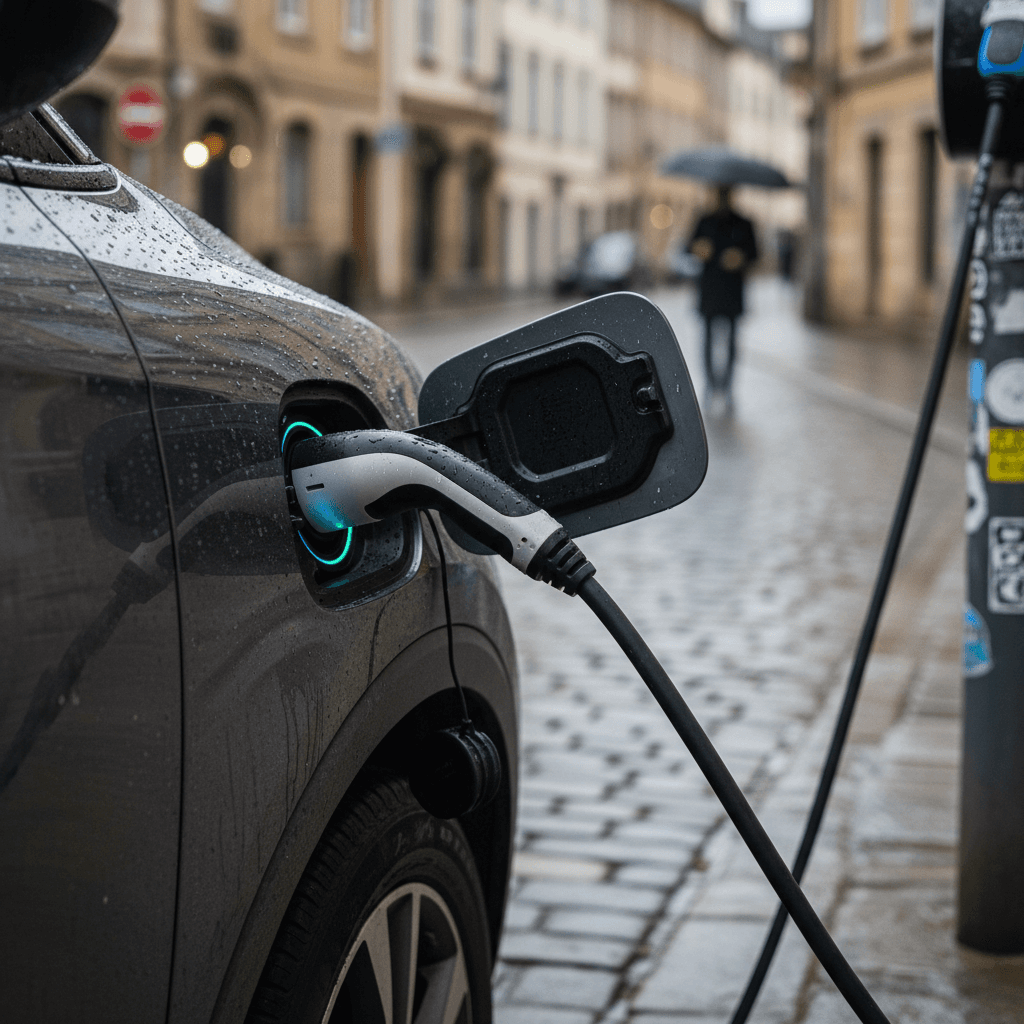
DC fast charging in and around Richmond
Example DC fast charging locations around Richmond
A few representative sites drivers commonly use. Always check your app for real‑time status and the latest additions.
| Area | Typical location type | Connector types | Best use case |
|---|---|---|---|
| East Richmond / White Oak | Tesla Supercharger hub at regional shopping center | NACS / Tesla; growing CCS access for non‑Teslas | Quick top‑ups for I‑64 traffic and airport area |
| I‑95 corridor (north/south of city) | Highway travel plazas and big box retail | CCS, CHAdeMO (legacy), some NACS | Road trips toward D.C., Carolinas, and Tidewater |
| Downtown & Shockoe | Parking decks and mixed‑use developments | Mostly Level 2; a few DC fast options expanding | Short, opportunistic top‑ups while you work or dine |
Not an exhaustive list, think of this as a starting point when planning trips.
Road‑trip planning tip
Level 2 public charging in Richmond neighborhoods
- Downtown & Shockoe Bottom: Parking decks near office buildings and apartments often have Level 2 EV spots, perfect if you commute in and leave your car for several hours.
- Fan & Museum District: Look for chargers in public lots serving museums, hospitals, and retail corridors where street parking is tight.
- Short Pump & West End: Big‑box shopping centers and lifestyle malls along Broad Street and around Short Pump Town Center frequently host multiple Level 2 units.
- Near universities: Campus garages and nearby mixed‑use projects may offer paid Level 2 charging aimed at students, staff, and visitors.
- Hotels and event venues: Many newer hotels around downtown and the suburbs advertise EV charging as an amenity, call ahead to confirm availability and whether it’s reserved for guests.
Good news for apartment dwellers
Home EV charging options with Dominion Energy
For most Richmond‑area drivers, home charging is the single biggest quality‑of‑life upgrade when you move to an EV. You plug in at night, wake up to a full battery, and only use public stations on your terms. Dominion Energy, headquartered in Richmond, has leaned into this with several programs that directly affect local EV owners.
Key Dominion Energy EV charging programs for Richmond homes
Check eligibility details on Dominion’s site before you apply.
Residential Charger Program
Dominion’s Residential Charger Program is a turnkey path to a Level 2 charger. They coordinate the electrician, supply an approved charger, and roll the cost into your bill with fixed payments (about $40/month for five years or a one‑time payment around $1,800).
Best for homeowners who want a one‑stop solution and predictable costs.
EV Charger Rewards
If you install an eligible smart Level 2 charger, EV Charger Rewards can offer a rebate on equipment plus an annual incentive (around $40/year) for allowing minor adjustments to your charging during peak demand.
Best for drivers who charge at night and don’t mind automated scheduling.
Time‑of‑use & off‑peak savings
Quick checklist: getting home charging set up in Richmond
1. Confirm your electrical panel capacity
Before you order a charger, have an electrician or program partner confirm that your panel can support a 40–60 amp circuit for Level 2 charging.
2. Decide where the car will usually park
Garage, driveway, or carport? The closer your charger is to your panel, the cheaper and easier the install usually is.
3. Compare DIY vs. Dominion’s turnkey program
Some homeowners prefer to pick their own hardware and contractor; others value the simplicity of Dominion’s bundled Residential Charger Program.
4. Register for incentives
If your charger qualifies, enroll in EV Charger Rewards and any other available rebates soon after purchase, many programs have 60–120 day windows.
Planning a Richmond EV trip: parking downtown and the I‑95 corridor
Whether you live here or you’re just passing through, Richmond’s layout shapes how you’ll use charging. Downtown and the Fan reward drivers who park once and walk, while suburban nodes like Short Pump and Midlothian are built around large parking lots and big‑box retail. I‑95 and I‑64 carve right past the city, and that’s where most high‑power DC fast sites cluster.
How to think about charging based on your trip type
Daily commuter in the Richmond metro
Rely on home Level 2 overnight and treat public Level 2 chargers as a backup.
If you park in a downtown garage with chargers, plug in when you know you’ll be there 3+ hours.
Use apps to mark your favorite reliable stations near your workplace and grocery store.
I‑95 / I‑64 road‑tripper
Plan DC fast stops every 100–150 miles, not every 50, you’ll save time overall.
Favor highway‑adjacent hubs with multiple stalls so you’re not stuck waiting.
Use your car’s trip planner (or A Better Routeplanner) to model hills, weather, and traffic.
Visitor staying downtown or near Short Pump
Confirm whether your hotel has guest‑only Level 2 stations and if fees apply.
If you arrive with low charge, hit a DC fast site at the edge of the city before heading into dense neighborhoods.
Once parked for the evening, treat any available Level 2 as a bonus rather than a necessity.
Mind parking rules at public chargers
Cost: How much EV charging in Richmond really runs
Home charging with Dominion
For many Richmond drivers, home charging works out to roughly $1–$2 of electricity per day for a typical commute. With the right rate plan and overnight charging, your cost per mile can be dramatically lower than gasoline, often equivalent to paying well under $1 per gallon.
Even if your monthly electric bill rises, it’s usually offset by a much larger drop in fuel spending.
Public Level 2 & DC fast charging
Public Level 2 pricing varies: some chargers are free (especially at workplaces or hotels), while others bill per kWh or per hour, plus any parking fees. DC fast charging is more expensive per kWh but saves time, ideal when your time is worth more than the extra few dollars.
As a rule of thumb, home charging should be your default; public fast charging is your convenience layer.
Money‑saving tip for Richmond drivers
Charging tips for used EV shoppers in Richmond
If you’re shopping the Richmond market for a used EV, the quality of the car’s battery and how it fits your local charging reality matter just as much as price and mileage. That’s exactly the problem Recharged set out to solve.
How Recharged helps Richmond buyers match cars to chargers
Charging isn’t one‑size‑fits‑all, especially with used EVs.
Verified battery health
Every vehicle on Recharged comes with a Recharged Score Report that includes an independent look at battery health, so you can see how much real‑world range to expect before you commit.
Range that fits your routes
Recharged specialists can help you think through your daily routes, commutes on I‑64, school runs in the West End, or trips to D.C., and suggest models that pair well with Richmond’s charging layout.
Financing, trade‑in & delivery
From financing to trade‑ins and nationwide delivery, Recharged streamlines the used‑EV buying process. If you’re local to Virginia, you can also visit the Richmond Experience Center to talk charging and ownership with EV‑focused staff.
Ready to find your next EV?
Browse VehiclesBefore you buy a used EV in Richmond, check these charging essentials
Confirm connector compatibility
Make sure the car’s DC fast connector (CCS or NACS) lines up with the networks you plan to use most around Richmond and on your regular routes.
Match range to your real routes
Overlay your daily and weekly driving on a map of local chargers. A slightly shorter‑range EV is fine if you have home charging and backup Level 2 nearby.
Inspect charging hardware
Check that the portable charge cord is included, the charging port and door work smoothly, and there are no warning lights related to charging.
Ask about previous charging habits
Frequent fast‑charging isn’t automatically a deal‑breaker, but it’s worth understanding how the previous owner used the car, especially on older models.
Review the Recharged Score Report
Use the report’s battery‑health and pricing insights to decide whether the car’s age, mileage, and range trade‑offs make sense for you.
FAQ: EV charging stations in Richmond, VA
Frequently asked questions about EV charging in Richmond
Bottom line: Driving and charging an EV in Richmond
Richmond is a friendlier place to drive an EV than many people assume. Between a growing web of public Level 2 and DC fast chargers, forward‑leaning Dominion Energy programs, and a strategic position on I‑95, you have plenty of options to keep your battery topped up, whether you’re commuting downtown, living in the suburbs, or road‑tripping up the East Coast.
If you’re just starting your EV journey, focus on two questions: Where will I charge most of the time? and How much real‑world range do I truly need? Get those answers right, and Richmond’s charging infrastructure becomes an asset, not a worry. And when you’re ready to shop for a used EV, Recharged can pair local charging know‑how with verified battery‑health data and fair pricing, so the car you buy fits both your budget and the way you actually drive in Central Virginia.