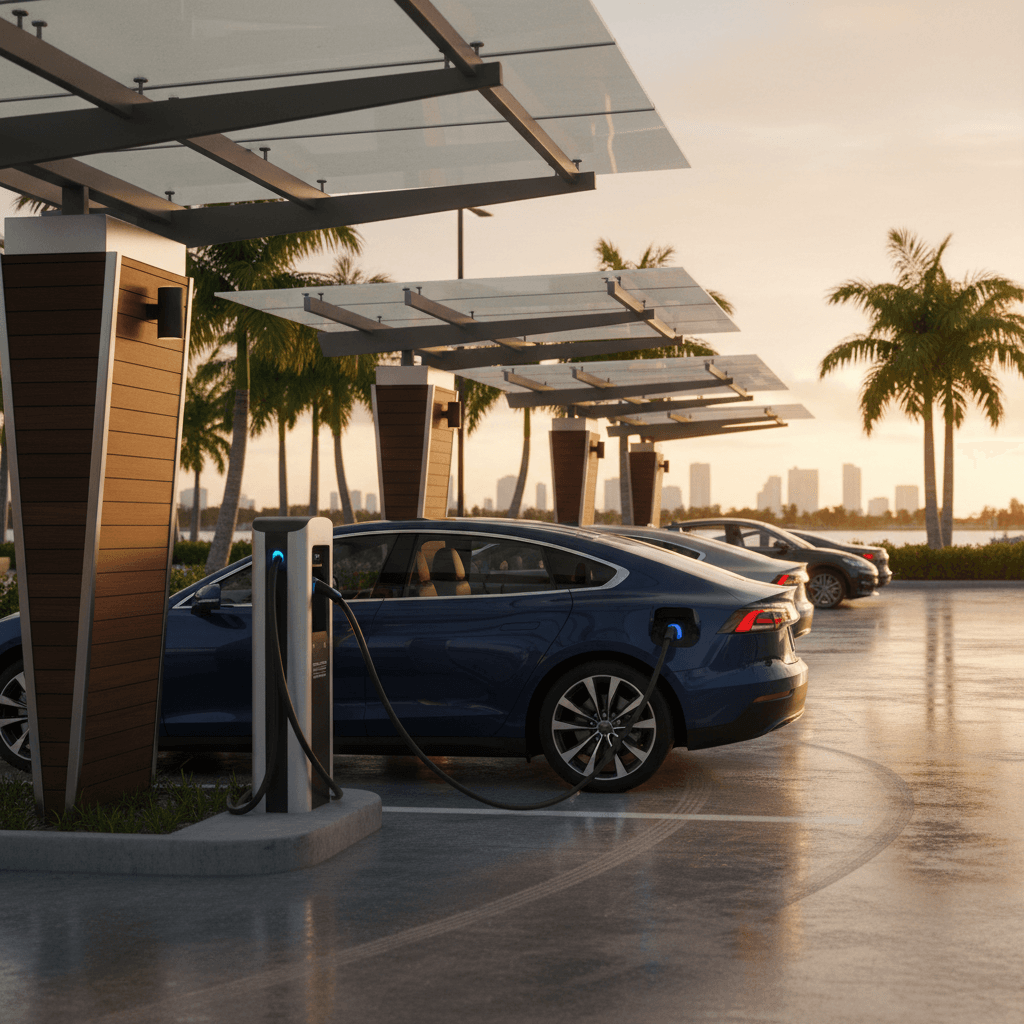
If you live in the Washington DC–Maryland–Virginia region, you’re in one of the better places in the country to own an electric vehicle. The density of EV charging stations in the DMV area has grown quickly, and today DC, Maryland, and Virginia together offer a robust mix of home, workplace, and public charging options. The trick is understanding where those chargers are, what type you’re pulling up to, and how to plan your routine so charging feels boring, in a good way.
Quick snapshot
Why the DMV Is a Strong EV Charging Region
DMV EV & Charging Growth at a Glance
For EV drivers, what matters is whether you can find a charger where and when you need it. On that front, the DMV punches above its weight. Maryland is among the top states for public chargers per square mile, and Virginia has become a national top‑10 player in total public chargers. At the same time, DC’s compact footprint means Level 2 and fast chargers are never far away if you know which apps to check.
Bottom line for locals
Types of EV Charging Stations You’ll Find in the DMV
Before you worry about where to charge, it helps to understand what you’re pulling up to. In the DMV, you’ll encounter all three major types of charging, but they serve different jobs:
Common Charging Types in DC, Maryland & Virginia
Match the station type to how long you plan to park.
Level 1 (120V)
• Uses a standard household outlet.
• Adds roughly 3–5 miles of range per hour.
• Best for overnight charging if you drive less than ~30 miles/day.
Common for single‑family homes but rare as a dedicated public option.
Level 2 (240V)
• Typical "destination" charging at garages, workplaces, hotels, and park‑and‑rides.
• Adds ~20–40 miles of range per hour depending on your car and amperage.
• Ideal for topping up while you’re parked for a few hours.
DC Fast Charging
• High‑power roadside or corridor charging, from ~50 kW up to 350+ kW.
• Adds ~150–250 miles of range per hour, sometimes more for newer EVs.
• Best for road trips or quick top‑ups when you’re low.
Think of this as the EV equivalent of a gas station stop.
Watch your plug type
Major EV Charging Networks in the DMV
The DMV is served by all the major national charging networks plus regional players. Knowing who operates a station helps you pick the right app, membership, and expectations:
Key Public Charging Networks Around DC, Maryland & Virginia
You’ll see these logos most often when hunting for a plug.
ChargePoint
• Dominant Level 2 provider nationwide, and strong across the DMV.
• You’ll find ChargePoint at office parks, universities, hospitals, and municipal garages.
• Accounts are often tied to workplace or property programs.
Electrify America
• DC fast charging network headquartered in Reston, VA.
• High‑power chargers (up to 350 kW) along I‑95, I‑66, I‑270, and major corridors.
• Supports CCS and CHAdeMO, and is rolling out NACS connectors.
EVgo
• Focus on urban and retail‑adjacent DC fast charging.
• Strong presence in the Washington DC metro area including DC proper, Montgomery and Prince George’s Counties, Arlington, Fairfax, and beyond.
• Good option if you live or work inside the Beltway.
Tesla Supercharger & Destination
• Dense along highways and in suburbs; destination chargers at hotels and parking garages.
• Increasingly opening to non‑Tesla EVs via the Tesla app at select sites.
• Excellent reliability record, especially on road‑trip routes.
Utilities & Municipals
• Pepco, Dominion Energy, BGE and local governments operate Level 2 and some DC fast chargers at park‑and‑rides, transit hubs, and public lots.
• Pricing is often competitive, sometimes with time‑of‑use discounts.
Retail & Hospitality
• Grocery chains, big‑box stores, hotels, restaurants, and travel plazas increasingly host chargers (often via the networks above).
• Ideal for topping up while you’d be parked anyway.
Simplify your app clutter
Where to Charge in DC, Maryland, and Virginia
Washington, DC
- Downtown & federal core: Parking garages near Metro stops and office towers often host ChargePoint Level 2 and, increasingly, DC fast chargers.
- Neighborhoods: Curbside Level 2 pilots and garage chargers in places like Navy Yard, NoMa, and Shaw help apartment dwellers.
- Major roads: Fast chargers are clustered near I‑395, New York Ave/US‑50, and key retail nodes.
Expect to pay for both parking and energy at many garages; factor that into your cost comparisons.
Maryland
- Suburban DC (MoCo/PG): Dense mix of Level 2 and DC fast chargers at shopping centers, Metro park‑and‑rides, and office campuses.
- Baltimore region: Level 2 and DC fast chargers at Inner Harbor garages, hospitals, and university campuses; additional sites along I‑95 and the tunnels.
- Corridors & shore: I‑95 travel plazas, the Bay Bridge, and Eastern Shore routes now include Level 2, DC fast chargers, and Tesla Superchargers.
Maryland also fines drivers who occupy charging spaces without actively charging, so move your car promptly when you’re done.
Virginia
- Northern Virginia: High concentration of fast chargers around Tysons, Arlington, Alexandria, and Reston along I‑495, I‑66, and the Dulles Toll Road.
- Corridors: Additional DC fast charging along I‑95 toward Fredericksburg and Richmond and on I‑81 for Shenandoah and Roanoke runs.
- Tourist & rural areas: Level 2 chargers in small towns, wineries, and lodging help bridge gaps between fast‑charging hubs.
Virginia’s mix of urban density and long rural stretches makes route planning especially important once you get beyond the Beltway.

How to Find EV Charging Stations in the DMV
EV charging is increasingly software‑driven. The apps you choose matter just as much as the hardware in the ground. Here are the most useful tools for navigating EV charging stations in the DMV area:
Best Ways to Locate EV Chargers Around the DMV
Combine crowd‑sourced data with network apps for the most reliable picture.
1. Mapping & aggregator apps
PlugShare, A Better Routeplanner (ABRP), and mainstream map apps (Google, Apple, Waze) pull data from multiple networks.
- Filter by connector type, power level, and network.
- Read recent check‑ins to avoid broken stations.
- Save favorite locations near home and work.
2. Network‑specific apps
Install apps for the networks you use regularly: ChargePoint, Electrify America, EVgo, Tesla, Blink, Shell Recharge, and utility‑backed apps where relevant.
- See real‑time stall availability.
- Start and stop sessions from your phone.
- Access lower member pricing or subscription plans.
3. In‑car navigation
Most newer EVs integrate public charging search directly into the built‑in navigation.
- Filter by charger speed and plug type.
- Route planning includes charging stops and estimated arrival SOC (state of charge).
- Some cars precondition the battery when routing to a fast charger to improve speeds.
Practical Steps Before You Drive to a Station
Check recent user check‑ins
In apps like PlugShare, sort by most recent check‑ins to see whether a station is online and how reliable it’s been over the last few weeks.
Confirm connector type and power level
Verify that the station supports your connector (CCS, NACS, CHAdeMO, J1772) and that the power level matches your expectations so you don’t confuse a Level 2 with a fast charger.
Look at site photos and access notes
Photos reveal details like parking garage height limits, pay kiosks, security gates, or whether you need to pull a ticket before entering.
Check parking rules and time limits
Many urban chargers have maximum stay limits, separate parking fees, or idle‑fee policies. These can quickly turn a cheap charge into an expensive one if you overstay.
Favor redundancy on road trips
When possible, plan routes where you have at least two different nearby fast‑charging options in case your first choice is full or down for maintenance.
Save your “ecosystem”
Cost: How Much Does Charging in the DMV Area Run?
Public charging pricing varies by operator, state rules, and whether you’re paying by kWh, by the minute, or via a subscription. In the DMV, you’ll see all three models, sometimes on the same stretch of highway. Here’s how to think about the costs.
Typical DMV Public Charging Cost Patterns
Exact prices change over time; always check your app before plugging in. This table is meant as a directional guide.
| Charging context | Typical pricing model | What to expect | Best use case |
|---|---|---|---|
| Home (Level 1/2) | Per kWh via your utility | Off‑peak residential rates often make this the lowest cost per mile, especially in Maryland and Virginia with time‑of‑use options. | Daily charging for commuters with driveway or garage access. |
| Workplace & municipal Level 2 | Per kWh, per hour, or flat session fee | Some employers or towns subsidize charging; others price close to retail electricity plus a small margin. | Daytime top‑ups while you’re parked anyway. |
| Retail & parking‑garage Level 2 | Mix of parking + energy fees | You might pay normal garage rates plus a per‑kWh fee or hourly premium for EV spots. | Errands downtown or in dense neighborhoods where home charging isn’t an option. |
| Highway DC fast charging | Per kWh or per‑minute (depending on state rules) | Fast charging is usually more expensive per mile than home charging but much faster in real‑world time. | Road trips and emergency top‑ups when you’re running low. |
Home charging is usually cheapest; DC fast charging offers speed at a premium.
Don’t ignore idle fees
Planning DMV Road Trips and Daily Commutes
Daily life and road trips place very different demands on the charging network. The DMV happens to support both use cases well, but your strategy will differ depending on the kind of driving you do most.
Charging Strategies for Common DMV Driving Patterns
Apartment & row‑house drivers
Prioritize access to reliable public Level 2 near home or work, garages, municipal lots, or curbside pilots.
Choose an EV with enough range to cover several days of driving between public sessions.
Consider Level 2 workplace charging as your “home base” if your employer offers it.
Get familiar with at least two nearby fast‑charging options for late‑night or weather‑related top‑ups.
Suburban commuters with home charging
Install or use a Level 2 charger in your garage or driveway if possible; set a daily charging limit (say 70–80%) to protect battery health.
Use public DC fast charging mainly for weekend trips out of the region, not daily commuting.
Take advantage of time‑of‑use rates from your utility by scheduling overnight charging.
For plug‑in hybrids, home Level 1 may be sufficient if your round‑trip commute is short.
Frequent I‑95 / I‑81 road‑trippers
Plan your route with ABRP or your car’s native planner, ensuring redundancy, especially in rural parts of Virginia and western Maryland.
Favor high‑power hubs near amenities like restrooms and food; the DMV has growing clusters at travel plazas and retail centers.
Arrive with a buffer (e.g., 10–20% battery) in case your first choice is busy or temporarily unavailable.
Stop earlier and more often in winter or heavy rain; cold batteries and weather can reduce both range and charging speeds.
Occasional drivers & second‑car EVs
Home Level 1 or shared Level 2 may be adequate if you drive only a few days a week.
Use public Level 2 in the city as a backup, think of it like filling a gas car once or twice a month.
Monitor your battery’s state of charge before long gaps between drives; avoid leaving the car at 0% or 100% for extended periods.
When you list a used EV for sale, documenting your charging habits and nearby infrastructure can boost buyer confidence.
DMV EV Charging Programs, Incentives, and Parking Rules
Local policy is a big reason the DMV region’s charging landscape looks better than most. While details change, a few themes are consistent: utilities are investing in public charging, cities are nudging new developments to include EV‑ready parking, and violations of EV‑only spaces are taken increasingly seriously.
- Utility programs: Pepco, Dominion, and BGE have all launched EV programs ranging from discounted home‑charging rates to co‑funded public and workplace chargers. Check your local utility’s site for current rebates on Level 2 equipment or special off‑peak pricing.
- Public funding: The DC region received nearly $4 million in 2024 federal grants dedicated to charging infrastructure, much of it targeting underserved communities in Northern Virginia and Maryland. That means more chargers coming to areas that historically lacked them.
- Building codes & new developments: More jurisdictions are requiring a percentage of parking spaces in new multifamily and commercial buildings to be EV‑capable, EV‑ready, or fully equipped with chargers, especially in urban and transit‑oriented developments.
- Enforcement of EV spaces: Maryland and Virginia increasingly fine gas cars (and EVs not actively charging) that block clearly signed EV‑only spots. In practice this means turnover is getting better at many high‑demand locations.
Don’t “ICE” your neighbors
Buying a Used EV in the DMV: How Charging Fits In
Because the DMV has both relatively dense charging and strong EV adoption, it’s a prime market for used EVs. But public charging doesn’t completely erase the importance of battery health and realistic range. When you’re evaluating a used EV, you want to know not just where you’ll charge, but how the car will perform at those chargers.
Questions to ask about charging
- What’s the car’s usable range today, not just its original EPA number?
- How fast can it charge on DC fast chargers (kW peak and typical speeds)?
- Is there a history of fast‑charging vs. home charging that might affect battery wear?
- Does the car support both CCS and NACS (directly or via adapter) if you plan to rely on public fast charging?
How Recharged can help
Every vehicle sold through Recharged comes with a Recharged Score Report that includes verified battery health and insights into how the car has been used and maintained.
- Battery diagnostics to set realistic range expectations for DMV commutes and road trips.
- Fair‑market pricing that reflects battery condition and local charging realities.
- EV‑specialist support to talk through charging strategies specific to your home, workplace, and favorite routes.
If you’re trading in or selling, transparent battery data and clear charging guidance can also make your car more attractive to the next owner.
DMV EV Charging FAQ
Common Questions About EV Charging Stations in the DMV Area
Key Takeaways for DMV EV Drivers
Owning an EV in the DMV today looks very different than it did even a few years ago. Maryland and Virginia have emerged as national leaders in public charging growth, DC is steadily building out urban options, and private networks are racing to fill in the gaps along major corridors. For you, that means less time worrying whether a plug exists and more time optimizing which chargers best fit your routine.
If you’re already an owner, focus on building a personal network of trusted stations, understanding your car’s charging behavior, and taking advantage of local utility programs. If you’re still shopping, especially for a used EV, pair the DMV’s strong charging landscape with transparent battery health data so you know exactly what kind of range and charging speeds to expect. That’s the philosophy behind the Recharged Score Report: make the hidden parts of EV ownership, like battery condition and charging, visible so you can buy and drive with confidence.