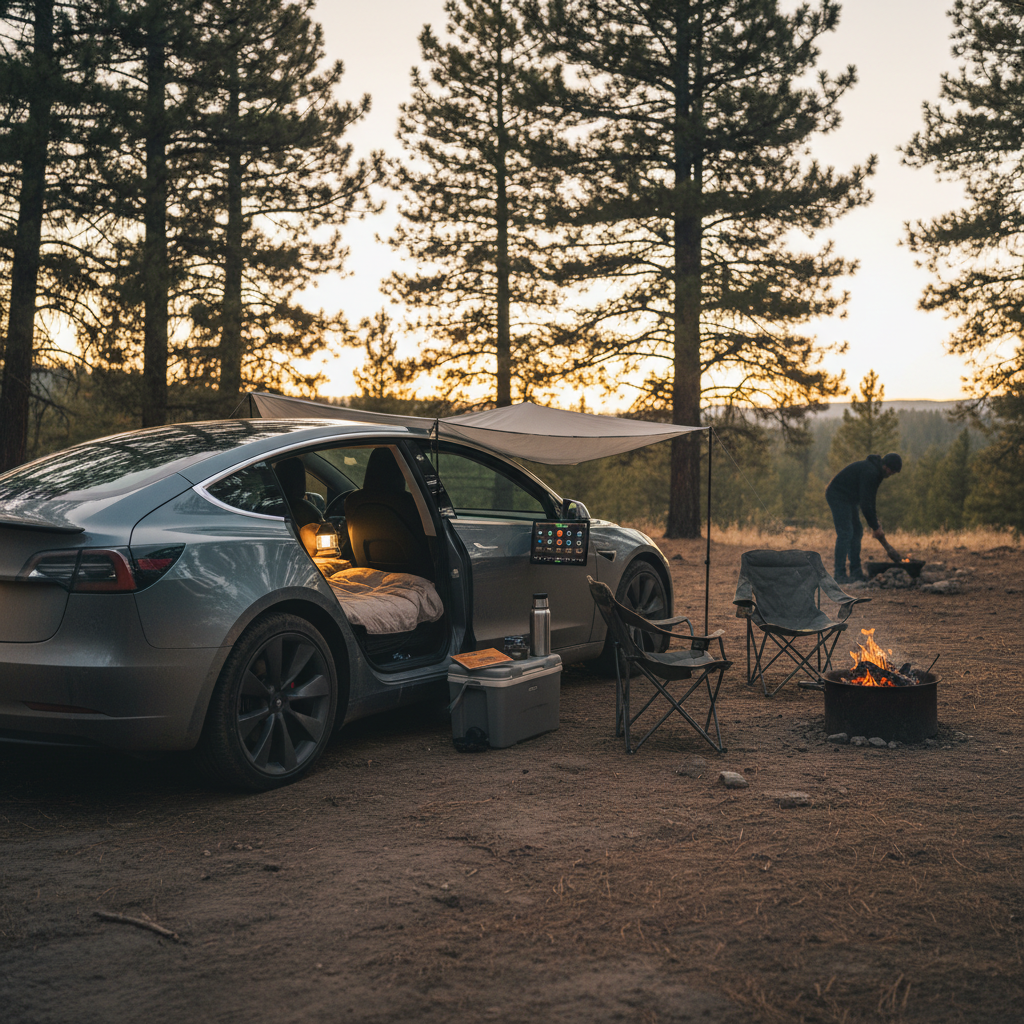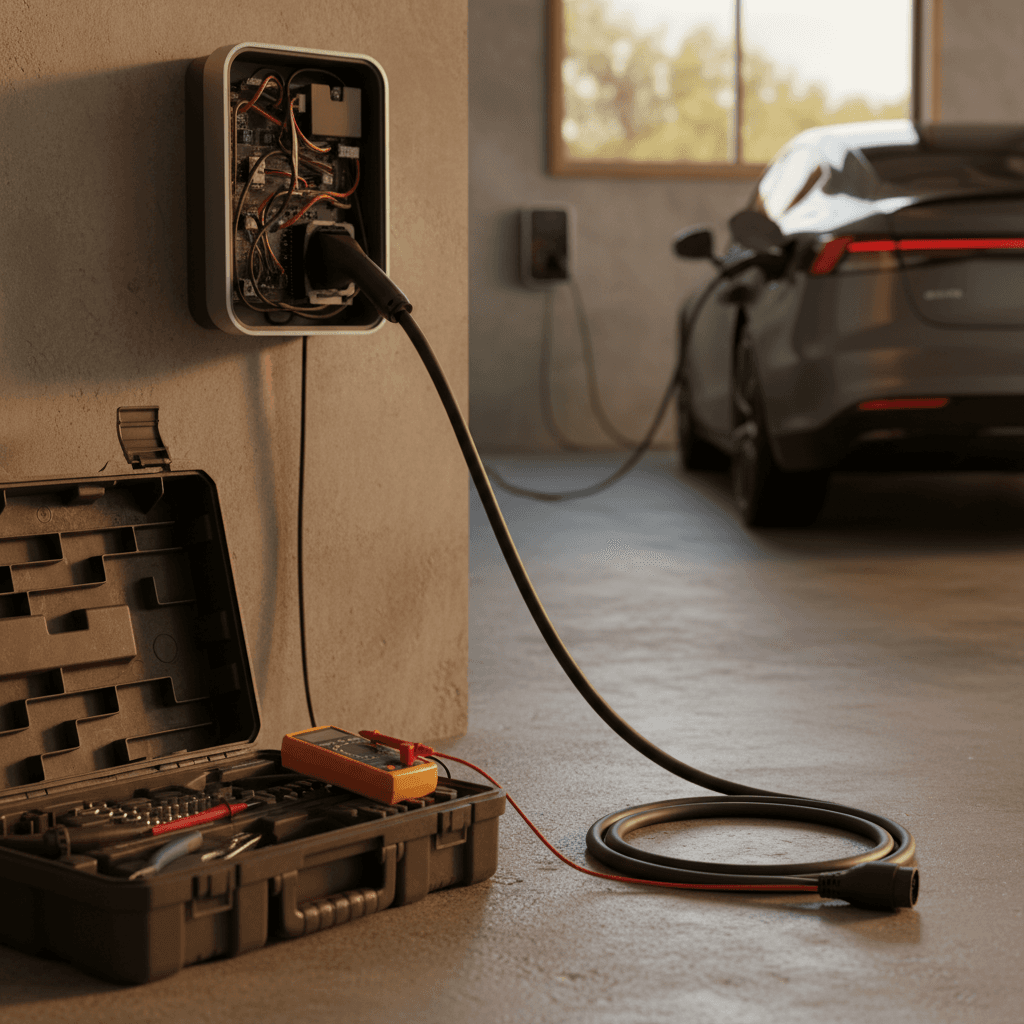
If you own an EV and you’re still living on a 120‑volt trickle charger, you already know the truth: that’s not a long‑term solution. A dedicated EV charger for a 240V outlet turns overnight charging from “maybe enough” into “always full by morning,” and it’s one of the single biggest quality‑of‑life upgrades in EV ownership.
240V in one sentence
Why a 240V EV charger is worth it
Level 1: the emergency cord
Every EV ships with a basic Level 1 charger that plugs into a standard 120V household outlet. It’s slow by design, typically 3–5 miles of range per hour of charging. That’s fine if you drive a handful of miles a day, or you’re visiting grandma for the weekend.
But if you’re commuting 30–50 miles a day, that trickle may never fully catch up, especially in winter.
Level 2: the real‑world solution
A Level 2 EV charger on a 240V outlet is what makes an EV feel like a practical appliance instead of a science project. A typical 32–40‑amp unit adds 20–35 miles of range per hour. Park in the evening, wake up to a full battery. No public‑charging detours, no Sunday‑night range anxiety.
It’s also kinder to your battery than living on DC fast charging. Slow, regular AC charging is the EV equivalent of a home‑cooked meal.
What a 240V home charger changes in everyday life
240V EV charging basics: volts, amps, and miles per hour
Shopping for an EV charger for a 240V outlet is easier once you decode a few numbers on the box: volts, amps, kilowatts, and your car’s onboard charger rating.
The four numbers that matter
You don’t need to be an electrician, just fluent in these.
Voltage: 120V vs 240V
Voltage is the electrical “pressure.” U.S. homes have 120V for regular outlets and 240V for big loads (dryers, ranges, EVs). A Level 2 charger uses 240V.
Amperage: 16A–48A
Amps measure how much current flows. More amps on a 240V circuit means more power. A 40‑amp charger on 240V delivers up to about 9.6 kW (before limits from your car).
kW: charging speed
Volts × amps ÷ 1000 = kilowatts (kW). Roughly, every 1 kW adds 3–4 miles of range per hour for many EVs. So 7 kW might give you 20–30 miles per hour of charging.
Onboard charger limit
Your car’s onboard charger caps how fast it can take AC power. If your EV tops out at 7.2 kW, a 48‑amp (11.5 kW) home charger won’t charge it any faster than a 32‑amp (7.7 kW) unit.
Check this in your owner’s manual
Common 240V outlet types for EV charging
When people say “EV charger for 240V outlet,” they’re usually thinking of a specific receptacle on the wall. In North America, that often means one of a few NEMA outlet types originally designed for stoves, dryers, or welders.
Popular 240V outlets used for Level 2 EV charging
Your electrician will match the outlet to both your charger’s plug and your home’s wiring.
| Outlet type | Typical use | Wires | Common breaker | EV pros | EV cons |
|---|---|---|---|---|---|
| NEMA 14‑50 | RVs, electric ranges | 2 hot, neutral, ground (4‑wire) | 50A | Very common for EVs, flexible for other appliances | Requires 4‑wire cable, GFCI often required, bulkier plug |
| NEMA 6‑50 | Welders, shop gear | 2 hot, ground (3‑wire) | 50A | Slightly cheaper/simpler wiring, many EVSEs offer 6‑50 | Less flexible for non‑EV use, not in every garage |
| NEMA 14‑30 | Electric dryers | 2 hot, neutral, ground | 30A | Great if you already have a 30A dryer circuit by the car | Lower max speed (good for smaller panels or mild driving needs) |
| NEMA 6‑20 | Window AC, small tools | 2 hot, ground | 20A | Useful for modest Level 2 (portable 16A–20A units) | Limited power; may not be enough for heavy daily driving |
Always follow local electrical code and your charger manufacturer’s instructions when choosing an outlet.
Don’t DIY the outlet choice
Plug‑in vs. hardwired EV chargers for a 240V circuit
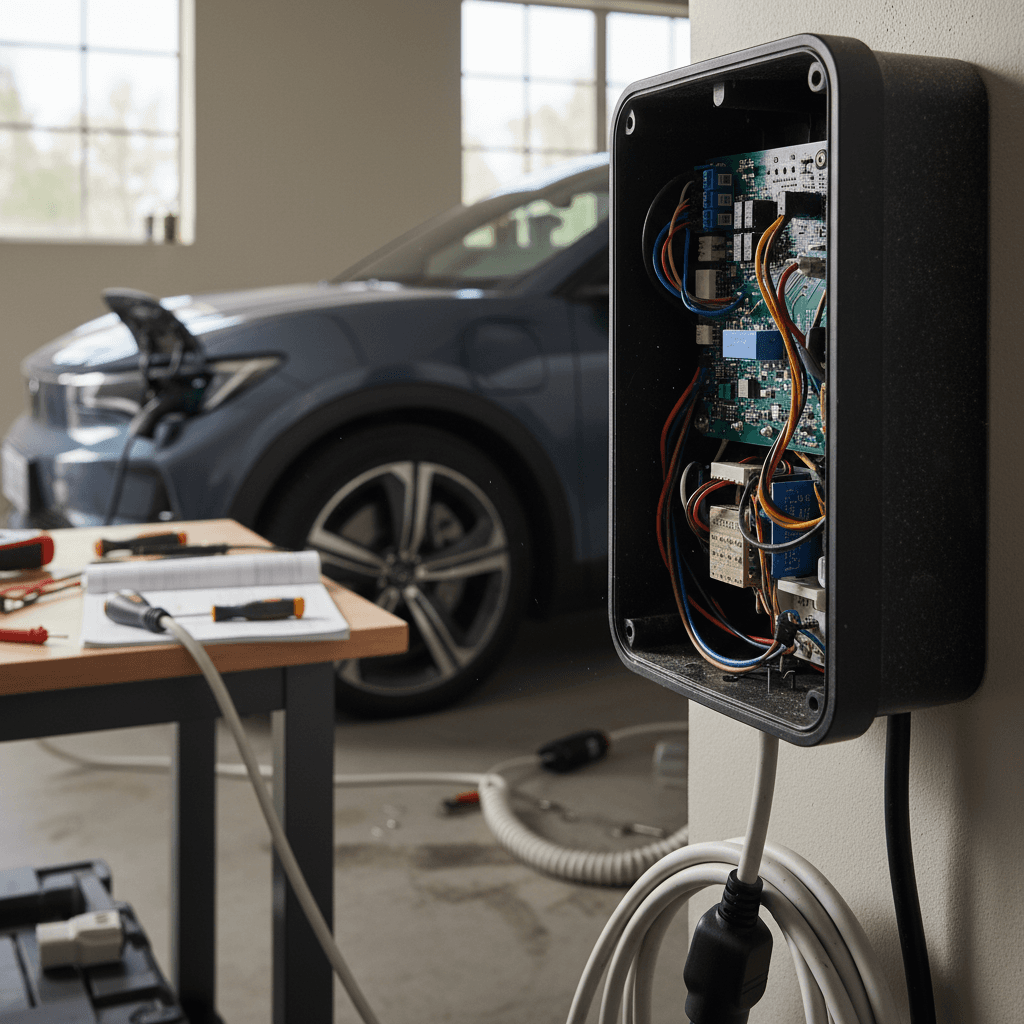
Once you have a 240V circuit available, you still have a choice: buy a plug‑in EV charger that uses the outlet like any appliance, or install a hardwired charger that’s permanently connected.
Plug‑in Level 2 chargers
- Use a 240V outlet (often NEMA 14‑50 or 6‑50).
- Easier to replace or upgrade, unplug one unit, plug in another.
- Ideal if you might move or change EVs frequently.
- Some models are dual‑voltage and can also run on 120V in a pinch.
Good fit for most homeowners who want flexibility and a simpler install.
Hardwired Level 2 chargers
- Directly wired to the circuit, no receptacle in between.
- Often preferred for outdoor installs (fewer failure points, sealed better).
- Can support higher amperage on the same wiring path in some cases.
- Required by some jurisdictions or incentives for safety or control reasons.
Best when you know you’re staying put and want a clean, permanent setup.
A smart compromise
How much power do you really need at 240V?
This is where the internet goes off the rails. Yes, it’s fun to brag about a 48‑amp home charger. No, most people don’t need one, and many homes can’t comfortably support it.
Pick your 240V charger size by how you actually drive
Three common use cases, three reasonable targets.
Light commuter
Daily driving: 20–30 miles/day
Good fit: 16A–24A on 240V (3.8–5.7 kW)
Perfect for drivers who mostly stay local and can leave the car plugged in every night. Often works on smaller panels or existing dryer‑grade circuits.
Typical suburban driver
Daily driving: 30–60 miles/day
Good fit: 32A–40A on 240V (7.7–9.6 kW)
This is the sweet spot for many households: fast overnight charging without pushing your electrical service too hard.
Heavy driver or multi‑EV
Daily driving: 60+ miles/day or 2+ EVs
Good fit: 40A–48A on 240V (9.6–11.5 kW)
Worth considering if your panel has capacity and you routinely arrive home with a low battery and leave early.
Don’t chase the biggest number
Installation costs for a 240V EV charger
Let’s talk money. Adding a circuit and EV charger for a 240V outlet is not a $50 weekend project. But it’s also not a kitchen remodel.
Typical 240V home charging costs (U.S., 2025)
Real‑world ballpark figures for planning, not quotes. Your local electrician and utility incentives will move these numbers up or down.
| Item | Low | High | Notes |
|---|---|---|---|
| Level 2 charger hardware | $300 | $900 | Basic units at the low end; premium smart chargers at the high end. |
| Install simple 240V outlet / circuit | $250 | $1,000 | Short run, panel nearby, no upgrades. |
| Full Level 2 install (charger + labor) | $800 | $2,500 | National averages for most homes, depending on distance and panel. |
| Panel / service upgrade (if needed) | $800 | $2,500+ | Older homes or maxed‑out panels drive this cost. |
| Permits & inspection | $50 | $300+ | Varies widely by city and utility requirements. |
| Incentives & tax credits | -$200 | -$1,500 | Federal credit up to 30% (max $1,000) plus many local rebates. |
Many households end up paying significantly less after stacking federal, state, and utility incentives.
Incentives change the math
Safety and code essentials for 240V EV outlets
A 240V EV circuit is not the place to experiment. You’re running a high continuous load for hours at a time, in garages that may be damp, dusty, or both. The good news: if you hire a qualified electrician and pull permits, the hard thinking is their job, not yours.
Non‑negotiables for a safe 240V EV install
Use a dedicated circuit
Your EV charger should be on its own breaker, sized appropriately (for example, a 40A charger typically goes on a 50A breaker) with no other loads sharing that circuit.
Respect the 80% rule
EV charging is considered a continuous load, so electricians size the circuit at <strong>125% of the charger’s maximum draw</strong>. That’s why a 40A charger needs a 50A circuit.
Follow outlet and GFCI requirements
Many jurisdictions now require GFCI protection for 240V outlets in garages and outdoors. Your electrician will choose the right combination of breaker, receptacle, and enclosure.
No sketchy adapters
Avoid cheap multi‑plug adapters or RV cheaters to make a plug fit. They can overheat under continuous load and may violate code and void your EVSE warranty.
Pull a permit and get inspection
It’s boring, but critical. Without a permitted, inspected install, future buyers, insurers, or fire investigators may not see your setup as legitimate.
Why DIY is usually a bad idea
Step‑by‑step: choosing the right 240V setup
Here’s a simple playbook to go from “thinking about it” to a working EV charger for a 240V outlet without wasting money or melting anything important.
Your 240V home charging game plan
1. Map your real driving needs
Log a week or two of driving. If you’re under ~50 miles per day, you can likely live happily with a 32–40A charger. Heavier use or multiple EVs may push you higher.
2. Check your panel capacity
Snap a clear photo of your electrical panel and schedule an electrician or EV‑savvy installer to review it. Ask what size EV circuit your panel can realistically support.
3. Pick your charger size and features
Decide on an amperage that fits both your driving and your panel. Then choose features: Wi‑Fi, load sharing, utility integration, or just simple plug‑and‑charge.
4. Choose outlet vs hardwired
With your electrician, decide whether a NEMA outlet makes sense (for flexibility) or if a hardwired install is safer/cleaner, especially outdoors.
5. Get 2–3 quotes and ask about incentives
Prices vary wildly. Get multiple bids, and explicitly ask installers what rebates and tax credits you can use for a 240V EV circuit and charger.
6. Plan for future EVs
If you might add a second EV, ask about installing conduit and panel space now for a second 240V circuit or a shared high‑amp circuit with smart load management.
How 240V home charging fits into shopping for a used EV
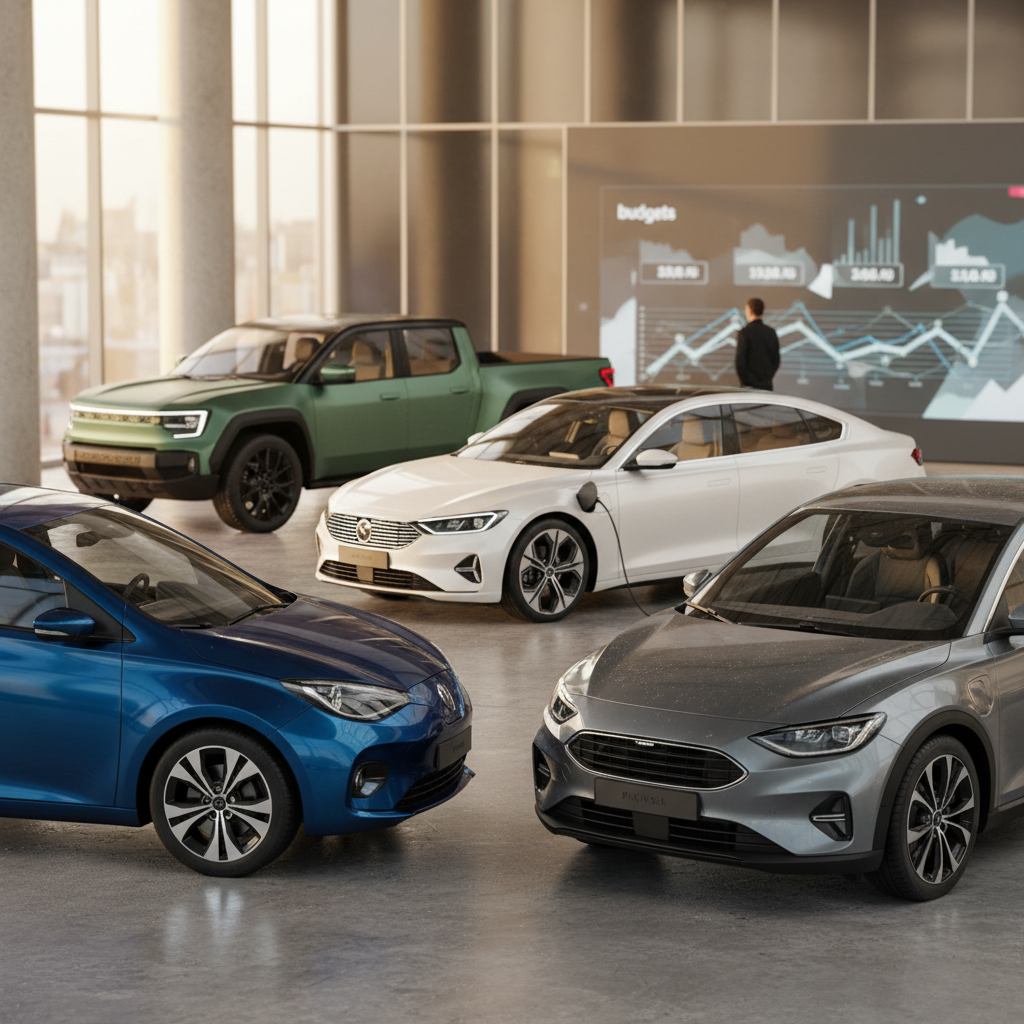
If you’re browsing used EVs, a 240V plan is not optional; it’s part of the purchase. A solid home charging setup can matter as much to day‑to‑day satisfaction as battery size or paint color.
Why 240V matters more with used EVs
- Reduced usable range: A 5‑year‑old EV might not deliver its original EPA range. 240V charging lets you comfortably top up each night, making that smaller range feel bigger.
- Less public fast charging: Older packs can be more sensitive to repeated DC fast charging. Relying on a home Level 2 charger is gentler on the battery.
- Resale appeal: When you eventually sell, being able to say “I had a professional 240V charger installed” is a comfort to the next owner.
Where Recharged fits in
Every used EV on Recharged comes with a Recharged Score Report that includes verified battery health. That means you can confidently choose a car whose real‑world range pairs well with a Level 2 setup at home.
Our EV specialists can also talk through home charging options while you’re shopping, so you’re not surprised by installation costs after the fact.
The holy trinity of happy EV ownership
FAQ: EV chargers and 240V outlets
Common questions about EV chargers for 240V outlets
Bottom line: build the right 240V charging backbone
A good EV charger for a 240V outlet is less about chasing maximum kilowatts and more about designing a system that fits your life, your panel, and your car. For most drivers, that means a 32–40A Level 2 charger, on a dedicated, professionally installed 240V circuit, close to where the car actually parks.
Get the fundamentals right, proper outlet or hardwire choice, safe wiring, realistic power level, and home charging fades into the background, the way it should. If you’re cross‑shopping used EVs, that’s exactly the quiet competence you want: a healthy battery, honest pricing, and a 240V setup that makes the car easy to live with. Recharged can help with the car side; a good electrician can handle the electrons.