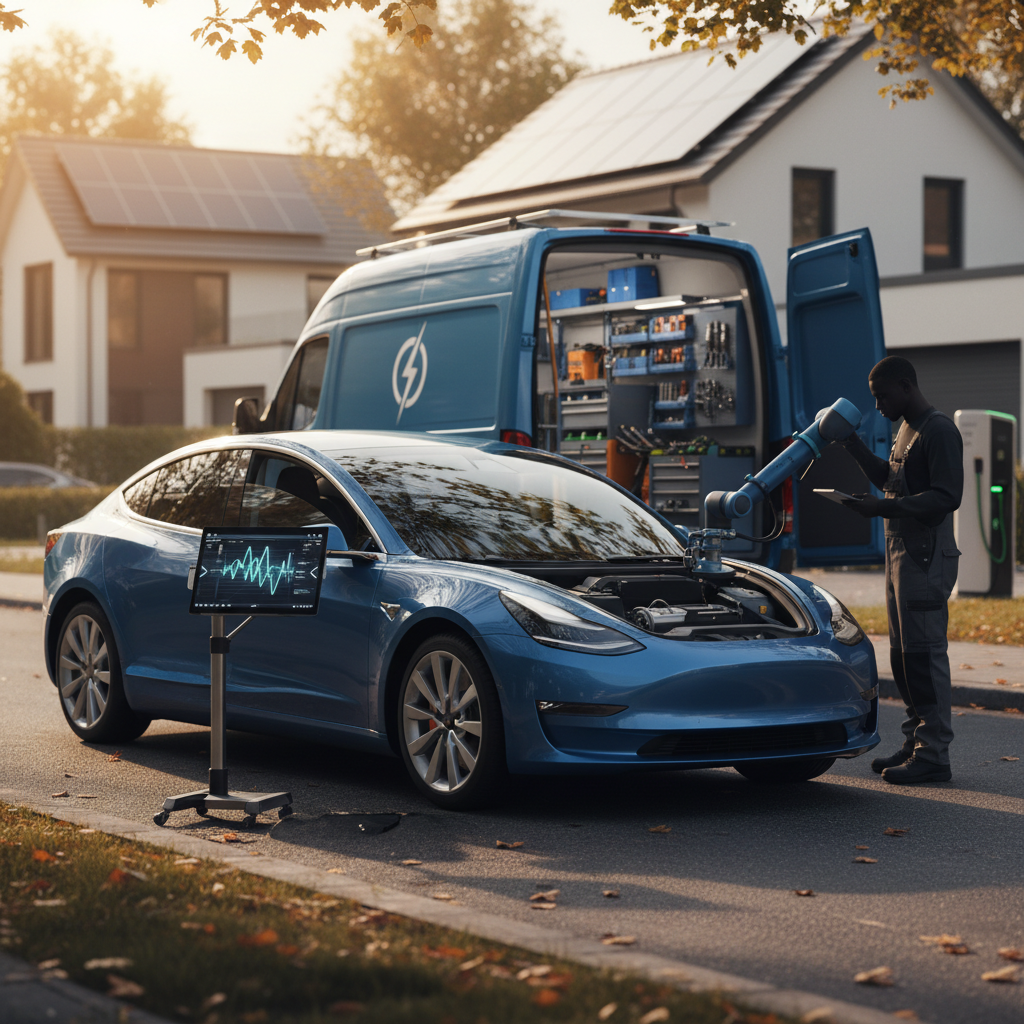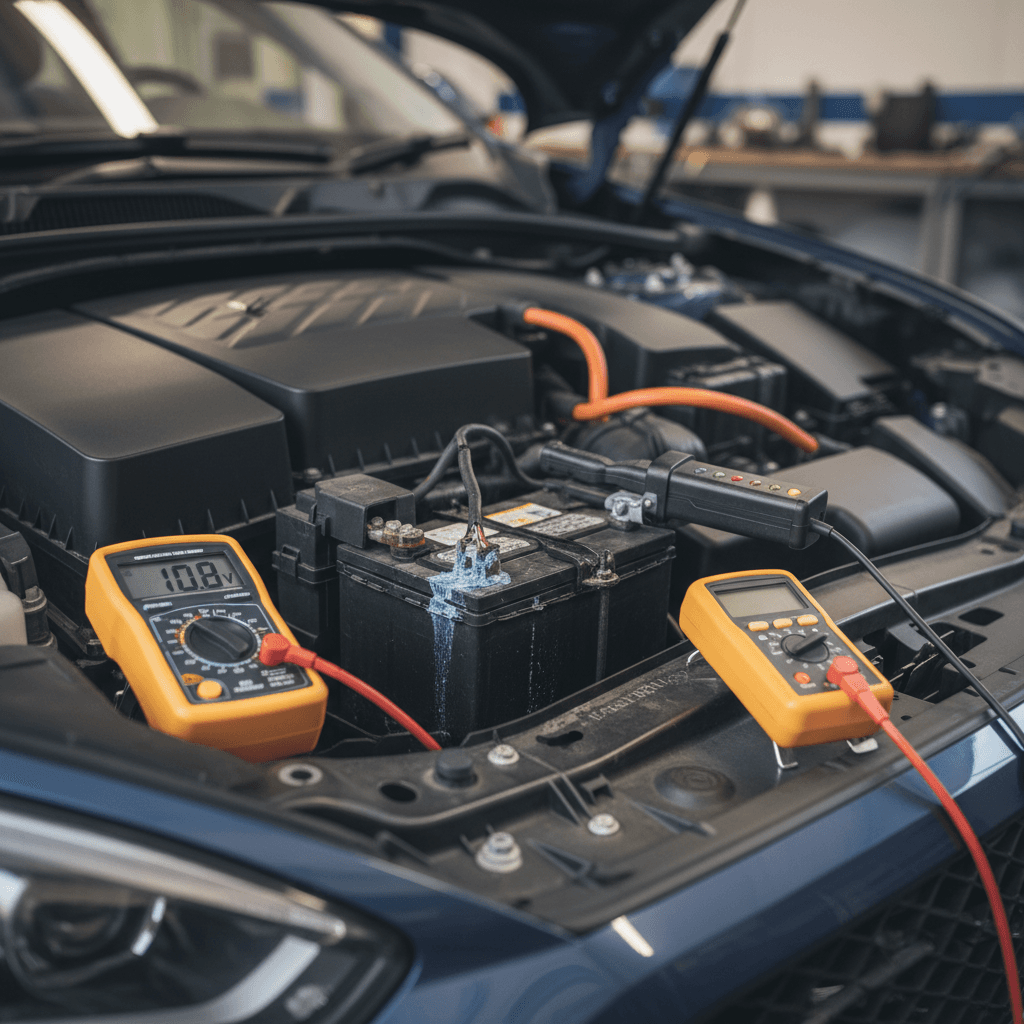
Your electric vehicle can have a giant, state‑of‑the‑art high‑voltage battery that’s fine, and still be stranded in your driveway because of a much smaller villain: EV 12 volt battery problems. When that little auxiliary battery goes, the whole car plays dead. No unlock, no “Ready” light, no drive. Just silence and a sinking feeling.
The tiny battery with outsized power
Why EVs Still Have 12‑Volt Batteries
You’d think modern EVs would have left the old 12‑volt system behind with carburetors and choke cables. They haven’t. Almost every electric car on the road still uses a low‑voltage 12V battery to run legacy systems and protect safety‑critical hardware.
- Safety and redundancy: Critical safety systems, airbags, power steering assist, brake boosters, hazard lights, must work even if the high‑voltage pack shuts down.
- Legacy components: Horns, door locks, window motors, wipers, interior lights and infotainment all expect 12V power. Re‑engineering every component for high voltage would be wildly expensive.
- Control electronics: The computers that manage the big battery, motors and charging need a stable low‑voltage supply before the main pack connects.
- Standard accessories: OBD ports, dash cams, trailer modules and many aftermarket accessories are all designed around 12V.
So instead of a belt‑driven alternator like a gas car, EVs use a DC‑DC converter to step down high‑voltage pack power to roughly 12–14V, keeping the auxiliary battery charged. When that system misbehaves, or the 12V battery ages out, you start seeing the familiar, maddening 12‑volt drama.
Common Symptoms of EV 12V Battery Problems
EV 12‑volt failures don’t always look like the classic dead‑starter scenario from gas cars. Here’s what drivers actually report when the low‑voltage system is in trouble.
Real‑world signs your EV 12V battery is struggling
You’ll usually see weird behavior before it goes completely dark.
1. Car won’t “wake up”
2. Low‑voltage warnings
3. Charging glitches
4. Random rebooting
5. Dead after parking
6. Access/key issues
Don’t ignore cascading error messages
What Actually Goes Wrong with EV 12V Systems
When owners complain about EV 12 volt battery problems, the battery itself is only half the story. The supporting cast, the DC‑DC converter, software and parasitic loads, plays a big role.
Why EV 12V Systems Fail More Than You’d Expect
Most auxiliary batteries in EVs are still lead‑acid (flooded, EFB or AGM), although some newer models use compact lithium 12V packs. Common failure modes include:
- Age‑related wear: Plates sulfate, capacity drops, and cold‑cranking capability fades, just like in a gas car.
- Chronic deep cycling: Features like always‑on security cameras or Sentry‑style modes repeatedly drain and recharge the 12V battery, shortening its life.
- High heat or severe cold: Extreme temperatures accelerate chemical aging or temporarily slash available power.
- DC‑DC converter faults: If the converter under‑charges, over‑charges or intermittently charges, the 12V battery is the innocent bystander that takes the blame.
- Software bugs and updates: Long over‑the‑air updates or failed sleep cycles can run the 12V battery down while the car sits.
- Cheap factory batteries: Some brands ship cost‑cut 12V units that owners end up replacing early with higher‑quality AGM or lithium units.
Not just a “Tesla thing”
How Long Do 12V Batteries Last in EVs?
In theory, a well‑managed 12V battery in an EV should last six to eight years under normal use. In practice, usage patterns and climate skew the results.
Realistic lifespan ranges
- 3–4 years: Common in hot climates, high‑mileage rideshare use, or vehicles with aggressive always‑on features.
- 5–6 years: Typical for daily drivers in moderate climates that sleep properly and avoid deep discharges.
- 7–8+ years: Achievable with high‑quality AGM or lithium 12V packs and sane software that limits cycling.
How this compares to gas cars
In a gasoline car, the 12V battery mostly starts the engine, then an alternator takes over. In an EV, the 12V is part of a complex digital life‑support system that may wake the car dozens of times a day. That extra duty cycle explains why some EV owners see shorter intervals between replacements, especially on early models or in harsh climates.
Watch for the 3–5 year window
Diagnosing EV 12V Battery Problems Safely
EVs add a high‑voltage layer of risk that gas cars don’t have, so you need to be disciplined about what you touch. The good news: basic 12V checks are still familiar territory if you’ve ever used a multimeter.
Step‑by‑step: Safe 12V checks on an EV
1. Confirm symptoms, not just codes
Write down exactly what the car is doing, won’t wake, intermittent charging, error messages. Screenshots of warnings are gold for service techs and future warranty claims.
2. Rule out the key and the app
Try the physical key card or fob if the phone key fails. If the car wakes with the card but not the phone, that’s connectivity, not necessarily low voltage.
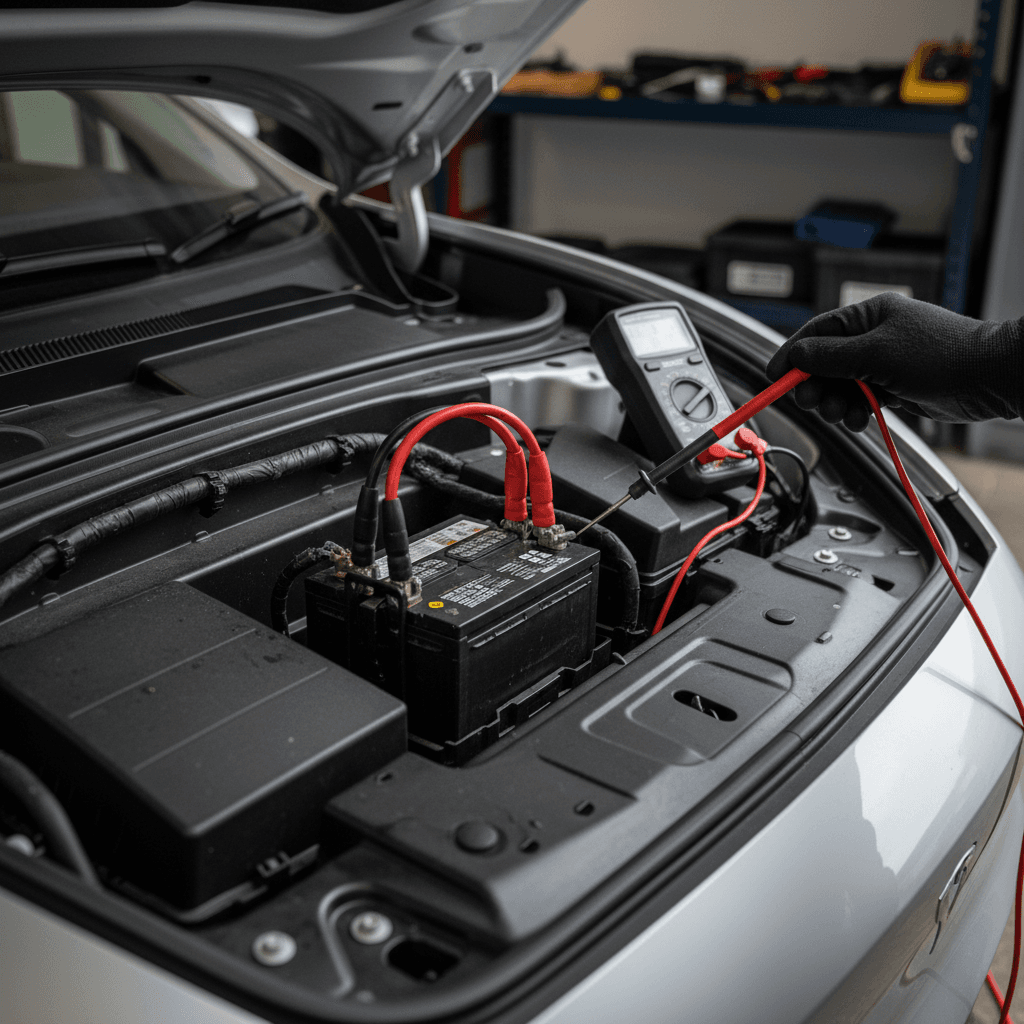
3. Measure 12V resting voltage
With the car off and “asleep,” a healthy 12V battery typically sits around 12.5–12.8V. Readings under ~12.2V suggest a low or aging battery; under 12V is a red flag.
4. Watch voltage under load
If you can access readings via service mode or an OBD tool, see how voltage behaves when the car wakes up or you turn on lights and HVAC. Big dips point to a weak battery.
5. Check for obvious abuse
Look for corroded terminals, loose clamps, wet or swollen cases, or aftermarket wiring disasters (hardwired dash cams, DIY audio, light bars) hanging off the 12V posts.
6. Let professionals handle high voltage
Never remove orange‑colored high‑voltage covers or cables. DC‑DC converter testing and main‑pack isolation are jobs for a qualified EV technician, not a Saturday science experiment.
What NOT to do
Repair Options and Typical Costs
Once you know you’ve got an EV 12V issue, the next question is painful but inevitable: What’s this going to cost me? The range runs from “annoying but fine” to “please don’t tell my spouse.”
Typical remedies for EV 12‑volt battery problems
Ballpark ranges will vary by brand, region and whether you’re under warranty.
| Repair option | What it involves | Typical cost (USD) | Good to know |
|---|---|---|---|
| 12V battery replacement (lead‑acid/AGM) | Replace auxiliary battery, register in vehicle software where required | $150–$450 | Often done at the dealer; some EVs require software coding after replacement. |
| 12V lithium pack replacement | Swap compact lithium 12V module, update vehicle config | $300–$900 | More common on newer Teslas and premium EVs; lighter, longer‑lasting but pricier. |
| DC‑DC converter diagnosis/repair | Testing, software updates, and possible converter replacement | $600–$2,000+ | May be covered under powertrain or EV‑specific warranty; can mimic bad‑battery symptoms. |
| Parasitic drain hunt | Tracing aftermarket or faulty modules that stay awake and draw power | $150–$600 | Time‑based labor. Dash cams and trackers are frequent culprits. |
| Software updates/configuration | Updating modules, recalibrating 12V charging logic, clearing error cascades | Often $0–$250 | Dealers may bundle this with other recall or service work. |
Always get an itemized estimate; low‑voltage work is often bundled with software updates or recall campaigns.
Check warranty and recalls first
Preventing EV 12‑Volt Battery Failures
You can’t baby an EV 12V battery into immortality, but you can stack the deck in your favor. The goal is simple: fewer deep discharges and less unnecessary cycling.
Habits that extend your EV’s 12V battery life
Small changes in how you use the car can buy years of extra life.
Let the car sleep
Tame security and camera features
Respect extreme heat and cold
Avoid leaving it parked at 0%
Service the 12V proactively
Trim third‑party apps
Add 12V checks to your service rhythm
Used EVs: What 12V Issues Buyers Should Watch For
If you’re shopping used, a weak or abused 12V system is one of those problems that won’t appear in glossy listing photos but can absolutely ruin your first week of ownership.
Red flags during a test drive
- Slow boot‑up: It takes a long time for the car to wake and go “Ready.”
- Persistent warning lights: Especially generic “electrical system” or multiple amber warnings across different systems.
- Random reboots: Screens freezing or restarting while driving.
- Charging weirdness: Car intermittently refuses Level 2 at home but fast charges fine.
Questions worth asking the seller
- “Has the 12V battery been replaced? When?”
- “Any history of the car not waking up or needing to be towed while parked?”
- “Any aftermarket electronics wired in, dash cams, trackers, stereos?”
- “Have there been recalls or service bulletins for the charging or DC‑DC system?”
How Recharged helps you avoid 12V drama
Quick 12V reality check before you buy a used EV
1. Start the car multiple times
Don’t just drive once. Power the car off, lock it, wait a few minutes and wake it again. You’re looking for consistency and any reluctance to boot.
2. Try both keys and the app
Make sure physical keys, cards and app all work reliably. Flaky access can be an early low‑voltage or module‑sleep issue.
3. Test different chargers
If possible, plug into both Level 2 and DC fast chargers. Inconsistent behavior on AC but not DC can hint at low‑voltage or onboard‑charger quirks.
4. Scan for codes
Have a qualified shop or seller run a diagnostic scan. Repeated low‑voltage or DC‑DC faults in the history are a negotiation tool, or a reason to walk.
5. Ask for maintenance records
Frequent 12V replacements or unexplained tows could signal a parasitic drain or a chronic converter issue, not just bad luck.
6. Use expert help
If you’re not an EV nerd, lean on specialists. With Recharged, you get guidance on pricing, trade‑in, financing and whether a specific used EV’s electrical history is worth the risk.
FAQ: EV 12‑Volt Battery Problems
Frequently Asked Questions About EV 12V Batteries
Bottom Line on EV 12‑Volt Battery Issues
EVs have largely solved the big‑battery horror stories people worried about a decade ago. What trips owners up now is smaller, but sneakier: EV 12 volt battery problems that turn sophisticated cars into statues. The fix, most of the time, isn’t mystical. It’s a combination of realistic expectations about 12V lifespan, smart habits that avoid constant wake‑ups, and taking warnings seriously before the car goes dark.
If you already own an EV, fold the 12V battery into your regular maintenance rhythm, test it before you take that winter road trip, watch how your apps and security settings affect sleep, and don’t hesitate to get a DC‑DC or software check if you’re on your second 12V in short order. If you’re shopping used, look beyond glossy photos. At Recharged, the Recharged Score Report, expert EV inspection and transparent history are built to surface these quiet electrical storylines, so your next EV feels like a step into the future, not a recurring low‑voltage déjà vu.