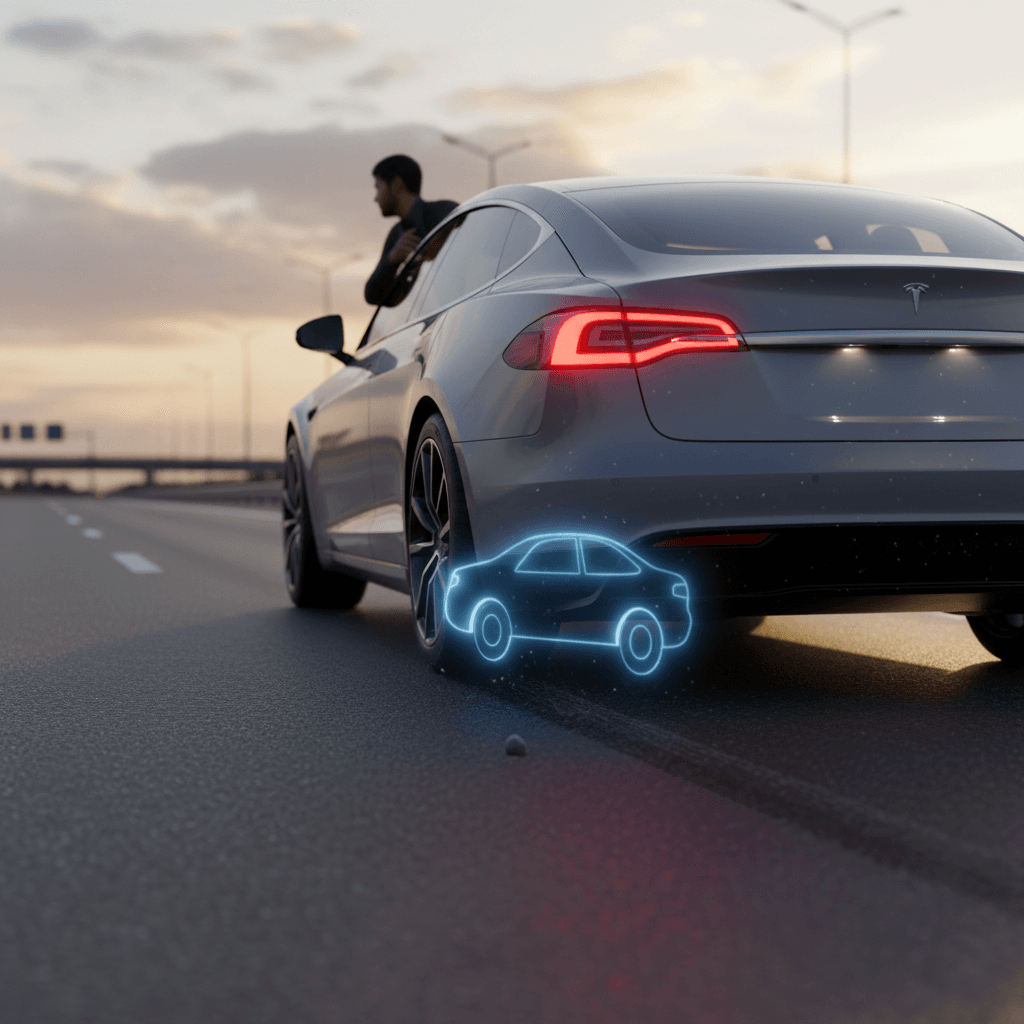
You’re cruising along in your electric car, traffic flowing, podcasts humming, when suddenly the car **slams on the brakes for no obvious reason**. No deer, no debris, no stopped traffic, just a lurch, a spike of adrenaline, and a very confused driver behind you. That unnerving moment is what people mean by electric car phantom braking.
In plain English
What Is Electric Car Phantom Braking?
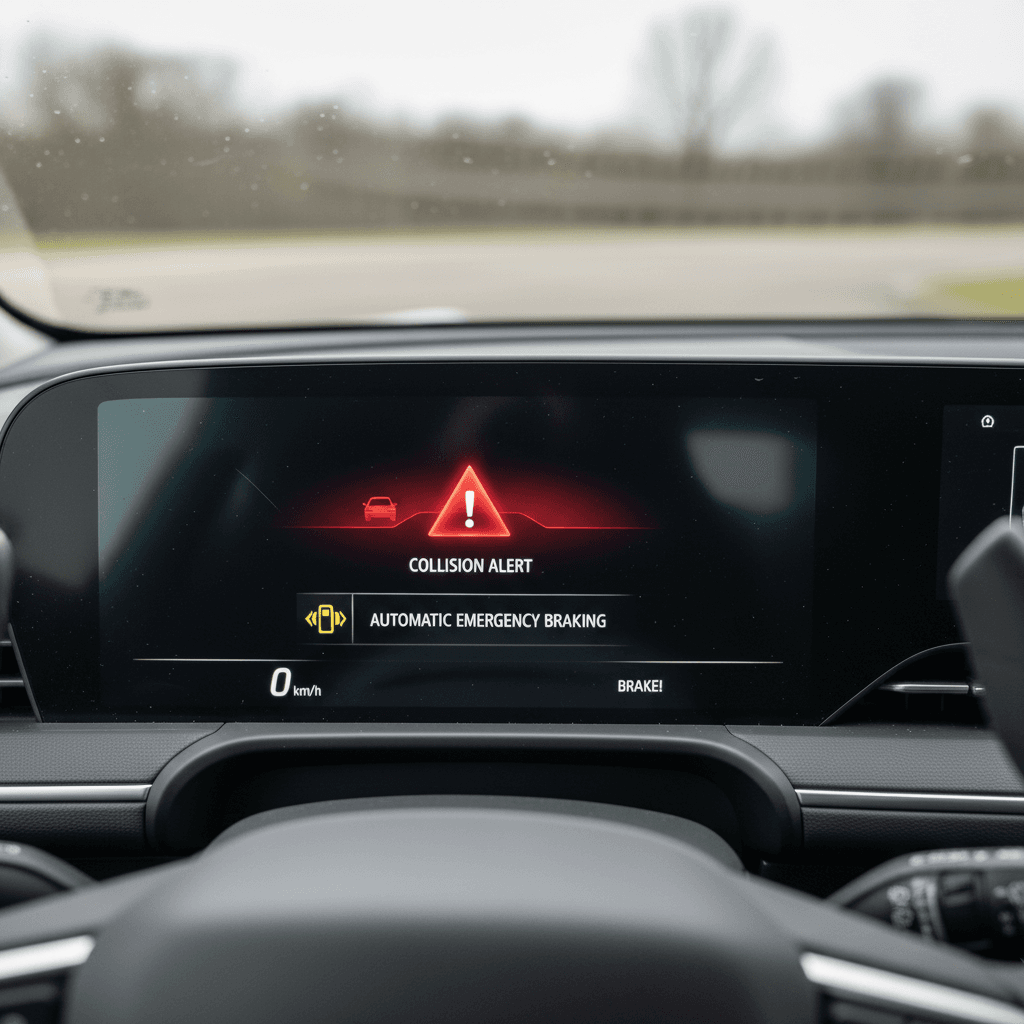
Phantom braking is an unexpected, uncommanded deceleration triggered by the car’s electronics rather than your right foot. It most often shows up when features like adaptive cruise control, lane centering, or automatic emergency braking (AEB) are active.
- You’re on cruise control, and the car suddenly brakes hard with no obstacle ahead.
- The car briefly “taps” the brakes whenever you pass under an overpass or road sign.
- On a two‑lane highway, your car slows sharply whenever a big truck approaches in the oncoming lane.
- In bright sun or heavy shadows, the car mistakes patterns on the road for obstacles.
On paper, this is the flip side of progress. EVs and modern cars are packed with collision-avoidance tech designed to hit the brakes when you’re distracted. Occasionally, that software sees ghosts.
Don’t confuse it with brake failure
How Modern EV Safety Systems Work
To understand electric car phantom braking, you have to understand the orchestra of sensors running the show. Most modern EVs, Teslas, Hyundais, Fords, VWs, you name it, layer several systems on top of conventional brakes:
Key Systems Behind Phantom Braking
Great when they’re right, jarring when they’re wrong
Adaptive Cruise Control (ACC)
Maintains your set speed but adjusts to traffic ahead.
- Uses radar and/or cameras.
- Brakes when a slower vehicle merges in front.
- Where many “soft” phantom slowdowns start.
Automatic Emergency Braking (AEB)
Designed to prevent or lessen a crash.
- Monitors for imminent front collisions.
- Can apply hard braking even if you don’t.
- False positives here feel like a panic stop.
Lane Keeping & Autopilot‑style Systems
Steer and brake to keep the car centered and spaced.
- Combine cameras, maps, and machine learning.
- May react to lane changes, curves, or cut‑ins.
- Complex logic = more edge cases.
These systems are watching the road all the time. When they think something is in your lane, or about to be, they may brake before you even see the problem. When they misinterpret what they see, you get phantom braking.
Vision vs. radar vs. lidar
Common Triggers for Phantom Braking in Electric Cars
The car doesn’t think in stories; it sees pixels, reflections, and radar echoes. Here are the situations that most often confuse it enough to stab the brakes.
Typical Phantom Braking Scenarios
Real-world situations that tend to provoke false positives
| Scenario | What the Car Sees | What You Feel |
|---|---|---|
| Oncoming truck on a two‑lane highway | Large object closing on your lane edge | Sharp slowdown or hard brake despite clear lane |
| Shadows, overpasses, and signs | Sudden contrast changes that look like obstacles | Brief brake “taps” or repeated small slowdowns |
| Mild curves with bright sun or rain | Lane markings + glare confuse lane model | System thinks you’re drifting toward an object |
| Cut‑ins and merging traffic | Vehicle crossing your path in front of sensors | Uncomfortable but technically “correct” braking |
| Hilly terrain or crests | Limited view beyond the crest | Overcautious braking before the road is visible |
Not every EV will react this way, but these patterns show up again and again in driver reports and safety investigations.
Train your systems
How Dangerous Is Phantom Braking Really?
From a safety engineer’s point of view, phantom braking is a textbook “Type I error”: the system sees danger where there is none. That’s better than missing a real truck stopped in your lane, but it’s not harmless.
- You can be rear‑ended if the car brakes much harder than surrounding traffic expects.
- You may instinctively swerve to avoid a non‑existent obstacle, creating a new hazard.
- Your confidence in the safety systems erodes, so you turn them off and lose real protection.
- Passengers (and drivers) start to dread the car’s random lurches, fatigue is a safety issue too.
Phantom Braking in Context
Zoom out and the picture is nuanced: **AEB and related tech are saving real lives**, even as they occasionally scare the daylights out of drivers. Phantom braking is a side effect of asking software to make judgment calls in messy, real‑world scenes.
When it crosses the line
Phantom Braking and Tesla Autopilot
No discussion of electric car phantom braking is complete without talking about Tesla. Because Teslas have been years ahead in widespread driver-assistance usage, they’ve also generated a disproportionate number of phantom‑braking complaints compared with legacy brands.
Owners have reported sudden slowdowns on two‑lane highways when semi‑trucks approach in the opposite direction, on divided interstates with overhead signs, and after software updates that changed how the car interpreted shadows and lane markings. Over-the-air updates have helped in some cases, then occasionally made things worse again. It’s a moving target.
Why Teslas Get the Headlines
- High Autopilot usage: More miles driven with semiautonomous features on means more opportunities for issues.
- Camera‑heavy approach: Later Teslas dropped radar in favor of pure camera “Tesla Vision,” which is sensitive to light, shadows, and contrast.
- Fast software iteration: Frequent updates can fix problems quickly, but also introduce new behaviors overnight.
Other EV Brands Aren’t Immune
- Brands like Mazda and Volkswagen have issued recalls or faced investigations over AEB false activations.
- Many automakers quietly refine calibrations via routine software updates.
- Legacy brands often keep driver‑assist behavior more conservative and less intrusive, which can mean fewer complaints, but also less aggressive crash avoidance.
If you’re shopping a used Tesla
How to Reduce Phantom Braking as a Driver
You can’t rewrite the code in your EV, but you’re not powerless either. A few habits and settings changes can dramatically cut down on phantom braking episodes.
Practical Ways to Tame Phantom Braking
1. Know which features are active
Learn your car’s icons and menus. There’s a difference between basic cruise control, adaptive cruise, lane centering, and full-blown “autopilot” modes. Phantom braking nearly always happens when <strong>assist features</strong> are steering or managing distance for you.
2. Adjust following distance and sensitivity
Most systems let you choose a longer following distance and sometimes “early/medium/late” collision warnings. A slightly more relaxed setting often means fewer false positives, especially in dense traffic.
3. Use assists selectively
If you know a certain stretch of two‑lane road always triggers a slowdown when trucks pass, there’s no shame in switching to plain cruise or manual driving there. Automation is a tool, not a religion.
4. Keep sensors and cameras clean
Grime on a windshield camera, bug splatter on a radar panel, or ice around a bumper sensor can all confuse the system. A quick wipe at the charger is cheap insurance.
5. Stay ‘hands‑on’ mentally
Even when the car is steering and braking, treat it like a nervous 16‑year‑old on a learner’s permit. Be ready to press the accelerator to override or gently take over steering if it behaves oddly.
6. Keep software up to date
Many automakers quietly tune AEB and ACC behavior in routine updates. Connect your car to Wi‑Fi when possible and install updates once they’ve been out long enough for early feedback.
Quick override move
What to Look For When Buying a Used EV
Shopping for a used electric car adds a twist: you’re not just buying a battery and a motor, you’re buying a software stack with a personality. Phantom braking is one of the quickest ways to tell whether that personality suits you.
Phantom Braking Checklist for Used EV Shoppers
Bring curiosity, and a healthy sense of self‑preservation
Recreate your real driving
- Test on highways, two‑lane roads, and city streets, wherever you spend time.
- Engage adaptive cruise and lane‑keeping, not just manual driving.
- Notice how often and how hard the car brakes unexpectedly.
Ask about recalls & updates
- Confirm all safety and driver‑assist recalls have been done.
- Ask whether the car is on the latest stable software, not an experimental beta.
- If you’re buying from a private seller, have them show you the update history screen.
Feel for calibration, not perfection
- Some gentle, understandable braking is normal.
- Multiple hard, unprompted slowdowns on a short drive are a red flag.
- Trust your gut: if you wouldn’t put your kids in that behavior, walk away.
Leverage objective diagnostics
- Battery and high‑voltage health still matter more than a bit of jittery braking.
- Look for a transparent report like a Recharged Score that rates battery condition, software, and safety systems together.
- A seller who can’t explain the car’s driver‑assist features probably hasn’t been paying attention to them.
How Recharged can help
When to Talk to a Dealer or Service Center
Some level of quirkiness is baked into early generations of driver assistance. But there’s a difference between the occasional nervous twitch and a car that feels like it has a mind of its own.
Signs Your Phantom Braking Needs Professional Attention
Frequent hard braking on clear roads
If you can reproduce sharp, seatbelt‑tugging stops on the same stretch of open road, that’s worth documenting and reporting.
Warning lights with sudden braking
If AEB or collision‑warning icons keep flashing along with the braking, have the car scanned for fault codes.
After a recent recall or software update
If behavior changed suddenly after an update, your dealer or service center may have a technical service bulletin (TSB) or newer calibration.
You avoid using safety features
If you’ve effectively “given up” on AEB or Autopilot‑style features, it’s time to talk to someone. The entire point of this tech is to make you safer, not more stressed.
Document, document, document
FAQ: Electric Car Phantom Braking
Frequently Asked Questions
The Bottom Line on Phantom Braking
Electric car phantom braking is the uncomfortable downside of giving your car the power to save you from yourself. When the algorithms guess wrong, you feel it in your chest and sometimes in your neck. But those same systems are quietly preventing real crashes every day.
As an EV driver, your job isn’t to worship the tech or to swear it off, it’s to understand how it behaves, use it where it shines, and override it when it doesn’t. As a shopper, especially in the used market, you should be test‑driving the software as much as the hardware, choosing a car whose on‑road habits match your risk tolerance.
At Recharged, we think the future of driving is electric, connected, and yes, increasingly automated. The key is transparency: clear battery health, honest pricing, and realistic expectations about what the car will, and won’t, do for you. Get that mix right, and phantom braking becomes what it should be: an occasional quirk, not a constant worry.