The Chevy Silverado EV is not just a gas truck with a battery stuffed underneath. It’s a purpose‑built electric pickup with huge range, serious towing muscle, and a very different ownership experience from a traditional Silverado. Before you drop $70,000–$90,000 or shop the used market, you need a clear Chevy Silverado EV buying checklist so you don’t overpay for capability you’ll never use, or underestimate what you actually need.
Quick take
Why a Silverado EV buying checklist matters
On paper, the Silverado EV looks simple: big electric truck, big numbers. In reality, you’ve got multiple trims, three main battery ranges, different tow ratings, fast‑charging speeds, and an options list that can quietly add five figures. On the used side, early fleet‑spec Work Trucks and first‑run RSTs are already starting to appear, each with its own story to tell.
Silverado EV numbers to keep in mind
Those numbers are impressive, but they only help if you understand how they line up against your life: commuting, weekend projects, towing a camper, or running a small business. Let’s walk through this Silverado EV buying checklist step by step.
Step 1: Choose your Silverado EV trim and purpose
Start with a brutally honest question: What do you really need this truck to do 80% of the time? That answer will point you toward the right Silverado EV trim long before you start haggling over price.
Which Silverado EV trim fits you?
Match the truck to your main use case before chasing options
Work Truck (WT)
Best for: Fleets, contractors, high‑mileage work use.
- Available Standard, Extended, and Max Range batteries
- More basic interior but huge range potential (up to 492 miles)
- Often fleet‑spec; used examples may have high mileage
LT
Best for: Daily drivers, long‑range commuters, light towing.
- Extended Range battery (408 miles EPA in 2025)
- Comfort features without full RST price
- Optional LT Premium adds midgate, Super Cruise, bigger wheels
RST (and Trail Boss)
Best for: Luxury, performance, toys, and show‑truck duty.
- Up to 760 hp with Wide Open Watts on RST
- Four‑wheel steering with Sidewinder diagonal driving
- Trail Boss adds lift, off‑road tires, Terrain mode
Trim‑shopping tip
Trim & purpose checklist
Define your core use case
Daily commuter, jobsite workhorse, family road‑trip machine, tow rig, or all of the above? Write it down; you’ll use it to sanity‑check every option.
Decide on fleet vs. retail spec
WT models can be fleet‑focused with simpler interiors and option mixes. If you’re shopping used, confirm whether a truck started life in commercial service.
Set a realistic budget range
Include taxes, fees, home charging hardware, and accessories, not just the sticker price. EV trucks often creep into six‑figure territory fully loaded.
List must‑have vs. nice‑to‑have
Separate non‑negotiables (tow rating, range, cab style) from fun stuff (panoramic roof, 24‑inch wheels). This keeps you from overspending when you see a glamorous RST.
Step 2: Confirm range vs. how you actually drive
GM built the Silverado EV to stalk the range leaderboard. A 2025 WT Max Range is EPA‑rated up to about 492 miles of range, with LT Extended Range at roughly 408 miles and RST Max Range at about 460 miles in GM’s estimates. Real‑world testing has still delivered 300–400 miles on the highway, which is stout for a full‑size truck, but not magic.
Range reality check
- Map your typical week: commute miles, errands, jobsite hops, school runs. How many miles is a heavy day?
- Decide your minimum comfortable buffer. Many EV owners like to arrive home with 15–25% battery remaining.
- If you do frequent 250–300 mile highway trips, target Extended or Max Range packs rather than Standard Range.
- Check whether your routes have DC fast chargers that support GM’s CCS connector today and NACS (Tesla) compatibility as adapters roll out.
Used‑truck twist
Step 3: Towing, payload and what the numbers really mean
The Silverado EV throws down some huge tow ratings: properly equipped LT and RST models can tow up to 12,500 pounds, and WT models with the right package are no slouch either. But with an EV truck, the question isn’t just “Can it tow?” but “How far can it tow between charges?”
Silverado EV capability snapshot
Approximate factory ratings; always verify against the specific truck’s door‑jamb sticker and owner’s manual.
| Trim | Approx. max towing | Approx. max payload | Best use case |
|---|---|---|---|
| WT Standard Range | ~8,500 lb | Up to ~2,350 lb | Regional work and lighter trailers |
| WT Extended/Max Range | 10,000–12,500 lb (config‑dependent) | Strong payload | Fleet towing, long‑range work use |
| LT Extended Range | 12,500 lb | ~1,800 lb | Campers, boats, enclosed trailers |
| RST Max Range | 12,500 lb | Around 2,000 lb | Luxury tow rig, toys plus passengers |
Payload and tow figures change with trim, options, and battery; treat these as ballpark numbers and double‑check the exact truck you’re buying.
Critical towing warning
Towing & payload checklist
Confirm the truck’s actual tow rating
Look at the door‑jamb sticker and owner’s manual for that VIN, not just a brochure or online spec. Different wheels, tires, and packages change the rating.
Weigh or estimate your real trailer weight
Don’t guess from the sales brochure. Include water, propane, gear, and passengers. Dealers and truck stops often have scales you can use.
Plan your towing route and chargers
Identify DC fast chargers along your towing routes and confirm trailer‑friendly access. Tight parking lots and short cables are not your friend with a long trailer.
Check brake controller and hitch setup
Verify built‑in trailer brake controller, hitch class, and wiring. On a used truck, inspect for rust, damage, or improvised hitch work.
Step 4: Charging plan, home, work and road trips
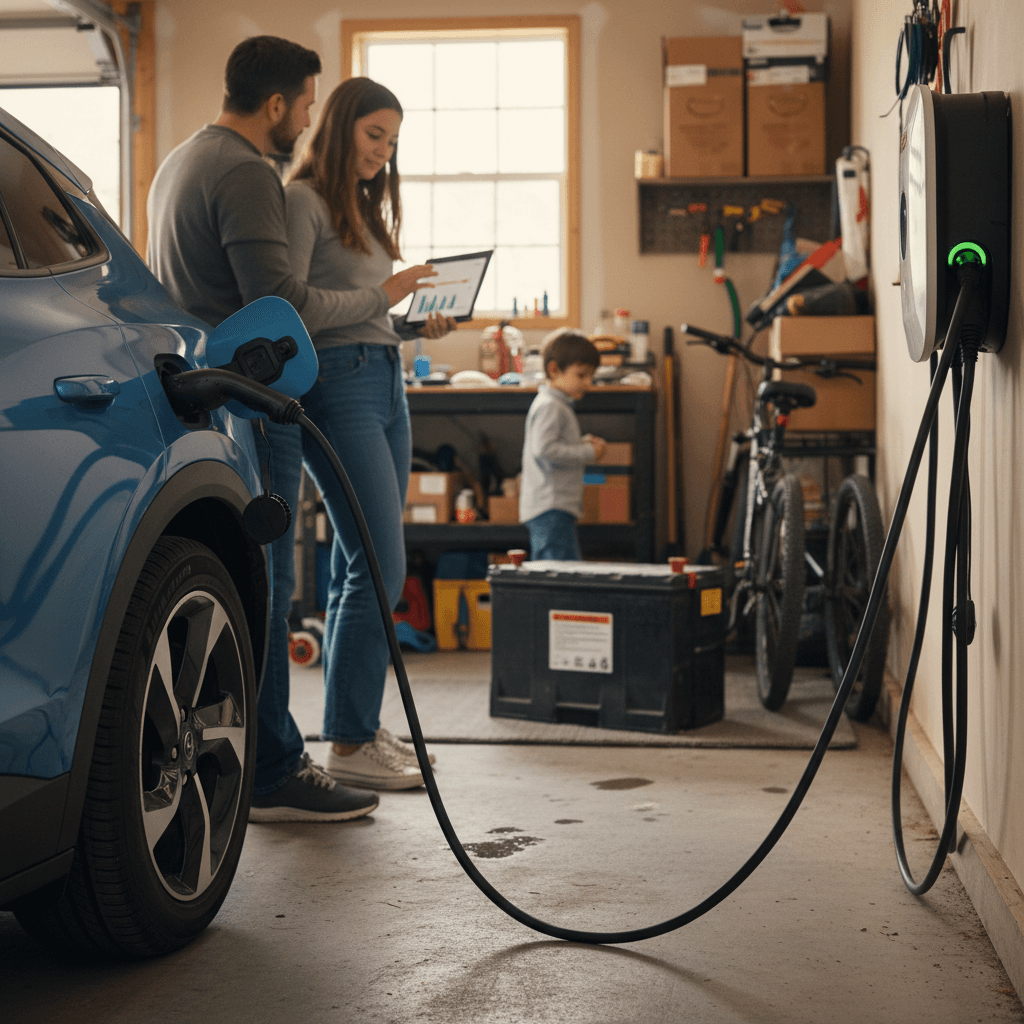
With a giant Ultium battery on board, how and where you charge matters more than it does in a small EV. The Silverado EV can handle high‑power DC fast charging when you’re on the road and solid Level 2 charging at home or work, but you need a plan before you sign anything.
Home & workplace charging
- Ideally, install a Level 2 (240V) charger in your garage or driveway capable of 40–80 amps.
- If you rent or live in a condo, confirm whether you can add charging or use existing shared stations.
- Check your electrical panel capacity, a full‑size EV truck pulls real power. You may need an electrician to add capacity.
- Use scheduled charging to take advantage of off‑peak electricity rates where available.
Public and road‑trip charging
- Confirm the truck’s max DC fast‑charge rate and how quickly it can go from, say, 10% to 80%.
- Download key apps (GM’s network access, plus major networks) and set up payment profiles.
- Look for stations with pull‑through layouts if you’ll be towing; otherwise you may have to unhook.
- As GM and other brands adopt Tesla’s NACS standard, check whether the truck comes with, or can use, adapters for Superchargers as they open to more non‑Tesla EVs.
Recharged can help with home charging
Step 5: Battery health and warranty checks (used and new)
GM’s Ultium pack in the Silverado EV is engineered for long life, and you get an 8‑year/100,000‑mile battery and electric‑components warranty from new. That’s reassuring, but as these trucks age and start showing up used, you’ll want more than a handshake and a Carfax.
Battery & warranty must‑checks
Don’t buy an electric truck blindly, verify how its pack is doing
Warranty status
- Confirm in‑service date (when the original warranty clock started).
- Check remaining years and miles on the high‑voltage warranty.
- Ask for documentation of any battery‑related repairs or software updates.
Battery health & use patterns
- Review DC fast‑charge vs. home charging history if available.
- Look for abnormal range complaints or sudden capacity drops in service records.
- Compare dashboard range at 100% to original EPA figures in similar conditions.
How Recharged handles battery health
Step 6: Tech features that actually matter in a Silverado EV
The Silverado EV is loaded with screens and clever party tricks, but some features change how the truck works day‑to‑day while others just light up the showroom. Your checklist should separate the two.
- Four‑wheel steering & Sidewinder: Shrinks the turning circle and, on RST and off‑road trims, can move the truck diagonally in tight spots, gold if you live in cities or tow often.
- Multi‑Flex Midgate & Tailgate: With the midgate down, you can get nearly 11 feet of load floor; crucial if you haul lumber, bikes, or overlength cargo.
- Super Cruise (with trailering): Hands‑free driving on mapped highways, even while towing on equipped trims. If you do long interstate runs, this can be worth real money in reduced fatigue.
- PowerBase offboard power: Up to roughly 10 kW of AC power to run tools, lights, or even a home in an outage with the right setup.
- Software & OTA updates: Make sure the truck is on current software and that over‑the‑air updates are enabled, this can improve efficiency, charging behavior, and feature sets over time.
Tech vs. budget reality
Step 7: Total cost, payment and incentive checklist
An electric truck reshuffles your cost picture. You may pay more up front but spend less on fuel and maintenance over the years. The mistake buyers make is focusing only on the monthly payment without checking the rest of the math.
Up‑front & monthly
- Price the exact trim and options you want, then compare to similar used examples.
- Factor in sales tax, title, registration, destination charges, and dealer fees.
- Include the cost of a Level 2 home charger and electrical work where needed.
- Get pre‑qualified for financing so you know your rate and budget before you negotiate.
Ongoing costs
- Estimate your electricity cost vs. current fuel use. Many drivers see dramatic savings, especially if they can charge off‑peak.
- Budget for tires, EV trucks are heavy and powerful, and they can eat through rubber faster than a gas half‑ton.
- Check insurance quotes; some carriers rate EV pickups differently than sedans or crossovers.
- Research federal, state, and utility incentives for EV purchases and charging equipment.
How Recharged simplifies the money side
Ready to find your next EV?
Browse VehiclesStep 8: Test drive and inspection walkthrough
A proper test drive in a Silverado EV is more than a lap around the block. You’re verifying how the truck fits your life and whether this particular example, especially if it’s used, has been treated kindly.
Silverado EV test drive checklist
Start with a full walk‑around
Check for uneven panel gaps, overspray, or misaligned trim that could indicate prior collision repair. Inspect bed, tailgate, and midgate hardware for damage or rust.
Look under and inside the bed
On work or fleet trucks, bed floors and tie‑downs tell you how hard the truck has been used. Deep gouges, bent tie‑downs, or rusted fasteners may mean a life of abuse.
Check tires and wheels
Mismatched or cheap tires on a heavy EV truck are a red flag. Uneven wear can suggest alignment issues or suspension damage, expensive on a complex EV chassis.
Drive city, highway, and rough pavement
Listen for clunks or rattles, test regenerative braking, and feel for wandering or vibration at speed. In an EV, new noises are easier to hear, use that to your advantage.
Test towing and payload features (if possible)
You may not hook up a trailer, but you can verify hitch hardware, trailer brake controls, camera views, and trailering modes in the infotainment screen.
Verify charging behavior
If you can, plug into a nearby Level 2 or DC fast charger and confirm that the truck connects and charges without errors. At minimum, check charge‑port door, pins, and seals.
A big electric truck hides its past differently than a gas one. No exhaust tips, no oil stains. You have to read the battery, the charging history, and the bodywork like a detective.
Silverado EV buying checklist: Summary
If you boil it down, a smart Chevy Silverado EV buying checklist comes back to just a few questions. Does this trim fit what I really do? Does the range and tow rating cover my worst‑case days, not just the pretty ones? Can I charge easily at home and on the road? And, especially if it’s used, is the battery as healthy as the paint is shiny?
Once you’ve answered those, the rest is about comfort, tech, and budget. That’s where shopping with an EV‑focused marketplace like Recharged helps. Every truck gets a Recharged Score Report with verified battery health, transparent pricing, expert guidance, and the option for nationwide delivery or a visit to the Recharged Experience Center in Richmond, VA. So when you finally back that Silverado EV out of the driveway, you’re confident it’s the right electric truck, not just the one that happened to be on the lot.