You don’t cross-shop the Chevy Equinox EV LT vs RS because you love homework; you do it because GM made this EV lineup just confusing enough to raise questions. Same battery, same platform, same basic range, yet a roughly $10,000 spread from a simple LT to a fully optioned RS. So what exactly are you paying for, and when does the RS make sense over a well‑optioned LT, or even a used Equinox EV?
2025 model-year context
Chevy Equinox EV LT vs RS: quick overview
Equinox EV LT vs RS: key numbers at a glance
Think of the Equinox EV LT as the smart, value‑driven base, 19‑inch wheels, big 17.7‑inch touchscreen, Chevy Safety Assist, heated front seats, and the full‑size battery with up to 319 miles of range. The Equinox EV RS is the same vehicle wearing a sport jacket: blacked‑out trim, available 21‑inch wheels, flat‑bottom steering wheel, colored stitching, and access to more premium options like a head‑up display and hands‑free parking.
LT vs RS: at-a-glance character sketch
Same heart, different personality
Equinox EV LT
- Role: Value play, family‑friendly spec
- Look: Clean, conventional SUV styling
- Standard: Cloth seats, heated fronts, 17.7" touchscreen, 19" wheels
- Best for: Budget‑conscious buyers who want max range per dollar
Equinox EV RS
- Role: Style and tech upgrade
- Look: Sporty grille, black accents, available 21" wheels
- Standard/Available: Evotex seating, flat‑bottom wheel, more luxury & tech bundles
- Best for: Drivers who care about aesthetics and creature comforts as much as range
Big picture
Price & value: how much more is the RS really?
For 2025, Chevy positions the Equinox EV as the approachable entry into Ultium‑based family EVs. The LT is the price leader; the RS is the aspirational one. Understanding the gap is the first step to choosing wisely.
2025 Chevy Equinox EV LT vs RS pricing
Approximate MSRPs including destination; real‑world dealer pricing may vary.
| Trim | Drivetrain | Approx. MSRP (incl. dest.) | What you’re paying for |
|---|---|---|---|
| LT | FWD | $34,995 | Core Equinox EV experience: 85‑kWh battery, 17.7" screen, Chevy Safety Assist |
| LT | AWD | $38,295 | Extra traction and power; similar equipment otherwise |
| LT + key packages | FWD | ~$43K–$46K | Comfort, additional safety, and convenience bundles layered onto LT |
| RS | FWD | $44,795 | Sporty styling, upgraded interior materials, more available tech |
| RS | AWD | $48,095 | Same RS look with dual‑motor punch and all‑weather confidence |
| RS + Convenience II | AWD | ~$51K+ | Essentially a fully loaded Equinox EV with most toys checked |
Remember that many U.S. buyers can subtract the $7,500 federal EV tax credit from these numbers, plus any state or utility incentives.
Sticker shock alert
Both trims benefit from the Equinox EV’s strong value story: a mass‑market compact SUV footprint, a generous range estimate, and eligibility, at least for now, for the full federal EV tax credit. Where the math diverges is on the used market. A year or two from now, an off‑lease RS with the flashy wheels and upgraded cabin may not cost dramatically more than an LT, yet it will feel like a more expensive car to live with.
Performance & range: do LT and RS drive differently?
Underneath the sheet metal, an Equinox EV LT and RS share the same Ultium‑based powertrain hardware. What changes is your choice of front‑wheel drive vs all‑wheel drive and, indirectly, wheel and tire packages that can nibble at your real‑world range.
- Single‑motor FWD: around 220 hp and low‑200s lb‑ft of torque, up to an EPA‑estimated 319 miles of range with both LT and RS.
- Dual‑motor AWD: roughly 300 hp and mid‑300s lb‑ft of torque, with range dropping into the mid‑200‑mile band (Chevy has quoted about 285 miles previously).
- Charging: both trims accept up to about 150 kW on DC fast chargers, good for roughly 70–77 miles added in 10 minutes when conditions are ideal.
- Onboard AC charging: 11.5‑kW Level 2 for most models, which means a full charge overnight on a 240‑volt home charger.
Do 21-inch wheels change the story?
How the LT feels
The LT on 19‑inch wheels is the Goldilocks spec: there’s enough torque to make on‑ramps a non‑event, and the quieter, softer‑riding tire setup suits family duty. It’s not a thriller, but you’re never left stranded in the slow lane wishing you bought the ‘fast one.’
How the RS feels
With the same basic motor hardware, the RS isn’t really quicker unless you also tick the AWD box. What you do notice is steering wheel shape, seating materials, and, if you go big on wheels, a firmer, slightly busier ride. It’s more about vibe than raw speed.
Design & styling: subtle LT or sporty RS?
GM understands that in the age of Instagram, design sells EVs. The Equinox EV LT is deliberately normal, almost anonymous, while the RS wears its electric intent a bit louder. The sheet metal is the same, but the details are not.
Exterior and interior design differences
Same body, different attitude
LT: understated and practical
- Conventional grille treatment and body‑color accents
- Standard 19" wheels with all‑season tires
- More traditional SUV vibe, great if you don’t want to shout "EV" at the neighbors
- Cloth seating surfaces with simpler color schemes
RS: sporty and expressive
- Unique RS grille and front fascia with a more aggressive look
- Black mirrors, moldings and badging; available contrasting roof on some markets
- Standard larger wheels (19" with optional 20" or 21" depending on package)
- Evotex (faux‑leather) seats with Torch Red/Santorini Blue stitching and RS‑branded headrests
Resale advantage for RS
Interior, comfort & tech: where the RS pulls ahead
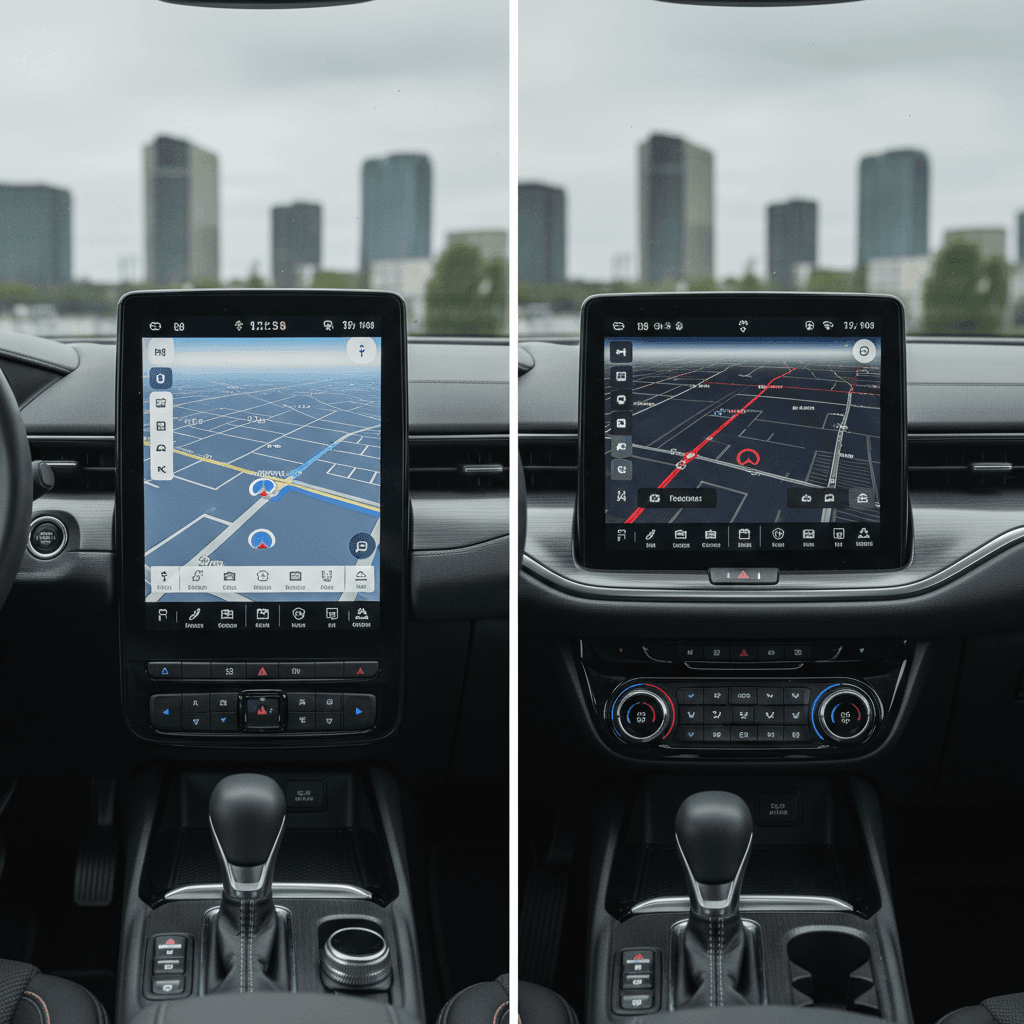
Both Equinox EV trims share the basics: the big 17.7‑inch central touchscreen, an 11‑inch digital gauge cluster, Google‑built‑in infotainment, and standard heated front seats with a heated steering wheel. The RS, however, turns up the interior drama and unlocks more tech when you start layering packages.
Equinox EV LT vs RS: interior & tech highlights
Representative features; equipment can vary by package and production date.
| Feature | LT | RS |
|---|---|---|
| Seat material | Cloth (heated front) | Evotex with contrast stitching (heated front; available heated rear) |
| Steering wheel | Round, heated | Flat‑bottom, heated, RS styling |
| Climate control | Single‑zone automatic | Available dual‑zone automatic |
| Infotainment | 17.7" touchscreen, Google built‑in | Same screen, plus more available upscale options |
| Head‑up display | Available via packages on higher‑content builds | More commonly bundled with RS convenience packages |
| Hands‑free parking assist | Generally not on base LT | Available on RS with advanced packages |
| Panoramic glass roof | Available on upper‑content LT | Often paired with RS appearance and convenience bundles |
Always verify exact equipment on the specific new or used vehicle you’re considering, especially for early‑build 2024 models vs later 2025s.
Don’t assume every RS is loaded
Safety & driver assistance: what carries over, what costs extra
The good news: safety isn’t where Chevy plays games. Chevy Safety Assist, including automatic emergency braking, lane‑keep assist, and other core features, is standard across Equinox EV LT and RS trims. Where things diverge is in the advanced driver‑assist toys and parking tech.
- Standard on both LT and RS: Chevy Safety Assist suite, rearview camera, and standard airbags.
- Commonly optional on both (often via packages): 360‑degree camera system, enhanced parking assist, blind‑zone steering assist, rear cross‑traffic braking.
- RS edge: hands‑free parking assist and some convenience safety features are more readily available on RS‑only or RS‑biased packages.
- Hands‑free driving: GM’s Super Cruise system appears on certain higher‑content builds and will be far more common on loaded RS models than on bare‑bones LTs.
Safety options on used Equinox EVs
Ownership costs & used-market reality
With any new EV, depreciation writes its own punchline. The Equinox EV is priced aggressively, but incentives, dealer discounts, and rapid tech turnover mean that early buyers will almost certainly see meaningful depreciation in the first three years, especially on higher‑MSRP builds.
What LT vs RS means for your wallet
Beyond the window sticker
Energy costs
LT and RS cost roughly the same to charge, since they share the same battery and drivetrain. Expect annual electricity costs in the hundreds of dollars, not thousands, if you charge mostly at home.
Depreciation
A fully loaded RS drops from a higher peak price, so the raw dollar loss can be bigger, though percentage‑wise it may track an LT. On the used market, RS’s extra curb appeal may make it easier to resell.
Battery health
Battery degradation is driven by use and charging habits more than trim level. A gently driven LT can have better real‑world range than a hard‑used RS, and vice versa. Condition matters more than badges.
Where Recharged fits in
Because the Equinox EV is still relatively new, the earliest 2024 and 2025 examples will start showing up on the used market in meaningful numbers over the next couple of years. That’s where the LT vs RS tension gets interesting: a used RS with strong battery health and the right options could deliver a lot of experience for a modest premium over a used LT, especially if you finance, trade in your current vehicle, or take advantage of nationwide delivery through a digital‑first retailer like Recharged.
Which Equinox EV trim fits your life?
Choose the LT if…
- You want the lowest entry price into an Ultium‑based Chevy SUV.
- Range matters more than wheels and stitching.
- You’re planning to keep the car long term and value simple, easily replaceable tires.
- You prefer a more understated look that doesn’t scream “sport package.”
- You’d rather invest in home charging or road trips than interior upgrades.
Choose the RS if…
- Design matters and you want your EV to look special inside and out.
- You plan to add or find a car with comfort and tech packages, head‑up display, dual‑zone climate, advanced parking, panoramic roof.
- You’re leaning toward AWD and want the full “top‑trim” experience.
- You care about future resale and know shoppers gravitate to loaded, sporty‑looking trims.
- You’re shopping used and find an RS whose price is close to similarly equipped LTs.
A simple rule of thumb
Quick checklist: LT vs RS in 60 seconds
Ask yourself these questions before you sign
1. What’s my real budget after incentives?
Write down a realistic out‑the‑door number, then subtract any federal, state, or utility incentives, and what your trade‑in is worth. Now compare LT and RS pricing against that true budget, not just the MSRP.
2. Am I paying extra only for looks?
If the RS you’re considering doesn’t add tech you care about, only black trim and bigger wheels, you may be better off in an LT with comfort and safety packages.
3. Do I need AWD, or just want it?
AWD adds traction and punch, but also cost and a range penalty. If you don’t regularly deal with snow, ice, or off‑pavement roads, a FWD LT or RS may be the more rational play.
4. How long will I keep this vehicle?
If you plan to drive it into the ground, absolute purchase price matters more than trim. If you’ll sell or trade in a few years, an RS’s desirability and options can help on resale.
5. What does my daily driving really look like?
If you log short commutes and school runs, LT vs RS won’t meaningfully change your experience. If you’re a road‑trip family, you may value extra comfort features like better seats, dual‑zone climate, and advanced driver assistance on the RS.
6. Have I compared used options?
Before ordering new, look at used Equinox EV listings with verified battery reports. A low‑mileage RS from a reputable source like Recharged can sometimes undercut a new LT on total cost of ownership.
Chevy Equinox EV LT vs RS: FAQ
Frequently asked questions about Equinox EV LT vs RS
Bottom line: LT vs RS for real-world EV buyers
Chevy has done something refreshingly straightforward with the Equinox EV: given you one battery, one basic form factor and two personalities. The LT is the pragmatist’s choice, an honest electric appliance with a long leash and a reasonable price. The RS is the show‑off sibling, the one that dresses better, takes nicer photos, and unlocks more comfort and tech when you’re willing to pay for them.
If you’re ordering new and watching every dollar, start with an LT and add only the packages you’ll actually feel every day. If you’re browsing the used market, don’t be afraid of an RS, especially when you can see verified battery health, pricing, and inspection data through a Recharged Score Report. At that point, you’re not just choosing between LT and RS; you’re choosing the version of Equinox EV that best fits your life, your roads, and your appetite for style.
Either way, the homework pays off. A few minutes comparing Chevy Equinox EV LT vs RS now can save you thousands later, in upfront cost, charging, and resale, and land you in an electric SUV that actually matches the way you drive.