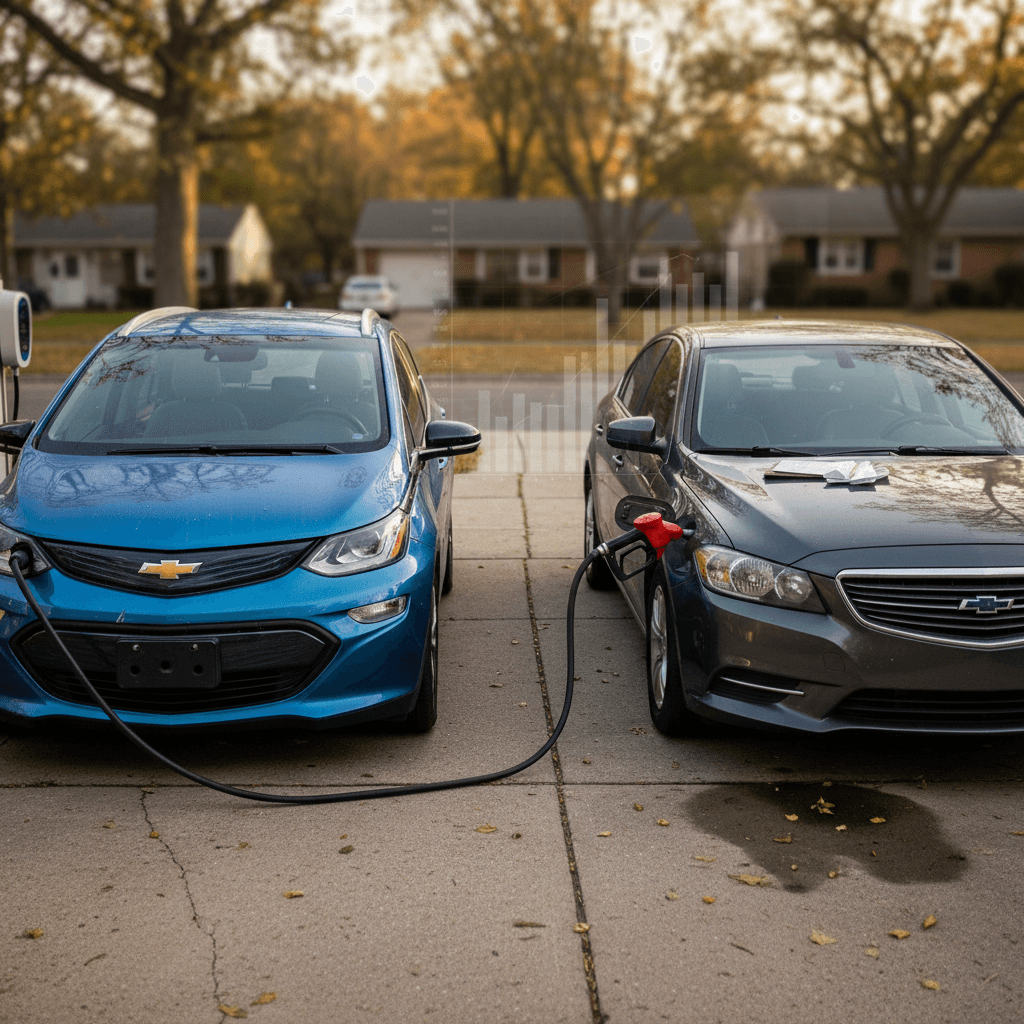
You’ve probably heard that electric cars are cheaper to run, but what does that actually look like in dollars and cents? If you’re cross‑shopping a Chevy Bolt vs a gas car, the real question is simple: over the years you own it, which one quietly eats more of your budget?
The short answer
Why Chevy Bolt vs Gas Car Cost Matters Now
Cost of ownership is no longer a back‑of‑the‑napkin calculation. In the last few years, gas prices have swung wildly, electricity prices have crept up, and used EV prices, especially for the Chevy Bolt, have come down to earth. As of late 2025, the U.S. national average gas price is hovering around $3.00 per gallon, while average residential electricity runs roughly $0.17 per kWh in many states.
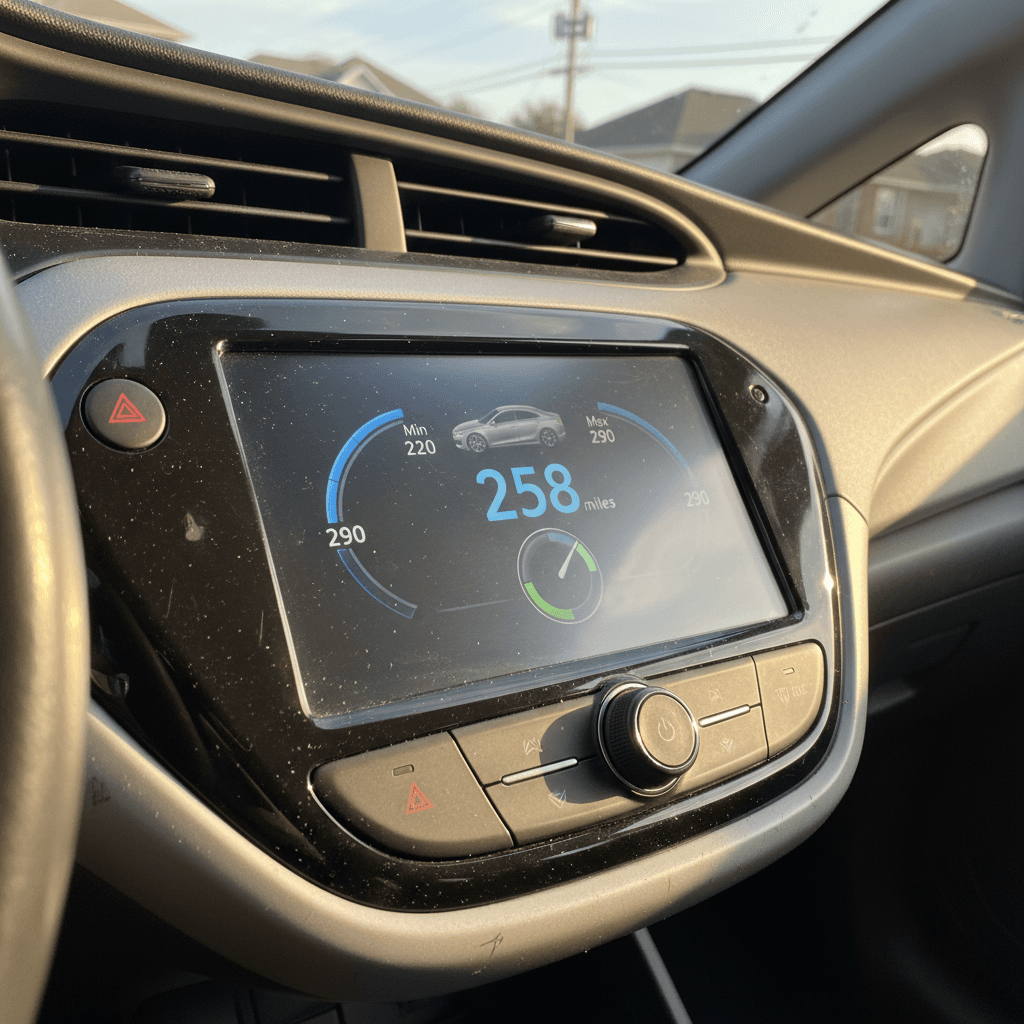
At the same time, the Chevy Bolt remains one of the most efficient EVs on the road, rated at about 28 kWh per 100 miles on recent model years. That combination, high efficiency and relatively stable electricity rates, means the gap between Bolt and gasoline running costs is still very real, even with cheaper gas than in 2022.
Key Assumptions Behind the Cost Comparison
To compare a Chevy Bolt vs a gas car on cost, you need consistent, realistic assumptions. Change these inputs, and the outcome can move noticeably.
- Annual mileage: 12,000 miles per year (close to the U.S. average).
- Ownership period: 5 years.
- Electricity price: $0.17 per kWh at home. If your rate is closer to $0.13 or $0.20, we’ll discuss how that shifts things later.
- Gas price: $3.00 per gallon national average, acknowledging that some states are well below $2.60 and coastal states can be well above $4.00.
- Chevy Bolt efficiency: 28 kWh/100 miles (roughly 3.6 miles per kWh).
- Gas compact efficiency: 32 mpg combined for a typical small hatchback or sedan (think Corolla, Civic, Cruze, Elantra).
Your numbers will vary
Fuel vs Electricity: What a Mile Really Costs
Let’s start with the part you feel every week: energy cost. Whether that’s at the pump or on your power bill, it’s the line item you’ll notice first.
Chevy Bolt vs Gas Car: Energy Cost per Mile
Based on typical 2025 U.S. gas and electricity prices and realistic efficiency numbers.
| Vehicle | Key Assumption | Energy Price | Consumption | Energy Cost per Mile |
|---|---|---|---|---|
| Chevy Bolt EV | 28 kWh/100 miles | $0.17/kWh | 0.28 kWh/mile | ≈ $0.048/mile |
| Gas compact | 32 mpg combined | $3.00/gal | 1/32 gal/mile | ≈ $0.094/mile |
These are averages. Your local prices and driving style can move the numbers up or down.
On these assumptions, a mile in the Bolt costs about half as much in energy as a mile in a comparable gas car.
Annual Fuel/Energy Spend at 12,000 Miles
Public charging changes the picture
Maintenance and Repairs: EV Simple, Gas Complex
Fuel is only part of the story. Over 5–10 years, the real budget sleeper is maintenance and repairs. This is where an EV’s simplicity shows up in your wallet.
Typical Maintenance: Chevy Bolt vs Gas Compact
Fewer moving parts usually means fewer surprises.
Chevy Bolt EV
- No oil changes, spark plugs, timing belts, or exhaust system.
- Brake pads last longer thanks to regenerative braking.
- Maintenance mostly means cabin filters, tire rotations, brake fluid, and coolant service on long intervals.
- Fewer wear items mean fewer random shop visits.
Gas compact
- Regular oil and filter changes every 5,000–7,500 miles.
- Transmission service, spark plugs, air/fuel filters, belts, and sometimes exhaust work.
- More heat and vibration generally mean more small failures over time.
- Brake wear is higher because all deceleration is friction‑based.
Real‑world fleet data and repair‑cost tracking consistently show EVs undercutting comparable gasoline cars on maintenance and repairs. It’s not that EVs never break, it’s that there’s simply less to maintain.
Chevy Bolt estimated maintenance
- Basic services and inspections: roughly $300–$400 per year when averaged over several years.
- Regenerative braking and no oil changes keep routine costs low.
Gas compact estimated maintenance
- Oil changes alone can run $150–$250 per year for a typical driver.
- Add in brake jobs, transmission service, and other items and it’s realistic to budget $600–$800 per year in the long run.
What about battery replacement?
Insurance, Taxes, and Fees
Insurance is highly personal, driven by your driving record, location, and coverage choices. In many markets, insuring a Chevy Bolt is roughly on par with or slightly higher than insuring a similarly priced compact gas car because of higher parts costs and specialized repair procedures.
- Registration and taxes: Some states add modest annual EV fees, while others still offer tax credits or lower registration costs. These usually move the needle by a few hundred dollars a year at most.
- Insurance: Think of insurance as roughly a wash in many cases. If there’s a difference, it’s often small compared with fuel and maintenance swings.
- Parking and perks: Certain cities offer discounted parking or HOV‑lane access for EVs. These benefits won’t show up in a spreadsheet but can matter to your daily life.
Depreciation and Used Values
A few years ago, new EVs, including the Bolt, depreciated quickly as new technology arrived and incentives changed. That’s one of the reasons the used‑EV market is so interesting today: much of that early depreciation has already happened.
A late‑model used Chevy Bolt often costs far less up front than a brand‑new gas compact, even when they offer similar interior space and features. That lower entry price can offset any lingering concerns about long‑term battery value, especially if you have a way to verify battery health before you buy.
How Recharged helps on depreciation risk
5‑Year Cost Comparison: Chevy Bolt vs Gas Compact
Let’s pull the major pieces together into a simple, 5‑year, 60,000‑mile comparison. We’ll assume you’re buying used, which is where the Bolt is most compelling, and that purchase prices are similar, say both cars cost around $20,000 out the door. That keeps the focus on running costs, not sticker price.
Illustrative 5‑Year Ownership Costs (60,000 Miles)
Assumes similar purchase price for a used Chevy Bolt and a used compact gas car. Numbers are rounded for clarity and will vary by driver and market.
| Category (5 years) | Chevy Bolt EV | Gas Compact | Notes |
|---|---|---|---|
| Energy (fuel/electricity) | ≈ $2,900 | ≈ $5,650 | Based on earlier $0.048 vs $0.094 per mile figures. |
| Maintenance & repairs | ≈ $1,800 | ≈ $3,500 | Bolt benefits from fewer routine services. |
| Registration/EV fees | ≈ $500–$1,000 | ≈ $500 | Some states add EV fees; many don’t, this is a placeholder range. |
| Insurance difference | ≈ similar | ≈ similar | Varies too much to generalize; treat as a wash in many markets. |
| Total major running costs | ≈ $5,200–$5,700 | ≈ $9,150 | Bolt saves roughly $3,500–$4,000 over 5 years on these assumptions. |
Purchase price is treated as equal to highlight operating‑cost differences; your real‑world results will depend on the actual vehicles you compare.
What Those Numbers Mean in Plain English
What this comparison leaves out
When a Gas Car Can Still Come Out Ahead
Despite the clear trend toward lower operating cost with a Chevy Bolt, there are situations where a gasoline car still makes more sense, or at least narrows the gap.
Scenarios That Favor a Gas Car
Cost isn’t the only factor, but here are cases where the math tightens up.
No home charging
Very low annual miles
Extreme climate & terrain
Think about winter range, not just cost
How Buying a Used Chevy Bolt with Recharged Changes the Math
All EV cost‑of‑ownership math hinges on one big question: how healthy is the battery? A Bolt with a strong pack can deliver years of low‑cost driving. One with a heavily degraded or abused battery can turn into a range‑anxiety machine you regret buying.
What Recharged Adds to the Equation
Verified battery health with every car
Every EV on Recharged comes with a <strong>Recharged Score Report</strong> that includes battery diagnostics. You’re not guessing about remaining capacity, you see measured results.
Fair‑market pricing on used Bolts
Because Recharged focuses on EVs, pricing reflects current EV market realities, not outdated assumptions. That helps ensure you’re not overpaying for older tech or under‑valuing a well‑cared‑for Bolt.
Expert EV‑specialist support
If you’re comparing a Chevy Bolt vs a gas car and aren’t sure how to weigh the trade‑offs, Recharged’s EV specialists can walk you through real‑world costs, charging needs, and how the car fits your life.
Flexible ways to buy and sell
Recharged offers <strong>financing, trade‑in, instant offer or consignment</strong>, and nationwide delivery. You can also sell or trade your current gas car to move into an EV without juggling multiple dealers.
From spreadsheet to driveway
Checklist: Deciding Between a Chevy Bolt and a Gas Car
Key Questions Before You Choose
1. Where will you charge most of the time?
If you can reliably charge at home or work at reasonable electricity rates, the Bolt’s cost advantage grows quickly. If not, investigate local fast‑charging availability and pricing before you commit.
2. How many miles do you actually drive?
Pull your last year of service records or use a tracking app. If you’re at or above 12,000 miles per year, the Bolt’s lower per‑mile cost becomes more meaningful.
3. What are gas and electricity prices in your area?
Check your actual cents‑per‑kWh from your utility bill and local gas prices. Plug those into the cost‑per‑mile formula from this article to personalize the comparison.
4. How long do you plan to keep the car?
The longer you own it and the more you drive, the more the EV’s lower running costs matter. If you swap cars every 18–24 months, depreciation and resale may dominate your decision.
5. Is your driving mostly local or mostly road‑trip?
For local and regional driving, a Bolt’s range and low running cost shine. If you’re doing frequent cross‑country trips in areas with sparse fast charging, a gas car may remain more convenient, for now.
6. Have you seen a real battery‑health report?
For any used EV, insist on verified battery data. With Recharged, that’s built in; elsewhere, you may need to pay for diagnostics or accept more uncertainty.
FAQ: Chevy Bolt vs Gas Car Cost
Frequently Asked Questions
Bottom Line: Is a Chevy Bolt Cheaper Than a Gas Car?
When you strip away the hype and run the numbers, the pattern is clear: for a typical American driver with access to home charging, a Chevy Bolt usually costs less to run than a comparable gas car. At roughly half the energy cost per mile and with fewer routine maintenance items, the Bolt quietly chips away at your transportation budget month after month.
Where things get trickier is when you can’t charge at home, drive very few miles, or live in an area with unusually high power prices and cheap gasoline. In those edge cases, a gas compact can still compete, or occasionally win, on cost, especially if it’s significantly cheaper to buy up front.
If you’re leaning toward an EV but want to be sure the math works for you, consider starting with a used Chevy Bolt backed by real battery data. Recharged’s combination of battery‑health diagnostics, fair‑market pricing, financing, trade‑in options, and nationwide delivery makes it much easier to turn a spreadsheet advantage into day‑to‑day savings you can actually feel.